

Grapes, green, seedless, raw
Whole food · Fruits and Fruit Juices
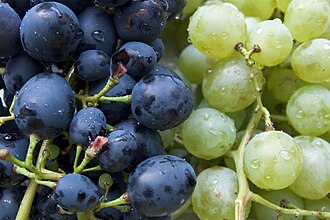
Photo: Wikipedia
These are plump, crisp orbs of pure refreshment, bursting with a delicate, honeyed sweetness and a clean, watery crunch. Nutritionally, they are a light, hydrating snack, delivering quick natural energy primarily from carbohydrates with negligible fat.
Calorie split: 4% protein · 93% carbs · 3% fat
↓ Full nutrition💚 Why it's loved
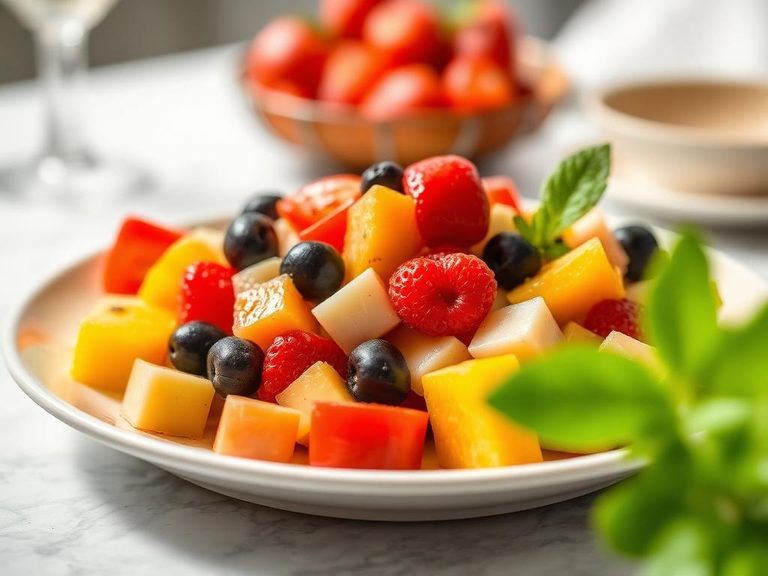
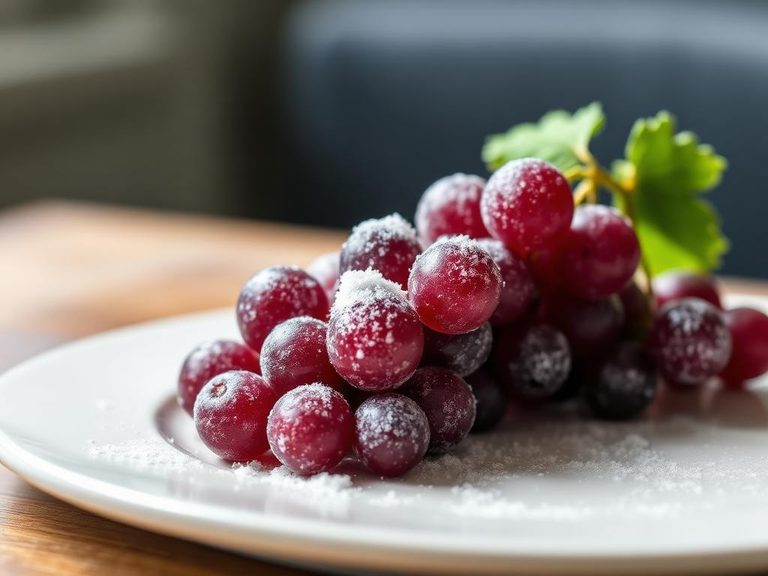
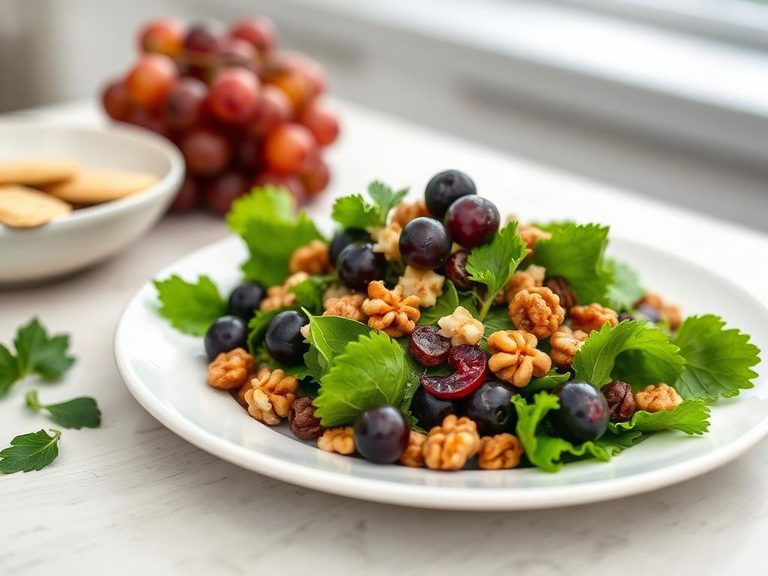
People adore them for their perfect balance of sweet, floral flavor and satisfyingly crisp texture, making them an ideal, refreshing snack. Their versatility shines in everything from chilled fruit salads to savory cheese boards and frozen treats.
⚠️ Watch-outs & how to enjoy it better
Their natural sugars can cause rapid blood-sugar spikes, especially when eaten alone in large quantities. To counteract this, pair them with a source of protein or fat (like cheese, nuts, or yogurt) to slow sugar absorption, and practice portion control.
Key benefits
- Excellent source of hydration due to high water content
- Provides quick, natural energy from carbohydrates
- Contains antioxidants like vitamin K and polyphenols
- Low in calories and fat, making them a light snack
- Convenient, no-prep whole food
🍽️ Popular dishes
🌍 Where it's eaten
💡 Did you know?
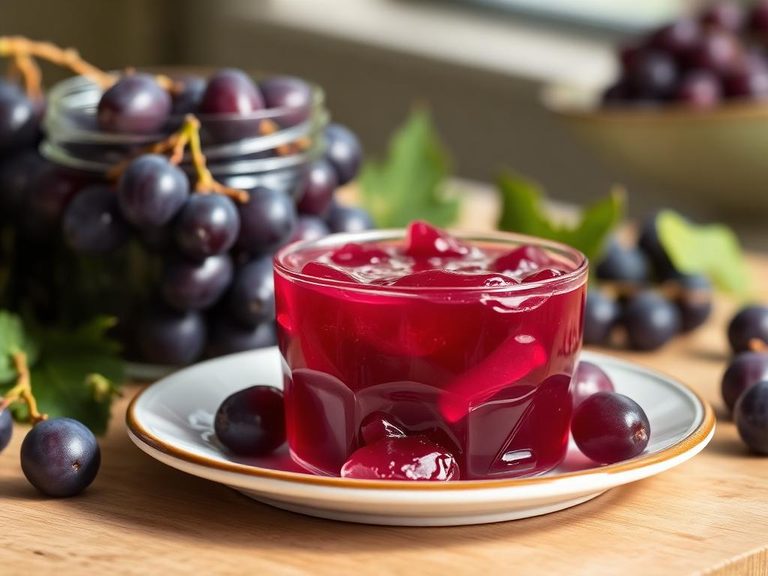
The process of making raisins is essentially sun-drying grapes, a method believed to have been discovered accidentally in ancient times when grapes left on the vine dried on the stem.
Full nutrition (USDA data · scales with serving)
| Water | 79.9 g |
| Energy (Atwater General Factors) | 80.1 kcal |
| Energy (Atwater Specific Factors) | 71.9 kcal |
| Nitrogen | 0.14 g |
| Protein | 0.90 g |
| Total lipid (fat) | 0.23 g |
| Ash | 0.39 g |
| Carbohydrate, by difference | 18.6 g |
| Sugars, Total | 16.1 g |
| Sucrose | 0.00 g |
| Glucose | 7.5 g |
| Fructose | 8.6 g |
| Lactose | 0.00 g |
| Maltose | 0.00 g |
| Galactose | 0.00 g |
| Calcium, Ca | 9.9 mg |
| Iron, Fe | 0.20 mg |
| Magnesium, Mg | 7.1 mg |
| Phosphorus, P | 22.0 mg |
| Potassium, K | 218 mg |
| Sodium, Na | 3.2 mg |
| Zinc, Zn | 0.03 mg |
| Copper, Cu | 0.06 mg |
| Manganese, Mn | 0.08 mg |
| Vitamin C, total ascorbic acid | 3.0 mg |
| Biotin | 0.00 ug |
Fat & fatty acid profile (per 100g)
Estimated from Grapes, american type (slip skin), raw — USDA does not publish this profile for Grapes.
| Fatty acids, total saturated | 0.11 g |
| SFA 4:0 | 0.00 g |
| SFA 6:0 | 0.00 g |
| SFA 8:0 | 0.00 g |
| SFA 10:0 | 0.00 g |
| SFA 12:0 | 0.00 g |
| SFA 14:0 | 0.00 g |
| SFA 16:0 | 0.10 g |
| SFA 18:0 | 0.01 g |
| Fatty acids, total monounsaturated | 0.01 g |
| MUFA 16:1 | 0.00 g |
| MUFA 18:1 | 0.01 g |
| MUFA 20:1 | 0.00 g |
| MUFA 22:1 | 0.00 g |
| Fatty acids, total polyunsaturated | 0.10 g |
| PUFA 18:2 | 0.08 g |
| PUFA 18:3 | 0.02 g |
| PUFA 18:4 | 0.00 g |
| PUFA 20:4 | 0.00 g |
| PUFA 20:5 n-3 (EPA) | 0.00 g |
| PUFA 22:5 n-3 (DPA) | 0.00 g |
| PUFA 22:6 n-3 (DHA) | 0.00 g |
| Fatty acids, total trans | 0.00 g |
| Cholesterol | 0.00 mg |
Amino acid profile (per 100g)
Estimated from Grapes, american type (slip skin), raw — USDA does not publish this profile for Grapes.
| Tryptophan | 0.00 g |
| Threonine | 0.02 g |
| Isoleucine | 0.01 g |
| Leucine | 0.01 g |
| Lysine | 0.01 g |
| Methionine | 0.02 g |
| Cystine | 0.01 g |
| Phenylalanine | 0.01 g |
| Tyrosine | 0.01 g |
| Valine | 0.02 g |
| Arginine | 0.05 g |
| Histidine | 0.02 g |
| Alanine | 0.03 g |
| Aspartic acid | 0.08 g |
| Glutamic acid | 0.13 g |
| Glycine | 0.02 g |
| Proline | 0.02 g |
| Serine | 0.03 g |
FAQ
Are green seedless grapes genetically modified?
No. Most commercial seedless grape varieties are developed through traditional cross-breeding and selective propagation techniques, not genetic modification.
Why are my green grapes sometimes tart?
Tartness can result from the grape variety, harvest timing (less ripe grapes have more acid), or storage conditions. Refrigerating them can mellow the flavor slightly.
How should I store them for maximum freshness?
Keep them unwashed in a perforated plastic bag in the refrigerator's crisper drawer. They can last 1-2 weeks. Wash only right before eating to prevent mold.
Nutrient density (calculated · NRF9.3)
Nutrient Rich Foods index: beneficial nutrients (protein, fiber, vitamins, minerals) minus saturated fat, added sugar & sodium, per 100 kcal.
NRF9.3 index — Fulgoni, Keast & Drewnowski, 2009. Computed from USDA nutrients.
Weight-loss friendliness (composite index)
Energy density 0.80 kcal/g · 4% calories from protein · 0.0 g fiber · 0.0 g sugar per 100 g.
Composite of energy density (Rolls et al., 1999), protein & fiber satiety, minus sugar. A calculated heuristic — ranks satiety-per-calorie, not a clinical measure.
Dietary load (calculated from USDA values)
Potential renal acid load. Positive = acid-forming, negative = alkaline-forming.
Sodium-to-potassium ratio: 0.01 (lower is better — aim for ≤ 1)
Sodium:potassium per WHO potassium guidance. Computed from USDA nutrients.