

Fruit cocktail, (peach and pineapple and pear and grape and cherry), canned, water pack, solids and liquids
Whole food · Fruits and Fruit Juices

Photo: Wikipedia
A nostalgic medley of tender peach, juicy pineapple, crisp pear, sweet grape, and bright cherry, all suspended in a light, refreshing water pack. The textures range from soft to pleasantly firm, offering a gentle, sweet-tart flavor without the heavy syrup. At just 32 kcal per 100g, it's a remarkably low-calorie, hydrating snack.
Calorie split: 5% protein · 94% carbs · 1% fat
↓ Full nutrition💚 Why it's loved
People love it for its cheerful, multi-fruit flavor and the satisfying contrast of textures in every spoonful. It's a versatile staple, enjoyed straight from the can as a light dessert, a quick snack, or a colorful addition to salads and breakfast bowls.
⚠️ Watch-outs & how to enjoy it better
The primary concern is the added sugar (7.51g per 100g), which can cause blood-sugar spikes, especially for those with diabetes or insulin resistance. To counteract this, pair it with a source of protein or healthy fat (like yogurt, nuts, or cottage cheese) to slow sugar absorption, and practice portion control.
Key benefits
- Low in calories and fat, supporting weight management.
- Provides a quick source of natural fruit sugars for energy.
- Contains dietary fiber, aiding digestion.
- Offers hydration due to its high water content.
- A convenient way to consume a variety of fruit servings.
🍽️ Popular dishes
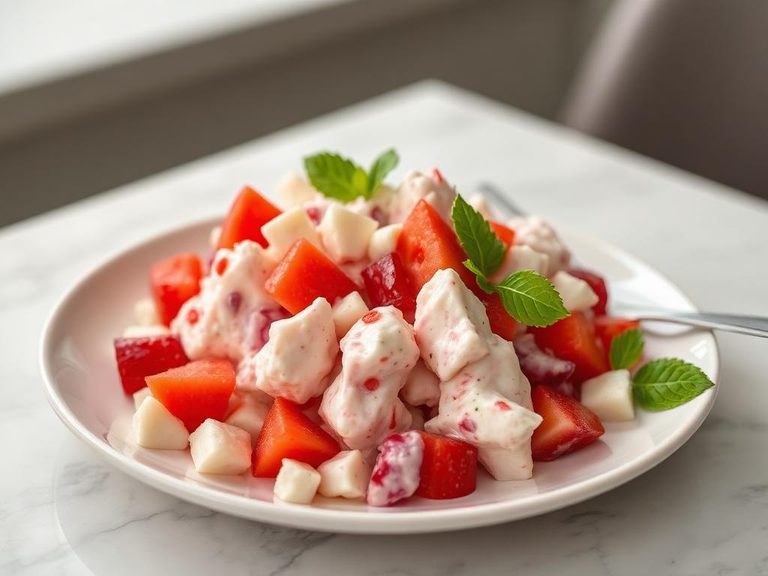
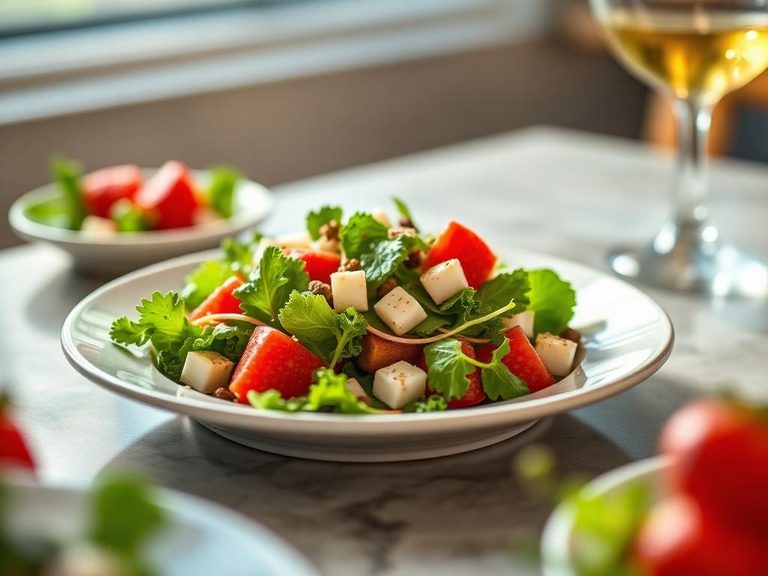

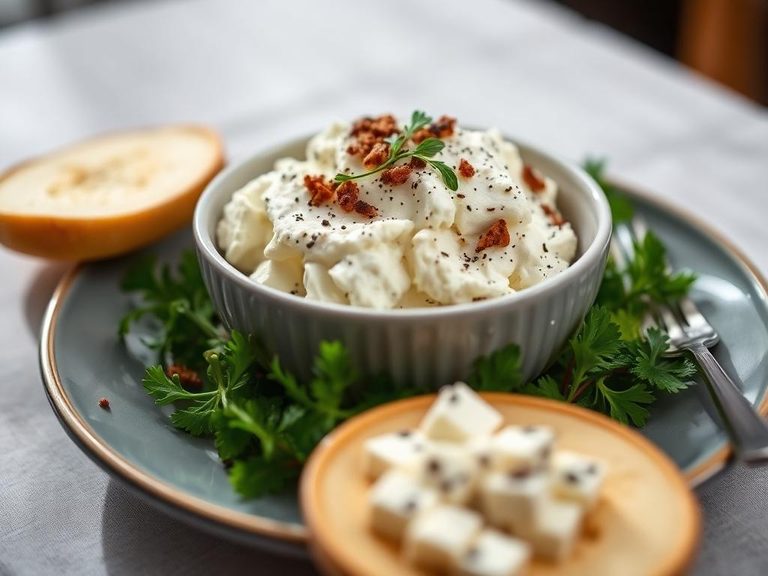


🌍 Where it's eaten
💡 Did you know?
The classic canned fruit cocktail was patented in 1912 by the California Fruit Growers Exchange (now Sunkist), and its specific five-fruit composition was designed to provide a balanced mix of colors, textures, and flavors year-round.
Full nutrition (USDA data · scales with serving)
| Water | 90.8 g |
| Energy | 32.0 kcal |
| Energy | 134 kj |
| Protein | 0.42 g |
| Total lipid (fat) | 0.05 g |
| Ash | 0.26 g |
| Carbohydrate, by difference | 8.5 g |
| Fiber, total dietary | 1.0 g |
| Total Sugars | 7.5 g |
| Calcium, Ca | 5.0 mg |
| Iron, Fe | 0.25 mg |
| Magnesium, Mg | 7.0 mg |
| Phosphorus, P | 11.0 mg |
| Potassium, K | 94.0 mg |
| Sodium, Na | 4.0 mg |
| Zinc, Zn | 0.09 mg |
| Copper, Cu | 0.07 mg |
| Manganese, Mn | 0.15 mg |
| Selenium, Se | 0.50 ug |
| Vitamin C, total ascorbic acid | 2.1 mg |
| Thiamin | 0.02 mg |
| Riboflavin | 0.01 mg |
| Niacin | 0.36 mg |
| Pantothenic acid | 0.06 mg |
| Vitamin B-6 | 0.05 mg |
| Folate, total | 3.0 ug |
| Folic acid | 0.00 ug |
| Folate, food | 3.0 ug |
| Folate, DFE | 3.0 ug |
| Choline, total | 3.7 mg |
| Vitamin B-12 | 0.00 ug |
| Vitamin B-12, added | 0.00 ug |
| Vitamin A, RAE | 13.0 ug |
| Retinol | 0.00 ug |
| Carotene, beta | 126 ug |
| Carotene, alpha | 0.00 ug |
| Cryptoxanthin, beta | 48.0 ug |
| Vitamin A, IU | 250 iu |
| Lycopene | 0.00 ug |
| Lutein + zeaxanthin | 75.0 ug |
| Vitamin E (alpha-tocopherol) | 0.40 mg |
| Vitamin E, added | 0.00 mg |
| Vitamin D (D2 + D3), International Units | 0.00 iu |
| Vitamin D (D2 + D3) | 0.00 ug |
| Vitamin K (phylloquinone) | 2.6 ug |
| Alcohol, ethyl | 0.00 g |
| Caffeine | 0.00 mg |
| Theobromine | 0.00 mg |
Fat & fatty acid profile (per 100g)
| Fatty acids, total saturated | 0.01 g |
| SFA 4:0 | 0.00 g |
| SFA 6:0 | 0.00 g |
| SFA 8:0 | 0.00 g |
| SFA 10:0 | 0.00 g |
| SFA 12:0 | 0.00 g |
| SFA 14:0 | 0.00 g |
| SFA 16:0 | 0.01 g |
| SFA 18:0 | 0.00 g |
| Fatty acids, total monounsaturated | 0.01 g |
| MUFA 16:1 | 0.00 g |
| MUFA 18:1 | 0.01 g |
| MUFA 20:1 | 0.00 g |
| MUFA 22:1 | 0.00 g |
| Fatty acids, total polyunsaturated | 0.02 g |
| PUFA 18:2 | 0.02 g |
| PUFA 18:3 | 0.00 g |
| PUFA 18:4 | 0.00 g |
| PUFA 20:4 | 0.00 g |
| PUFA 20:5 n-3 (EPA) | 0.00 g |
| PUFA 22:5 n-3 (DPA) | 0.00 g |
| PUFA 22:6 n-3 (DHA) | 0.00 g |
| Fatty acids, total trans | 0.00 g |
| Cholesterol | 0.00 mg |
FAQ
Is canned fruit cocktail as healthy as fresh fruit?
While it retains vitamins and fiber, the canning process can reduce some heat-sensitive nutrients like vitamin C. The main nutritional difference is often the added sugar in light or heavy syrup packs. The water-packed version, like this one, is the healthiest canned option, closely mimicking fresh fruit's calorie and sugar profile.
Why is it packed in water instead of juice or syrup?
Packing in water is the lowest-calorie method, allowing the natural sweetness of the fruit to shine without added sugars. It's preferred by those monitoring calorie or sugar intake, though the fruit may taste less intensely sweet than syrup-packed versions.
Can I use the liquid from the can?
Absolutely! The liquid is a light, sweet fruit juice blend. You can drink it, use it to sweeten tea or smoothies, or incorporate it into salad dressings, marinades, or gelatin desserts to add subtle fruit flavor without extra calories.
Nutrient density (calculated · NRF9.3)
Nutrient Rich Foods index: beneficial nutrients (protein, fiber, vitamins, minerals) minus saturated fat, added sugar & sodium, per 100 kcal.
NRF9.3 index — Fulgoni, Keast & Drewnowski, 2009. Computed from USDA nutrients.
Weight-loss friendliness (composite index)
Energy density 0.32 kcal/g · 5% calories from protein · 1.0 g fiber · 7.5 g sugar per 100 g.
Composite of energy density (Rolls et al., 1999), protein & fiber satiety, minus sugar. A calculated heuristic — ranks satiety-per-calorie, not a clinical measure.
Dietary load (calculated from USDA values)
Potential renal acid load. Positive = acid-forming, negative = alkaline-forming.
Sodium-to-potassium ratio: 0.04 (lower is better — aim for ≤ 1)
Sodium:potassium per WHO potassium guidance. Computed from USDA nutrients.