

Cereals ready-to-eat, NATURE'S PATH, Organic FLAX PLUS, Pumpkin Granola
Whole food · Breakfast Cereals

Photo: Wikipedia
Nature's Path Organic Flax Plus Pumpkin Granola is a crunchy, hearty cereal made with rolled oats, pumpkin seeds, and a touch of maple syrup, delivering a toasty, nutty flavor with a satisfying chew. Its 467 kcal per 100g comes from a balanced mix of complex carbs, plant-based protein (11.23g), and healthy fats (18.33g), with 8.4g of fiber to support digestion. The granola’s signature crunch and subtle sweetness make it a versatile base for breakfast or snacks.
Calorie split: 9% protein · 56% carbs · 35% fat
↓ Full nutrition💚 Why it's loved
People love it for its satisfying crunch and balanced sweetness, which pairs perfectly with yogurt, milk, or fruit. Its versatility as a topping, snack, or cereal makes it a staple in health-conscious kitchens.
⚠️ Watch-outs & how to enjoy it better
The 18.17g of sugar per 100g may cause blood-sugar spikes if consumed in large portions, especially for those with insulin sensitivity. To counteract this, pair it with protein-rich Greek yogurt or a handful of nuts to slow sugar absorption, and stick to a 1/2-cup serving (about 60g).
Key benefits
- High in fiber (8.4g per 100g) for digestive health
- Good source of plant-based protein (11.23g per 100g)
- Contains healthy fats from flax and pumpkin seeds
- Organic and non-GMO certified
- Provides a slow-release energy boost from complex carbs
🍽️ Popular dishes
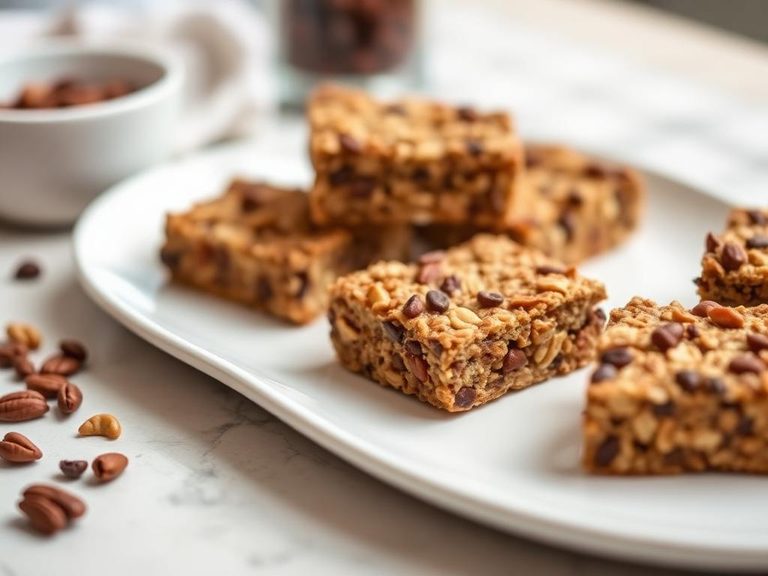
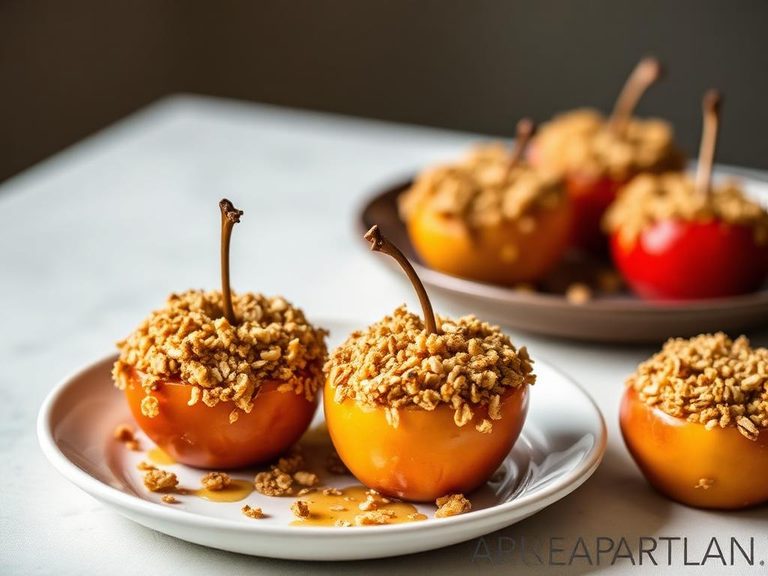
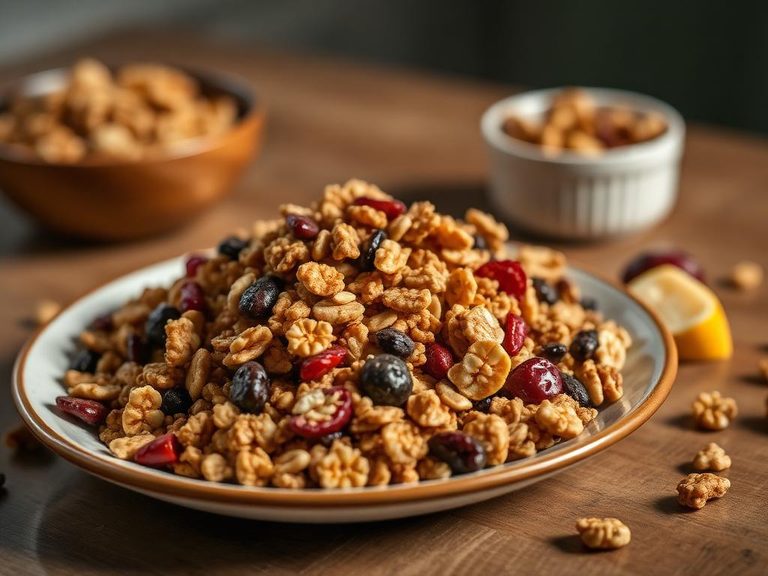
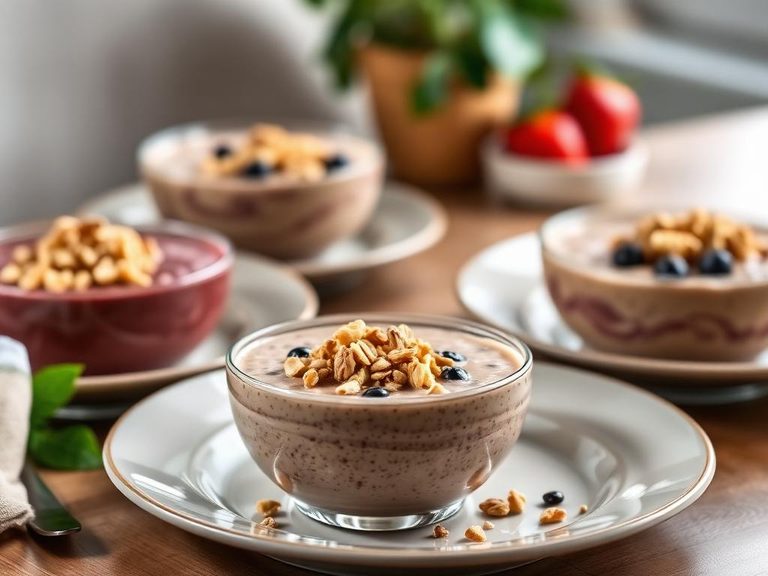
🌍 Where it's eaten
💡 Did you know?
Nature's Path was founded in 1985 by a Canadian family who started making granola in their kitchen to avoid artificial additives, and it’s now one of the largest organic cereal brands in the world.
Full nutrition (USDA data · scales with serving)
| Water | 3.0 g |
| Energy | 467 kcal |
| Energy | 1955 kj |
| Protein | 11.2 g |
| Total lipid (fat) | 18.3 g |
| Ash | 1.3 g |
| Carbohydrate, by difference | 66.1 g |
| Fiber, total dietary | 8.4 g |
| Total Sugars | 18.2 g |
| Calcium, Ca | 51.0 mg |
| Iron, Fe | 4.0 mg |
| Magnesium, Mg | 40.0 mg |
| Phosphorus, P | 323 mg |
| Potassium, K | 291 mg |
| Sodium, Na | 74.0 mg |
| Zinc, Zn | 0.40 mg |
| Copper, Cu | 0.08 mg |
| Manganese, Mn | 0.12 mg |
| Selenium, Se | 1.2 ug |
| Fluoride, F | 10.0 ug |
| Vitamin C, total ascorbic acid | 0.30 mg |
| Thiamin | 0.12 mg |
| Riboflavin | 0.01 mg |
| Niacin | 0.20 mg |
| Pantothenic acid | 0.10 mg |
| Vitamin B-6 | 0.03 mg |
| Folate, total | 15.0 ug |
| Folic acid | 0.00 ug |
| Folate, food | 15.0 ug |
| Folate, DFE | 15.0 ug |
| Choline, total | 3.7 mg |
| Vitamin B-12 | 0.00 ug |
| Vitamin B-12, added | 0.00 ug |
| Vitamin A, RAE | 0.00 ug |
| Retinol | 0.00 ug |
| Carotene, beta | 0.00 ug |
| Carotene, alpha | 0.00 ug |
| Cryptoxanthin, beta | 0.00 ug |
| Vitamin A, IU | 0.00 iu |
| Lycopene | 0.00 ug |
| Lutein + zeaxanthin | 143 ug |
| Vitamin E (alpha-tocopherol) | 0.89 mg |
| Vitamin E, added | 0.00 mg |
| Vitamin D (D2 + D3), International Units | 0.00 iu |
| Vitamin D (D2 + D3) | 0.00 ug |
| Vitamin K (phylloquinone) | 26.2 ug |
| Alcohol, ethyl | 0.00 g |
| Caffeine | 0.00 mg |
| Theobromine | 0.00 mg |
Fat & fatty acid profile (per 100g)
| Fatty acids, total saturated | 2.8 g |
| SFA 4:0 | 0.00 g |
| SFA 6:0 | 0.00 g |
| SFA 8:0 | 0.00 g |
| SFA 10:0 | 0.00 g |
| SFA 12:0 | 0.01 g |
| SFA 14:0 | 0.01 g |
| SFA 16:0 | 1.9 g |
| SFA 18:0 | 0.69 g |
| Fatty acids, total monounsaturated | 4.0 g |
| MUFA 16:1 | 0.01 g |
| MUFA 18:1 | 4.0 g |
| MUFA 20:1 | 0.02 g |
| MUFA 22:1 | 0.00 g |
| Fatty acids, total polyunsaturated | 8.6 g |
| PUFA 18:2 | 6.9 g |
| PUFA 18:2 n-6 c,c | 6.9 g |
| PUFA 18:3 | 1.6 g |
| PUFA 18:3 n-3 c,c,c (ALA) | 1.6 g |
| PUFA 18:4 | 0.00 g |
| PUFA 20:4 | 0.01 g |
| PUFA 20:5 n-3 (EPA) | 0.00 g |
| PUFA 22:5 n-3 (DPA) | 0.00 g |
| PUFA 22:6 n-3 (DHA) | 0.00 g |
| Fatty acids, total trans | 0.00 g |
| Cholesterol | 0.00 mg |
FAQ
Is this granola gluten-free?
It is not certified gluten-free, as it contains oats which may be cross-contaminated with gluten. Check the label for specific allergen information.
Can I eat this granola on a keto diet?
No, it is too high in carbs (66.1g per 100g) for a standard keto diet, which typically limits carbs to 20-50g per day.
How should I store this granola to keep it fresh?
Store it in an airtight container in a cool, dry place. It stays fresh for up to 2-3 weeks after opening, or longer if refrigerated.
Nutrient density (calculated · NRF9.3)
Nutrient Rich Foods index: beneficial nutrients (protein, fiber, vitamins, minerals) minus saturated fat, added sugar & sodium, per 100 kcal.
NRF9.3 index — Fulgoni, Keast & Drewnowski, 2009. Computed from USDA nutrients.
Weight-loss friendliness (composite index)
Energy density 4.67 kcal/g · 10% calories from protein · 8.4 g fiber · 18.2 g sugar per 100 g.
Composite of energy density (Rolls et al., 1999), protein & fiber satiety, minus sugar. A calculated heuristic — ranks satiety-per-calorie, not a clinical measure.
Dietary load (calculated from USDA values)
Potential renal acid load. Positive = acid-forming, negative = alkaline-forming.
Sodium-to-potassium ratio: 0.25 (lower is better — aim for ≤ 1)
Sodium:potassium per WHO potassium guidance. Computed from USDA nutrients.