

Capers, canned
Whole food · Spices and Herbs

Photo: Wikipedia
Capers are the unripened flower buds of the Capparis spinosa shrub, typically pickled in brine or salt. They deliver a sharp, briny, and slightly floral burst of flavor with a firm, popping texture. Nutritionally, they are low-calorie and surprisingly high in fiber, providing 3.2g per 100g.
Calorie split: 26% protein · 53% carbs · 21% fat
↓ Full nutrition💚 Why it's loved
People love capers for their intense, concentrated brininess that acts as a flavor amplifier, cutting through rich sauces and fatty fish. They are a staple in Mediterranean cuisine, adding a sophisticated, piquant note to everything from pasta to salads.
⚠️ Watch-outs & how to enjoy it better
The primary downside is their extremely high sodium content from the brining process, which can be a concern for those monitoring salt intake. To mitigate this, rinse capers thoroughly under cold water before use and pair them with low-sodium ingredients like fresh vegetables and lean proteins.
Key benefits
- High in dietary fiber (3.2g per 100g)
- Very low calorie density (23 kcal per 100g)
- Rich in antioxidants like quercetin and rutin
- Good source of plant-based protein (2.36g per 100g)
- Contains minerals like iron and magnesium
🍽️ Popular dishes
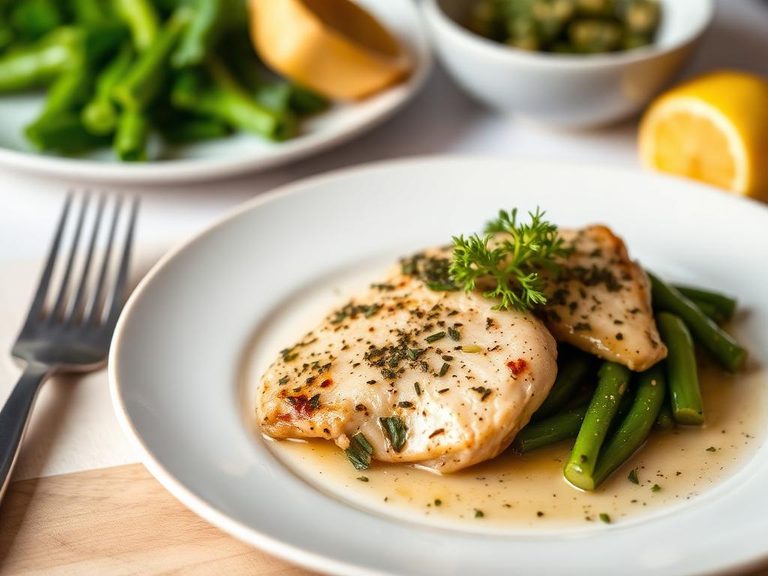
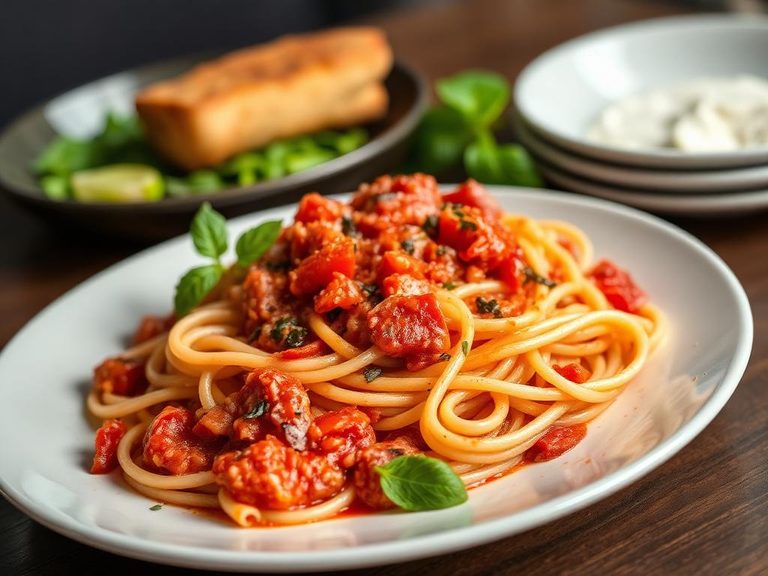
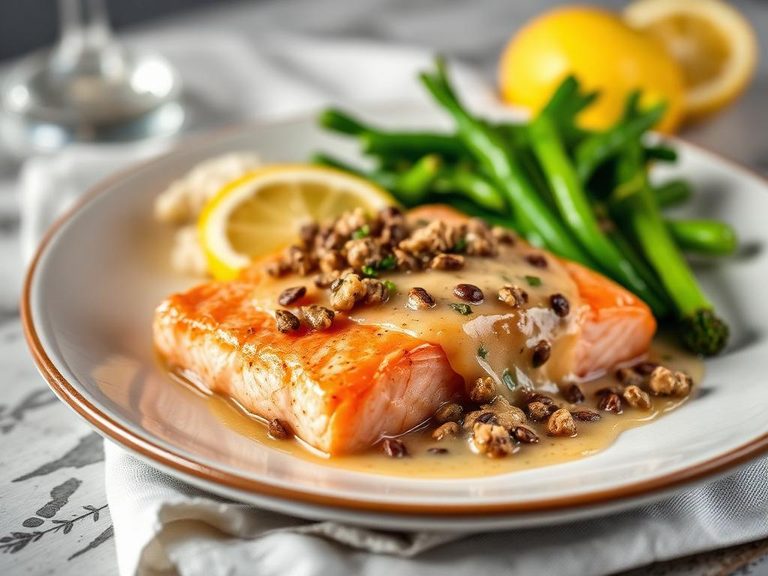
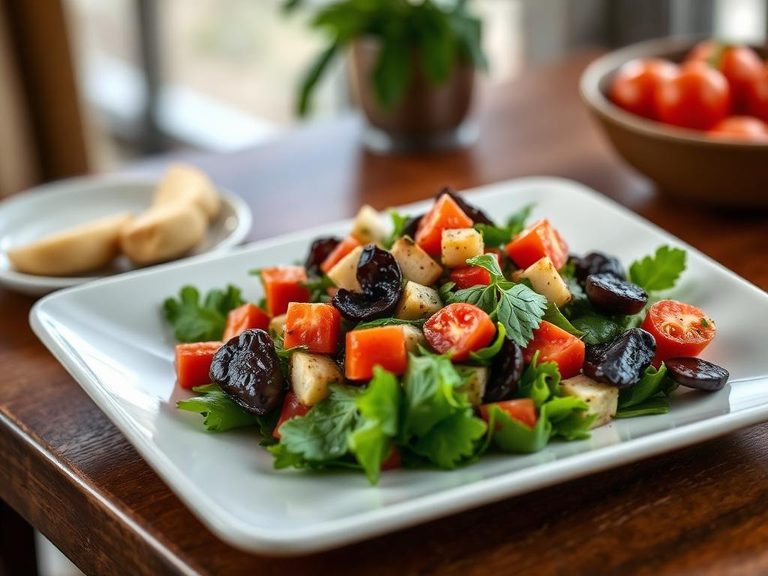
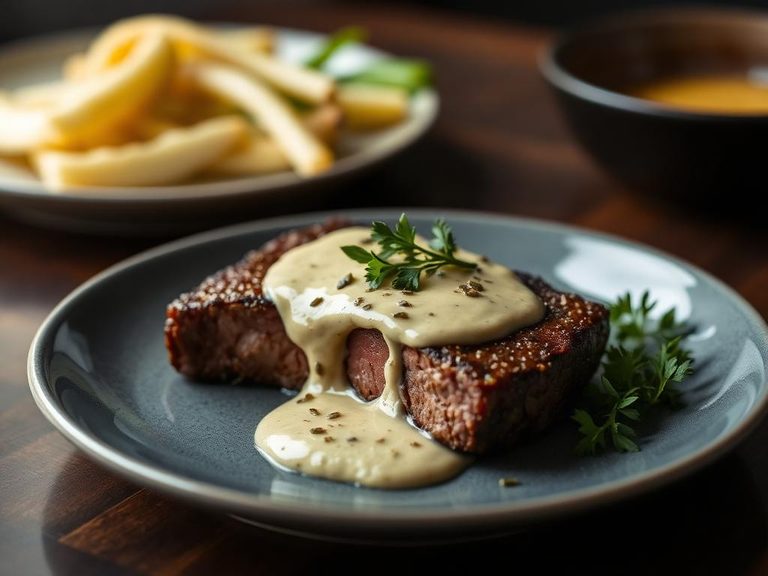

🌍 Where it's eaten
💡 Did you know?
Capers are sometimes called 'poor man's truffles' because their intense, complex flavor can elevate simple dishes to gourmet status without the high cost.
Full nutrition (USDA data · scales with serving)
| Water | 83.8 g |
| Energy | 23.0 kcal |
| Energy | 96.0 kj |
| Protein | 2.4 g |
| Total lipid (fat) | 0.86 g |
| Ash | 8.0 g |
| Carbohydrate, by difference | 4.9 g |
| Fiber, total dietary | 3.2 g |
| Total Sugars | 0.41 g |
| Calcium, Ca | 40.0 mg |
| Iron, Fe | 1.7 mg |
| Magnesium, Mg | 33.0 mg |
| Phosphorus, P | 10.0 mg |
| Potassium, K | 40.0 mg |
| Sodium, Na | 2348 mg |
| Zinc, Zn | 0.32 mg |
| Copper, Cu | 0.37 mg |
| Manganese, Mn | 0.08 mg |
| Selenium, Se | 1.2 ug |
| Vitamin C, total ascorbic acid | 4.3 mg |
| Thiamin | 0.02 mg |
| Riboflavin | 0.14 mg |
| Niacin | 0.65 mg |
| Pantothenic acid | 0.03 mg |
| Vitamin B-6 | 0.02 mg |
| Folate, total | 23.0 ug |
| Folic acid | 0.00 ug |
| Folate, food | 23.0 ug |
| Folate, DFE | 23.0 ug |
| Choline, total | 6.5 mg |
| Vitamin B-12 | 0.00 ug |
| Vitamin B-12, added | 0.00 ug |
| Vitamin A, RAE | 7.0 ug |
| Retinol | 0.00 ug |
| Carotene, beta | 83.0 ug |
| Carotene, alpha | 0.00 ug |
| Cryptoxanthin, beta | 0.00 ug |
| Vitamin A, IU | 138 iu |
| Lycopene | 0.00 ug |
| Lutein + zeaxanthin | 0.00 ug |
| Vitamin E (alpha-tocopherol) | 0.88 mg |
| Vitamin E, added | 0.00 mg |
| Vitamin D (D2 + D3), International Units | 0.00 iu |
| Vitamin D (D2 + D3) | 0.00 ug |
| Vitamin K (phylloquinone) | 24.6 ug |
| Alcohol, ethyl | 0.00 g |
| Caffeine | 0.00 mg |
| Theobromine | 0.00 mg |
Fat & fatty acid profile (per 100g)
| Fatty acids, total saturated | 0.23 g |
| SFA 4:0 | 0.00 g |
| SFA 6:0 | 0.00 g |
| SFA 8:0 | 0.00 g |
| SFA 10:0 | 0.00 g |
| SFA 12:0 | 0.00 g |
| SFA 14:0 | 0.00 g |
| SFA 16:0 | 0.17 g |
| SFA 18:0 | 0.04 g |
| Fatty acids, total monounsaturated | 0.06 g |
| MUFA 16:1 | 0.00 g |
| MUFA 18:1 | 0.06 g |
| MUFA 20:1 | 0.00 g |
| MUFA 22:1 | 0.00 g |
| Fatty acids, total polyunsaturated | 0.30 g |
| PUFA 18:2 | 0.11 g |
| PUFA 18:3 | 0.18 g |
| PUFA 18:4 | 0.00 g |
| PUFA 20:4 | 0.00 g |
| PUFA 20:5 n-3 (EPA) | 0.00 g |
| PUFA 22:5 n-3 (DPA) | 0.00 g |
| PUFA 22:6 n-3 (DHA) | 0.00 g |
| Fatty acids, total trans | 0.00 g |
| Cholesterol | 0.00 mg |
| Phytosterols | 48.0 mg |
FAQ
Are capers and caper berries the same thing?
No, they are different. Capers are the unopened flower buds, while caper berries are the larger, fruit-like seed pods that develop after the flower blooms. Capers are more pungent and commonly used in cooking.
How should I store capers?
Once opened, capers should be stored in their brine in a sealed container in the refrigerator. They can last for several months if kept submerged in the brine, which prevents them from drying out.
What's the difference between salt-packed and brine-packed capers?
Salt-packed capers are preserved in coarse salt and have a more intense, concentrated flavor but require thorough rinsing and soaking before use. Brine-packed capers are milder and ready to use after a quick rinse.
Nutrient density (calculated · NRF9.3)
Nutrient Rich Foods index: beneficial nutrients (protein, fiber, vitamins, minerals) minus saturated fat, added sugar & sodium, per 100 kcal.
NRF9.3 index — Fulgoni, Keast & Drewnowski, 2009. Computed from USDA nutrients.
Weight-loss friendliness (composite index)
Energy density 0.23 kcal/g · 41% calories from protein · 3.2 g fiber · 0.4 g sugar per 100 g.
Composite of energy density (Rolls et al., 1999), protein & fiber satiety, minus sugar. A calculated heuristic — ranks satiety-per-calorie, not a clinical measure.
Dietary load (calculated from USDA values)
Potential renal acid load. Positive = acid-forming, negative = alkaline-forming.
Sodium-to-potassium ratio: 58.70 (lower is better — aim for ≤ 1)
Sodium:potassium per WHO potassium guidance. Computed from USDA nutrients.