

Buckwheat, whole grain
Whole food · Cereal Grains and Pasta

Photo: Wikipedia
Buckwheat is a gluten-free pseudocereal with a robust, earthy, and slightly nutty flavor, often described as having a pleasant, chewy texture when cooked whole. It is a nutritional powerhouse, offering a complete protein profile with all nine essential amino acids, and is exceptionally rich in minerals like magnesium, copper, and manganese. Its high fiber content and low glycemic index make it a smart, satisfying choice for sustained energy.
Calorie split: 12% protein · 80% carbs · 8% fat
↓ Full nutrition💚 Why it's loved
People love buckwheat for its deep, earthy flavor that pairs beautifully with both sweet and savory dishes, from hearty porridge to delicate soba noodles. Its versatility and cultural significance in cuisines from Japan to Eastern Europe make it a beloved staple for those seeking nutritious, gluten-free grains.
⚠️ Watch-outs & how to enjoy it better
Buckwheat contains oxalates, which can contribute to kidney stones in susceptible individuals, so those with a history of oxalate stones should consume it in moderation and ensure adequate hydration. It also has a relatively high carb content, which can affect blood sugar; pairing it with protein (like eggs or legumes) or healthy fats (like nuts or avocado) can help mitigate this impact.
Key benefits
- Complete protein source with all essential amino acids.
- Rich in magnesium for muscle and nerve function.
- High in fiber to support digestive health.
- Contains rutin, a flavonoid that may support circulation.
- Naturally gluten-free, suitable for celiac diets.
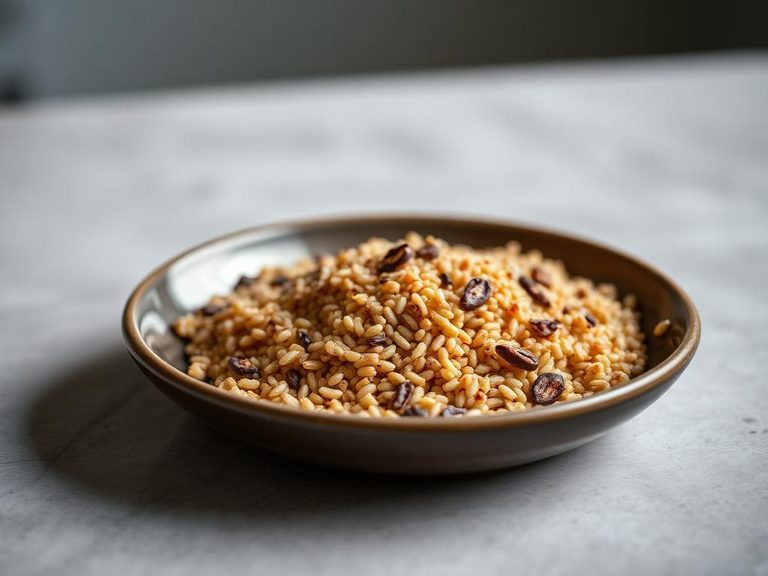
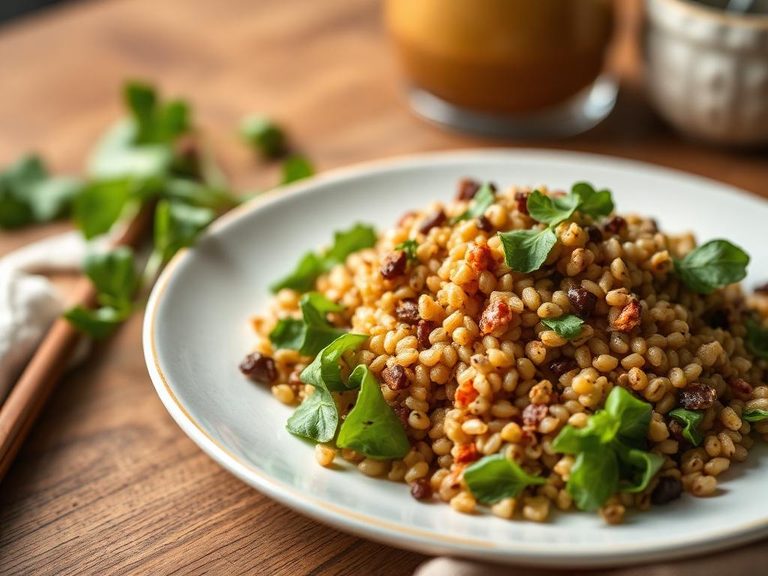
🍽️ Popular dishes



🌍 Where it's eaten
💡 Did you know?
Despite its name, buckwheat is not a type of wheat and is not even a grass; it's a member of the rhubarb family, making it a 'pseudocereal' botanically related to sorrel and dock.
Full nutrition (USDA data · scales with serving)
| Water | 12.9 g |
| Energy (Atwater General Factors) | 356 kcal |
| Energy (Atwater Specific Factors) | 332 kcal |
| Nitrogen | 1.9 g |
| Protein | 11.1 g |
| Total lipid (fat) | 3.0 g |
| Ash | 1.8 g |
| Carbohydrate, by difference | 71.1 g |
| Fiber, total dietary | 4.0 g |
| Total dietary fiber (AOAC 2011.25) | 4.8 g |
| High Molecular Weight Dietary Fiber (HMWDF) | 4.1 g |
| Low Molecular Weight Dietary Fiber (LMWDF) | 0.00 g |
| Beta-glucan | 0.00 g |
| Starch | 61.6 g |
| Calcium, Ca | 13.6 mg |
| Iron, Fe | 2.4 mg |
| Magnesium, Mg | 203 mg |
| Phosphorus, P | 374 mg |
| Potassium, K | 415 mg |
| Sodium, Na | 0.00 mg |
| Zinc, Zn | 2.2 mg |
| Copper, Cu | 0.48 mg |
| Manganese, Mn | 1.2 mg |
| Selenium, Se | 13.6 ug |
| Molybdenum, Mo | 55.3 ug |
| Thiamin | 0.54 mg |
| Riboflavin | 0.18 mg |
| Niacin | 5.4 mg |
| Vitamin B-6 | 0.28 mg |
| Biotin | 18.6 ug |
Fat & fatty acid profile (per 100g)
Estimated from Buckwheat — USDA does not publish this profile for Buckwheat.
| Fatty acids, total saturated | 0.74 g |
| SFA 4:0 | 0.00 g |
| SFA 6:0 | 0.00 g |
| SFA 8:0 | 0.04 g |
| SFA 10:0 | 0.02 g |
| SFA 12:0 | 0.01 g |
| SFA 14:0 | 0.03 g |
| SFA 16:0 | 0.45 g |
| SFA 18:0 | 0.05 g |
| Fatty acids, total monounsaturated | 1.0 g |
| MUFA 16:1 | 0.02 g |
| MUFA 18:1 | 0.99 g |
| MUFA 20:1 | 0.00 g |
| MUFA 22:1 | 0.01 g |
| Fatty acids, total polyunsaturated | 1.0 g |
| PUFA 18:2 | 0.96 g |
| PUFA 18:3 | 0.08 g |
| PUFA 18:4 | 0.00 g |
| PUFA 20:4 | 0.00 g |
| PUFA 20:5 n-3 (EPA) | 0.00 g |
| PUFA 22:5 n-3 (DPA) | 0.00 g |
| PUFA 22:6 n-3 (DHA) | 0.00 g |
| Cholesterol | 0.00 mg |
Amino acid profile (per 100g)
Estimated from Buckwheat — USDA does not publish this profile for Buckwheat.
| Tryptophan | 0.19 g |
| Threonine | 0.51 g |
| Isoleucine | 0.50 g |
| Leucine | 0.83 g |
| Lysine | 0.67 g |
| Methionine | 0.17 g |
| Cystine | 0.23 g |
| Phenylalanine | 0.52 g |
| Tyrosine | 0.24 g |
| Valine | 0.68 g |
| Arginine | 0.98 g |
| Histidine | 0.31 g |
| Alanine | 0.75 g |
| Aspartic acid | 1.1 g |
| Glutamic acid | 2.0 g |
| Glycine | 1.0 g |
| Proline | 0.51 g |
| Serine | 0.69 g |
FAQ
Is buckwheat gluten-free?
Yes, buckwheat is naturally gluten-free, making it a safe and nutritious choice for people with celiac disease or gluten sensitivity. However, it's important to check labels for cross-contamination if purchasing processed products.
How do I cook buckwheat groats?
Rinse buckwheat groats, then cook with a 1:2 ratio of groats to water or broth. Bring to a boil, reduce heat, cover, and simmer for 10-15 minutes until tender. For a nuttier flavor, toast the groats in a dry pan before cooking.
Can buckwheat help with blood sugar control?
Buckwheat has a low glycemic index and is high in fiber, which can help stabilize blood sugar levels. Its magnesium content also supports insulin sensitivity, making it a beneficial choice for managing blood sugar.
Nutrient density (calculated · NRF9.3)
Nutrient Rich Foods index: beneficial nutrients (protein, fiber, vitamins, minerals) minus saturated fat, added sugar & sodium, per 100 kcal.
NRF9.3 index — Fulgoni, Keast & Drewnowski, 2009. Computed from USDA nutrients.
Weight-loss friendliness (composite index)
Energy density 3.56 kcal/g · 12% calories from protein · 4.0 g fiber · 0.0 g sugar per 100 g.
Composite of energy density (Rolls et al., 1999), protein & fiber satiety, minus sugar. A calculated heuristic — ranks satiety-per-calorie, not a clinical measure.
Dietary load (calculated from USDA values)
Potential renal acid load. Positive = acid-forming, negative = alkaline-forming.
Sodium-to-potassium ratio: 0.00 (lower is better — aim for ≤ 1)
Sodium:potassium per WHO potassium guidance. Computed from USDA nutrients.