

Babyfood, fruit, papaya and applesauce with tapioca, strained
Whole food · Baby Foods

Photo: Wikipedia
This is a smooth, velvety baby food purée that blends the tropical sweetness of papaya with the familiar, mild comfort of applesauce, all thickened with tapioca starch for a satisfying, spoonable texture. It's a low-calorie, fiber-rich option with a naturally vibrant, sun-kissed color and a flavor profile that's gently sweet without any added sugars. Nutritionally, it's a light source of carbohydrates for energy, primarily from fruit and starch.
Calorie split: 1% protein · 98% carbs · 1% fat
↓ Full nutrition💚 Why it's loved
Parents appreciate it as a convenient, nutrient-dense first food that introduces a tropical fruit flavor beyond the usual apple or banana. Its mild, naturally sweet taste and smooth consistency are often a hit with babies exploring new textures and flavors.
⚠️ Watch-outs & how to enjoy it better
As a fruit-based purée with tapioca, it can cause a relatively quick rise in blood sugar, so it's best not to serve it in isolation. To counteract this, pair it with a source of protein or healthy fat, like a side of plain yogurt or a smear of avocado, to slow digestion and create a more balanced snack.
Key benefits
- Naturally low in fat and contains no added sugars.
- Provides dietary fiber from papaya and applesauce.
- Contains papain, a natural digestive enzyme from papaya.
- Tapioca starch offers easily digestible, quick energy.
- Smooth texture is ideal for early eaters transitioning to solids.
🍽️ Popular dishes
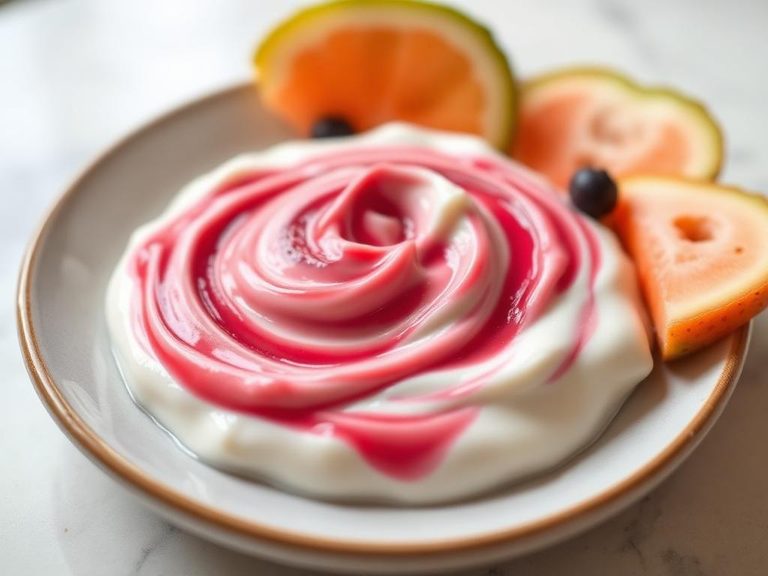
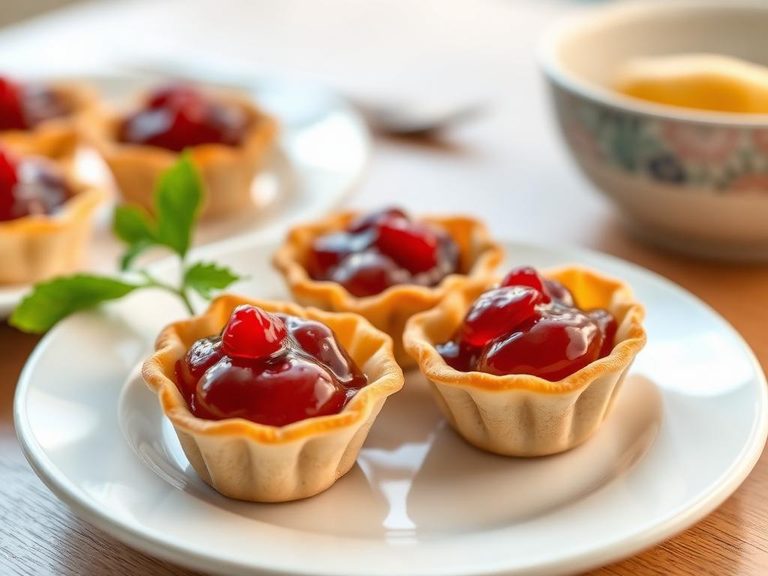
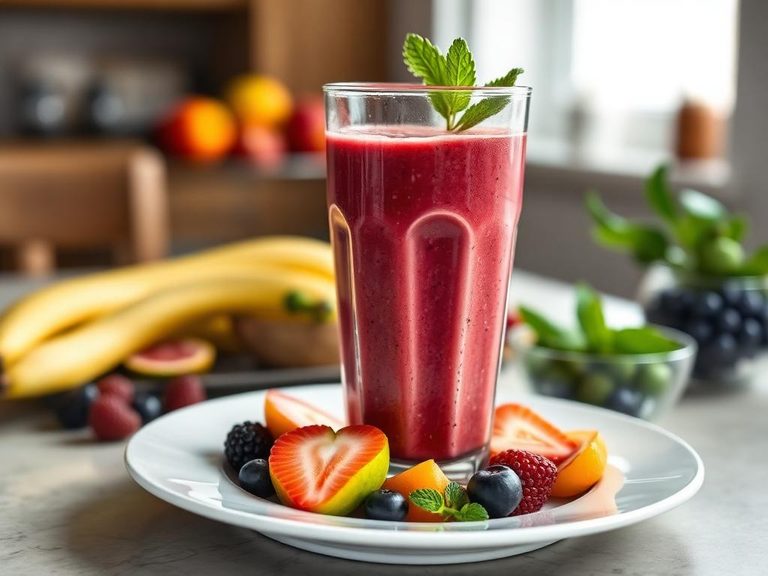
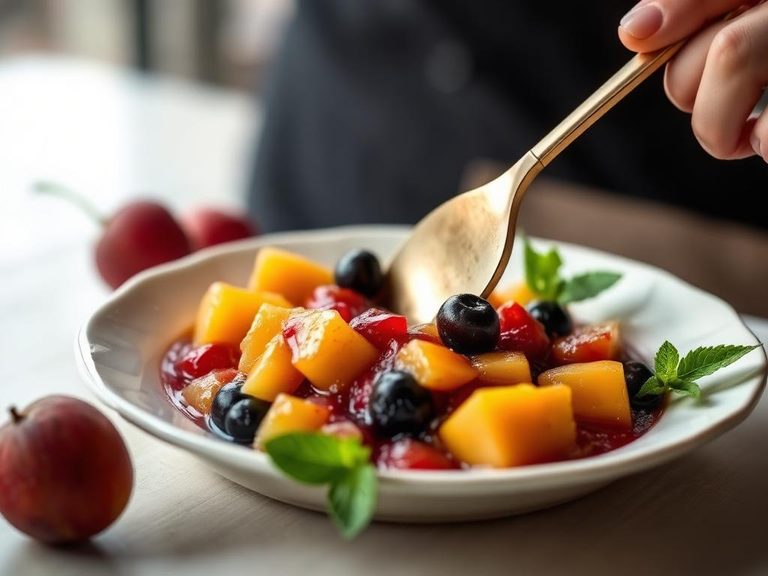
🌍 Where it's eaten
💡 Did you know?
Tapioca, the thickener in this purée, is derived from the starchy root of the cassava plant, which is a staple food for over 500 million people worldwide.
Full nutrition (USDA data · scales with serving)
| Water | 80.6 g |
| Energy | 70.0 kcal |
| Energy | 293 kj |
| Protein | 0.20 g |
| Total lipid (fat) | 0.10 g |
| Ash | 0.20 g |
| Carbohydrate, by difference | 18.9 g |
| Fiber, total dietary | 1.4 g |
| Calcium, Ca | 7.0 mg |
| Iron, Fe | 0.44 mg |
| Magnesium, Mg | 5.0 mg |
| Phosphorus, P | 5.0 mg |
| Potassium, K | 79.0 mg |
| Sodium, Na | 5.0 mg |
| Zinc, Zn | 0.03 mg |
| Copper, Cu | 0.04 mg |
| Selenium, Se | 0.40 ug |
| Vitamin C, total ascorbic acid | 113 mg |
| Thiamin | 0.01 mg |
| Riboflavin | 0.03 mg |
| Niacin | 0.11 mg |
| Pantothenic acid | 0.28 mg |
| Vitamin B-6 | 0.02 mg |
| Folate, total | 2.0 ug |
| Folic acid | 0.00 ug |
| Folate, food | 2.0 ug |
| Folate, DFE | 2.0 ug |
| Vitamin B-12 | 0.00 ug |
| Vitamin A, RAE | 4.0 ug |
| Retinol | 0.00 ug |
| Vitamin A, IU | 76.0 iu |
Fat & fatty acid profile (per 100g)
Estimated from Babyfood, grape juice, no sugar, canned — USDA does not publish this profile for Babyfood.
| Fatty acids, total saturated | 0.00 g |
| SFA 4:0 | 0.00 g |
| SFA 6:0 | 0.00 g |
| SFA 8:0 | 0.00 g |
| SFA 10:0 | 0.00 g |
| SFA 12:0 | 0.00 g |
| SFA 14:0 | 0.00 g |
| SFA 16:0 | 0.00 g |
| SFA 18:0 | 0.00 g |
| Fatty acids, total monounsaturated | 0.00 g |
| MUFA 16:1 | 0.00 g |
| MUFA 18:1 | 0.00 g |
| MUFA 20:1 | 0.00 g |
| MUFA 22:1 | 0.00 g |
| Fatty acids, total polyunsaturated | 0.00 g |
| PUFA 18:2 | 0.00 g |
| PUFA 18:3 | 0.00 g |
| PUFA 18:4 | 0.00 g |
| PUFA 20:4 | 0.00 g |
| PUFA 20:5 n-3 (EPA) | 0.00 g |
| PUFA 22:5 n-3 (DPA) | 0.00 g |
| PUFA 22:6 n-3 (DHA) | 0.00 g |
| Cholesterol | 0.00 mg |
Amino acid profile (per 100g)
Estimated from Babyfood, grape juice, no sugar, canned — USDA does not publish this profile for Babyfood.
| Threonine | 0.02 g |
| Isoleucine | 0.01 g |
| Leucine | 0.02 g |
| Lysine | 0.02 g |
| Methionine | 0.03 g |
| Cystine | 0.01 g |
| Phenylalanine | 0.02 g |
| Tyrosine | 0.02 g |
| Valine | 0.02 g |
| Arginine | 0.06 g |
| Histidine | 0.03 g |
| Alanine | 0.04 g |
| Aspartic acid | 0.10 g |
| Glutamic acid | 0.18 g |
| Glycine | 0.03 g |
| Proline | 0.03 g |
| Serine | 0.04 g |
FAQ
Is this food safe for babies with allergies?
While papaya and applesauce are not common allergens, tapioca is a processed starch. It's generally considered low-risk, but always introduce new foods one at a time and consult your pediatrician for specific allergy concerns.
Why is tapioca used in baby food?
Tapioca starch is a mild, hypoallergenic thickener that gives purées a smooth, cohesive texture without altering the fruit's natural flavor. It's also a source of easily digestible carbohydrates.
Can I mix this with other baby foods?
Absolutely. Its mild flavor makes it a versatile base. You can mix it with vegetable purées like sweet potato or carrot to introduce new flavors, or swirl it into iron-fortified cereals for a nutritional boost.
Nutrient density (calculated · NRF9.3)
Nutrient Rich Foods index: beneficial nutrients (protein, fiber, vitamins, minerals) minus saturated fat, added sugar & sodium, per 100 kcal.
NRF9.3 index — Fulgoni, Keast & Drewnowski, 2009. Computed from USDA nutrients.
Weight-loss friendliness (composite index)
Energy density 0.70 kcal/g · 1% calories from protein · 1.4 g fiber · 0.0 g sugar per 100 g.
Composite of energy density (Rolls et al., 1999), protein & fiber satiety, minus sugar. A calculated heuristic — ranks satiety-per-calorie, not a clinical measure.
Dietary load (calculated from USDA values)
Potential renal acid load. Positive = acid-forming, negative = alkaline-forming.
Sodium-to-potassium ratio: 0.06 (lower is better — aim for ≤ 1)
Sodium:potassium per WHO potassium guidance. Computed from USDA nutrients.