

Stirred into a fruit compote
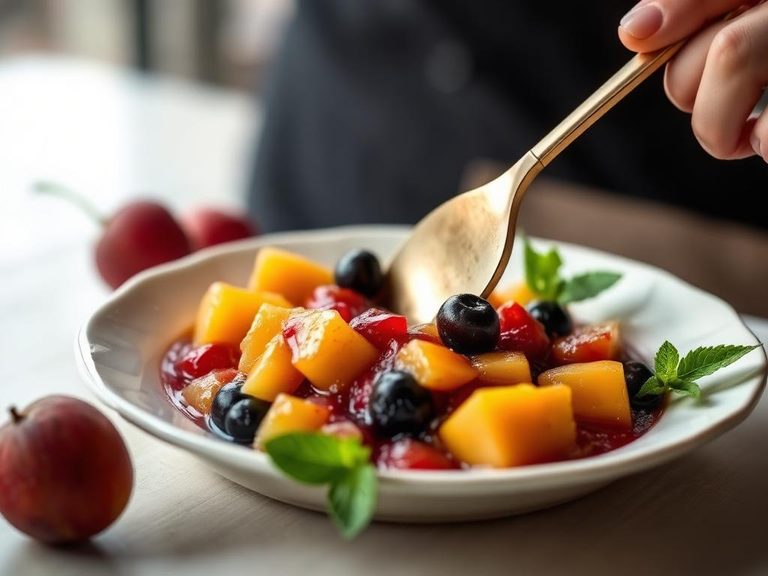
A fruit compote is a simple dessert or topping made by gently simmering chopped fruits—such as apples, berries, or stone fruits—in a light syrup or their own juices. The mixture is often 'stirred' during cooking to help it thicken and prevent sticking, resulting in a chunky, saucy texture. This preparation is a classic way to preserve seasonal fruit and is enjoyed across many European and North American cuisines.
🍽️ Nutrition at a glance
A typical fruit compote is primarily a source of carbohydrates, especially natural sugars from the fruit, with minimal fat and protein. It provides a good amount of dietary fiber, vitamin C, and various antioxidants, depending on the fruits used, and generally ranges from 100 to 150 calories per serving.
Nutrition breakdown
| Calories | 130 kcal |
| Protein | 1 g |
| Carbs | 32 g |
| Fat | 0.5 g |
| Fiber | 4 g |
| Sugar | 24 g |
| Sodium | 5 mg |
| Vitamin C | 15 mg |
| Potassium | 300 mg |
| Manganese | 0.3 mg |
| Vitamin K | 8 µg |
| Vitamin A | 60 µg RAE |
| Iron | 0.5 mg |
| Folate | 20 µg |
| Magnesium | 15 mg |
Per 1 cup (240 g) · estimated, varies by recipe
💡 What's interesting
Culturally, compotes were historically a practical method for preserving fruit before modern refrigeration, and they remain a versatile dish that can be served warm or cold. Nutritionally, the gentle cooking process can make certain nutrients, like lycopene in tomatoes or beta-carotene in carrots, more bioavailable to the body.
🍽️ Related dishes


AI estimate may be inaccurate · Terms