

Apple juice, frozen concentrate, unsweetened, undiluted, without added ascorbic acid
Whole food · Fruits and Fruit Juices

Photo: Wikipedia
This is a dense, syrupy brick of pure apple essence, typically sold in a can or carton, representing the concentrated juice of several apples with no added sugar. Its flavor is intensely sweet and tart, with a smooth, viscous texture that must be diluted with water before drinking. Nutritionally, it is a concentrated source of carbohydrates, primarily from natural fruit sugars like fructose, providing a quick energy boost but with minimal protein or fat.
Calorie split: 1% protein · 97% carbs · 2% fat
↓ Full nutrition💚 Why it's loved
People love it for its intense, pure apple flavor that's more robust than many ready-to-drink juices, and its incredible versatility in both sweet and savory recipes. It's a nostalgic staple in many households, evoking memories of homemade drinks and holiday cooking.
⚠️ Watch-outs & how to enjoy it better
Its high sugar content can lead to rapid blood-sugar spikes, making it a concern for those managing diabetes or watching their glycemic load. To mitigate this, dilute it well (e.g., 1 part concentrate to 3-4 parts water), pair the drink with a source of protein or fat (like nuts or cheese), and stick to a small portion size.
Key benefits
- Provides a quick source of natural energy from fruit sugars.
- Contains small amounts of potassium and other apple-derived minerals.
- Offers a convenient, shelf-stable way to have apple flavor year-round.
- Can be a base for homemade beverages, sauces, and glazes.
- Retains some of the antioxidant compounds found in whole apples.
🍽️ Popular dishes
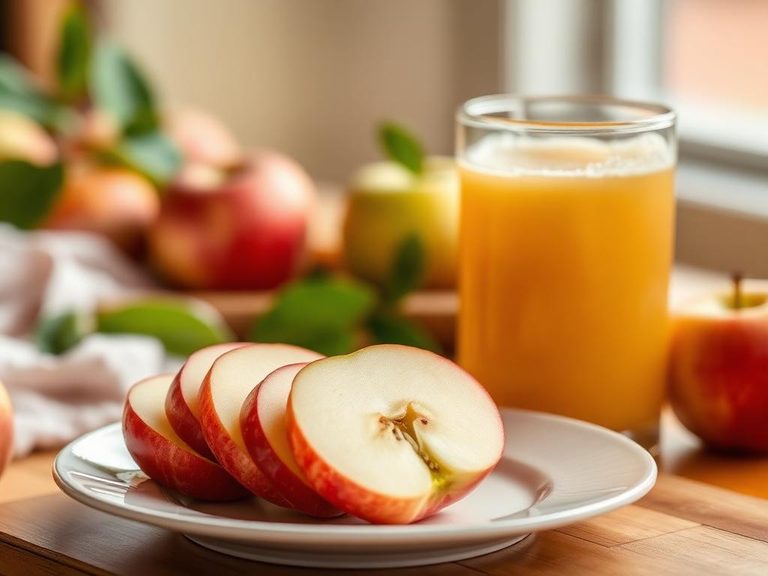
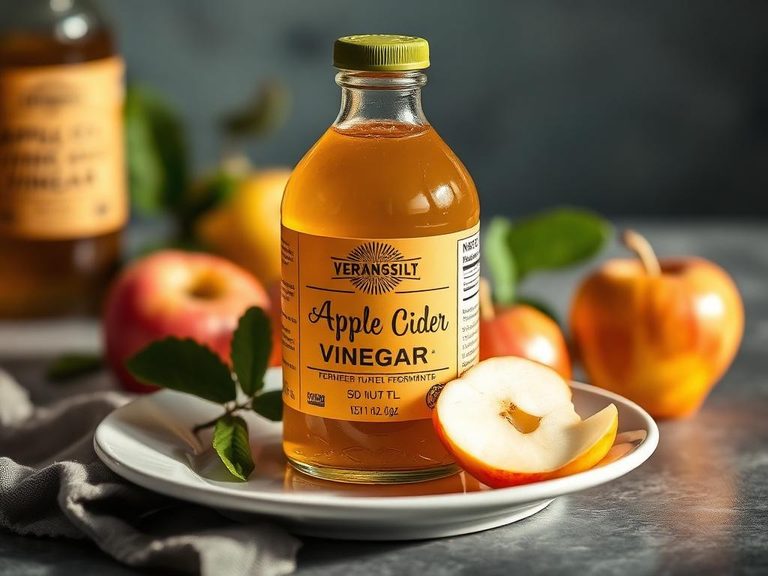
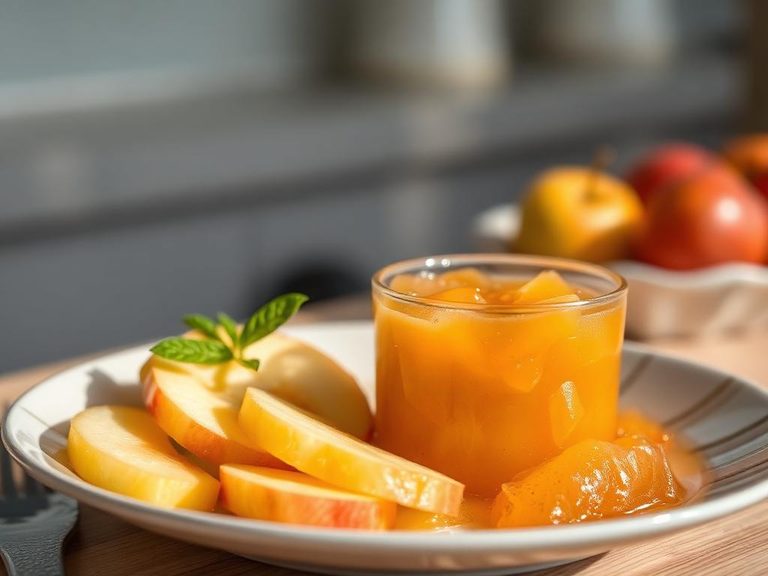
🌍 Where it's eaten
💡 Did you know?
A single can of frozen concentrate (about 355g) represents the juice of roughly 12-15 medium apples, yet contains almost no fiber, which is why the sugar hits your bloodstream much faster than eating whole fruit.
Full nutrition (USDA data · scales with serving)
| Water | 57.0 g |
| Energy | 166 kcal |
| Energy | 695 kj |
| Protein | 0.51 g |
| Total lipid (fat) | 0.37 g |
| Ash | 1.1 g |
| Carbohydrate, by difference | 41.0 g |
| Fiber, total dietary | 0.40 g |
| Total Sugars | 38.8 g |
| Calcium, Ca | 20.0 mg |
| Iron, Fe | 0.91 mg |
| Magnesium, Mg | 17.0 mg |
| Phosphorus, P | 25.0 mg |
| Potassium, K | 448 mg |
| Sodium, Na | 25.0 mg |
| Zinc, Zn | 0.13 mg |
| Copper, Cu | 0.05 mg |
| Manganese, Mn | 0.23 mg |
| Selenium, Se | 0.40 ug |
| Vitamin C, total ascorbic acid | 2.1 mg |
| Thiamin | 0.01 mg |
| Riboflavin | 0.05 mg |
| Niacin | 0.14 mg |
| Pantothenic acid | 0.22 mg |
| Vitamin B-6 | 0.12 mg |
| Folate, total | 1.0 ug |
| Folic acid | 0.00 ug |
| Folate, food | 1.0 ug |
| Folate, DFE | 1.0 ug |
| Choline, total | 6.5 mg |
| Vitamin B-12 | 0.00 ug |
| Vitamin B-12, added | 0.00 ug |
| Vitamin A, RAE | 0.00 ug |
| Retinol | 0.00 ug |
| Carotene, beta | 0.00 ug |
| Carotene, alpha | 0.00 ug |
| Cryptoxanthin, beta | 0.00 ug |
| Vitamin A, IU | 0.00 iu |
| Lycopene | 0.00 ug |
| Lutein + zeaxanthin | 57.0 ug |
| Vitamin E (alpha-tocopherol) | 0.04 mg |
| Vitamin E, added | 0.00 mg |
| Vitamin D (D2 + D3), International Units | 0.00 iu |
| Vitamin D (D2 + D3) | 0.00 ug |
| Vitamin K (phylloquinone) | 0.00 ug |
| Alcohol, ethyl | 0.00 g |
| Caffeine | 0.00 mg |
| Theobromine | 0.00 mg |
Fat & fatty acid profile (per 100g)
| Fatty acids, total saturated | 0.06 g |
| SFA 4:0 | 0.00 g |
| SFA 6:0 | 0.00 g |
| SFA 8:0 | 0.00 g |
| SFA 10:0 | 0.00 g |
| SFA 12:0 | 0.00 g |
| SFA 14:0 | 0.00 g |
| SFA 16:0 | 0.05 g |
| SFA 18:0 | 0.01 g |
| Fatty acids, total monounsaturated | 0.01 g |
| MUFA 16:1 | 0.00 g |
| MUFA 18:1 | 0.01 g |
| MUFA 20:1 | 0.00 g |
| MUFA 22:1 | 0.00 g |
| Fatty acids, total polyunsaturated | 0.11 g |
| PUFA 18:2 | 0.09 g |
| PUFA 18:3 | 0.02 g |
| PUFA 18:4 | 0.00 g |
| PUFA 20:4 | 0.00 g |
| PUFA 20:5 n-3 (EPA) | 0.00 g |
| PUFA 22:5 n-3 (DPA) | 0.00 g |
| PUFA 22:6 n-3 (DHA) | 0.00 g |
| Fatty acids, total trans | 0.00 g |
| Cholesterol | 0.00 mg |
FAQ
What's the difference between this and regular apple juice?
This is a concentrated form, meaning most of the water has been removed. You must add water back to make it drinkable. Regular apple juice is already diluted and ready to drink, but often has a different flavor profile and may contain added preservatives.
Is it healthy?
It provides natural sugars and some minerals, but lacks the fiber and many nutrients of whole apples. Due to its high sugar concentration, it should be consumed in moderation, especially by those monitoring blood sugar.
How long does it last after opening?
Once diluted, it should be treated like regular juice and consumed within 7-10 days in the refrigerator. The undiluted concentrate, if kept frozen, can last for months.
Nutrient density (calculated · NRF9.3)
Nutrient Rich Foods index: beneficial nutrients (protein, fiber, vitamins, minerals) minus saturated fat, added sugar & sodium, per 100 kcal.
NRF9.3 index — Fulgoni, Keast & Drewnowski, 2009. Computed from USDA nutrients.
Weight-loss friendliness (composite index)
Energy density 1.66 kcal/g · 1% calories from protein · 0.4 g fiber · 38.8 g sugar per 100 g.
Composite of energy density (Rolls et al., 1999), protein & fiber satiety, minus sugar. A calculated heuristic — ranks satiety-per-calorie, not a clinical measure.
Dietary load (calculated from USDA values)
Potential renal acid load. Positive = acid-forming, negative = alkaline-forming.
Sodium-to-potassium ratio: 0.06 (lower is better — aim for ≤ 1)
Sodium:potassium per WHO potassium guidance. Computed from USDA nutrients.