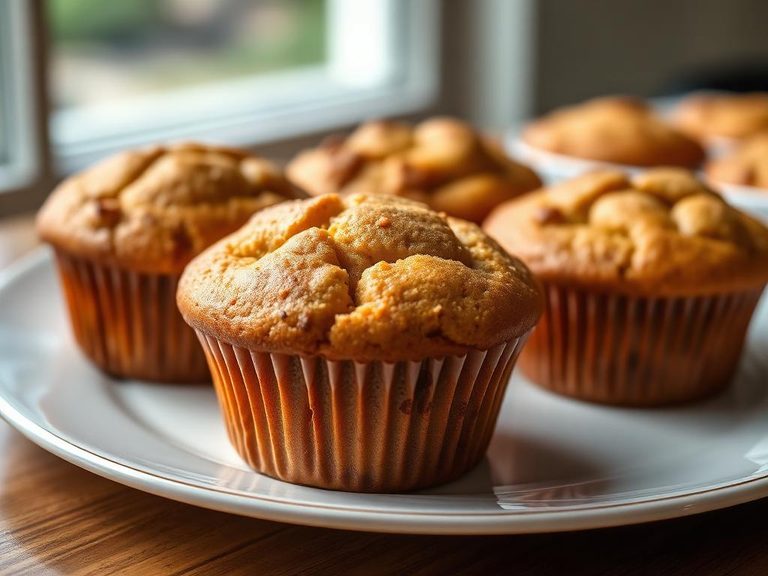
Muffins, plain, prepared from recipe, made with low fat (2%) milk
Whole food · Baked Products

Photo: Wikipedia
A classic, tender quick bread with a soft, cake-like crumb and a subtle, sweet aroma. This plain version, made with low-fat milk, offers a balanced, comforting flavor that's less rich than its full-fat counterparts. It provides a moderate energy boost with a notable 6.9g of protein per 100g, making it a more substantial snack than many pastries.
💚 Why it's loved
People love it for its comforting, nostalgic taste and satisfyingly soft texture that's perfect for breakfast or a snack. Its simple, adaptable nature makes it a beloved canvas for endless flavor variations, from blueberry to cinnamon.
⚠️ Watch-outs & how to enjoy it better
Despite using low-fat milk, its high carbohydrate content (41.4g per 100g) can cause blood sugar spikes, especially if eaten alone. To counteract this, pair it with a source of protein or healthy fat, like a handful of nuts or a dollop of Greek yogurt, and practice portion control. Those with gluten or dairy allergies should also be cautious.
Key benefits
- Provides a quick source of energy from carbohydrates.
- Contains a decent amount of protein (6.9g per 100g) for a baked good.
- The 2.7g of fiber per 100g supports digestive health.
- Uses low-fat milk, reducing saturated fat content compared to whole milk versions.
- Versatile base for adding fruits, nuts, or spices.
🍽️ Popular dishes
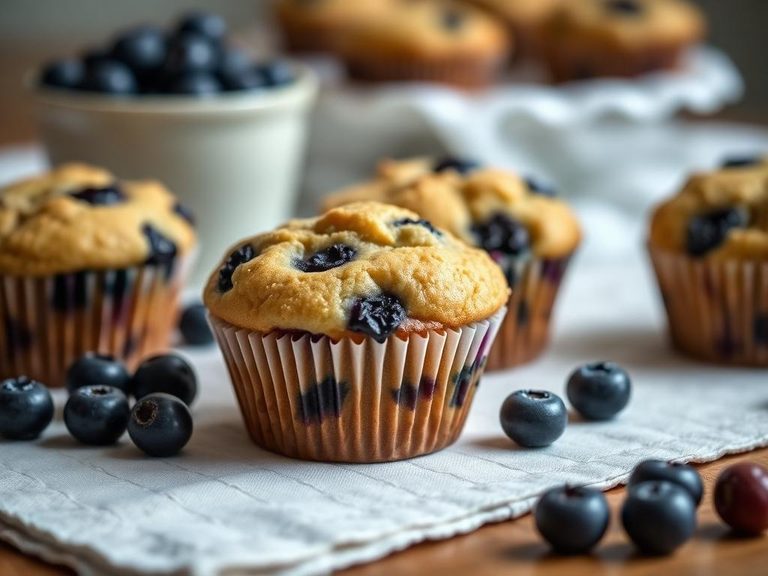
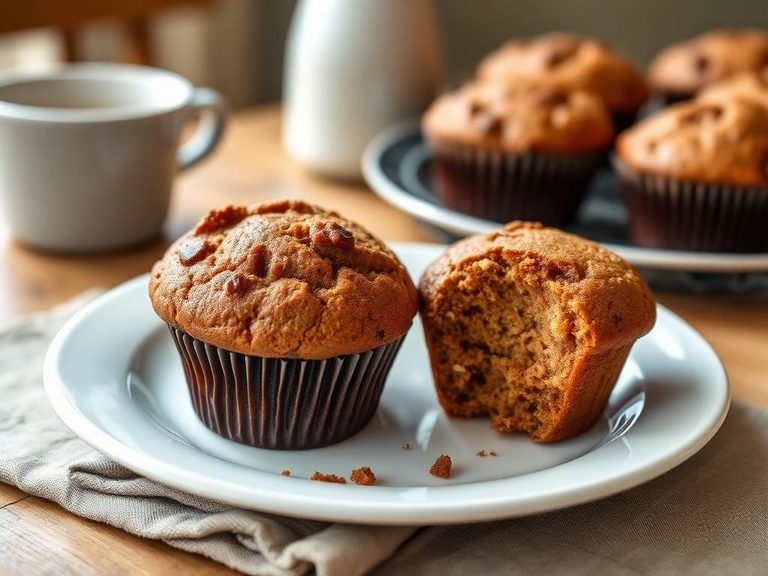
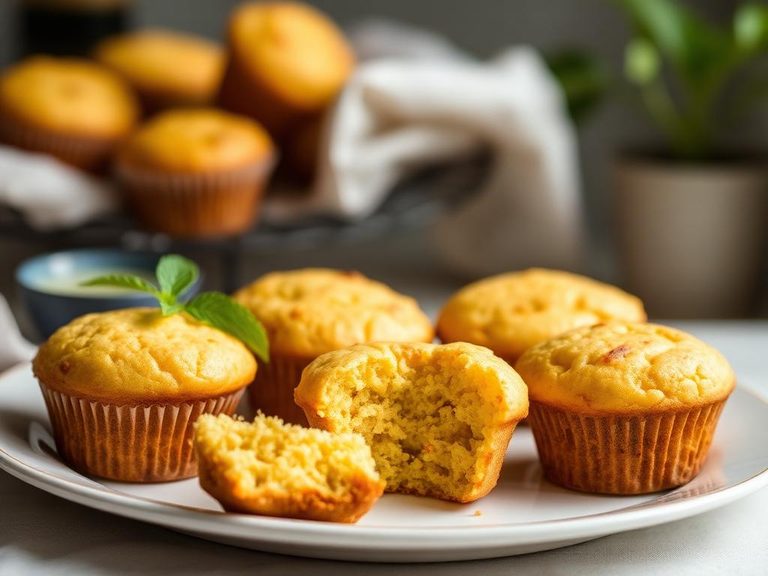
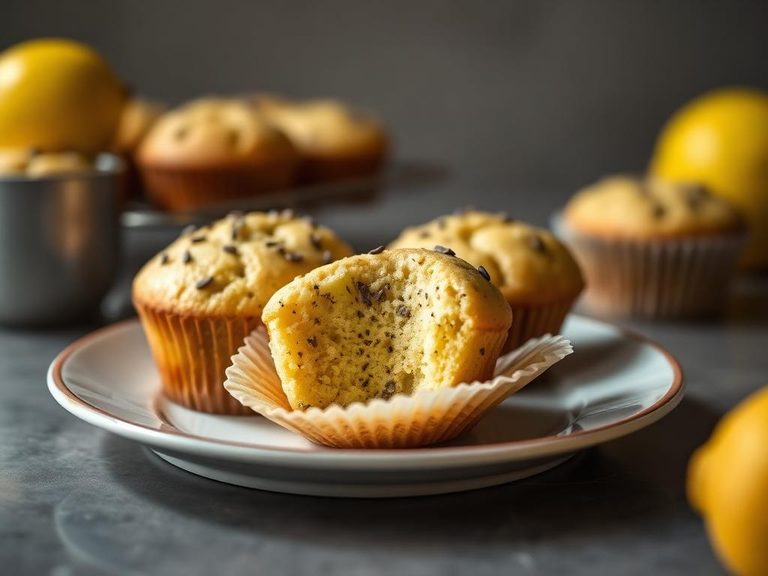
🌍 Where it's eaten
💡 Did you know?
The word 'muffin' likely derives from the German word 'muffe,' meaning a type of small cake, and the first known recipe for a muffin-like food appeared in a 1703 English cookbook.
Full nutrition (scales with serving)
| Water | 37.7 g |
| Energy | 296 kcal |
| Energy | 1238 kj |
| Protein | 6.9 g |
| Total lipid (fat) | 11.4 g |
| Ash | 2.7 g |
| Carbohydrate, by difference | 41.4 g |
| Fiber, total dietary | 2.7 g |
| Calcium, Ca | 200 mg |
| Iron, Fe | 2.4 mg |
| Magnesium, Mg | 17.0 mg |
| Phosphorus, P | 153 mg |
| Potassium, K | 121 mg |
| Sodium, Na | 467 mg |
| Zinc, Zn | 0.56 mg |
| Copper, Cu | 0.07 mg |
| Manganese, Mn | 0.30 mg |
| Selenium, Se | 18.0 ug |
| Vitamin C, total ascorbic acid | 0.30 mg |
| Thiamin | 0.28 mg |
| Riboflavin | 0.30 mg |
| Niacin | 2.3 mg |
| Pantothenic acid | 0.35 mg |
| Vitamin B-6 | 0.04 mg |
| Folate, total | 51.0 ug |
| Folic acid | 38.0 ug |
| Folate, food | 13.0 ug |
| Folate, DFE | 78.0 ug |
| Choline, total | 43.4 mg |
| Vitamin B-12 | 0.15 ug |
| Vitamin A, RAE | 40.0 ug |
| Retinol | 39.0 ug |
| Vitamin A, IU | 140 iu |
Fat & fatty acid profile (per 100g)
| Fatty acids, total saturated | 2.2 g |
| SFA 4:0 | 0.03 g |
| SFA 6:0 | 0.02 g |
| SFA 8:0 | 0.01 g |
| SFA 10:0 | 0.02 g |
| SFA 12:0 | 0.02 g |
| SFA 14:0 | 0.10 g |
| SFA 16:0 | 1.4 g |
| SFA 18:0 | 0.53 g |
| Fatty acids, total monounsaturated | 2.8 g |
| MUFA 16:1 | 0.06 g |
| MUFA 18:1 | 2.7 g |
| MUFA 20:1 | 0.02 g |
| MUFA 22:1 | 0.00 g |
| Fatty acids, total polyunsaturated | 5.7 g |
| PUFA 18:2 | 5.0 g |
| PUFA 18:3 | 0.66 g |
| PUFA 18:4 | 0.00 g |
| PUFA 20:4 | 0.01 g |
| PUFA 20:5 n-3 (EPA) | 0.00 g |
| PUFA 22:5 n-3 (DPA) | 0.00 g |
| PUFA 22:6 n-3 (DHA) | 0.00 g |
| Cholesterol | 39.0 mg |
Amino acid profile (per 100g)
| Tryptophan | 0.09 g |
| Threonine | 0.23 g |
| Isoleucine | 0.29 g |
| Leucine | 0.52 g |
| Lysine | 0.28 g |
| Methionine | 0.14 g |
| Cystine | 0.13 g |
| Phenylalanine | 0.34 g |
| Tyrosine | 0.24 g |
| Valine | 0.33 g |
| Arginine | 0.29 g |
| Histidine | 0.16 g |
| Alanine | 0.25 g |
| Aspartic acid | 0.39 g |
| Glutamic acid | 1.9 g |
| Glycine | 0.22 g |
| Proline | 0.68 g |
| Serine | 0.37 g |
FAQ
Is this muffin healthier than a cupcake?
Generally, yes. A plain muffin typically has less sugar and frosting than a cupcake, but it can still be high in calories and carbs. The use of low-fat milk here slightly reduces the fat content compared to a full-fat version.
Can I freeze these muffins?
Yes, they freeze very well. Wrap them individually in plastic wrap or foil, then place them in a freezer-safe bag. They can be stored for up to 3 months and reheated in a microwave or oven.
Why is the sugar listed as 0g?
This value likely refers to added sugars. Muffins contain natural sugars from ingredients like milk and flour, but the recipe may not include significant added sugar, or the amount per 100g is rounded down.