

Tomatoes, yellow, raw
Whole food · Vegetables and Vegetable Products
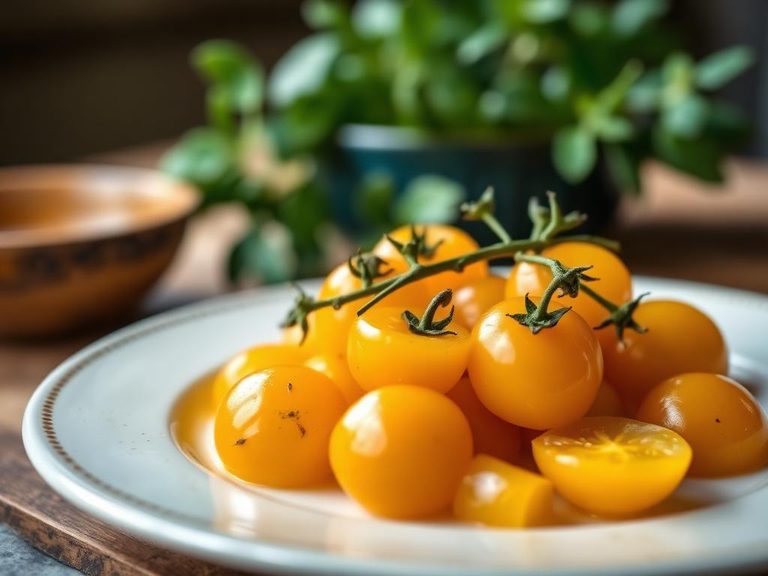
Yellow tomatoes are a vibrant, sun-kissed variety of the common tomato, prized for their milder, less acidic flavor and a subtly sweet, almost fruity taste. Their flesh is typically firm and juicy, with a smooth, golden-yellow skin that makes them a visually striking addition to any dish. Nutritionally, they are a low-calorie powerhouse, offering a good source of fiber and antioxidants while being virtually fat-free.
Calorie split: 22% protein · 66% carbs · 13% fat
↓ Full nutrition💚 Why it's loved
People love yellow tomatoes for their unique, less acidic flavor profile that is sweeter and more nuanced than red varieties, making them perfect for fresh salads and salsas. Their sunny color adds visual appeal to dishes, and they are celebrated in culinary traditions for their versatility in both raw and cooked preparations.
⚠️ Watch-outs & how to enjoy it better
Some individuals, particularly those with acid reflux or sensitive stomachs, may find tomatoes (including yellow varieties) can trigger discomfort due to their natural acidity. To counteract this, pair them with alkaline foods like leafy greens or dairy, or opt for cooked preparations which reduce acidity. Those monitoring blood sugar should be mindful of portion sizes, as tomatoes contain natural sugars, though their low glycemic index makes them a generally safe choice.
Key benefits
- Rich in antioxidants like beta-carotene and lycopene
- Low in calories and naturally fat-free
- Good source of dietary fiber for digestive health
- Provides essential vitamins A and C
- May support heart health due to antioxidant content
🍽️ Popular dishes
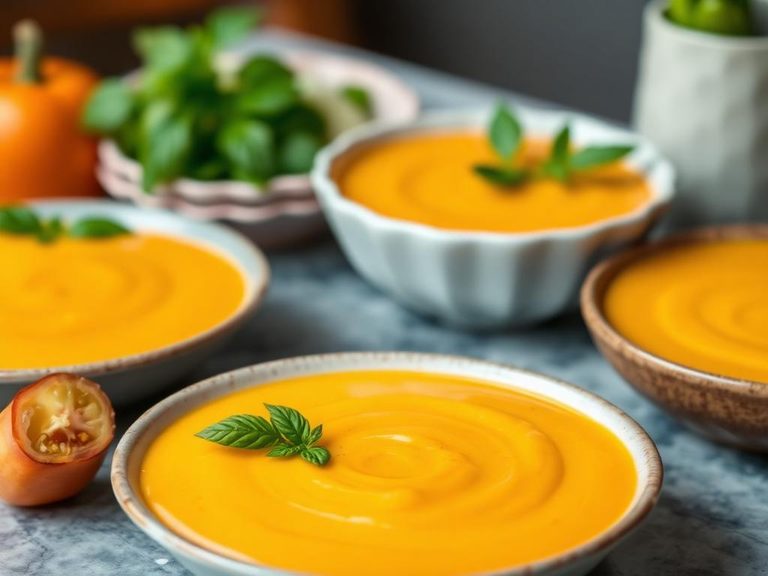
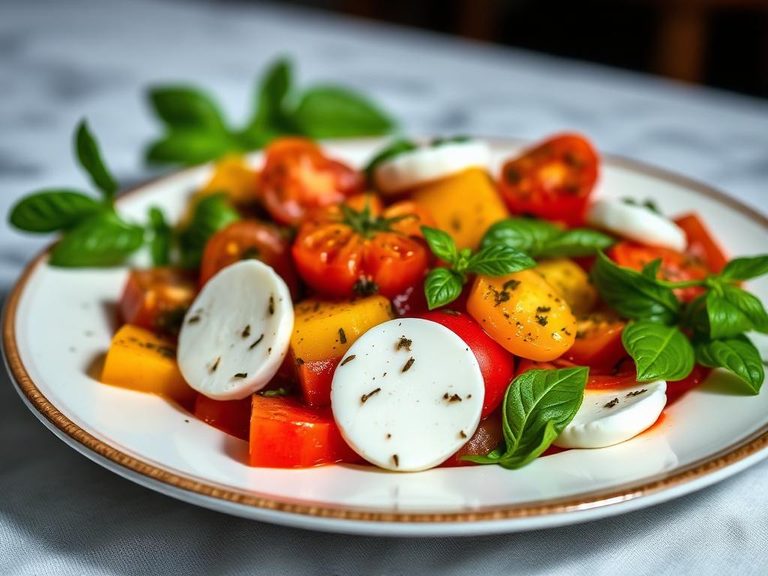
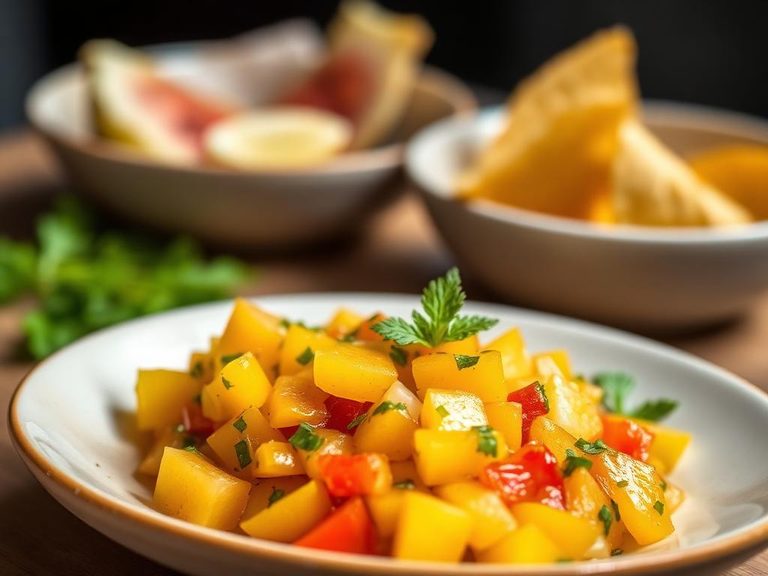
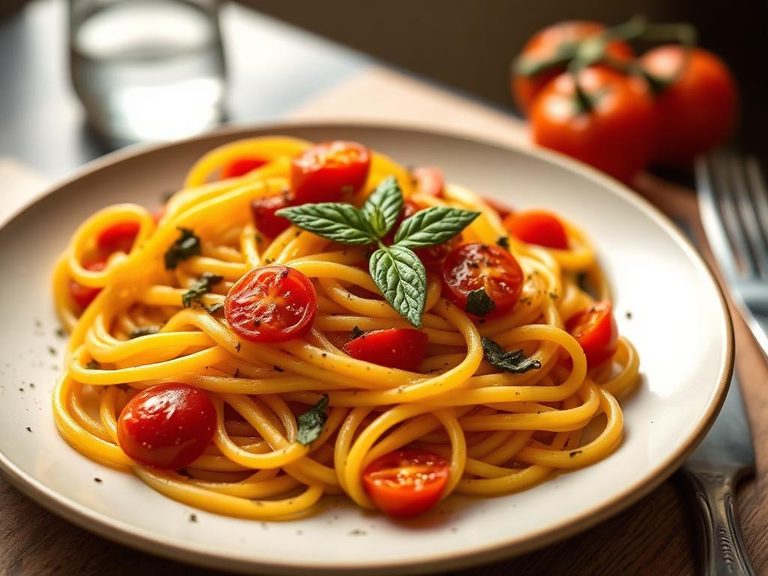

🌍 Where it's eaten
💡 Did you know?
Yellow tomatoes were among the first tomato varieties cultivated by the Aztecs in Mexico long before red tomatoes became globally dominant.
Full nutrition (USDA data · scales with serving)
| Water | 95.3 g |
| Energy | 15.0 kcal |
| Energy | 63.0 kj |
| Protein | 0.98 g |
| Total lipid (fat) | 0.26 g |
| Ash | 0.50 g |
| Carbohydrate, by difference | 3.0 g |
| Fiber, total dietary | 0.70 g |
| Calcium, Ca | 11.0 mg |
| Iron, Fe | 0.49 mg |
| Magnesium, Mg | 12.0 mg |
| Phosphorus, P | 36.0 mg |
| Potassium, K | 258 mg |
| Sodium, Na | 23.0 mg |
| Zinc, Zn | 0.28 mg |
| Copper, Cu | 0.10 mg |
| Manganese, Mn | 0.12 mg |
| Selenium, Se | 0.40 ug |
| Vitamin C, total ascorbic acid | 9.0 mg |
| Thiamin | 0.04 mg |
| Riboflavin | 0.05 mg |
| Niacin | 1.2 mg |
| Pantothenic acid | 0.11 mg |
| Vitamin B-6 | 0.06 mg |
| Folate, total | 30.0 ug |
| Folic acid | 0.00 ug |
| Folate, food | 30.0 ug |
| Folate, DFE | 30.0 ug |
| Vitamin B-12 | 0.00 ug |
| Vitamin A, RAE | 0.00 ug |
| Retinol | 0.00 ug |
| Vitamin A, IU | 0.00 iu |
| Vitamin D (D2 + D3), International Units | 0.00 iu |
| Vitamin D (D2 + D3) | 0.00 ug |
Fat & fatty acid profile (per 100g)
| Fatty acids, total saturated | 0.04 g |
| SFA 16:0 | 0.03 g |
| SFA 18:0 | 0.01 g |
| Fatty acids, total monounsaturated | 0.04 g |
| MUFA 16:1 | 0.00 g |
| MUFA 18:1 | 0.04 g |
| Fatty acids, total polyunsaturated | 0.11 g |
| PUFA 18:2 | 0.10 g |
| PUFA 18:3 | 0.00 g |
| Fatty acids, total trans | 0.00 g |
| Cholesterol | 0.00 mg |
| Phytosterols | 6.0 mg |
Amino acid profile (per 100g)
| Tryptophan | 0.01 g |
| Threonine | 0.02 g |
| Isoleucine | 0.02 g |
| Leucine | 0.04 g |
| Lysine | 0.04 g |
| Methionine | 0.01 g |
| Cystine | 0.01 g |
| Phenylalanine | 0.03 g |
| Tyrosine | 0.02 g |
| Valine | 0.03 g |
| Arginine | 0.02 g |
| Histidine | 0.01 g |
| Alanine | 0.03 g |
| Aspartic acid | 0.14 g |
| Glutamic acid | 0.36 g |
| Glycine | 0.02 g |
| Proline | 0.02 g |
| Serine | 0.03 g |
FAQ
Are yellow tomatoes less nutritious than red tomatoes?
Not necessarily. Yellow tomatoes contain different antioxidants, such as beta-carotene, and are often lower in acidity, making them a nutritious alternative with unique health benefits.
Can I use yellow tomatoes in place of red tomatoes in recipes?
Yes, yellow tomatoes can be used interchangeably with red tomatoes in most dishes, though they will impart a milder, sweeter flavor and a different color to the final dish.
How should I store yellow tomatoes?
Store yellow tomatoes at room temperature, away from direct sunlight, and use them within a few days for optimal flavor. Avoid refrigeration, as it can dull their taste and texture.
Nutrient density (calculated · NRF9.3)
Nutrient Rich Foods index: beneficial nutrients (protein, fiber, vitamins, minerals) minus saturated fat, added sugar & sodium, per 100 kcal.
NRF9.3 index — Fulgoni, Keast & Drewnowski, 2009. Computed from USDA nutrients.
Weight-loss friendliness (composite index)
Energy density 0.15 kcal/g · 26% calories from protein · 0.7 g fiber · 0.0 g sugar per 100 g.
Composite of energy density (Rolls et al., 1999), protein & fiber satiety, minus sugar. A calculated heuristic — ranks satiety-per-calorie, not a clinical measure.
Dietary load (calculated from USDA values)
Potential renal acid load. Positive = acid-forming, negative = alkaline-forming.
Sodium-to-potassium ratio: 0.09 (lower is better — aim for ≤ 1)
Sodium:potassium per WHO potassium guidance. Computed from USDA nutrients.