

Tomato, roma
Whole food · Vegetables and Vegetable Products
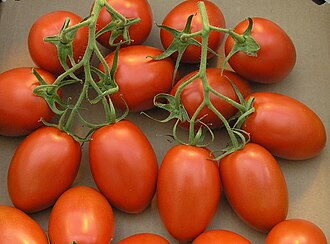
Photo: Wikipedia
The Roma tomato is a plum-shaped, meaty variety prized for its low moisture content and rich, concentrated flavor. Its firm texture holds up beautifully to heat, making it the go-to tomato for sauces, pastes, and canning. Nutritionally, it's a low-calorie powerhouse, delivering a solid dose of fiber and vitamin C with virtually no fat.
Calorie split: 13% protein · 70% carbs · 17% fat
↓ Full nutrition💚 Why it's loved
People adore the Roma tomato for its robust, sweet-tart flavor and meaty flesh that doesn't turn watery when cooked. Its versatility shines in everything from fresh salsas to slow-simmered sauces, making it a staple in kitchens worldwide.
⚠️ Watch-outs & how to enjoy it better
Some find the Roma tomato's texture too dense or less juicy for fresh eating compared to beefsteak varieties. Its high acidity can be a concern for those with acid reflux or sensitive stomachs; pairing it with a small amount of fat (like olive oil) or cooking it can help reduce perceived acidity.
Key benefits
- Excellent source of lycopene, a powerful antioxidant linked to heart health.
- High in vitamin C, which supports immune function and skin health.
- Good source of dietary fiber, aiding digestion and promoting fullness.
- Very low in calories and naturally fat-free, ideal for weight management.
- Contains potassium, which helps regulate blood pressure.
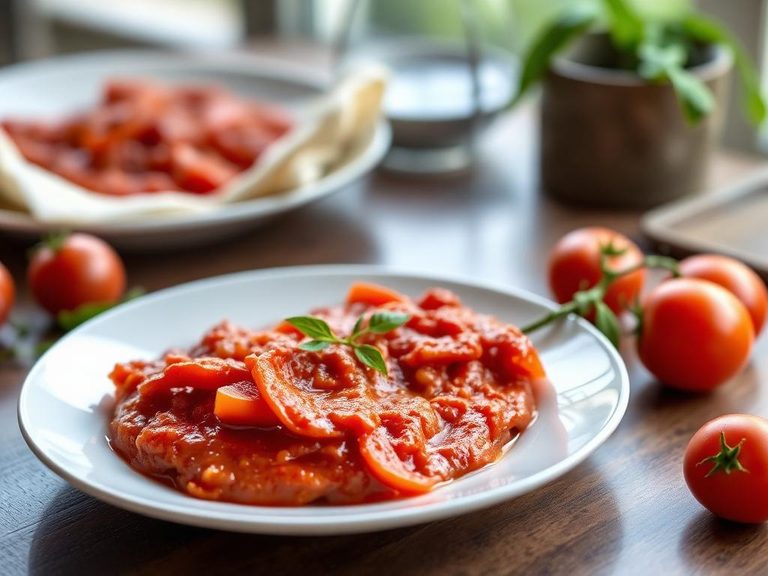
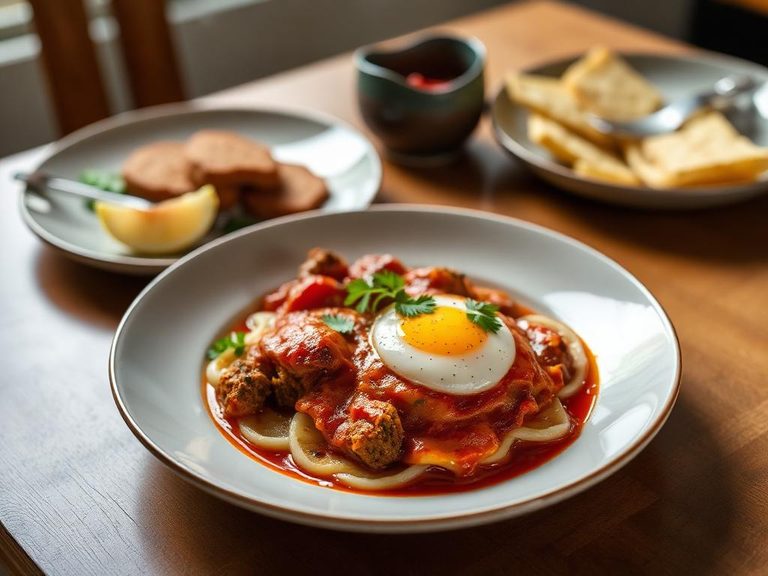
🍽️ Popular dishes
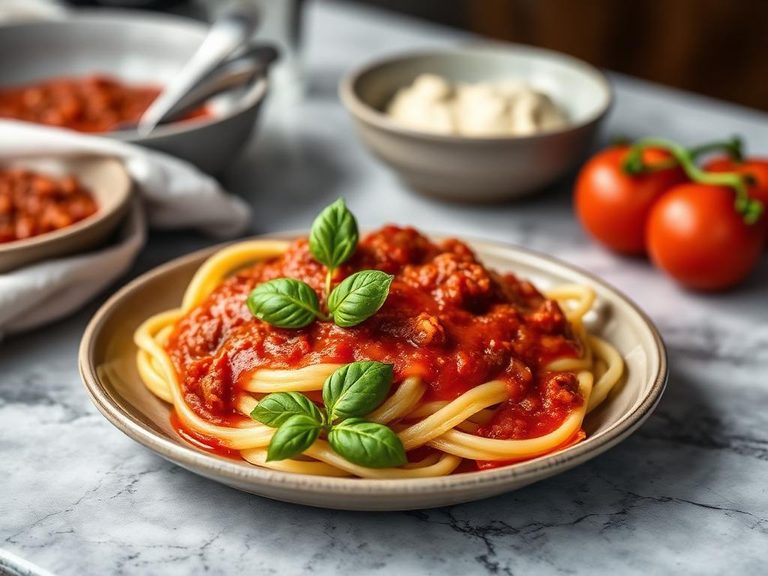
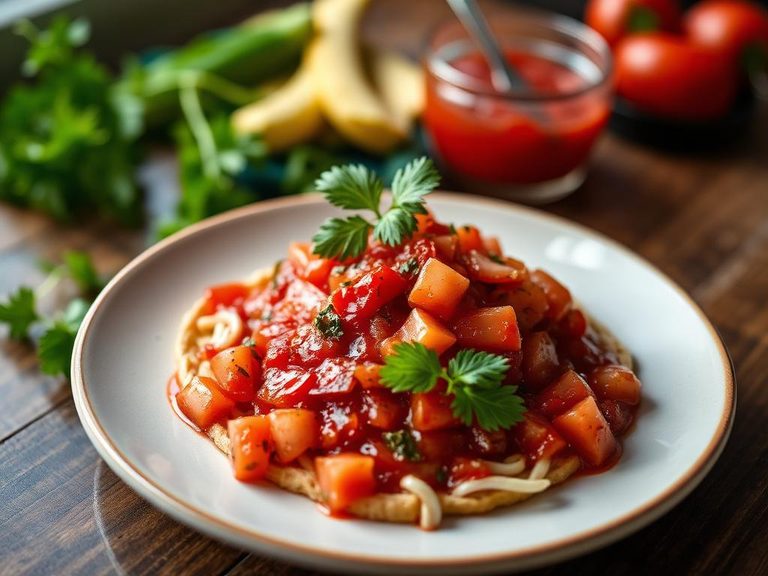

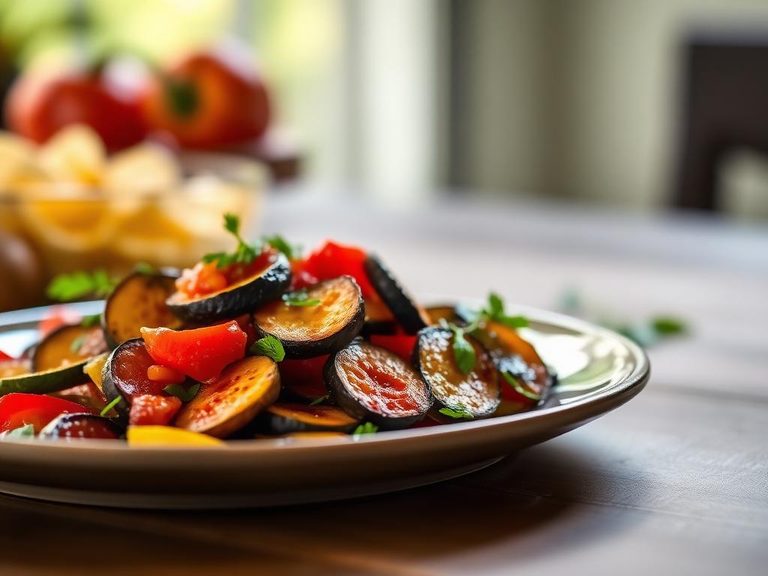
🌍 Where it's eaten
💡 Did you know?
The Roma tomato is a hybrid of two older varieties, the 'Red Plum' and the 'Red Pear,' developed in the early 20th century to create a more uniform, disease-resistant fruit ideal for commercial canning.
Full nutrition (USDA data · scales with serving)
| Water | 94.7 g |
| Energy (Atwater General Factors) | 22.0 kcal |
| Energy (Atwater Specific Factors) | 19.0 kcal |
| Nitrogen | 0.11 g |
| Protein | 0.70 g |
| Total lipid (fat) | 0.42 g |
| Ash | 0.31 g |
| Carbohydrate, by difference | 3.8 g |
| Fiber, total dietary | 0.97 g |
| Calcium, Ca | 10.0 mg |
| Iron, Fe | 0.10 mg |
| Magnesium, Mg | 8.1 mg |
| Phosphorus, P | 19.1 mg |
| Potassium, K | 193 mg |
| Sodium, Na | 0.00 mg |
| Zinc, Zn | 0.08 mg |
| Copper, Cu | 0.03 mg |
| Manganese, Mn | 0.09 mg |
| Selenium, Se | 0.00 ug |
| Vitamin C, total ascorbic acid | 17.8 mg |
| Thiamin | 0.06 mg |
| Riboflavin | 0.00 mg |
| Niacin | 0.53 mg |
| Vitamin B-6 | 0.08 mg |
| Biotin | 0.47 ug |
| Folate, total | 10.0 ug |
| Vitamin A, RAE | 23.9 ug |
| Carotene, beta | 276 ug |
| Carotene, alpha | 0.88 ug |
| Carotene, gamma | 2.1 ug |
| Cryptoxanthin, beta | 19.1 ug |
| Cryptoxanthin, alpha | 9.6 ug |
| Lycopene | 2863 ug |
| Lutein + zeaxanthin | 56.0 ug |
| cis-Lutein/Zeaxanthin | 0.00 ug |
| Lutein | 56.0 ug |
| Zeaxanthin | 0.00 ug |
Fat & fatty acid profile (per 100g)
Estimated from Tomato products, canned, sauce, with tomato tidbits — USDA does not publish this profile for Tomato.
| Fatty acids, total saturated | 0.06 g |
| SFA 14:0 | 0.00 g |
| SFA 16:0 | 0.04 g |
| SFA 18:0 | 0.01 g |
| Fatty acids, total monounsaturated | 0.06 g |
| MUFA 16:1 | 0.00 g |
| MUFA 18:1 | 0.06 g |
| MUFA 20:1 | 0.00 g |
| Fatty acids, total polyunsaturated | 0.16 g |
| PUFA 18:2 | 0.15 g |
| PUFA 18:3 | 0.01 g |
| Fatty acids, total trans | 0.00 g |
| Cholesterol | 0.00 mg |
Amino acid profile (per 100g)
Estimated from Tomato products, canned, sauce, with tomato tidbits — USDA does not publish this profile for Tomato.
| Tryptophan | 0.01 g |
| Threonine | 0.03 g |
| Isoleucine | 0.03 g |
| Leucine | 0.04 g |
| Lysine | 0.04 g |
| Methionine | 0.01 g |
| Cystine | 0.01 g |
| Phenylalanine | 0.03 g |
| Tyrosine | 0.02 g |
| Valine | 0.03 g |
| Arginine | 0.03 g |
| Histidine | 0.02 g |
| Alanine | 0.04 g |
| Aspartic acid | 0.17 g |
| Glutamic acid | 0.53 g |
| Glycine | 0.02 g |
| Proline | 0.03 g |
| Serine | 0.03 g |
FAQ
What's the difference between a Roma tomato and a regular tomato?
Roma tomatoes are a plum variety with an oblong shape, firmer flesh, and fewer seeds and less liquid than standard round tomatoes. This makes them ideal for cooking into sauces and pastes, as they break down less and provide a more concentrated flavor.
Are Roma tomatoes good for you?
Yes, they are very nutritious. They are low in calories and fat, high in fiber, and an excellent source of antioxidants like lycopene, which is more bioavailable when the tomato is cooked. They also provide vitamin C and potassium.
How should I store Roma tomatoes?
Store unripe Roma tomatoes at room temperature, stem-side down, until they ripen. Once ripe, you can keep them in the refrigerator for a few days to slow spoilage, but note that refrigeration can dull their flavor and texture. For long-term storage, they are excellent for canning or freezing.
Nutrient density (calculated · NRF9.3)
Nutrient Rich Foods index: beneficial nutrients (protein, fiber, vitamins, minerals) minus saturated fat, added sugar & sodium, per 100 kcal.
NRF9.3 index — Fulgoni, Keast & Drewnowski, 2009. Computed from USDA nutrients.
Weight-loss friendliness (composite index)
Energy density 0.22 kcal/g · 13% calories from protein · 1.0 g fiber · 0.0 g sugar per 100 g.
Composite of energy density (Rolls et al., 1999), protein & fiber satiety, minus sugar. A calculated heuristic — ranks satiety-per-calorie, not a clinical measure.
Dietary load (calculated from USDA values)
Potential renal acid load. Positive = acid-forming, negative = alkaline-forming.
Sodium-to-potassium ratio: 0.00 (lower is better — aim for ≤ 1)
Sodium:potassium per WHO potassium guidance. Computed from USDA nutrients.