

Tempeh, cooked
Whole food · Legumes and Legume Products

Photo: Wikipedia
Tempeh is a traditional Indonesian soy product made by fermenting cooked soybeans with a specific mold, forming a firm, dense cake with a distinctive nutty, earthy flavor and a satisfying, meaty bite. Its nutrition is standout: a complete protein powerhouse with nearly 20g per 100g, making it a staple for plant-based diets. The fermentation process also makes its nutrients more bioavailable and gives it a unique, umami-rich profile.
Calorie split: 37% protein · 14% carbs · 48% fat
↓ Full nutrition💚 Why it's loved
People love tempeh for its robust, savory flavor that absorbs marinades beautifully and its incredibly versatile texture, which can be sliced, crumbled, or cubed for everything from stir-fries to burgers. It's deeply rooted in Javanese cuisine and culture, offering a satisfying, whole-food alternative to processed meat substitutes.
⚠️ Watch-outs & how to enjoy it better
Some find its natural, fermented taste and dense texture an acquired taste. It is made from soy, a common allergen, and contains moderate levels of purines, which individuals with gout or certain kidney conditions may need to limit. To counteract the strong flavor, marinating it in acidic or savory liquids (like soy sauce, citrus, or vinegar) for 30 minutes before cooking can mellow it and enhance its taste.
Key benefits
- Excellent source of complete plant protein
- Rich in minerals like manganese and copper
- Fermentation may enhance nutrient absorption
- Provides a firm, versatile texture for cooking
- Naturally low in carbohydrates
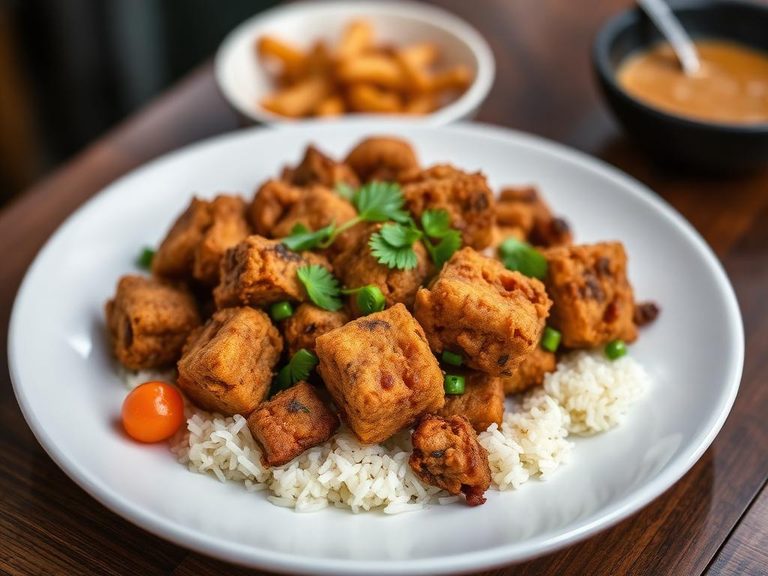
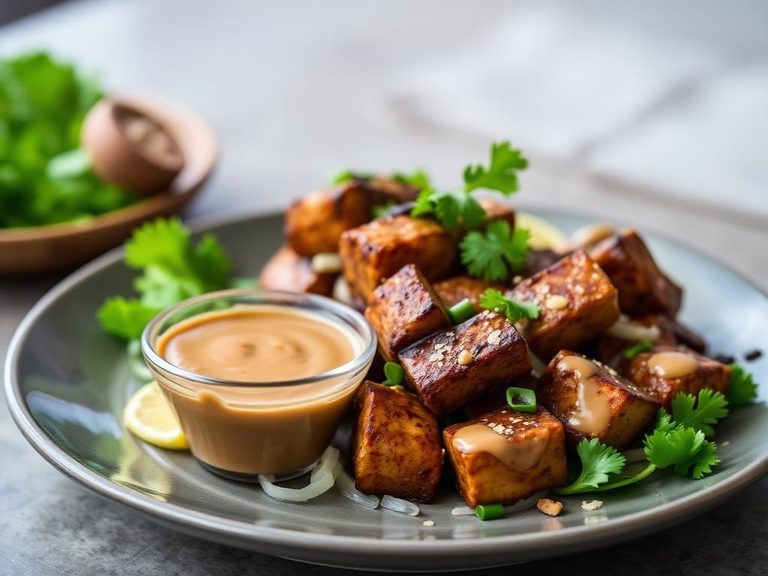
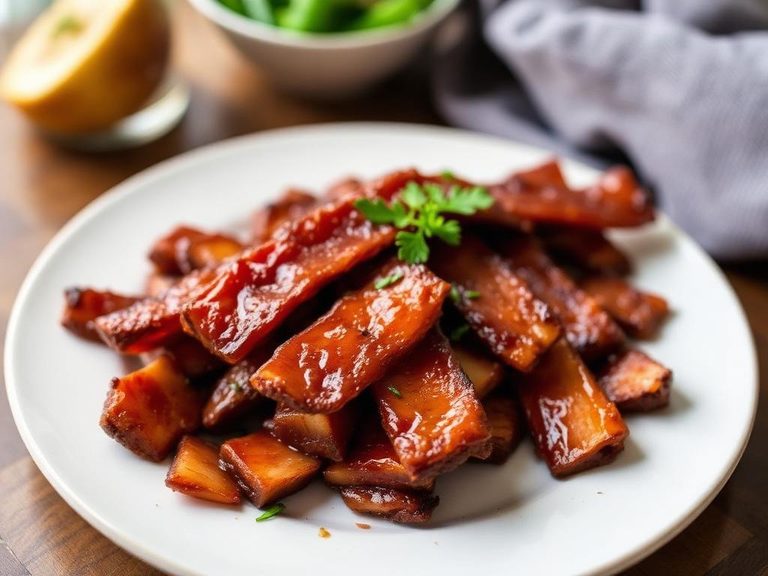
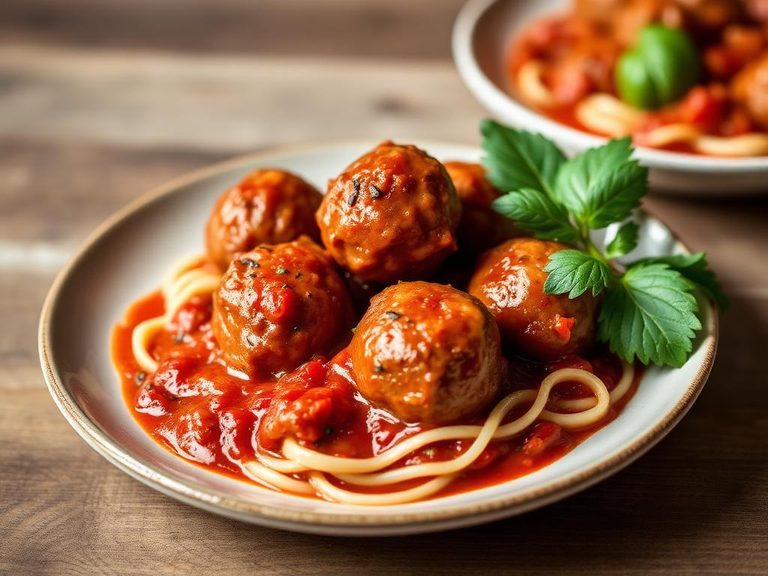
🍽️ Popular dishes

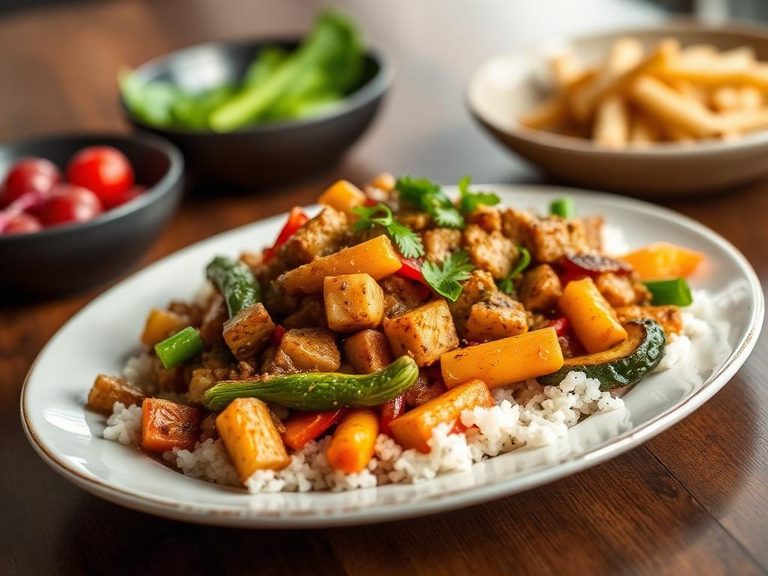
🌍 Where it's eaten
💡 Did you know?
The white, fuzzy mold (Rhizopus oligosporus) that binds the soybeans into a cake is not only safe to eat but is also a source of the enzyme phytase, which helps break down phytic acid and may make the minerals in tempeh more available for your body to use.
Full nutrition (USDA data · scales with serving)
| Water | 59.6 g |
| Energy | 195 kcal |
| Energy | 817 kj |
| Protein | 19.9 g |
| Total lipid (fat) | 11.4 g |
| Ash | 1.5 g |
| Carbohydrate, by difference | 7.6 g |
| Calcium, Ca | 96.0 mg |
| Iron, Fe | 2.1 mg |
| Magnesium, Mg | 77.0 mg |
| Phosphorus, P | 253 mg |
| Potassium, K | 401 mg |
| Sodium, Na | 14.0 mg |
| Zinc, Zn | 1.6 mg |
| Copper, Cu | 0.54 mg |
| Manganese, Mn | 1.3 mg |
| Selenium, Se | 0.00 ug |
| Thiamin | 0.05 mg |
| Riboflavin | 0.36 mg |
| Niacin | 2.1 mg |
| Pantothenic acid | 0.45 mg |
| Vitamin B-6 | 0.20 mg |
| Folate, total | 21.0 ug |
| Folic acid | 0.00 ug |
| Folate, food | 21.0 ug |
| Folate, DFE | 21.0 ug |
| Vitamin B-12 | 0.14 ug |
| Vitamin D (D2 + D3), International Units | 0.00 iu |
| Vitamin D (D2 + D3) | 0.00 ug |
Fat & fatty acid profile (per 100g)
| Fatty acids, total saturated | 3.4 g |
| SFA 8:0 | 0.00 g |
| SFA 10:0 | 0.00 g |
| SFA 12:0 | 0.00 g |
| SFA 14:0 | 0.05 g |
| SFA 15:0 | 0.00 g |
| SFA 16:0 | 2.2 g |
| SFA 17:0 | 0.05 g |
| SFA 18:0 | 0.80 g |
| SFA 20:0 | 0.10 g |
| SFA 22:0 | 0.20 g |
| SFA 24:0 | 0.00 g |
| Fatty acids, total monounsaturated | 3.7 g |
| MUFA 14:1 | 0.00 g |
| MUFA 16:1 | 0.10 g |
| MUFA 17:1 | 0.07 g |
| MUFA 18:1 | 3.5 g |
| MUFA 20:1 | 0.10 g |
| MUFA 22:1 | 0.00 g |
| Fatty acids, total polyunsaturated | 2.6 g |
| PUFA 18:2 | 2.5 g |
| PUFA 18:3 | 0.12 g |
| PUFA 20:3 | 0.00 g |
| PUFA 20:4 | 0.00 g |
| Fatty acids, total trans | 0.00 g |
Amino acid profile (per 100g)
Estimated from Tempeh — USDA does not publish this profile for Tempeh.
| Tryptophan | 0.19 g |
| Threonine | 0.80 g |
| Isoleucine | 0.88 g |
| Leucine | 1.4 g |
| Lysine | 0.91 g |
| Methionine | 0.17 g |
| Cystine | 0.19 g |
| Phenylalanine | 0.89 g |
| Tyrosine | 0.66 g |
| Valine | 0.92 g |
| Arginine | 1.3 g |
| Histidine | 0.47 g |
| Alanine | 0.96 g |
| Aspartic acid | 2.0 g |
| Glutamic acid | 3.3 g |
| Glycine | 0.75 g |
| Proline | 1.0 g |
| Serine | 1.0 g |
FAQ
How is tempeh different from tofu?
Tofu is made from coagulated soy milk, resulting in a soft, smooth texture. Tempeh is made from whole, fermented soybeans, giving it a much firmer, chewier texture and a more complex, nutty flavor. The fermentation also creates a binding mycelium that holds the beans together.
Do I need to cook tempeh before eating it?
While tempeh is safe to eat directly from the package (it's pre-cooked during manufacturing), cooking is highly recommended. Steaming or simmering it for 10 minutes before frying or grilling can soften it and reduce any residual bitterness, allowing it to better absorb flavors.
Why does my tempeh have a dark or black patch?
Some dark spots or patches on the surface are normal and part of the natural fermentation process, often where the mold has matured. However, if it's slimy, has an off-putting ammonia smell, or shows significant black or green mold (beyond the normal white mycelium), it should be discarded.
Nutrient density (calculated · NRF9.3)
Nutrient Rich Foods index: beneficial nutrients (protein, fiber, vitamins, minerals) minus saturated fat, added sugar & sodium, per 100 kcal.
NRF9.3 index — Fulgoni, Keast & Drewnowski, 2009. Computed from USDA nutrients.
Weight-loss friendliness (composite index)
Energy density 1.95 kcal/g · 41% calories from protein · 0.0 g fiber · 0.0 g sugar per 100 g.
Composite of energy density (Rolls et al., 1999), protein & fiber satiety, minus sugar. A calculated heuristic — ranks satiety-per-calorie, not a clinical measure.
Dietary load (calculated from USDA values)
Potential renal acid load. Positive = acid-forming, negative = alkaline-forming.
Sodium-to-potassium ratio: 0.03 (lower is better — aim for ≤ 1)
Sodium:potassium per WHO potassium guidance. Computed from USDA nutrients.