

Soup, cream of onion, canned, prepared with equal volume milk
Whole food · Soups, Sauces, and Gravies
This is a classic, velvety soup made from puréed onions and enriched with milk, offering a smooth, comforting texture and a sweet, savory flavor profile. Its nutrition is notably balanced for a canned soup, providing a moderate calorie count with a good mix of protein and fats. The preparation with milk significantly boosts its calcium and protein content compared to water-based versions.
Calorie split: 15% protein · 40% carbs · 46% fat
↓ Full nutrition💚 Why it's loved
People adore its rich, creamy texture and the deep, sweet flavor of caramelized onions, which makes it a nostalgic comfort food. It's incredibly versatile, serving as a base for casseroles, a sauce component, or a simple, satisfying bowl on its own.
⚠️ Watch-outs & how to enjoy it better
The primary concern is its likely high sodium content from canning, which can be problematic for blood pressure. The milk base also makes it unsuitable for those with lactose intolerance or a cow's milk allergy. To counteract sodium, pair it with a fresh, low-sodium side salad or rinse any solid components if possible. For lactose issues, consider a lactose-free milk version or a digestive enzyme supplement.
Key benefits
- Good source of calcium from milk addition
- Provides complete protein from milk
- Contains prebiotic fiber from onions
- Balanced macronutrient ratio for satiety
- Quick, shelf-stable comfort food option
🍽️ Popular dishes
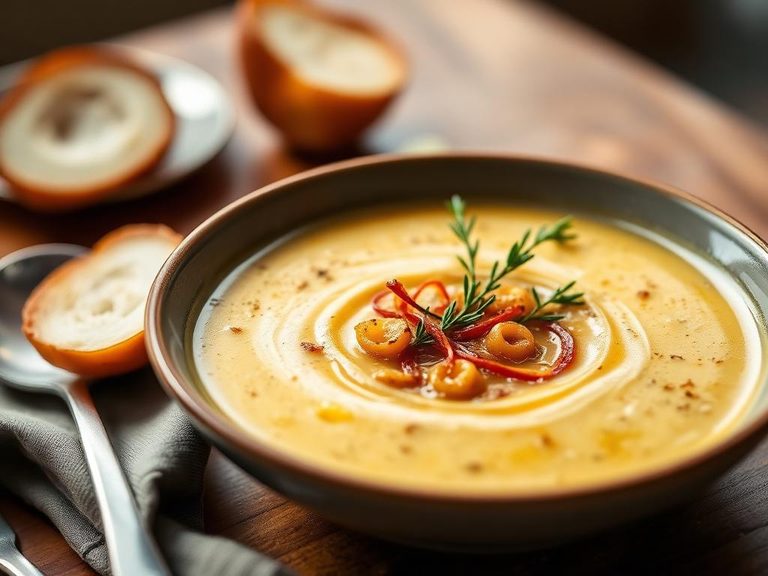
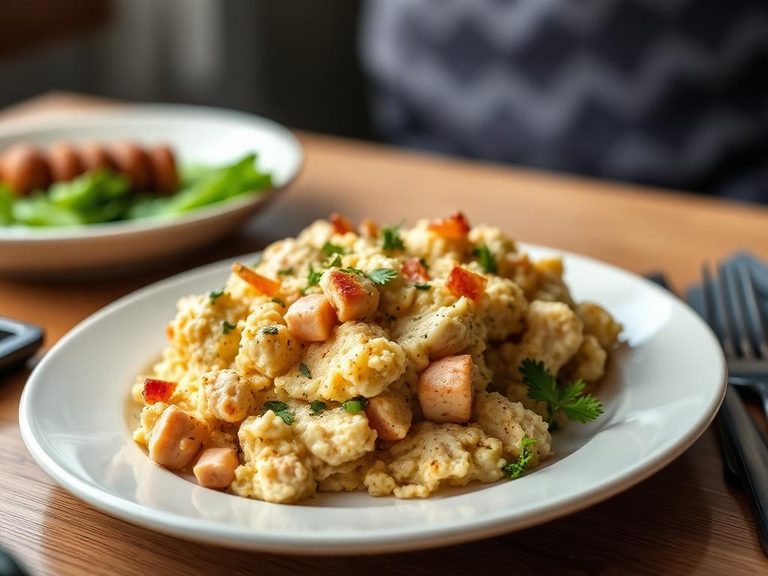
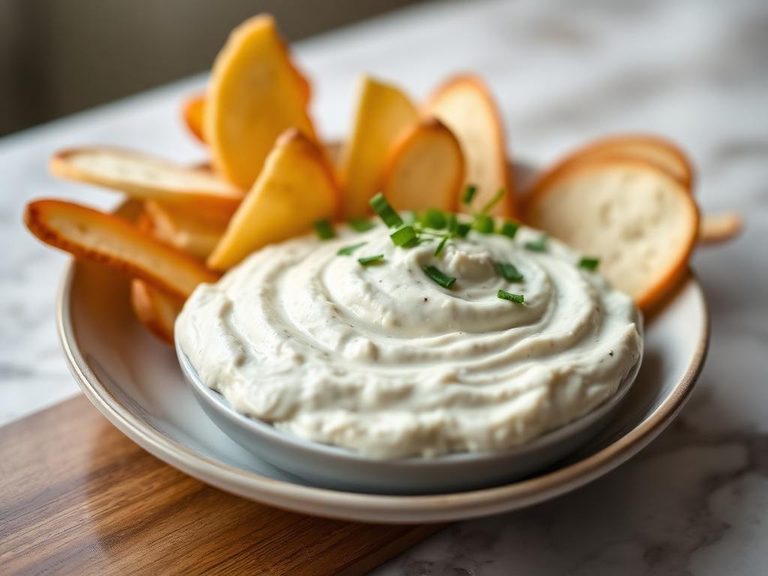

🌍 Where it's eaten
💡 Did you know?
The Maillard reaction and caramelization that give onions their deep sweetness in this soup can develop over hours of slow cooking, but the canned version achieves a similar depth in minutes using pre-cooked onion purée.
Full nutrition (USDA data · scales with serving)
| Water | 84.5 g |
| Energy | 75.0 kcal |
| Energy | 314 kj |
| Protein | 2.7 g |
| Total lipid (fat) | 3.8 g |
| Ash | 1.5 g |
| Carbohydrate, by difference | 7.4 g |
| Fiber, total dietary | 0.30 g |
| Calcium, Ca | 72.0 mg |
| Iron, Fe | 0.28 mg |
| Magnesium, Mg | 9.0 mg |
| Phosphorus, P | 62.0 mg |
| Potassium, K | 125 mg |
| Sodium, Na | 405 mg |
| Zinc, Zn | 0.25 mg |
| Copper, Cu | 0.06 mg |
| Manganese, Mn | 0.10 mg |
| Vitamin C, total ascorbic acid | 1.0 mg |
| Thiamin | 0.04 mg |
| Riboflavin | 0.11 mg |
| Niacin | 0.24 mg |
| Pantothenic acid | 0.28 mg |
| Vitamin B-6 | 0.03 mg |
| Folate, total | 9.0 ug |
| Folic acid | 0.00 ug |
| Folate, food | 9.0 ug |
| Folate, DFE | 9.0 ug |
| Vitamin B-12 | 0.20 ug |
| Vitamin A, RAE | 21.0 ug |
| Retinol | 14.0 ug |
| Vitamin A, IU | 182 iu |
| Alcohol, ethyl | 0.00 g |
Fat & fatty acid profile (per 100g)
| Fatty acids, total saturated | 1.6 g |
| SFA 4:0 | 0.07 g |
| SFA 6:0 | 0.04 g |
| SFA 8:0 | 0.03 g |
| SFA 10:0 | 0.05 g |
| SFA 12:0 | 0.06 g |
| SFA 14:0 | 0.23 g |
| SFA 16:0 | 0.74 g |
| SFA 18:0 | 0.36 g |
| Fatty acids, total monounsaturated | 1.3 g |
| MUFA 16:1 | 0.06 g |
| MUFA 18:1 | 1.2 g |
| MUFA 20:1 | 0.00 g |
| MUFA 22:1 | 0.00 g |
| Fatty acids, total polyunsaturated | 0.64 g |
| PUFA 18:2 | 0.58 g |
| PUFA 18:3 | 0.07 g |
| PUFA 18:4 | 0.00 g |
| PUFA 20:4 | 0.00 g |
| PUFA 20:5 n-3 (EPA) | 0.00 g |
| PUFA 22:5 n-3 (DPA) | 0.00 g |
| PUFA 22:6 n-3 (DHA) | 0.00 g |
| Cholesterol | 13.0 mg |
Amino acid profile (per 100g)
Estimated from Soup, bean with pork, canned, condensed — USDA does not publish this profile for Soup.
| Tryptophan | 0.06 g |
| Threonine | 0.24 g |
| Isoleucine | 0.29 g |
| Leucine | 0.48 g |
| Lysine | 0.40 g |
| Methionine | 0.07 g |
| Cystine | 0.07 g |
| Phenylalanine | 0.33 g |
| Tyrosine | 0.18 g |
| Valine | 0.32 g |
| Arginine | 0.31 g |
| Histidine | 0.15 g |
| Alanine | 0.29 g |
| Aspartic acid | 0.66 g |
| Glutamic acid | 1.1 g |
| Glycine | 0.28 g |
| Proline | 0.27 g |
| Serine | 0.29 g |
FAQ
Is this soup a good source of vegetables?
While it contains onion purée, the primary vegetable content is processed. It's better considered a flavorful, creamy base rather than a significant serving of whole vegetables.
Can I use it as a substitute for heavy cream in recipes?
Yes, it can add creaminess and onion flavor to dishes like casseroles or sauces, but it will thin the mixture more and add its own savory-sweet taste. It's not a 1:1 swap for pure fat.
How does the milk preparation differ from water-prepared?
Using milk instead of water creates a richer, more opaque, and creamier soup with higher protein and calcium content, but also adds dairy allergens and lactose.
Nutrient density (calculated · NRF9.3)
Nutrient Rich Foods index: beneficial nutrients (protein, fiber, vitamins, minerals) minus saturated fat, added sugar & sodium, per 100 kcal.
NRF9.3 index — Fulgoni, Keast & Drewnowski, 2009. Computed from USDA nutrients.
Weight-loss friendliness (composite index)
Energy density 0.75 kcal/g · 15% calories from protein · 0.3 g fiber · 0.0 g sugar per 100 g.
Composite of energy density (Rolls et al., 1999), protein & fiber satiety, minus sugar. A calculated heuristic — ranks satiety-per-calorie, not a clinical measure.
Dietary load (calculated from USDA values)
Potential renal acid load. Positive = acid-forming, negative = alkaline-forming.
Sodium-to-potassium ratio: 3.24 (lower is better — aim for ≤ 1)
Sodium:potassium per WHO potassium guidance. Computed from USDA nutrients.