

Sauce, ready-to-serve, pepper or hot
Whole food · Soups, Sauces, and Gravies
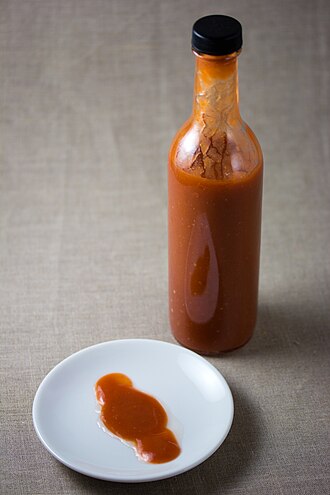
Photo: Wikipedia
This is a fiery, ready-to-use condiment made from chili peppers, vinegar, and salt, delivering a sharp, tangy heat that instantly awakens the palate. Its thin, pourable texture coats food lightly, offering a bright, acidic kick rather than a thick, clingy sauce. Nutritionally, it's a very low-calorie way to add intense flavor, with minimal impact on macronutrients.
Calorie split: 16% protein · 57% carbs · 27% fat
↓ Full nutrition💚 Why it's loved
People adore it for its ability to instantly elevate a dish, providing a customizable, electrifying heat that can range from a gentle tingle to a fiery blaze. It's a universal flavor amplifier, cherished across countless cuisines for its simplicity and punch.
⚠️ Watch-outs & how to enjoy it better
The primary downside is its potential to cause gastrointestinal discomfort or heartburn for those sensitive to spice or acid. For individuals monitoring sodium intake, frequent use can contribute significantly to daily limits. To mitigate, use sparingly, pair with cooling dairy like yogurt or cheese, and balance sodium by choosing low-sodium versions or using it alongside other herbs and spices.
Key benefits
- Adds significant flavor with negligible calories.
- Capsaicin may support a temporary metabolic boost.
- The vinegar base can aid in food preservation.
- Enhances the taste of simple, bland foods.
🍽️ Popular dishes

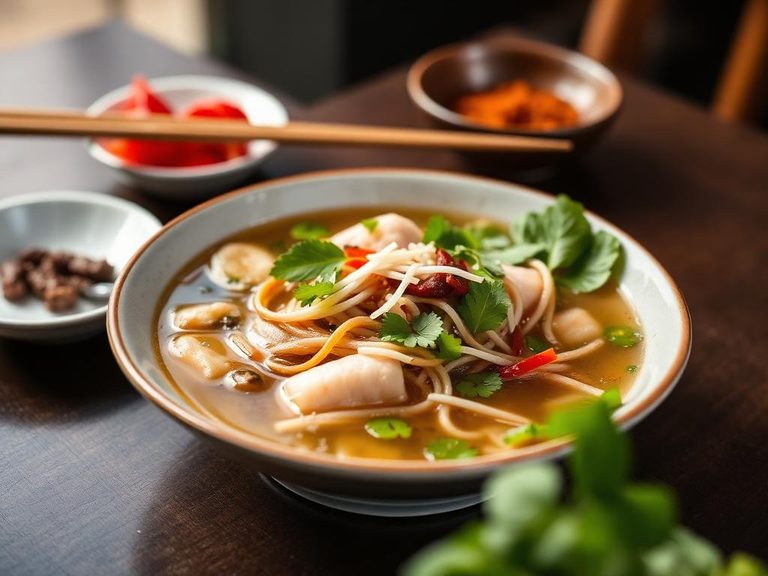
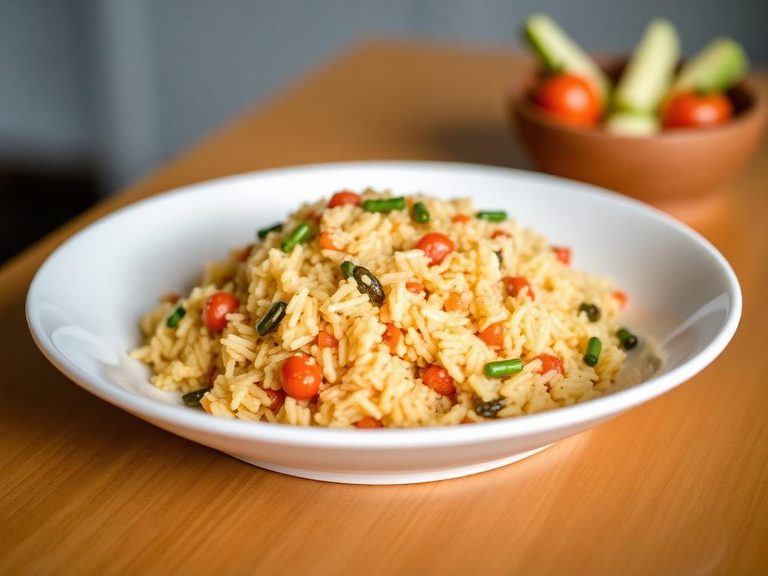
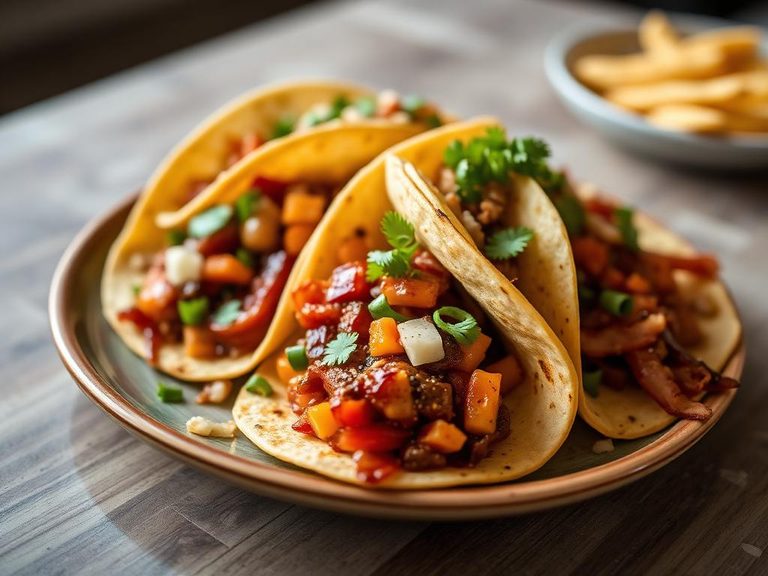
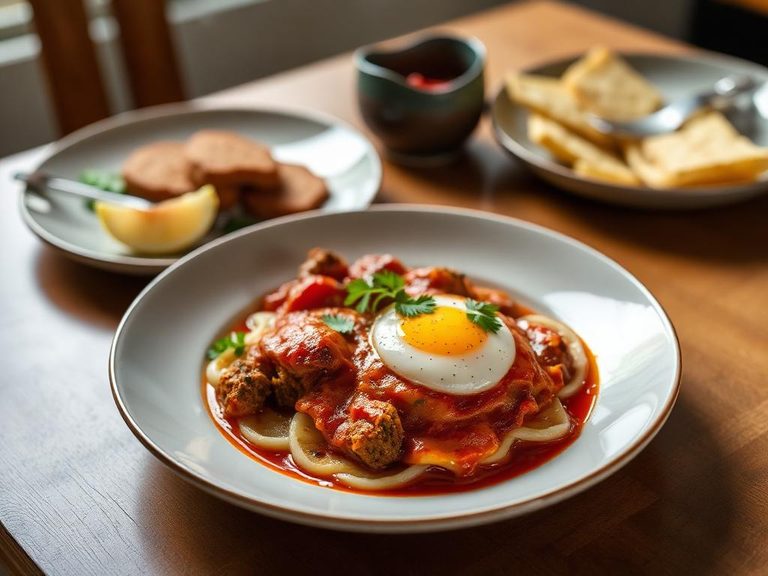
🌍 Where it's eaten
💡 Did you know?
The 'heat' in hot sauce comes from capsaicin, a compound that binds to pain receptors in your mouth, tricking your brain into feeling a burning sensation without causing actual damage.
Full nutrition (USDA data · scales with serving)
| Water | 90.0 g |
| Energy | 11.0 kcal |
| Energy | 46.0 kj |
| Protein | 0.51 g |
| Total lipid (fat) | 0.37 g |
| Ash | 7.4 g |
| Carbohydrate, by difference | 1.8 g |
| Fiber, total dietary | 0.30 g |
| Total Sugars | 1.3 g |
| Calcium, Ca | 8.0 mg |
| Iron, Fe | 0.48 mg |
| Magnesium, Mg | 5.0 mg |
| Phosphorus, P | 11.0 mg |
| Potassium, K | 144 mg |
| Sodium, Na | 2643 mg |
| Zinc, Zn | 0.11 mg |
| Copper, Cu | 0.03 mg |
| Manganese, Mn | 0.05 mg |
| Selenium, Se | 0.00 ug |
| Vitamin C, total ascorbic acid | 74.8 mg |
| Thiamin | 0.04 mg |
| Riboflavin | 0.08 mg |
| Niacin | 0.25 mg |
| Pantothenic acid | 0.11 mg |
| Vitamin B-6 | 0.16 mg |
| Folate, total | 6.0 ug |
| Folic acid | 0.00 ug |
| Folate, food | 6.0 ug |
| Folate, DFE | 6.0 ug |
| Vitamin B-12 | 0.00 ug |
| Vitamin A, RAE | 8.0 ug |
| Retinol | 0.00 ug |
| Carotene, beta | 91.0 ug |
| Carotene, alpha | 6.0 ug |
| Cryptoxanthin, beta | 7.0 ug |
| Vitamin A, IU | 162 iu |
| Lycopene | 0.00 ug |
| Lutein + zeaxanthin | 121 ug |
| Vitamin E (alpha-tocopherol) | 0.12 mg |
| Vitamin K (phylloquinone) | 2.4 ug |
Fat & fatty acid profile (per 100g)
| Fatty acids, total saturated | 0.05 g |
| SFA 14:0 | 0.00 g |
| SFA 16:0 | 0.04 g |
| SFA 18:0 | 0.01 g |
| Fatty acids, total monounsaturated | 0.03 g |
| MUFA 16:1 | 0.00 g |
| MUFA 18:1 | 0.03 g |
| Fatty acids, total polyunsaturated | 0.20 g |
| PUFA 18:2 | 0.20 g |
| PUFA 18:3 | 0.00 g |
| Cholesterol | 0.00 mg |
Amino acid profile (per 100g)
| Tryptophan | 0.01 g |
| Threonine | 0.02 g |
| Isoleucine | 0.02 g |
| Leucine | 0.03 g |
| Lysine | 0.02 g |
| Methionine | 0.01 g |
| Cystine | 0.01 g |
| Phenylalanine | 0.02 g |
| Tyrosine | 0.01 g |
| Valine | 0.02 g |
| Arginine | 0.03 g |
| Histidine | 0.01 g |
| Alanine | 0.02 g |
| Aspartic acid | 0.07 g |
| Glutamic acid | 0.07 g |
| Glycine | 0.02 g |
| Proline | 0.02 g |
| Serine | 0.02 g |
FAQ
Is hot sauce high in sodium?
Yes, most commercial hot sauces are very high in sodium, as salt is a key preservative and flavor enhancer. A single tablespoon can contain over 100% of the recommended daily limit for some diets.
Does hot sauce have any health benefits?
While not a health food, the capsaicin in hot sauce has been studied for potential benefits like a temporary metabolism boost and pain relief. Its main benefit is enhancing the enjoyment of food with minimal calories.
How should I store an opened bottle of hot sauce?
For best quality and flavor retention, store opened hot sauce in the refrigerator. The cool, dark environment helps preserve its color, heat, and tangy flavor for up to a year.
Nutrient density (calculated · NRF9.3)
Nutrient Rich Foods index: beneficial nutrients (protein, fiber, vitamins, minerals) minus saturated fat, added sugar & sodium, per 100 kcal.
NRF9.3 index — Fulgoni, Keast & Drewnowski, 2009. Computed from USDA nutrients.
Weight-loss friendliness (composite index)
Energy density 0.11 kcal/g · 19% calories from protein · 0.3 g fiber · 1.3 g sugar per 100 g.
Composite of energy density (Rolls et al., 1999), protein & fiber satiety, minus sugar. A calculated heuristic — ranks satiety-per-calorie, not a clinical measure.
Dietary load (calculated from USDA values)
Potential renal acid load. Positive = acid-forming, negative = alkaline-forming.
Sodium-to-potassium ratio: 18.35 (lower is better — aim for ≤ 1)
Sodium:potassium per WHO potassium guidance. Computed from USDA nutrients.