

Pumpkin leaves, cooked, boiled, drained, with salt
Whole food · Vegetables and Vegetable Products
Boiled pumpkin leaves are tender, slightly earthy greens with a mild, spinach-like flavor and a soft, delicate texture. They are a low-calorie, high-fiber vegetable, offering a surprising 2.72g of protein per 100g while contributing minimal fat.
Calorie split: 41% protein · 51% carbs · 7% fat
↓ Full nutrition💚 Why it's loved
People cherish pumpkin leaves for their versatile, mild taste that absorbs seasonings beautifully, making them a staple in comfort dishes from curries to stews. In many cultures, they are a beloved, economical way to add nutritious greens to the daily table.
⚠️ Watch-outs & how to enjoy it better
The leaves can have a slightly fuzzy texture if not prepared properly, and boiling with salt adds sodium. To counteract, ensure leaves are thoroughly washed and de-stemmed, and consider using minimal added salt during cooking, seasoning more at the table. Those monitoring oxalate intake should note leafy greens contain them; pairing with a calcium-rich food like yogurt can help.
Key benefits
- Excellent source of dietary fiber (2.7g per 100g)
- Very low in calories (21 kcal per 100g)
- Good plant-based protein source (2.72g per 100g)
- Naturally low in fat (0.22g per 100g)
- Provides essential vitamins and minerals common to dark leafy greens
🍽️ Popular dishes
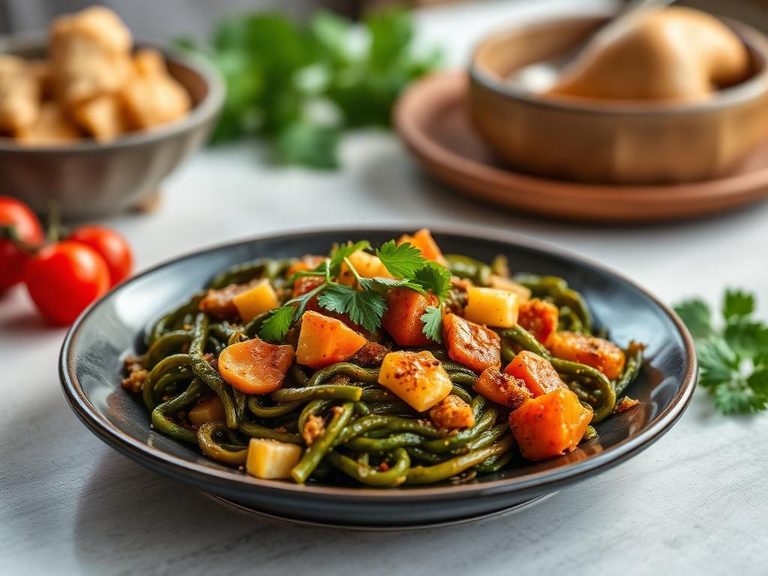
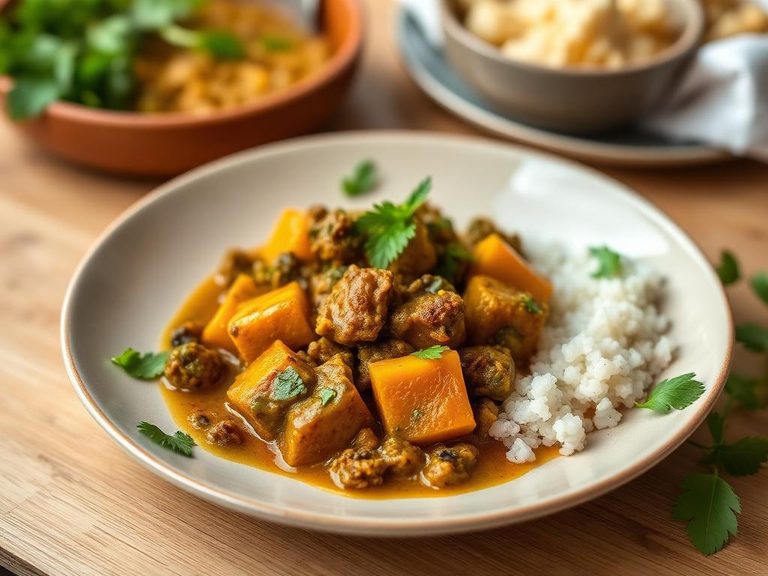
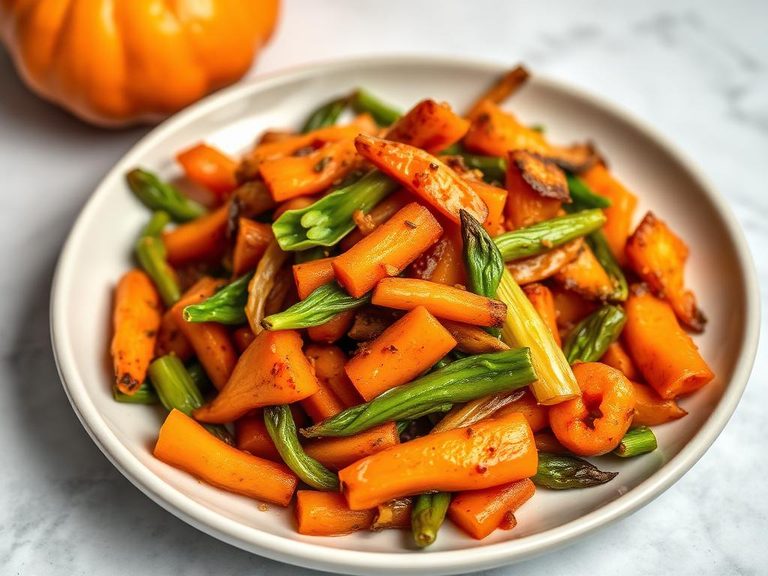
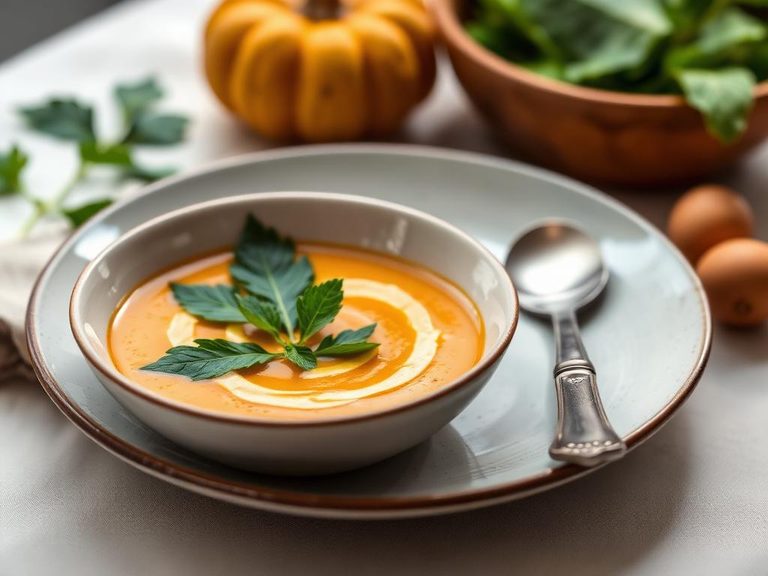
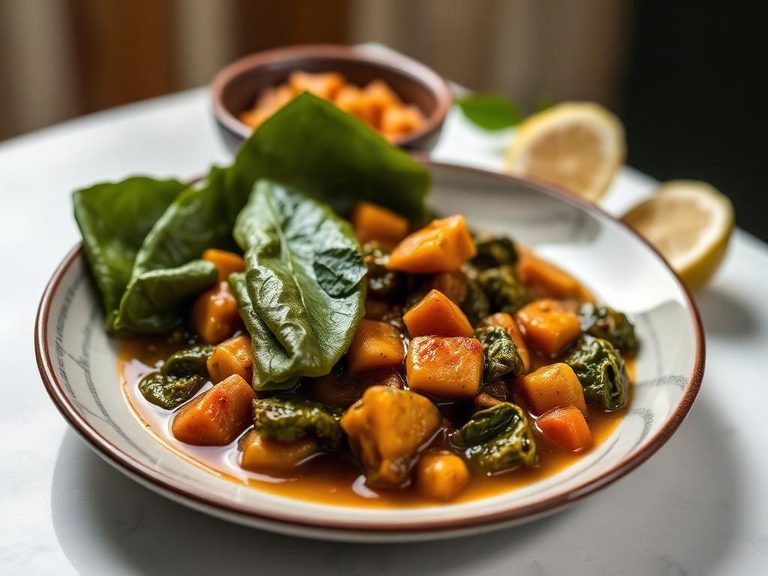
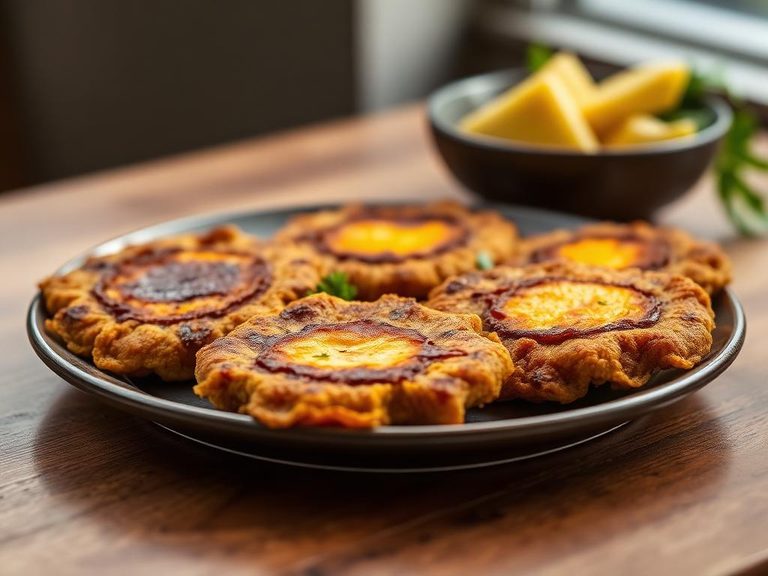
🌍 Where it's eaten
💡 Did you know?
In many tropical regions, it's the tender shoots and tendrils, not just the leaves, that are harvested and considered a delicacy for their extra crisp texture.
Full nutrition (USDA data · scales with serving)
| Water | 92.5 g |
| Energy | 21.0 kcal |
| Energy | 88.0 kj |
| Protein | 2.7 g |
| Total lipid (fat) | 0.22 g |
| Ash | 1.2 g |
| Carbohydrate, by difference | 3.4 g |
| Fiber, total dietary | 2.7 g |
| Total Sugars | 0.69 g |
| Calcium, Ca | 43.0 mg |
| Iron, Fe | 3.2 mg |
| Magnesium, Mg | 38.0 mg |
| Phosphorus, P | 79.0 mg |
| Potassium, K | 438 mg |
| Sodium, Na | 244 mg |
| Zinc, Zn | 0.20 mg |
| Copper, Cu | 0.13 mg |
| Manganese, Mn | 0.35 mg |
| Selenium, Se | 0.90 ug |
| Vitamin C, total ascorbic acid | 1.0 mg |
| Thiamin | 0.07 mg |
| Riboflavin | 0.14 mg |
| Niacin | 0.85 mg |
| Pantothenic acid | 0.04 mg |
| Vitamin B-6 | 0.20 mg |
| Folate, total | 25.0 ug |
| Folic acid | 0.00 ug |
| Folate, food | 25.0 ug |
| Folate, DFE | 25.0 ug |
| Vitamin B-12 | 0.00 ug |
| Vitamin B-12, added | 0.00 ug |
| Vitamin A, RAE | 80.0 ug |
| Retinol | 0.00 ug |
| Carotene, beta | 960 ug |
| Carotene, alpha | 0.00 ug |
| Cryptoxanthin, beta | 0.00 ug |
| Vitamin A, IU | 1600 iu |
| Lycopene | 0.00 ug |
| Lutein + zeaxanthin | 1747 ug |
| Vitamin E (alpha-tocopherol) | 0.96 mg |
| Vitamin E, added | 0.00 mg |
| Vitamin D (D2 + D3), International Units | 0.00 iu |
| Vitamin D (D2 + D3) | 0.00 ug |
| Vitamin K (phylloquinone) | 108 ug |
| Caffeine | 0.00 mg |
| Theobromine | 0.00 mg |
Fat & fatty acid profile (per 100g)
| Fatty acids, total saturated | 0.11 g |
| SFA 12:0 | 0.00 g |
| SFA 14:0 | 0.01 g |
| SFA 16:0 | 0.08 g |
| SFA 18:0 | 0.01 g |
| Fatty acids, total monounsaturated | 0.03 g |
| MUFA 16:1 | 0.01 g |
| MUFA 18:1 | 0.01 g |
| Fatty acids, total polyunsaturated | 0.01 g |
| PUFA 18:2 | 0.01 g |
| PUFA 18:3 | 0.01 g |
| Fatty acids, total trans | 0.00 g |
| Cholesterol | 0.00 mg |
Amino acid profile (per 100g)
| Tryptophan | 0.04 g |
| Threonine | 0.14 g |
| Isoleucine | 0.14 g |
| Leucine | 0.27 g |
| Lysine | 0.17 g |
| Methionine | 0.05 g |
| Cystine | 0.03 g |
| Phenylalanine | 0.15 g |
| Tyrosine | 0.14 g |
| Valine | 0.16 g |
| Arginine | 0.19 g |
| Histidine | 0.04 g |
FAQ
How do you prepare pumpkin leaves to remove the fuzz?
After washing, gently rub the leaves between your hands or use a soft brush under running water. Blanching them briefly in boiling water before the main cooking step also helps soften the texture.
Are pumpkin leaves the same as pumpkin vine shoots?
They come from the same plant. 'Leaves' typically refers to the mature leaf blades, while 'shoots' or 'tendrils' are the younger, more tender growing tips and stems, which are often preferred for their texture.
What do boiled pumpkin leaves taste like?
They have a mild, slightly earthy and grassy flavor, very similar to cooked spinach but often a bit more delicate and less bitter. The texture is soft and tender.
Nutrient density (calculated · NRF9.3)
Nutrient Rich Foods index: beneficial nutrients (protein, fiber, vitamins, minerals) minus saturated fat, added sugar & sodium, per 100 kcal.
NRF9.3 index — Fulgoni, Keast & Drewnowski, 2009. Computed from USDA nutrients.
Weight-loss friendliness (composite index)
Energy density 0.21 kcal/g · 52% calories from protein · 2.7 g fiber · 0.7 g sugar per 100 g.
Composite of energy density (Rolls et al., 1999), protein & fiber satiety, minus sugar. A calculated heuristic — ranks satiety-per-calorie, not a clinical measure.
Dietary load (calculated from USDA values)
Potential renal acid load. Positive = acid-forming, negative = alkaline-forming.
Sodium-to-potassium ratio: 0.56 (lower is better — aim for ≤ 1)
Sodium:potassium per WHO potassium guidance. Computed from USDA nutrients.