

Peppered loaf, pork, beef
Whole food · Sausages and Luncheon Meats

Photo: Wikipedia
A savory, pre-cooked loaf made from a blend of ground pork and beef, seasoned with black pepper and other spices. It has a dense, uniform texture similar to a firm meatloaf or pâté, with a pronounced peppery kick and a rich, meaty flavor. Nutritionally, it's a high-protein, low-carb option, providing substantial protein with minimal sugars.
Calorie split: 48% protein · 13% carbs · 40% fat
↓ Full nutrition💚 Why it's loved
People love it for its robust, peppery flavor and satisfying, meaty texture that works hot or cold. It's a cultural staple in many European cuisines, valued as a hearty, no-fuss component for sandwiches, salads, and charcuterie boards.
⚠️ Watch-outs & how to enjoy it better
The processed nature means it can be high in sodium and may contain preservatives like nitrates. Those monitoring sodium intake should be cautious. To counteract, pair it with fresh, potassium-rich vegetables like leafy greens or tomatoes, and be mindful of portion sizes within a balanced meal.
Key benefits
- High in complete protein for muscle maintenance.
- Low in carbohydrates and sugars.
- Convenient, ready-to-eat protein source.
- Provides iron and B vitamins from red meat.
- Versatile for quick meal assembly.
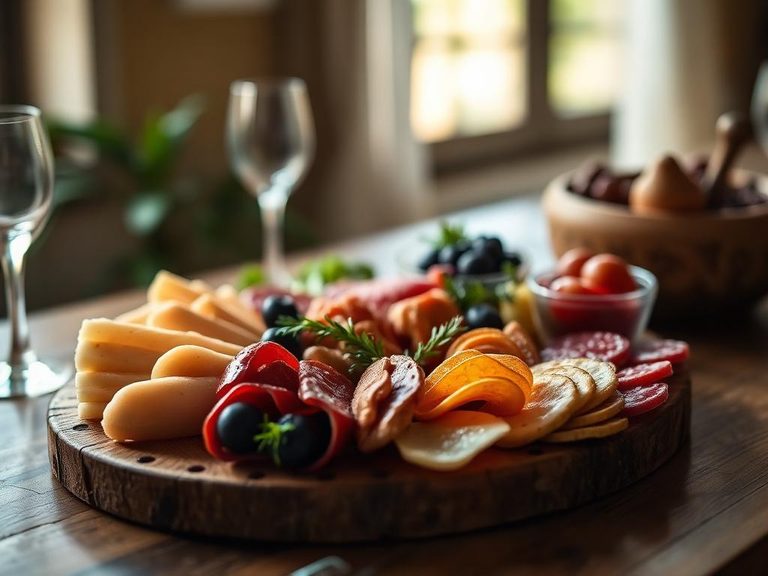
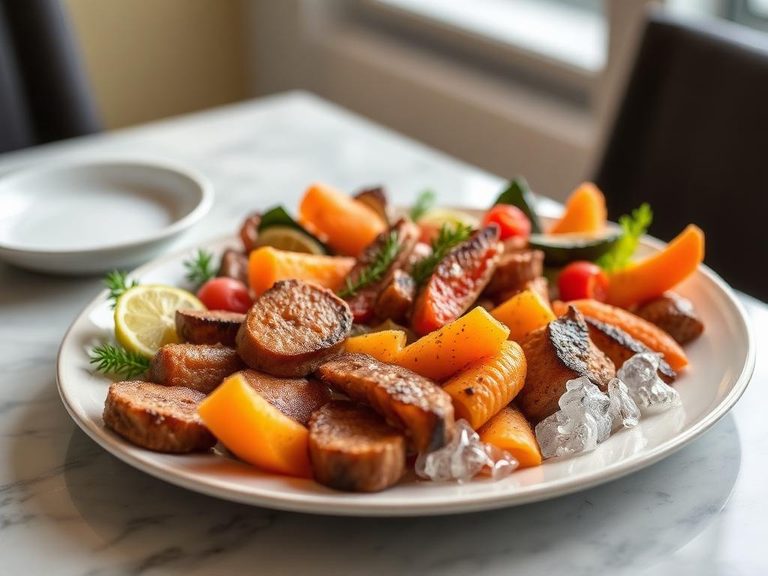
🍽️ Popular dishes
🌍 Where it's eaten
💡 Did you know?
The 'loaf' format was historically a practical way to use up smaller cuts of meat and fat, extending their shelf life through curing and spicing before refrigeration was common.
Full nutrition (USDA data · scales with serving)
| Water | 67.4 g |
| Energy | 149 kcal |
| Energy | 624 kj |
| Protein | 17.3 g |
| Total lipid (fat) | 6.4 g |
| Ash | 4.4 g |
| Carbohydrate, by difference | 4.5 g |
| Fiber, total dietary | 0.00 g |
| Total Sugars | 4.6 g |
| Calcium, Ca | 54.0 mg |
| Iron, Fe | 1.1 mg |
| Magnesium, Mg | 20.0 mg |
| Phosphorus, P | 170 mg |
| Potassium, K | 394 mg |
| Sodium, Na | 732 mg |
| Zinc, Zn | 3.2 mg |
| Copper, Cu | 0.12 mg |
| Manganese, Mn | 0.06 mg |
| Selenium, Se | 11.3 ug |
| Vitamin C, total ascorbic acid | 0.00 mg |
| Thiamin | 0.38 mg |
| Riboflavin | 0.30 mg |
| Niacin | 3.1 mg |
| Pantothenic acid | 0.53 mg |
| Vitamin B-6 | 0.27 mg |
| Folate, total | 2.0 ug |
| Folic acid | 0.00 ug |
| Folate, food | 2.0 ug |
| Folate, DFE | 2.0 ug |
| Choline, total | 73.0 mg |
| Betaine | 6.5 mg |
| Vitamin B-12 | 2.0 ug |
| Vitamin B-12, added | 0.00 ug |
| Vitamin A, RAE | 0.00 ug |
| Retinol | 0.00 ug |
| Carotene, beta | 0.00 ug |
| Carotene, alpha | 0.00 ug |
| Cryptoxanthin, beta | 0.00 ug |
| Vitamin A, IU | 0.00 iu |
| Lycopene | 0.00 ug |
| Lutein + zeaxanthin | 0.00 ug |
| Vitamin E (alpha-tocopherol) | 0.22 mg |
| Vitamin E, added | 0.00 mg |
| Vitamin D (D2 + D3), International Units | 32.0 iu |
| Vitamin D (D2 + D3) | 0.80 ug |
| Vitamin K (phylloquinone) | 1.6 ug |
| Alcohol, ethyl | 0.00 g |
| Caffeine | 0.00 mg |
| Theobromine | 0.00 mg |
Fat & fatty acid profile (per 100g)
| Fatty acids, total saturated | 2.3 g |
| SFA 4:0 | 0.00 g |
| SFA 6:0 | 0.00 g |
| SFA 8:0 | 0.00 g |
| SFA 10:0 | 0.03 g |
| SFA 12:0 | 0.01 g |
| SFA 14:0 | 0.09 g |
| SFA 16:0 | 1.4 g |
| SFA 18:0 | 0.79 g |
| Fatty acids, total monounsaturated | 3.0 g |
| MUFA 16:1 | 0.28 g |
| MUFA 18:1 | 2.7 g |
| MUFA 20:1 | 0.00 g |
| MUFA 22:1 | 0.00 g |
| Fatty acids, total polyunsaturated | 0.50 g |
| PUFA 18:2 | 0.43 g |
| PUFA 18:3 | 0.07 g |
| PUFA 18:4 | 0.00 g |
| PUFA 20:4 | 0.00 g |
| PUFA 20:5 n-3 (EPA) | 0.00 g |
| PUFA 22:5 n-3 (DPA) | 0.00 g |
| PUFA 22:6 n-3 (DHA) | 0.00 g |
| Cholesterol | 46.0 mg |
FAQ
Is peppered loaf the same as meatloaf?
No. Peppered loaf is a pre-cooked, cured, and sliced deli meat product, similar to bologna or liverwurst. Meatloaf is a baked dish made from raw ground meat mixed with binders and seasonings, typically served hot and sliced at the table.
How should I store leftover peppered loaf?
Once opened, keep it tightly wrapped in its original packaging or an airtight container in the refrigerator. It's best consumed within 3-5 days. It can also be frozen for up to 2 months, though the texture may become slightly crumbly upon thawing.
Can I cook with peppered loaf?
Absolutely! While often eaten cold, you can pan-fry slices until crispy to add texture to salads or grain bowls, or dice it up as a protein-rich addition to omelets, frittatas, or fried rice.
Nutrient density (calculated · NRF9.3)
Nutrient Rich Foods index: beneficial nutrients (protein, fiber, vitamins, minerals) minus saturated fat, added sugar & sodium, per 100 kcal.
NRF9.3 index — Fulgoni, Keast & Drewnowski, 2009. Computed from USDA nutrients.
Weight-loss friendliness (composite index)
Energy density 1.49 kcal/g · 46% calories from protein · 0.0 g fiber · 4.6 g sugar per 100 g.
Composite of energy density (Rolls et al., 1999), protein & fiber satiety, minus sugar. A calculated heuristic — ranks satiety-per-calorie, not a clinical measure.
Dietary load (calculated from USDA values)
Potential renal acid load. Positive = acid-forming, negative = alkaline-forming.
Sodium-to-potassium ratio: 1.86 (lower is better — aim for ≤ 1)
Sodium:potassium per WHO potassium guidance. Computed from USDA nutrients.