

Peas and onions, canned, solids and liquids
Whole food · Vegetables and Vegetable Products

Photo: Wikipedia
This is a humble, savory staple of canned pantry goods: tender green peas and soft, translucent onion slices swimming in a light, savory broth. The flavor is mild and sweet from the peas, with a mellow, aromatic depth from the onions, creating a comforting, slightly starchy texture. Nutritionally, it's a low-calorie, high-fiber side that provides a modest protein boost without any fat.
Calorie split: 26% protein · 67% carbs · 7% fat
↓ Full nutrition💚 Why it's loved
People love it for its comforting, nostalgic flavor that evokes home cooking and quick, easy meals. Its versatility allows it to be a simple side, a soup base, or a component in casseroles and salads.
⚠️ Watch-outs & how to enjoy it better
The primary concern is the sodium content often found in canned versions, which can be high. Those monitoring blood sugar should be mindful of the carbohydrate content (8.57g per 100g). To counteract, rinse the peas and onions under water to reduce sodium, and pair with a source of protein (like chicken or beans) and healthy fat (like olive oil) to slow carbohydrate absorption.
Key benefits
- Low in calories and fat, making it a light side dish.
- Good source of dietary fiber (2.3g per 100g) for digestive health.
- Provides plant-based protein (3.28g per 100g).
- Convenient, shelf-stable source of vegetables.
- Contains no added sugar.
🍽️ Popular dishes
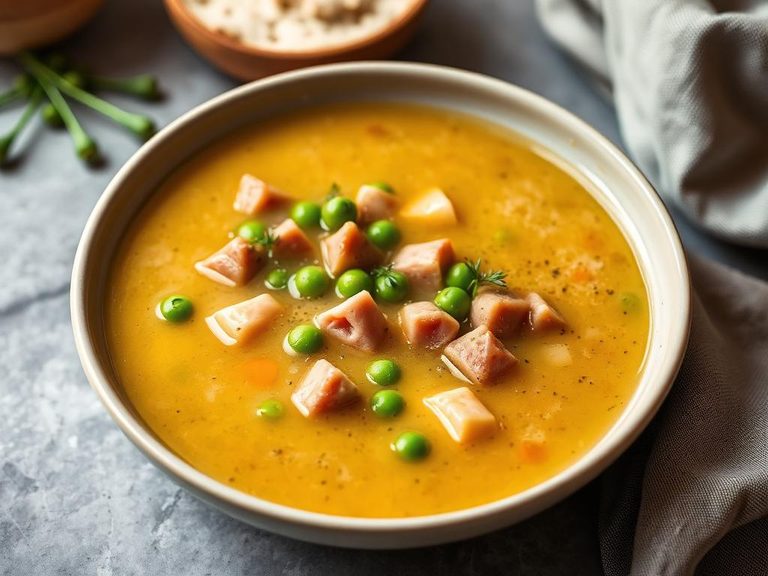
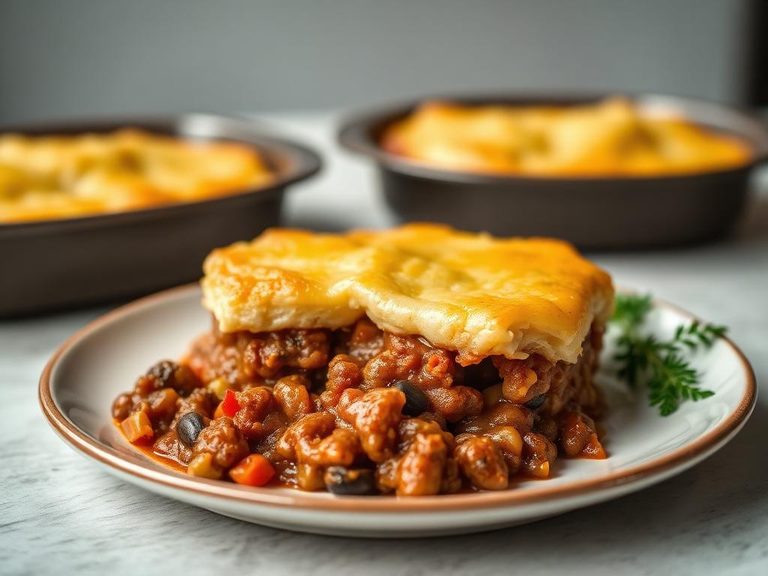
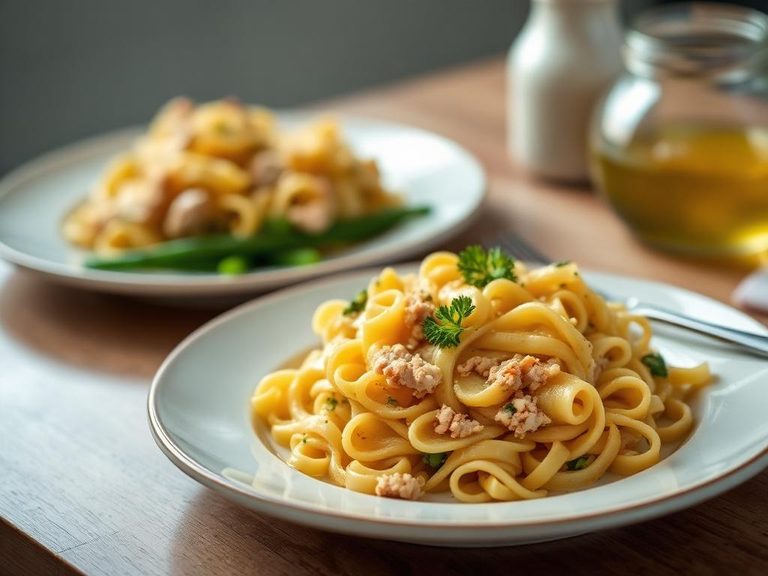
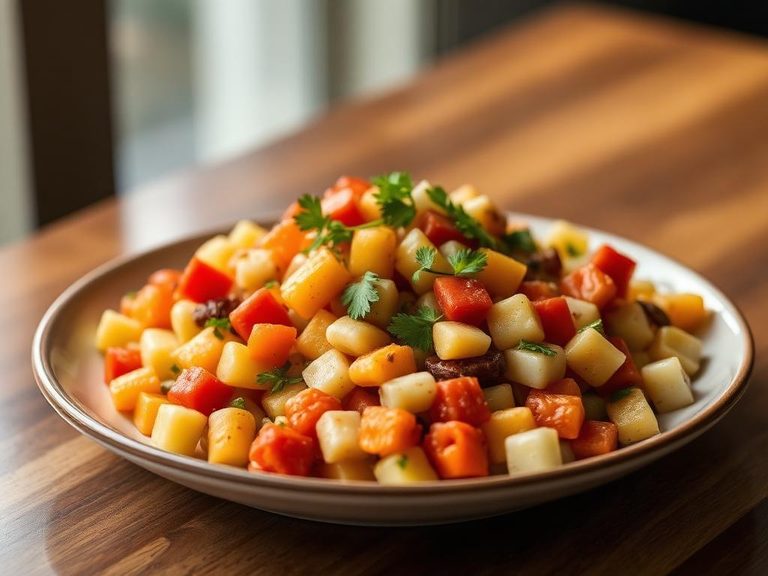
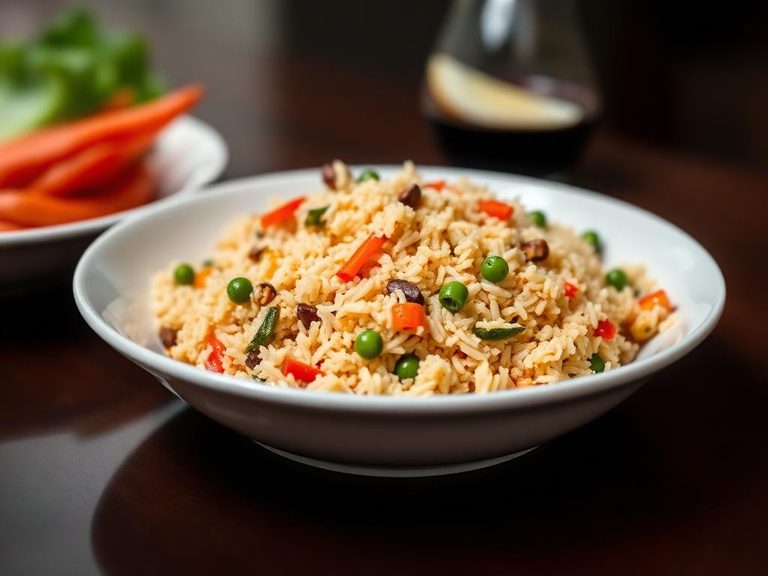
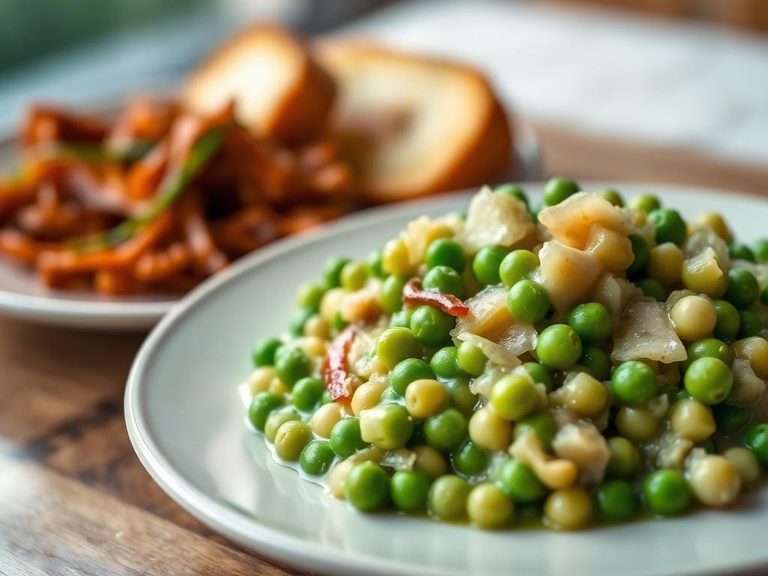
🌍 Where it's eaten
💡 Did you know?
The combination of peas and onions is so fundamental in cooking that it forms part of the classic French mirepoix (onion, carrot, celery) and British 'holy trinity' (onion, carrot, celery/peas) flavor bases for soups and stews.
Full nutrition (USDA data · scales with serving)
| Water | 86.4 g |
| Energy | 51.0 kcal |
| Energy | 213 kj |
| Protein | 3.3 g |
| Total lipid (fat) | 0.38 g |
| Ash | 1.4 g |
| Carbohydrate, by difference | 8.6 g |
| Fiber, total dietary | 2.3 g |
| Calcium, Ca | 17.0 mg |
| Iron, Fe | 0.87 mg |
| Magnesium, Mg | 16.0 mg |
| Phosphorus, P | 51.0 mg |
| Potassium, K | 96.0 mg |
| Sodium, Na | 442 mg |
| Zinc, Zn | 0.58 mg |
| Copper, Cu | 0.10 mg |
| Manganese, Mn | 0.26 mg |
| Selenium, Se | 0.40 ug |
| Vitamin C, total ascorbic acid | 3.0 mg |
| Thiamin | 0.10 mg |
| Riboflavin | 0.07 mg |
| Niacin | 1.3 mg |
| Pantothenic acid | 0.16 mg |
| Vitamin B-6 | 0.19 mg |
| Folate, total | 27.0 ug |
| Folic acid | 0.00 ug |
| Folate, food | 27.0 ug |
| Folate, DFE | 27.0 ug |
| Vitamin B-12 | 0.00 ug |
| Vitamin A, RAE | 8.0 ug |
| Retinol | 0.00 ug |
| Vitamin A, IU | 161 iu |
| Vitamin D (D2 + D3), International Units | 0.00 iu |
| Vitamin D (D2 + D3) | 0.00 ug |
Fat & fatty acid profile (per 100g)
| Fatty acids, total saturated | 0.07 g |
| SFA 14:0 | 0.00 g |
| SFA 16:0 | 0.06 g |
| SFA 18:0 | 0.01 g |
| Fatty acids, total monounsaturated | 0.04 g |
| MUFA 18:1 | 0.04 g |
| Fatty acids, total polyunsaturated | 0.18 g |
| PUFA 18:2 | 0.14 g |
| PUFA 18:3 | 0.03 g |
| Fatty acids, total trans | 0.00 g |
| Cholesterol | 0.00 mg |
Amino acid profile (per 100g)
| Tryptophan | 0.02 g |
| Threonine | 0.12 g |
| Isoleucine | 0.12 g |
| Leucine | 0.19 g |
| Lysine | 0.19 g |
| Methionine | 0.05 g |
| Cystine | 0.02 g |
| Phenylalanine | 0.12 g |
| Tyrosine | 0.07 g |
| Valine | 0.14 g |
| Arginine | 0.27 g |
| Histidine | 0.06 g |
| Alanine | 0.14 g |
| Aspartic acid | 0.29 g |
| Glutamic acid | 0.45 g |
| Glycine | 0.11 g |
| Proline | 0.10 g |
| Serine | 0.11 g |
FAQ
What's the difference between this and canned peas alone?
The addition of onions provides a savory, aromatic flavor base and a slight textural contrast. The liquid is also typically a seasoned broth rather than just water or salted water.
Is the liquid (solids and liquids) nutritious?
Yes, it contains water-soluble vitamins and minerals leached from the vegetables. However, it also contains most of the added sodium. Using it in soups or sauces captures those nutrients, but rinsing reduces sodium.
Can I use this in a salad?
Absolutely. Drain and rinse the peas and onions, then chill them. They add a nice, soft texture and mild flavor to grain salads, pasta salads, or green salads.
Nutrient density (calculated · NRF9.3)
Nutrient Rich Foods index: beneficial nutrients (protein, fiber, vitamins, minerals) minus saturated fat, added sugar & sodium, per 100 kcal.
NRF9.3 index — Fulgoni, Keast & Drewnowski, 2009. Computed from USDA nutrients.
Weight-loss friendliness (composite index)
Energy density 0.51 kcal/g · 26% calories from protein · 2.3 g fiber · 0.0 g sugar per 100 g.
Composite of energy density (Rolls et al., 1999), protein & fiber satiety, minus sugar. A calculated heuristic — ranks satiety-per-calorie, not a clinical measure.
Dietary load (calculated from USDA values)
Potential renal acid load. Positive = acid-forming, negative = alkaline-forming.
Sodium-to-potassium ratio: 4.60 (lower is better — aim for ≤ 1)
Sodium:potassium per WHO potassium guidance. Computed from USDA nutrients.