

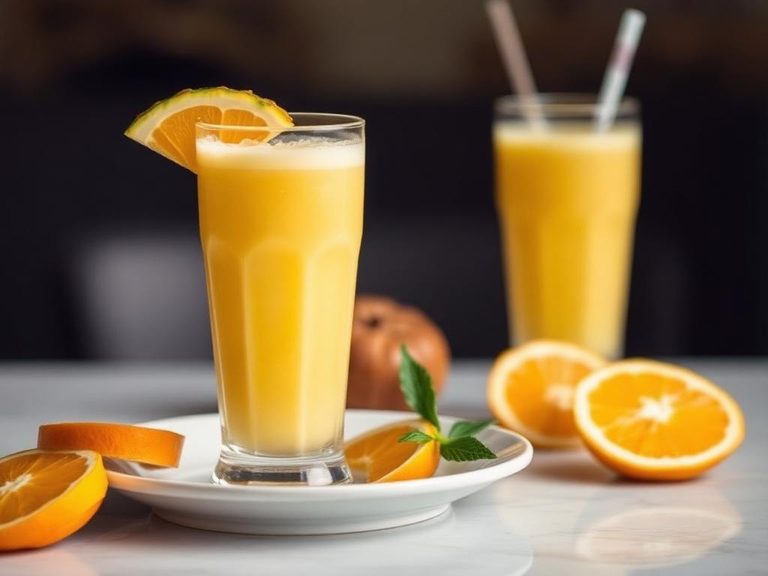
Orange Pineapple Juice Blend
Whole food · Fruits and Fruit Juices
A vibrant, tropical fusion of sweet pineapple and tangy orange, this juice blend delivers a bright, sun-kissed flavor with a smooth, refreshing texture. It's a low-calorie, hydrating option packed with natural sugars and a notable dose of Vitamin C, making it a popular choice for a quick energy boost or a flavorful mixer.
Calorie split: 3% protein · 95% carbs · 1% fat
↓ Full nutrition💚 Why it's loved
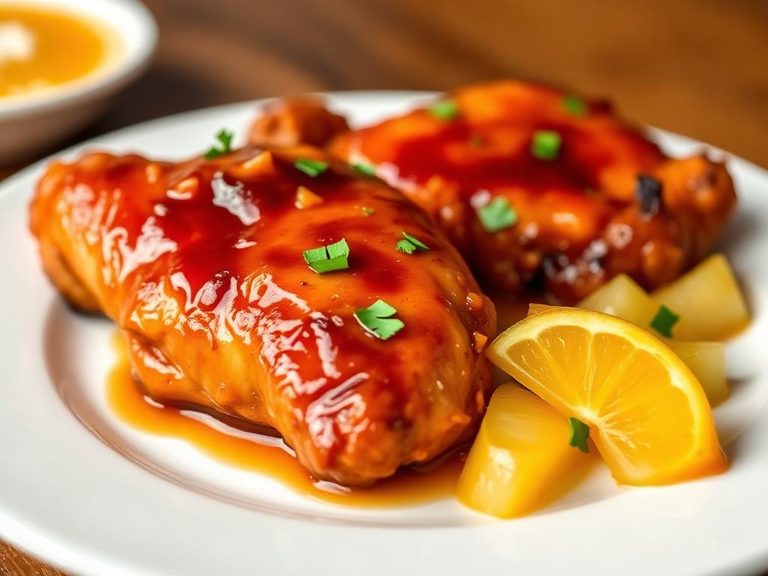
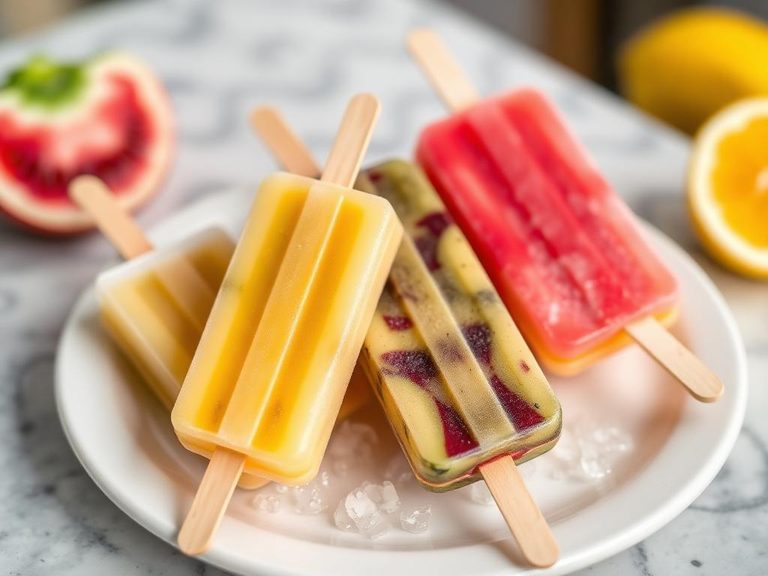
People adore its perfectly balanced sweet-tart profile that captures the essence of summer in a glass. Its versatility shines as a standalone refreshment, a base for smoothies and cocktails, or a bright addition to marinades and dressings.
⚠️ Watch-outs & how to enjoy it better
The high natural sugar content (over 10g per 100g) can cause rapid blood sugar spikes, making it a concern for diabetics or those monitoring glucose. To mitigate this, pair it with a source of protein or healthy fat (like a handful of nuts or Greek yogurt) to slow sugar absorption, and practice portion control by diluting it with water or sparkling water.
Key benefits
- Excellent source of Vitamin C, supporting immune function.
- Provides natural sugars for a quick energy source.
- Low in fat and contains no cholesterol.
- Hydrating and refreshing, ideal for warm weather.
- Contains small amounts of potassium and folate.
🍽️ Popular dishes


🌍 Where it's eaten
💡 Did you know?
The bromelain enzyme in pineapple, which can tenderize meat, is largely inactivated by the pasteurization process used for commercial juices, so this blend won't break down the proteins in your marinade as effectively as fresh pineapple.
Full nutrition (USDA data · scales with serving)
| Water | 87.2 g |
| Energy | 51.0 kcal |
| Energy | 214 kj |
| Protein | 0.41 g |
| Total lipid (fat) | 0.08 g |
| Ash | 0.35 g |
| Carbohydrate, by difference | 12.2 g |
| Fiber, total dietary | 0.20 g |
| Total Sugars | 10.6 g |
| Calcium, Ca | 8.0 mg |
| Iron, Fe | 0.18 mg |
| Magnesium, Mg | 10.0 mg |
| Phosphorus, P | 11.0 mg |
| Potassium, K | 150 mg |
| Sodium, Na | 4.0 mg |
| Zinc, Zn | 0.06 mg |
| Copper, Cu | 0.03 mg |
| Manganese, Mn | 0.38 mg |
| Selenium, Se | 0.10 ug |
| Vitamin C, total ascorbic acid | 40.7 mg |
| Thiamin | 0.04 mg |
| Riboflavin | 0.03 mg |
| Niacin | 0.17 mg |
| Vitamin B-6 | 0.06 mg |
| Folate, total | 10.0 ug |
| Folic acid | 0.00 ug |
| Folate, food | 10.0 ug |
| Folate, DFE | 10.0 ug |
| Choline, total | 3.8 mg |
| Vitamin B-12 | 0.00 ug |
| Vitamin B-12, added | 0.00 ug |
| Vitamin A, RAE | 1.0 ug |
| Retinol | 0.00 ug |
| Carotene, beta | 5.0 ug |
| Carotene, alpha | 3.0 ug |
| Cryptoxanthin, beta | 9.0 ug |
| Vitamin A, IU | 17.0 iu |
| Lycopene | 0.00 ug |
| Lutein + zeaxanthin | 14.0 ug |
| Vitamin E (alpha-tocopherol) | 0.07 mg |
| Vitamin E, added | 0.00 mg |
| Vitamin D (D2 + D3), International Units | 0.00 iu |
| Vitamin D (D2 + D3) | 0.00 ug |
| Vitamin K (phylloquinone) | 0.10 ug |
| Alcohol, ethyl | 0.00 g |
| Caffeine | 0.00 mg |
| Theobromine | 0.00 mg |
Fat & fatty acid profile (per 100g)
| Fatty acids, total saturated | 0.01 g |
| SFA 4:0 | 0.00 g |
| SFA 6:0 | 0.00 g |
| SFA 8:0 | 0.00 g |
| SFA 10:0 | 0.00 g |
| SFA 12:0 | 0.00 g |
| SFA 14:0 | 0.00 g |
| SFA 16:0 | 0.01 g |
| SFA 18:0 | 0.00 g |
| Fatty acids, total monounsaturated | 0.01 g |
| MUFA 16:1 | 0.00 g |
| MUFA 18:1 | 0.01 g |
| MUFA 20:1 | 0.00 g |
| MUFA 22:1 | 0.00 g |
| Fatty acids, total polyunsaturated | 0.02 g |
| PUFA 18:2 | 0.02 g |
| PUFA 18:3 | 0.01 g |
| PUFA 18:4 | 0.00 g |
| PUFA 20:4 | 0.00 g |
| PUFA 20:5 n-3 (EPA) | 0.00 g |
| PUFA 22:5 n-3 (DPA) | 0.00 g |
| PUFA 22:6 n-3 (DHA) | 0.00 g |
| Fatty acids, total trans | 0.00 g |
| Cholesterol | 0.00 mg |
FAQ
Is orange pineapple juice blend the same as 'sunny D'?
No. SunnyD is a citrus-flavored beverage that often contains added sugars, preservatives, and a lower percentage of actual fruit juice. A pure orange pineapple juice blend is made from concentrated or freshly squeezed fruit juices with no added sugars.
Can I use this blend in baking?
Yes, it can be used in cakes, muffins, or glazes to add moisture and a tropical flavor. However, its high sugar content may affect the recipe's overall sweetness and texture, so you might need to adjust other sugars in the recipe.
Why does the color sometimes separate or look different?
Natural separation can occur because the pulp and particles from the different fruits settle over time. This is normal for juices without stabilizers. Simply shake the container well before pouring to recombine.
Nutrient density (calculated · NRF9.3)
Nutrient Rich Foods index: beneficial nutrients (protein, fiber, vitamins, minerals) minus saturated fat, added sugar & sodium, per 100 kcal.
NRF9.3 index — Fulgoni, Keast & Drewnowski, 2009. Computed from USDA nutrients.
Weight-loss friendliness (composite index)
Energy density 0.51 kcal/g · 3% calories from protein · 0.2 g fiber · 10.6 g sugar per 100 g.
Composite of energy density (Rolls et al., 1999), protein & fiber satiety, minus sugar. A calculated heuristic — ranks satiety-per-calorie, not a clinical measure.
Dietary load (calculated from USDA values)
Potential renal acid load. Positive = acid-forming, negative = alkaline-forming.
Sodium-to-potassium ratio: 0.03 (lower is better — aim for ≤ 1)
Sodium:potassium per WHO potassium guidance. Computed from USDA nutrients.