

Mollusks, oyster, eastern, farmed, cooked, dry heat
Whole food · Finfish and Shellfish Products

Photo: Wikipedia
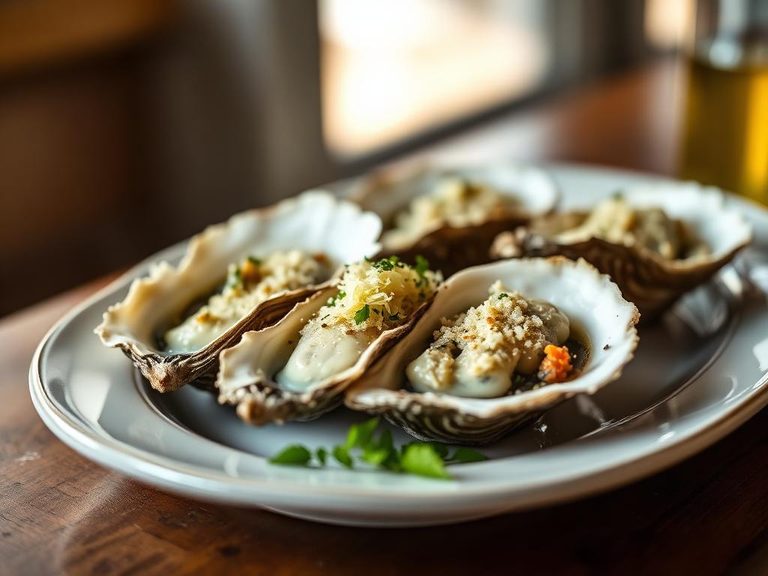
Farmed eastern oysters, cooked by dry heat, transform from briny, slippery jewels into tender, savory bites with a subtle sweetness and a firm yet juicy texture. They pack a surprising protein punch for their size, delivering 7 grams per 100g while remaining low in calories and fat.
Calorie split: 37% protein · 38% carbs · 25% fat
↓ Full nutrition💚 Why it's loved
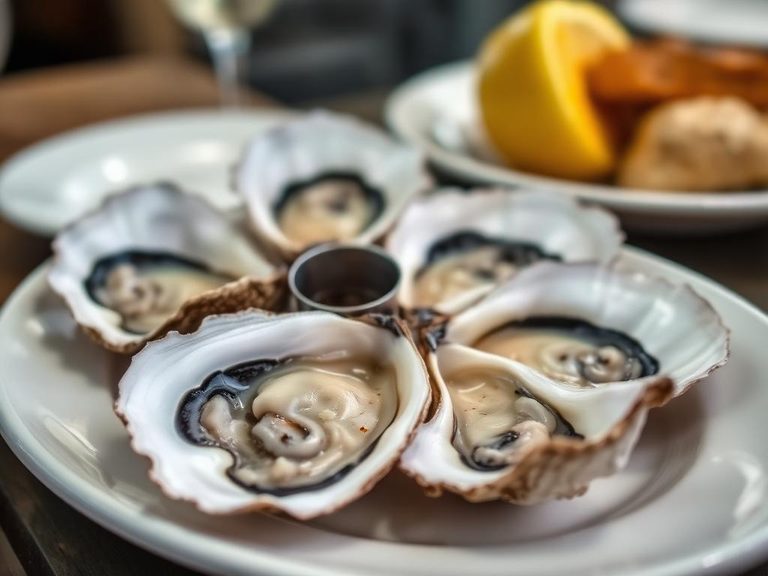
People cherish oysters for their unique, terroir-driven taste of the sea, which can range from creamy and sweet to briny and mineral. Their versatility allows them to be enjoyed simply grilled, baked, or fried, making them a centerpiece for both rustic feasts and elegant dining.
⚠️ Watch-outs & how to enjoy it better
Oysters are a common shellfish allergen and can concentrate waterborne contaminants like norovirus or heavy metals if not sourced carefully. To mitigate risks, purchase from reputable, regulated farms and ensure they are cooked to an internal temperature of 145°F (63°C) to kill pathogens.
Key benefits
- Excellent source of high-quality protein
- Low in calories and total fat
- Naturally rich in zinc and vitamin B12
- Contains beneficial omega-3 fatty acids
- Source of selenium and iron
🍽️ Popular dishes



🌍 Where it's eaten
💡 Did you know?
A single oyster can filter up to 50 gallons of water per day, playing a vital role in cleaning and clarifying its marine habitat.
Full nutrition (USDA data · scales with serving)
| Water | 82.0 g |
| Energy | 79.0 kcal |
| Energy | 331 kj |
| Protein | 7.0 g |
| Total lipid (fat) | 2.1 g |
| Ash | 1.6 g |
| Carbohydrate, by difference | 7.3 g |
| Fiber, total dietary | 0.00 g |
| Calcium, Ca | 56.0 mg |
| Iron, Fe | 7.8 mg |
| Magnesium, Mg | 33.0 mg |
| Phosphorus, P | 115 mg |
| Potassium, K | 152 mg |
| Sodium, Na | 163 mg |
| Zinc, Zn | 45.1 mg |
| Copper, Cu | 1.4 mg |
| Manganese, Mn | 0.42 mg |
| Selenium, Se | 77.5 ug |
| Vitamin C, total ascorbic acid | 6.0 mg |
| Thiamin | 0.13 mg |
| Riboflavin | 0.06 mg |
| Niacin | 1.8 mg |
| Pantothenic acid | 0.20 mg |
| Vitamin B-6 | 0.08 mg |
| Folate, total | 24.0 ug |
| Folic acid | 0.00 ug |
| Folate, food | 24.0 ug |
| Folate, DFE | 24.0 ug |
| Vitamin B-12 | 24.3 ug |
| Vitamin A, RAE | 19.0 ug |
| Retinol | 19.0 ug |
| Vitamin A, IU | 63.0 iu |
Fat & fatty acid profile (per 100g)
| Fatty acids, total saturated | 0.68 g |
| SFA 14:0 | 0.05 g |
| SFA 16:0 | 0.49 g |
| SFA 18:0 | 0.07 g |
| Fatty acids, total monounsaturated | 0.23 g |
| MUFA 16:1 | 0.06 g |
| MUFA 18:1 | 0.11 g |
| MUFA 20:1 | 0.05 g |
| Fatty acids, total polyunsaturated | 0.71 g |
| PUFA 18:2 | 0.04 g |
| PUFA 18:3 | 0.06 g |
| PUFA 18:4 | 0.12 g |
| PUFA 20:4 | 0.04 g |
| PUFA 20:5 n-3 (EPA) | 0.23 g |
| PUFA 22:6 n-3 (DHA) | 0.21 g |
| Cholesterol | 38.0 mg |
Amino acid profile (per 100g)
| Tryptophan | 0.08 g |
| Threonine | 0.30 g |
| Isoleucine | 0.30 g |
| Leucine | 0.49 g |
| Lysine | 0.52 g |
| Methionine | 0.16 g |
| Cystine | 0.09 g |
| Phenylalanine | 0.25 g |
| Tyrosine | 0.22 g |
| Valine | 0.31 g |
| Arginine | 0.51 g |
| Histidine | 0.13 g |
| Alanine | 0.42 g |
| Aspartic acid | 0.68 g |
| Glutamic acid | 0.95 g |
| Glycine | 0.44 g |
| Proline | 0.29 g |
| Serine | 0.31 g |
FAQ
How does cooking affect the nutrition of oysters?
Cooking, especially dry heat methods like grilling or baking, concentrates the protein and minerals slightly by removing water, but can reduce the heat-sensitive vitamin B12 content. The overall calorie and macronutrient profile remains similar to the raw state.
Are farmed oysters as nutritious as wild ones?
Yes, farmed oysters are often more consistent in nutrition and safety. They are raised in controlled environments, which can lead to a reliable nutrient profile and lower risk of contamination compared to wild oysters harvested from variable conditions.
Can I eat oysters if I'm watching my cholesterol?
Oysters contain dietary cholesterol, but they are low in saturated fat and provide heart-healthy omega-3s. For most people, moderate consumption fits into a cholesterol-conscious diet, but it's best to consult with a healthcare provider for personalized advice.
Nutrient density (calculated · NRF9.3)
Nutrient Rich Foods index: beneficial nutrients (protein, fiber, vitamins, minerals) minus saturated fat, added sugar & sodium, per 100 kcal.
NRF9.3 index — Fulgoni, Keast & Drewnowski, 2009. Computed from USDA nutrients.
Weight-loss friendliness (composite index)
Energy density 0.79 kcal/g · 35% calories from protein · 0.0 g fiber · 0.0 g sugar per 100 g.
Composite of energy density (Rolls et al., 1999), protein & fiber satiety, minus sugar. A calculated heuristic — ranks satiety-per-calorie, not a clinical measure.
Dietary load (calculated from USDA values)
Potential renal acid load. Positive = acid-forming, negative = alkaline-forming.
Sodium-to-potassium ratio: 1.07 (lower is better — aim for ≤ 1)
Sodium:potassium per WHO potassium guidance. Computed from USDA nutrients.