

Mollusks, oyster, eastern, cooked, breaded and fried
Whole food · Finfish and Shellfish Products
Breaded and fried eastern oysters transform briny, plump mollusks into crispy, golden nuggets with a satisfying crunch that gives way to a tender, ocean-sweet interior. The breading adds a savory, toasted layer that balances the oyster's natural salinity. Nutritionally, they offer a solid protein boost (8.77g per 100g) alongside a notable fat content from the frying process.
Calorie split: 18% protein · 24% carbs · 58% fat
↓ Full nutrition💚 Why it's loved
People adore them for the irresistible contrast between the crunchy, seasoned coating and the juicy, briny oyster inside, a texture experience that's deeply satisfying. They are a beloved staple in coastal comfort food and pub fare, often served as a shareable appetizer or a hearty sandwich filling.
⚠️ Watch-outs & how to enjoy it better
The breading and frying method significantly increases the calorie and fat content compared to raw or steamed oysters, making them less ideal for low-fat diets. They can be high in sodium, and the frying process may reduce some heat-sensitive nutrients. To counteract this, pair them with a fresh, acidic slaw or a simple green salad to add fiber and cut the richness, and practice portion control by enjoying them as an occasional treat rather than a daily meal.
Key benefits
- Good source of complete protein
- Provides zinc and selenium for immune support
- Contains omega-3 fatty acids
- Offers B12 for nerve function
- Iron content supports oxygen transport
🍽️ Popular dishes
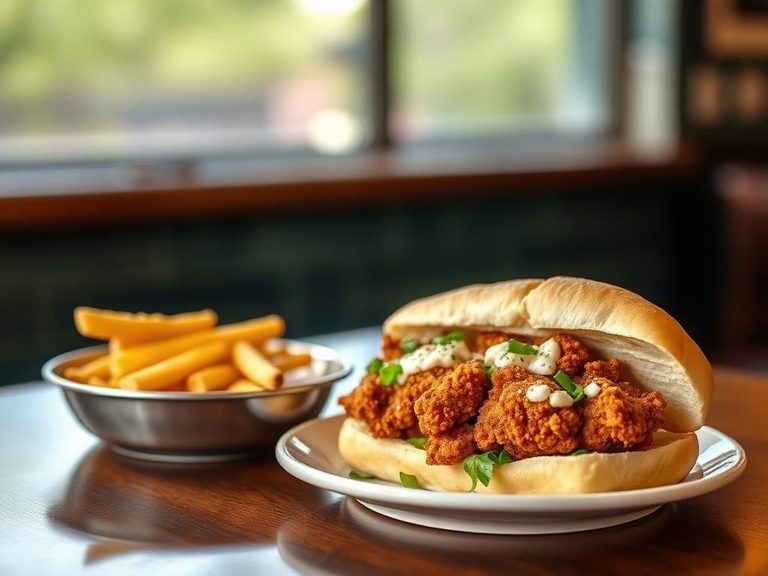
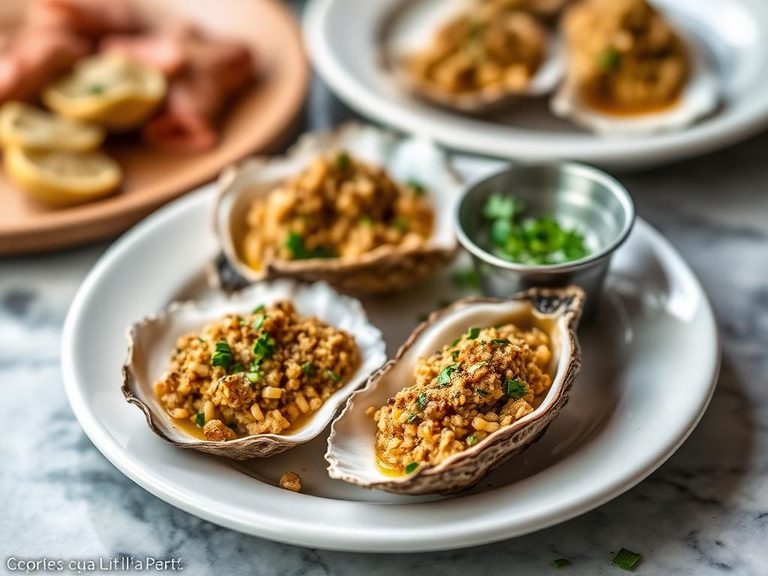
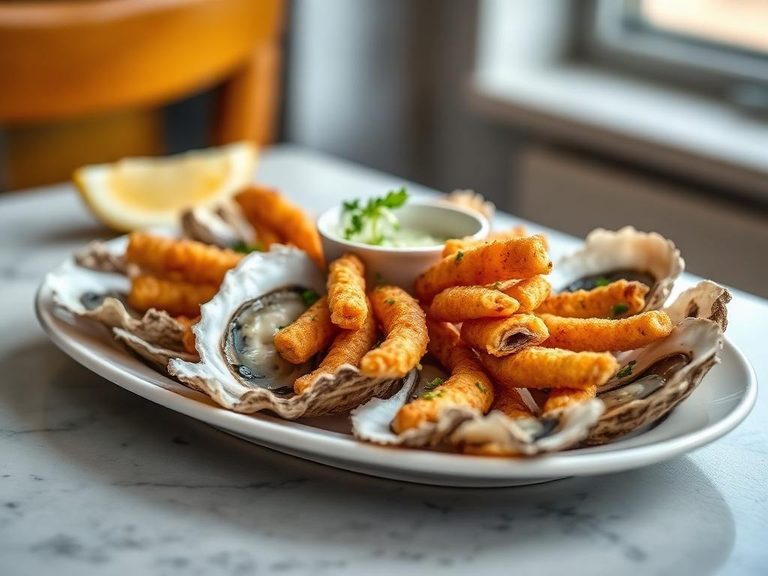
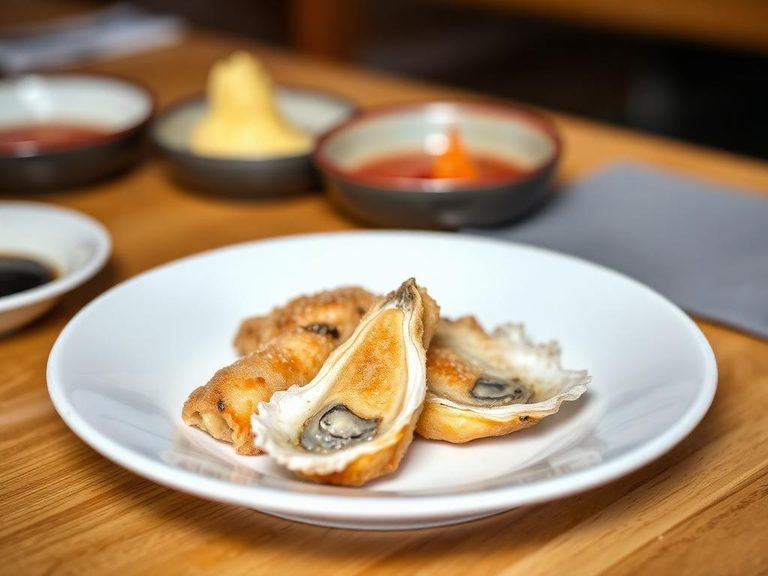
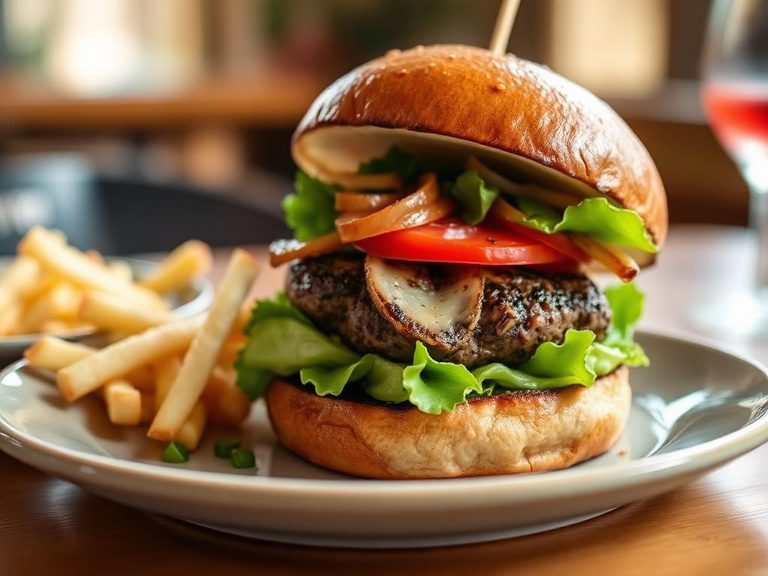
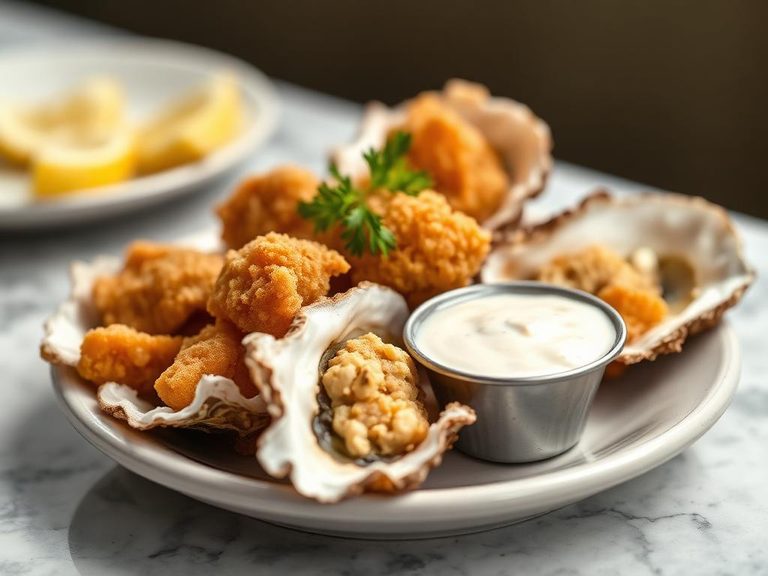
🌍 Where it's eaten
💡 Did you know?
The practice of breading and frying oysters became particularly popular in the United States during the late 19th and early 20th centuries as a way to make shellfish more accessible and palatable to inland populations.
Full nutrition (USDA data · scales with serving)
| Water | 64.7 g |
| Energy | 199 kcal |
| Energy | 832 kj |
| Protein | 8.8 g |
| Total lipid (fat) | 12.6 g |
| Ash | 1.7 g |
| Carbohydrate, by difference | 11.6 g |
| Calcium, Ca | 62.0 mg |
| Iron, Fe | 7.0 mg |
| Magnesium, Mg | 58.0 mg |
| Phosphorus, P | 159 mg |
| Potassium, K | 244 mg |
| Sodium, Na | 417 mg |
| Zinc, Zn | 87.1 mg |
| Copper, Cu | 4.3 mg |
| Manganese, Mn | 0.49 mg |
| Selenium, Se | 66.5 ug |
| Vitamin C, total ascorbic acid | 3.8 mg |
| Thiamin | 0.15 mg |
| Riboflavin | 0.20 mg |
| Niacin | 1.6 mg |
| Pantothenic acid | 0.27 mg |
| Vitamin B-6 | 0.06 mg |
| Folate, total | 31.0 ug |
| Folic acid | 17.0 ug |
| Folate, food | 14.0 ug |
| Folate, DFE | 43.0 ug |
| Vitamin B-12 | 15.6 ug |
| Vitamin A, RAE | 90.0 ug |
| Vitamin A, IU | 302 iu |
Fat & fatty acid profile (per 100g)
| Fatty acids, total saturated | 3.2 g |
| SFA 14:0 | 0.15 g |
| SFA 16:0 | 1.9 g |
| SFA 18:0 | 1.1 g |
| Fatty acids, total monounsaturated | 4.7 g |
| MUFA 16:1 | 0.09 g |
| MUFA 18:1 | 4.4 g |
| MUFA 20:1 | 0.06 g |
| MUFA 22:1 | 0.01 g |
| Fatty acids, total polyunsaturated | 3.3 g |
| PUFA 18:2 | 2.4 g |
| PUFA 18:3 | 0.16 g |
| PUFA 18:4 | 0.09 g |
| PUFA 20:4 | 0.07 g |
| PUFA 20:5 n-3 (EPA) | 0.20 g |
| PUFA 22:5 n-3 (DPA) | 0.05 g |
| PUFA 22:6 n-3 (DHA) | 0.22 g |
| Cholesterol | 71.0 mg |
Amino acid profile (per 100g)
| Tryptophan | 0.10 g |
| Threonine | 0.36 g |
| Isoleucine | 0.40 g |
| Leucine | 0.64 g |
| Lysine | 0.58 g |
| Methionine | 0.20 g |
| Cystine | 0.13 g |
| Phenylalanine | 0.35 g |
| Tyrosine | 0.29 g |
| Valine | 0.41 g |
| Arginine | 0.58 g |
| Histidine | 0.17 g |
| Alanine | 0.49 g |
| Aspartic acid | 0.78 g |
| Glutamic acid | 1.5 g |
| Glycine | 0.49 g |
| Proline | 0.47 g |
| Serine | 0.43 g |
FAQ
Are fried oysters healthy?
They provide protein and beneficial minerals like zinc, but the frying process adds significant fat and calories. They are best enjoyed in moderation as part of a balanced diet.
What's the best way to reheat fried oysters?
Reheat in a preheated oven or air fryer at 375°F (190°C) for 5-8 minutes to re-crisp the breading. Avoid microwaving, which will make them soggy.
Can I make them with a different coating?
Yes, common alternatives include cornmeal, panko breadcrumbs, or a light flour dredge, each offering a different texture and flavor profile.
Nutrient density (calculated · NRF9.3)
Nutrient Rich Foods index: beneficial nutrients (protein, fiber, vitamins, minerals) minus saturated fat, added sugar & sodium, per 100 kcal.
NRF9.3 index — Fulgoni, Keast & Drewnowski, 2009. Computed from USDA nutrients.
Weight-loss friendliness (composite index)
Energy density 1.99 kcal/g · 18% calories from protein · 0.0 g fiber · 0.0 g sugar per 100 g.
Composite of energy density (Rolls et al., 1999), protein & fiber satiety, minus sugar. A calculated heuristic — ranks satiety-per-calorie, not a clinical measure.
Dietary load (calculated from USDA values)
Potential renal acid load. Positive = acid-forming, negative = alkaline-forming.
Sodium-to-potassium ratio: 1.71 (lower is better — aim for ≤ 1)
Sodium:potassium per WHO potassium guidance. Computed from USDA nutrients.