

Lettuce, romaine, green, raw
Whole food · Vegetables and Vegetable Products
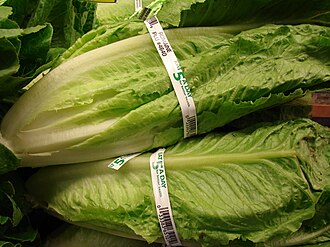
Photo: Wikipedia
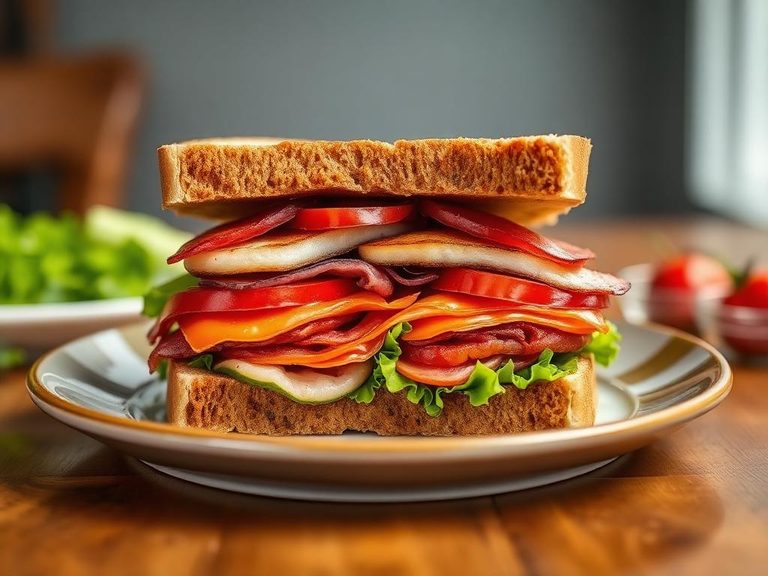
Romaine lettuce is a crisp, elongated leaf with a sturdy, pale rib and a fresh, mildly sweet, slightly bitter flavor. Its satisfying crunch and refreshing juiciness make it a staple in salads and sandwiches. Nutritionally, it's exceptionally low-calorie (21 kcal/100g) and provides a good source of vitamin A (as beta-carotene) and vitamin K.
Calorie split: 19% protein · 78% carbs · 3% fat
↓ Full nutrition💚 Why it's loved
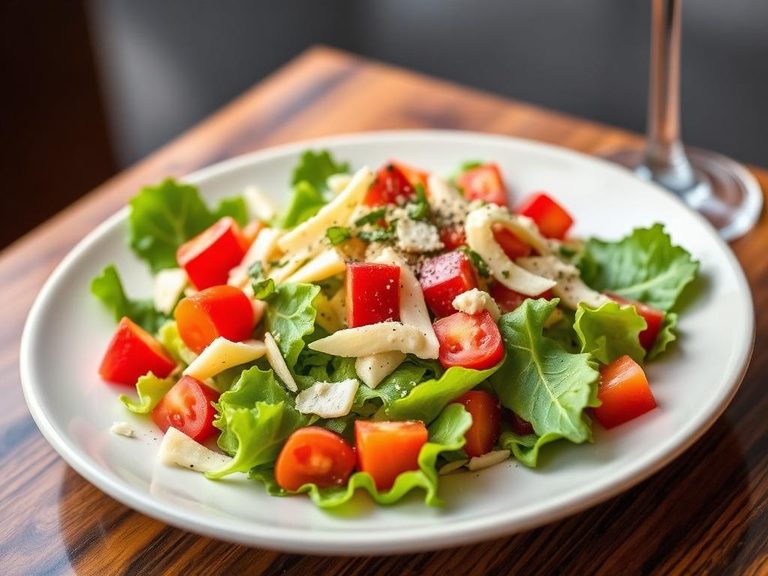
People love romaine for its perfect balance of crisp texture and mild, sweet flavor that acts as a versatile canvas for other ingredients. It's the iconic backbone of the Caesar salad, beloved for its ability to hold up to creamy dressings without wilting.
⚠️ Watch-outs & how to enjoy it better
Romaine lettuce can be a vehicle for foodborne illnesses like E. coli if contaminated, as it's often consumed raw. Those on blood thinners should be mindful of its vitamin K content, which can interfere with medication. To counteract risks, always wash leaves thoroughly under running water, even pre-washed bags, and consult a doctor about consistent intake if on anticoagulants.
Key benefits
- Excellent source of vitamin A for vision and immune health
- Good source of vitamin K for bone health
- Very low in calories, aiding weight management
- High water content supports hydration
- Provides folate and small amounts of vitamin C and potassium
🍽️ Popular dishes
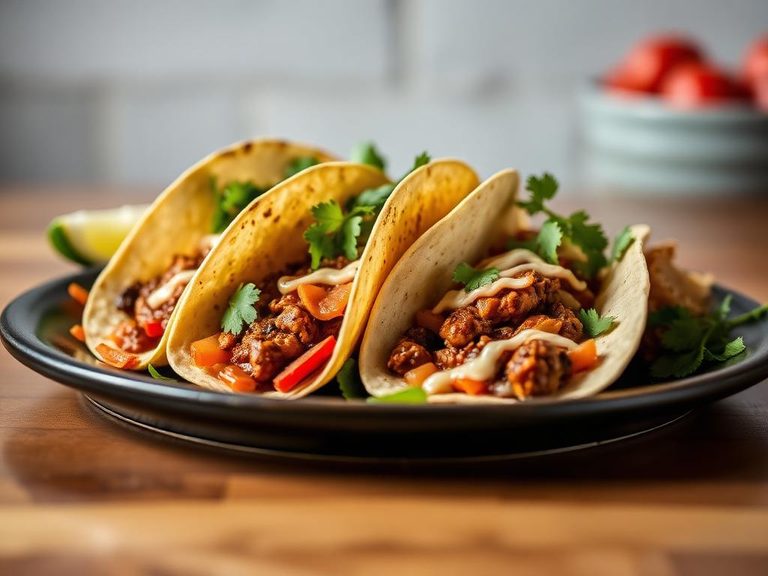
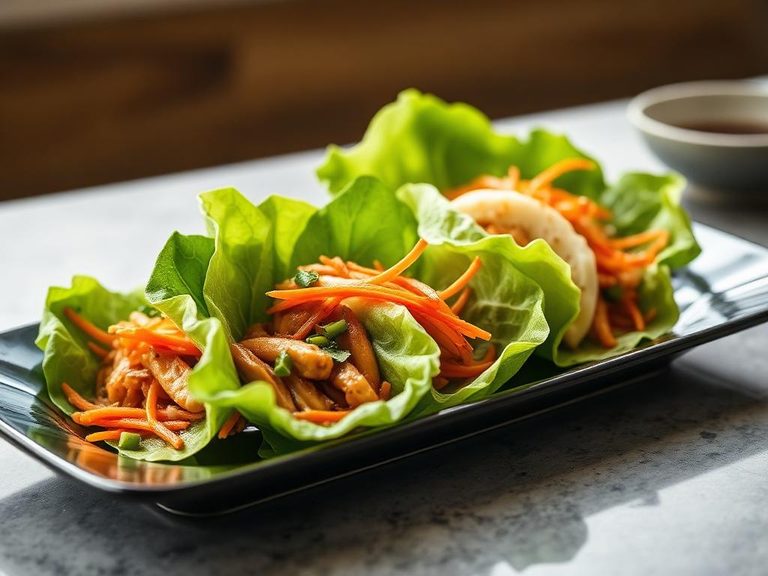
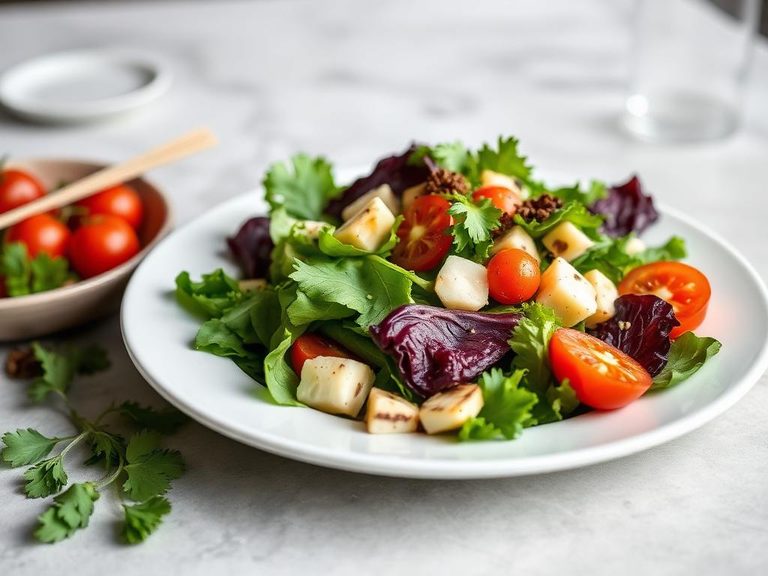
🌍 Where it's eaten
💡 Did you know?
Ancient Egyptians cultivated romaine lettuce not for its leaves, but for its seeds and oil-rich stem, which they used to produce a form of lettuce oil.
Full nutrition (USDA data · scales with serving)
| Water | 94.3 g |
| Energy (Atwater General Factors) | 20.8 kcal |
| Energy (Atwater Specific Factors) | 17.5 kcal |
| Nitrogen | 0.16 g |
| Protein | 0.98 g |
| Total lipid (fat) | 0.07 g |
| Ash | 0.61 g |
| Carbohydrate, by difference | 4.1 g |
| Calcium, Ca | 27.6 mg |
| Iron, Fe | 0.27 mg |
| Magnesium, Mg | 12.1 mg |
| Phosphorus, P | 23.4 mg |
| Potassium, K | 260 mg |
| Sodium, Na | 23.0 mg |
| Zinc, Zn | 0.25 mg |
| Copper, Cu | 0.05 mg |
| Manganese, Mn | 0.23 mg |
| Thiamin | 0.06 mg |
| Niacin | 0.37 mg |
| Vitamin B-6 | 0.06 mg |
| Vitamin K (phylloquinone) | 83.4 ug |
| Vitamin K (Dihydrophylloquinone) | 0.00 ug |
| Vitamin K (Menaquinone-4) | 0.00 ug |
Fat & fatty acid profile (per 100g)
Estimated from Lettuce, butterhead (includes boston and bibb types), raw — USDA does not publish this profile for Lettuce.
| Fatty acids, total saturated | 0.03 g |
| SFA 4:0 | 0.00 g |
| SFA 6:0 | 0.00 g |
| SFA 8:0 | 0.00 g |
| SFA 10:0 | 0.00 g |
| SFA 12:0 | 0.00 g |
| SFA 14:0 | 0.00 g |
| SFA 16:0 | 0.03 g |
| SFA 18:0 | 0.00 g |
| Fatty acids, total monounsaturated | 0.01 g |
| MUFA 16:1 | 0.00 g |
| MUFA 18:1 | 0.01 g |
| MUFA 20:1 | 0.00 g |
| MUFA 22:1 | 0.00 g |
| Fatty acids, total polyunsaturated | 0.12 g |
| PUFA 18:2 | 0.03 g |
| PUFA 18:3 | 0.08 g |
| PUFA 18:4 | 0.00 g |
| PUFA 20:4 | 0.00 g |
| PUFA 20:5 n-3 (EPA) | 0.00 g |
| PUFA 22:5 n-3 (DPA) | 0.00 g |
| PUFA 22:6 n-3 (DHA) | 0.00 g |
| Fatty acids, total trans | 0.00 g |
| Cholesterol | 0.00 mg |
Amino acid profile (per 100g)
Estimated from Lettuce, butterhead (includes boston and bibb types), raw — USDA does not publish this profile for Lettuce.
| Tryptophan | 0.01 g |
| Threonine | 0.04 g |
| Isoleucine | 0.04 g |
| Leucine | 0.07 g |
| Lysine | 0.06 g |
| Methionine | 0.01 g |
| Cystine | 0.01 g |
| Phenylalanine | 0.05 g |
| Tyrosine | 0.02 g |
| Valine | 0.05 g |
| Arginine | 0.05 g |
| Histidine | 0.02 g |
| Alanine | 0.05 g |
| Aspartic acid | 0.14 g |
| Glutamic acid | 0.21 g |
| Glycine | 0.04 g |
| Proline | 0.04 g |
| Serine | 0.05 g |
FAQ
Is the dark green leaf part of romaine more nutritious than the pale rib?
Yes. The darker outer leaves contain significantly more beta-carotene (vitamin A) and chlorophyll than the paler, watery inner ribs, though both parts are nutritious.
How do I keep romaine lettuce fresh longer?
Wrap the unwashed head in a dry paper towel and place it in a perforated plastic bag in the crisper drawer. This absorbs excess moisture, which causes slime and decay.
Can I cook romaine lettuce?
Absolutely. Romaine's sturdy structure holds up well to quick grilling or sautéing, which brings out a sweeter, smokier flavor and a tender-crisp texture, perfect as a side dish.
Nutrient density (calculated · NRF9.3)
Nutrient Rich Foods index: beneficial nutrients (protein, fiber, vitamins, minerals) minus saturated fat, added sugar & sodium, per 100 kcal.
NRF9.3 index — Fulgoni, Keast & Drewnowski, 2009. Computed from USDA nutrients.
Weight-loss friendliness (composite index)
Energy density 0.21 kcal/g · 19% calories from protein · 0.0 g fiber · 0.0 g sugar per 100 g.
Composite of energy density (Rolls et al., 1999), protein & fiber satiety, minus sugar. A calculated heuristic — ranks satiety-per-calorie, not a clinical measure.
Dietary load (calculated from USDA values)
Potential renal acid load. Positive = acid-forming, negative = alkaline-forming.
Sodium-to-potassium ratio: 0.09 (lower is better — aim for ≤ 1)
Sodium:potassium per WHO potassium guidance. Computed from USDA nutrients.