

Lamb, variety meats and by-products, brain, raw
Whole food · Lamb, Veal, and Game Products
Lamb brain is a delicate, creamy organ meat with a soft, custard-like texture when cooked and a mild, subtly mineral flavor. It is exceptionally rich in nutrients like vitamin B12 and omega-3 fatty acids, offering a nutrient-dense option for adventurous eaters.
Calorie split: 35% protein · 0% carbs · 65% fat
↓ Full nutrition💚 Why it's loved
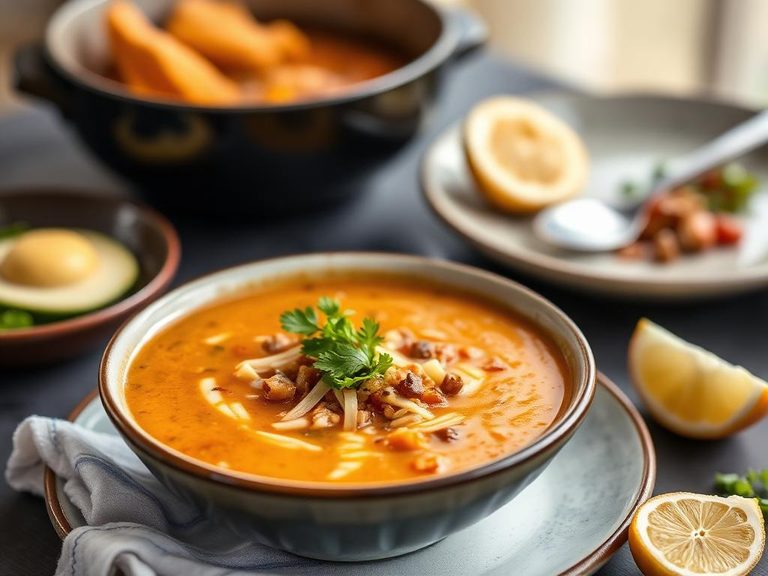
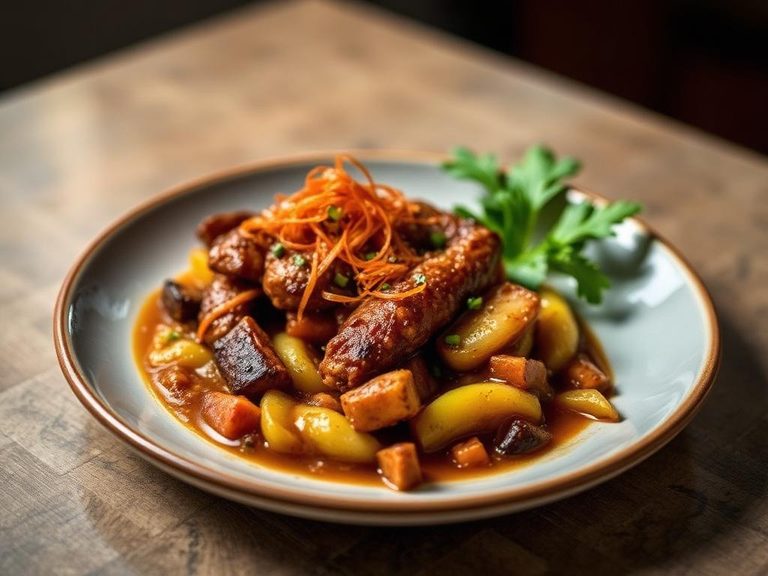
People love lamb brain for its uniquely rich, buttery flavor and luxurious, melt-in-your-mouth texture when prepared correctly. It is prized in many cuisines as a delicacy, often featured in traditional dishes for its distinct taste and cultural significance.
⚠️ Watch-outs & how to enjoy it better
The primary caution is its high dietary cholesterol content, which may be a concern for individuals managing specific health conditions. To enjoy it mindfully, practice strict portion control, pair it with fiber-rich vegetables, and consider it an occasional treat rather than a staple. Ensure it is sourced from reputable suppliers and cooked thoroughly to eliminate any food safety risks.
Key benefits
- Excellent source of vitamin B12 for nerve function.
- Contains DHA, an omega-3 fatty acid important for brain health.
- High in high-quality protein with all essential amino acids.
- Rich in choline, a nutrient for cell membranes and metabolism.
- Provides essential minerals like selenium and phosphorus.
🍽️ Popular dishes
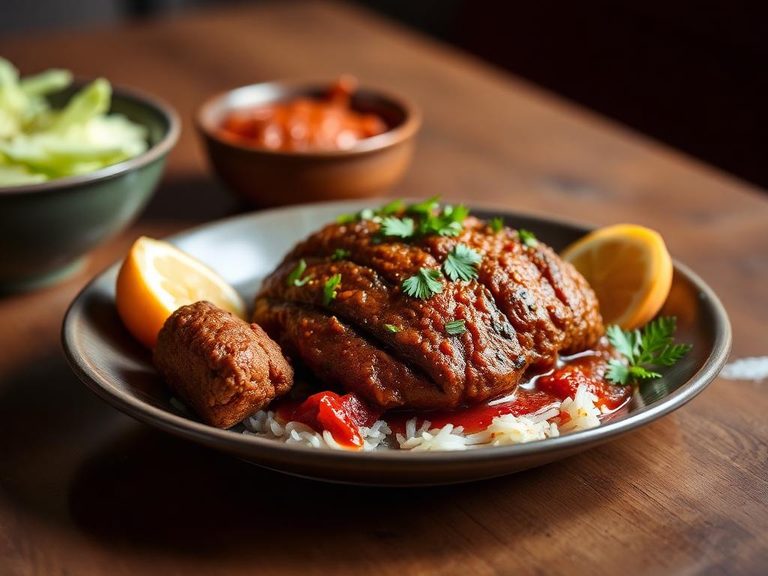
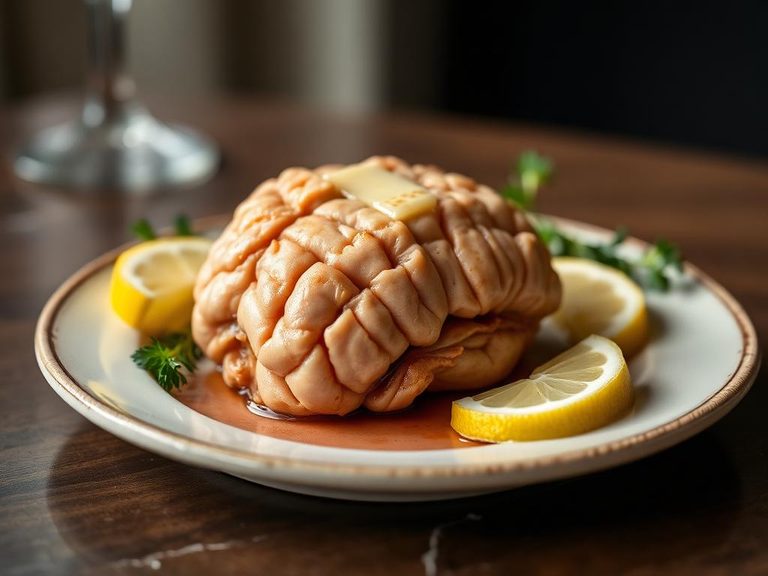
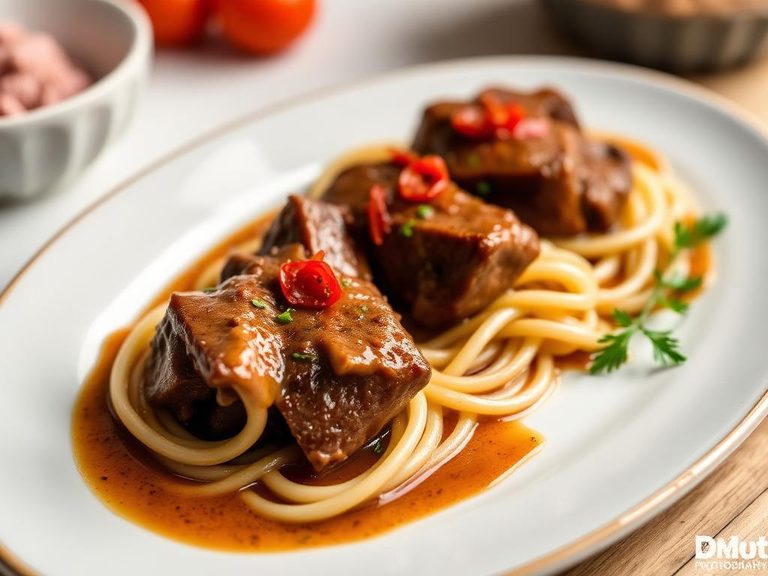
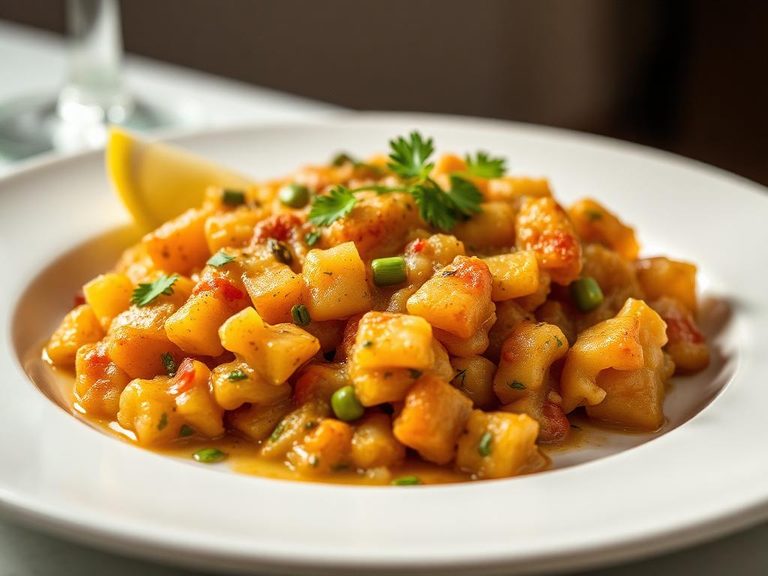
🌍 Where it's eaten
💡 Did you know?
A single serving of lamb brain can provide over 100% of the daily recommended intake for vitamin B12, a nutrient crucial for energy production and red blood cell formation.
Full nutrition (USDA data · scales with serving)
| Water | 79.2 g |
| Energy | 122 kcal |
| Energy | 510 kj |
| Protein | 10.4 g |
| Total lipid (fat) | 8.6 g |
| Ash | 1.3 g |
| Carbohydrate, by difference | 0.00 g |
| Fiber, total dietary | 0.00 g |
| Calcium, Ca | 9.0 mg |
| Iron, Fe | 1.8 mg |
| Magnesium, Mg | 12.0 mg |
| Phosphorus, P | 270 mg |
| Potassium, K | 296 mg |
| Sodium, Na | 112 mg |
| Zinc, Zn | 1.2 mg |
| Copper, Cu | 0.24 mg |
| Manganese, Mn | 0.04 mg |
| Selenium, Se | 9.0 ug |
| Vitamin C, total ascorbic acid | 16.0 mg |
| Thiamin | 0.13 mg |
| Riboflavin | 0.30 mg |
| Niacin | 3.9 mg |
| Pantothenic acid | 0.92 mg |
| Vitamin B-6 | 0.29 mg |
| Folate, total | 3.0 ug |
| Folic acid | 0.00 ug |
| Folate, food | 3.0 ug |
| Folate, DFE | 3.0 ug |
| Vitamin B-12 | 11.3 ug |
| Vitamin A, RAE | 0.00 ug |
| Retinol | 0.00 ug |
| Vitamin A, IU | 0.00 iu |
Fat & fatty acid profile (per 100g)
| Fatty acids, total saturated | 2.2 g |
| SFA 12:0 | 0.00 g |
| SFA 14:0 | 0.04 g |
| SFA 16:0 | 1.1 g |
| SFA 18:0 | 1.1 g |
| Fatty acids, total monounsaturated | 1.6 g |
| MUFA 16:1 | 0.05 g |
| MUFA 18:1 | 1.3 g |
| MUFA 20:1 | 0.12 g |
| MUFA 22:1 | 0.00 g |
| Fatty acids, total polyunsaturated | 0.88 g |
| PUFA 18:2 | 0.03 g |
| PUFA 18:3 | 0.00 g |
| PUFA 20:4 | 0.23 g |
| PUFA 20:5 n-3 (EPA) | 0.00 g |
| PUFA 22:5 n-3 (DPA) | 0.13 g |
| PUFA 22:6 n-3 (DHA) | 0.49 g |
| Cholesterol | 1352 mg |
Amino acid profile (per 100g)
| Tryptophan | 0.11 g |
| Threonine | 0.47 g |
| Isoleucine | 0.41 g |
| Leucine | 0.81 g |
| Lysine | 0.67 g |
| Methionine | 0.21 g |
| Cystine | 0.11 g |
| Phenylalanine | 0.50 g |
| Tyrosine | 0.38 g |
| Valine | 0.49 g |
| Arginine | 0.70 g |
| Histidine | 0.28 g |
| Alanine | 0.59 g |
| Aspartic acid | 0.87 g |
| Glutamic acid | 1.2 g |
| Glycine | 0.49 g |
| Proline | 0.45 g |
| Serine | 0.54 g |
FAQ
How is lamb brain typically prepared?
It is often soaked in milk or water to remove blood, then gently poached, sautéed, or fried. It's commonly used in curries, scrambled with eggs, or served in sandwiches.
Is lamb brain safe to eat?
When sourced from healthy animals and cooked thoroughly to an internal temperature of 160°F (71°C), it is safe. However, as with all organ meats, moderation is key due to its high cholesterol content.
What does lamb brain taste like?
It has a mild, slightly sweet and mineral flavor, often compared to a very rich, delicate sweetbread. The texture is soft and creamy when cooked properly.
Nutrient density (calculated · NRF9.3)
Nutrient Rich Foods index: beneficial nutrients (protein, fiber, vitamins, minerals) minus saturated fat, added sugar & sodium, per 100 kcal.
NRF9.3 index — Fulgoni, Keast & Drewnowski, 2009. Computed from USDA nutrients.
Weight-loss friendliness (composite index)
Energy density 1.22 kcal/g · 34% calories from protein · 0.0 g fiber · 0.0 g sugar per 100 g.
Composite of energy density (Rolls et al., 1999), protein & fiber satiety, minus sugar. A calculated heuristic — ranks satiety-per-calorie, not a clinical measure.
Dietary load (calculated from USDA values)
Potential renal acid load. Positive = acid-forming, negative = alkaline-forming.
Sodium-to-potassium ratio: 0.38 (lower is better — aim for ≤ 1)
Sodium:potassium per WHO potassium guidance. Computed from USDA nutrients.