

Lamb, loin, separable lean only, trimmed to 1/4" fat, choice, cooked, roasted
Whole food · Lamb, Veal, and Game Products
This is a lean, premium cut of roasted lamb loin, trimmed of most visible fat to deliver a tender, juicy, and subtly sweet meat with a mild, non-gamey flavor. It's a protein powerhouse, packing over 26 grams of protein per 100g with virtually no carbohydrates, making it an excellent choice for low-carb and high-protein diets. The cooking method of roasting concentrates its savory, umami-rich juices, resulting in a succulent texture that's both satisfying and elegant.
Calorie split: 55% protein · 0% carbs · 45% fat
↓ Full nutrition💚 Why it's loved
People love it for its delicate, tender texture and clean, savory flavor that isn't as intensely gamey as other lamb cuts, making it approachable even for those new to lamb. Its versatility allows it to be the star of a simple weeknight roast or an elegant dinner centerpiece, often paired with herbs like rosemary and mint.
⚠️ Watch-outs & how to enjoy it better
While lean, it can become dry and tough if overcooked due to its low fat content, which is a common pitfall for home cooks. Those watching their saturated fat intake should be mindful of portion sizes, and it can be expensive compared to other cuts; counteract dryness by using a meat thermometer and letting it rest before slicing.
Key benefits
- High-quality complete protein for muscle maintenance and satiety
- Excellent source of heme iron, which is highly bioavailable
- Rich in zinc, supporting immune function and wound healing
- Contains B vitamins like B12 and niacin for energy metabolism
- Naturally low in carbohydrates and sugar
🍽️ Popular dishes
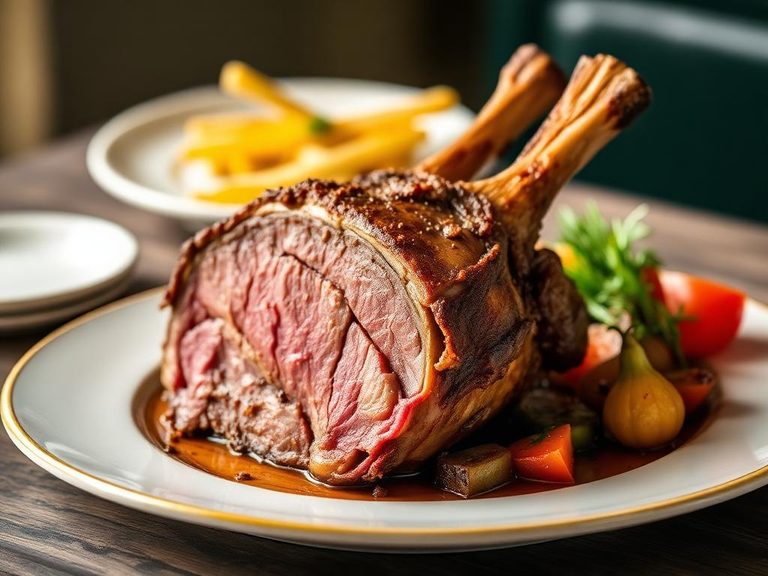
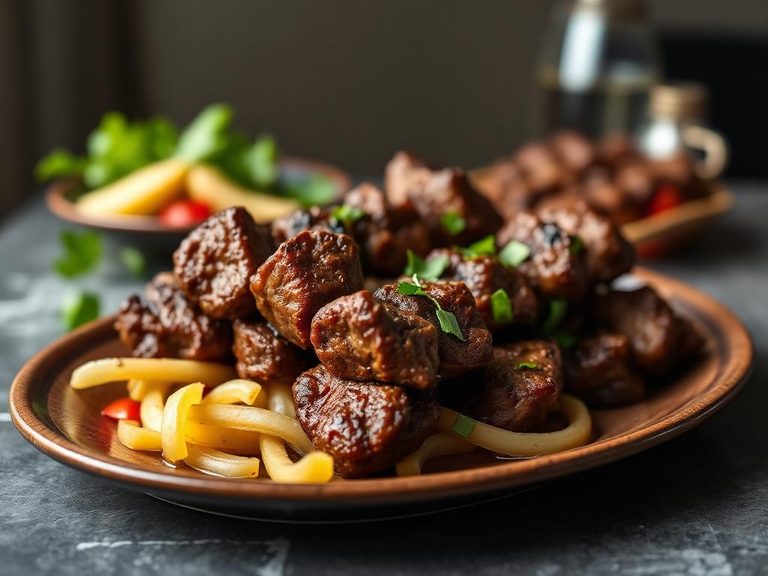
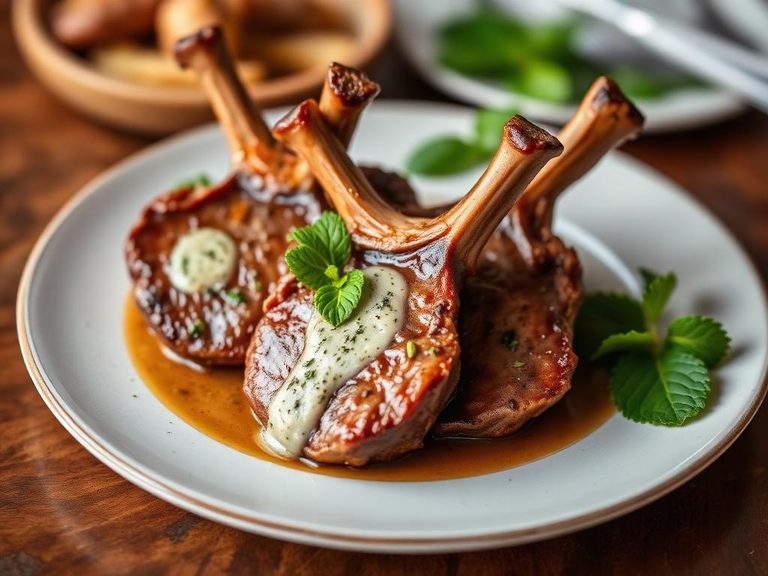
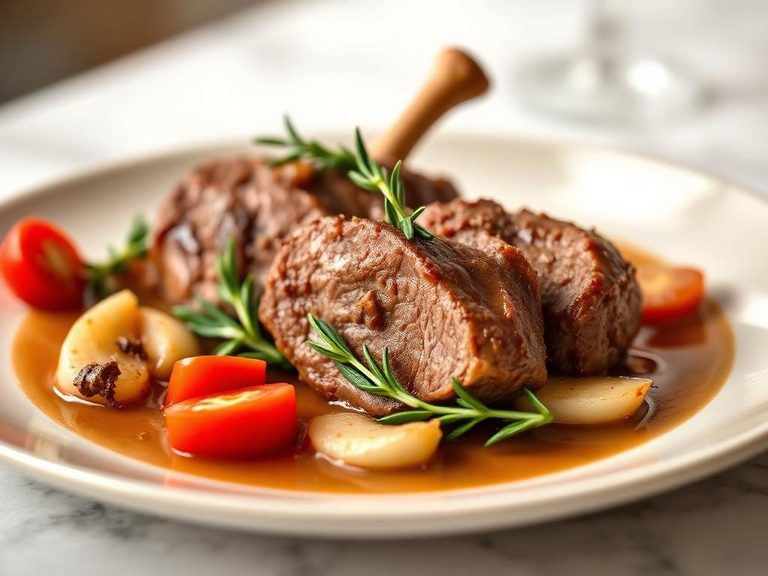
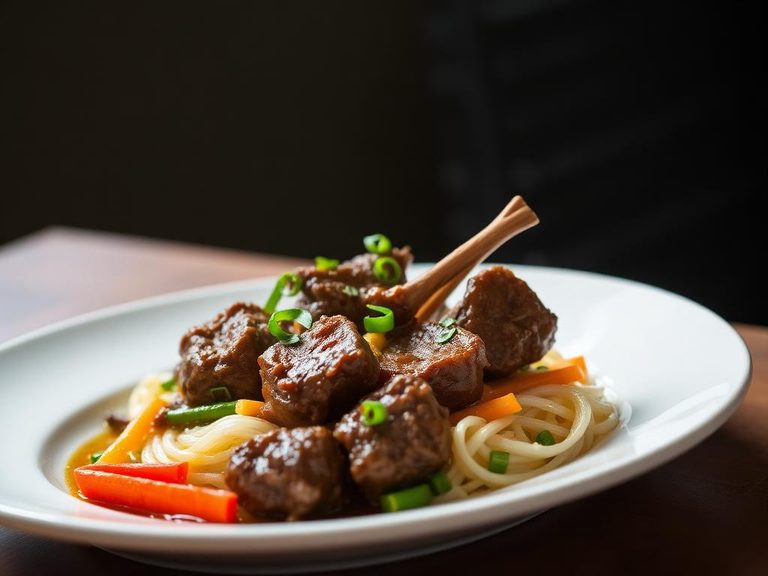
🌍 Where it's eaten
💡 Did you know?
Lamb loin is one of the most tender muscles in the animal, and its tenderness is largely due to the fact that it's a relatively unused muscle, meaning it has less connective tissue and collagen compared to tougher cuts like shoulder or shank.
Full nutrition (USDA data · scales with serving)
| Water | 62.8 g |
| Energy | 202 kcal |
| Energy | 845 kj |
| Protein | 26.6 g |
| Total lipid (fat) | 9.8 g |
| Ash | 1.4 g |
| Carbohydrate, by difference | 0.00 g |
| Fiber, total dietary | 0.00 g |
| Calcium, Ca | 17.0 mg |
| Iron, Fe | 2.4 mg |
| Magnesium, Mg | 27.0 mg |
| Phosphorus, P | 206 mg |
| Potassium, K | 267 mg |
| Sodium, Na | 66.0 mg |
| Zinc, Zn | 4.1 mg |
| Copper, Cu | 0.13 mg |
| Manganese, Mn | 0.03 mg |
| Selenium, Se | 30.3 ug |
| Vitamin C, total ascorbic acid | 0.00 mg |
| Thiamin | 0.10 mg |
| Riboflavin | 0.27 mg |
| Niacin | 6.8 mg |
| Pantothenic acid | 0.68 mg |
| Vitamin B-6 | 0.16 mg |
| Folate, total | 25.0 ug |
| Folic acid | 0.00 ug |
| Folate, food | 25.0 ug |
| Folate, DFE | 25.0 ug |
| Vitamin B-12 | 2.2 ug |
| Vitamin A, RAE | 0.00 ug |
| Retinol | 0.00 ug |
| Vitamin A, IU | 0.00 iu |
| Vitamin E (alpha-tocopherol) | 0.16 mg |
Fat & fatty acid profile (per 100g)
| Fatty acids, total saturated | 3.7 g |
| SFA 10:0 | 0.02 g |
| SFA 12:0 | 0.03 g |
| SFA 14:0 | 0.29 g |
| SFA 16:0 | 2.0 g |
| SFA 18:0 | 1.2 g |
| Fatty acids, total monounsaturated | 4.0 g |
| MUFA 16:1 | 0.29 g |
| MUFA 18:1 | 3.6 g |
| Fatty acids, total polyunsaturated | 0.86 g |
| PUFA 18:2 | 0.64 g |
| PUFA 18:3 | 0.14 g |
| PUFA 20:4 | 0.08 g |
| Cholesterol | 87.0 mg |
Amino acid profile (per 100g)
| Tryptophan | 0.31 g |
| Threonine | 1.1 g |
| Isoleucine | 1.3 g |
| Leucine | 2.1 g |
| Lysine | 2.3 g |
| Methionine | 0.68 g |
| Cystine | 0.32 g |
| Phenylalanine | 1.1 g |
| Tyrosine | 0.89 g |
| Valine | 1.4 g |
| Arginine | 1.6 g |
| Histidine | 0.84 g |
| Alanine | 1.6 g |
| Aspartic acid | 2.3 g |
| Glutamic acid | 3.9 g |
| Glycine | 1.3 g |
| Proline | 1.1 g |
| Serine | 0.99 g |
FAQ
How do I prevent lamb loin from drying out when roasting?
Use a meat thermometer to cook it to an internal temperature of 145°F (63°C) for medium-rare, then let it rest for 5-10 minutes before slicing to allow juices to redistribute.
Is lamb loin a good cut for grilling?
Yes, it's excellent for grilling due to its tenderness; just be careful not to overcook it, as it can become tough quickly. Marinating it first can add flavor and help retain moisture.
What's the difference between lamb loin and lamb leg?
Lamb loin is a smaller, more tender cut from the back, ideal for quick cooking methods like roasting or grilling, while lamb leg is larger, has more connective tissue, and is often braised or slow-roasted for tenderness.
Nutrient density (calculated · NRF9.3)
Nutrient Rich Foods index: beneficial nutrients (protein, fiber, vitamins, minerals) minus saturated fat, added sugar & sodium, per 100 kcal.
NRF9.3 index — Fulgoni, Keast & Drewnowski, 2009. Computed from USDA nutrients.
Weight-loss friendliness (composite index)
Energy density 2.02 kcal/g · 53% calories from protein · 0.0 g fiber · 0.0 g sugar per 100 g.
Composite of energy density (Rolls et al., 1999), protein & fiber satiety, minus sugar. A calculated heuristic — ranks satiety-per-calorie, not a clinical measure.
Dietary load (calculated from USDA values)
Potential renal acid load. Positive = acid-forming, negative = alkaline-forming.
Sodium-to-potassium ratio: 0.25 (lower is better — aim for ≤ 1)
Sodium:potassium per WHO potassium guidance. Computed from USDA nutrients.