Ham, sliced, pre-packaged, deli meat (96%fat free, water added)
Whole food · Sausages and Luncheon Meats
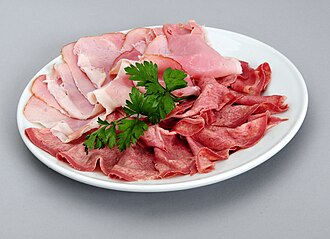
Photo: Wikipedia
This is a lean, pre-packaged deli meat made from cured pork, typically with water added to enhance juiciness. It offers a mild, savory flavor with a soft, slightly springy texture that's easy to bite into. Nutritionally, it's a high-protein, very low-carb option, making it a staple for quick meals and snacks.
💚 Why it's loved
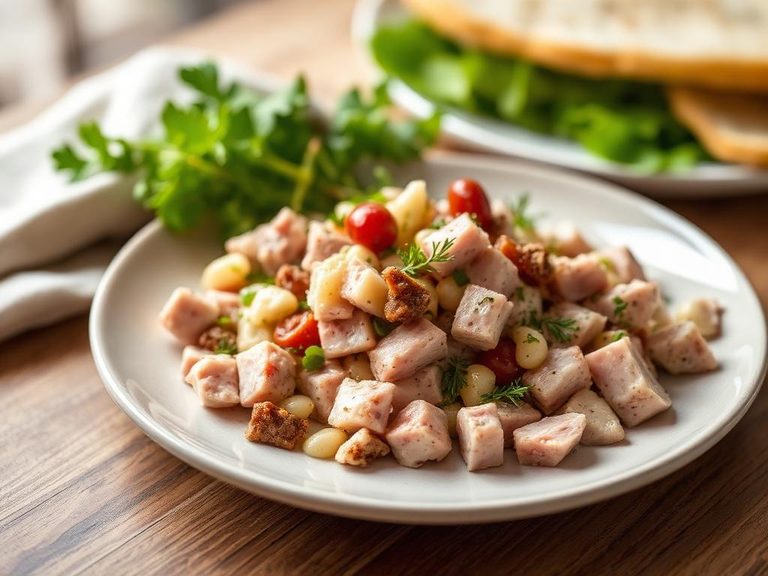
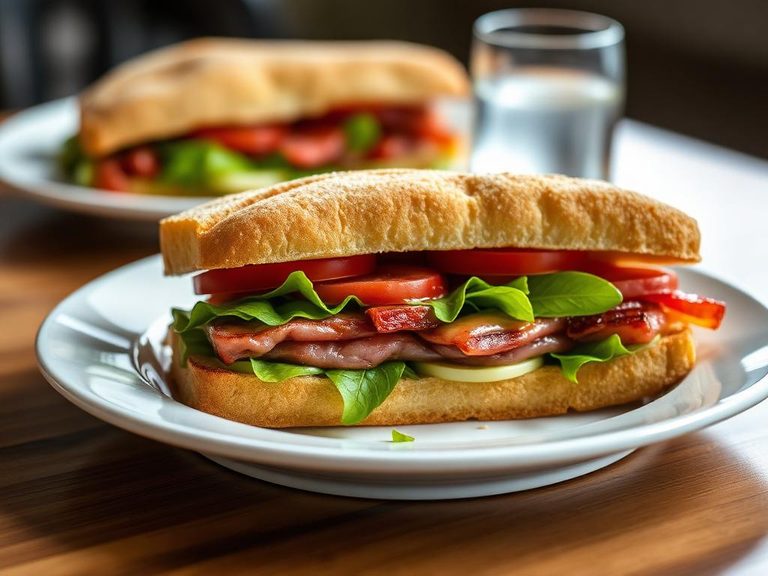
People love it for its mild, salty-savory flavor and incredible versatility—it's the foundation of countless sandwiches, wraps, and salads. Its convenience and reliable protein content make it a go-to for quick lunches and meal prep.
⚠️ Watch-outs & how to enjoy it better
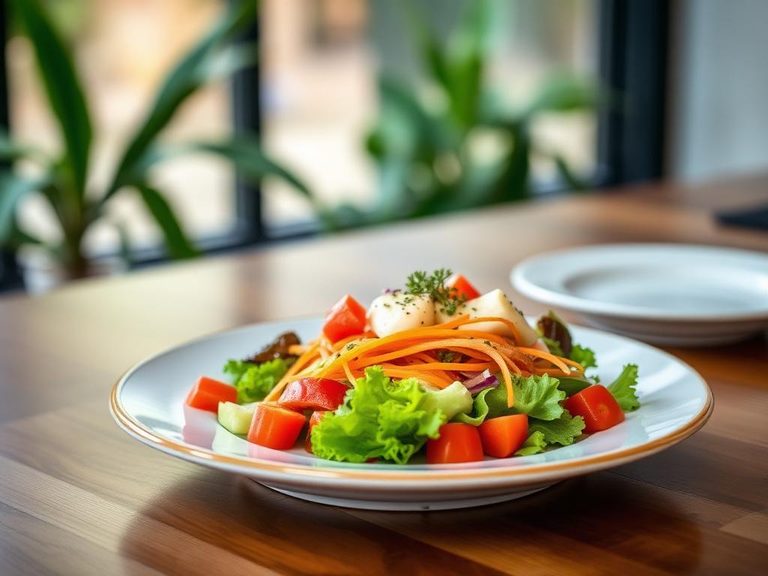
The primary concern is its typically high sodium content, which can be an issue for those monitoring blood pressure or fluid retention. It also often contains preservatives like nitrates/nitrites. To counteract, pair it with potassium-rich foods (like avocado or leafy greens) to help balance sodium, and choose lower-sodium varieties when available. For a fresher option, consider using it as a quick protein boost in a salad rather than as the main event in a sandwich.
Key benefits
- Excellent source of lean protein (16.7g per 100g)
- Very low in carbohydrates and sugar
- Convenient, ready-to-eat protein source
- Low in fat, especially saturated fat
- Provides essential minerals like selenium and thiamine
🍽️ Popular dishes


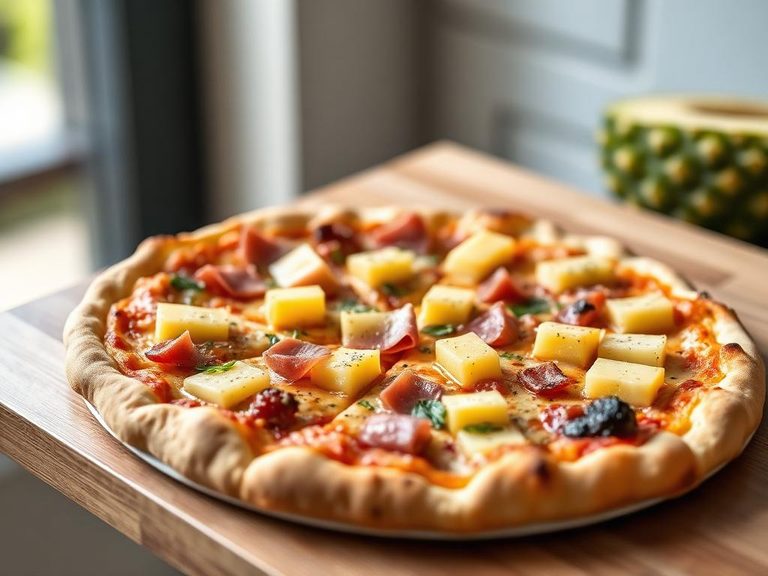
🌍 Where it's eaten
💡 Did you know?
The process of making deli ham involves curing, which historically was a method of preservation, and modern pre-packaged versions often use a 'water-added' technique where the ham is injected with a brine to increase yield and ensure consistent moisture.
Full nutrition (scales with serving)
| Water | 75.7 g |
| Energy (Atwater General Factors) | 101 kcal |
| Energy (Atwater Specific Factors) | 106 kcal |
| Energy | 106 kcal |
| Energy | 443 kj |
| Nitrogen | 2.7 g |
| Protein | 16.7 g |
| Total lipid (fat) | 3.7 g |
| Total fat (NLEA) | 3.1 g |
| Ash | 3.6 g |
| Carbohydrate, by difference | 0.27 g |
| Calcium, Ca | 5.0 mg |
| Iron, Fe | 0.58 mg |
| Magnesium, Mg | 18.8 mg |
| Phosphorus, P | 261 mg |
| Potassium, K | 425 mg |
| Sodium, Na | 1040 mg |
| Zinc, Zn | 1.5 mg |
| Copper, Cu | 0.05 mg |
| Manganese, Mn | 0.00 mg |
| Fatty acids, total saturated | 1.1 g |
| SFA 4:0 | 0.00 g |
| SFA 6:0 | 0.00 g |
| SFA 8:0 | 0.00 g |
| SFA 10:0 | 0.00 g |
| SFA 11:0 | 0.00 g |
| SFA 12:0 | 0.00 g |
| SFA 14:0 | 0.04 g |
| SFA 15:0 | 0.00 g |
| SFA 16:0 | 0.71 g |
| SFA 17:0 | 0.01 g |
| SFA 18:0 | 0.35 g |
| SFA 20:0 | 0.01 g |
| SFA 22:0 | 0.00 g |
| SFA 24:0 | 0.00 g |
| Fatty acids, total monounsaturated | 1.5 g |
| MUFA 14:1 c | 0.00 g |
| MUFA 15:1 | 0.00 g |
| MUFA 16:1 c | 0.09 g |
| MUFA 17:1 | 0.01 g |
| MUFA 17:1 c | 0.01 g |
| MUFA 18:1 c | 1.4 g |
| MUFA 20:1 c | 0.03 g |
| MUFA 22:1 c | 0.00 g |
| MUFA 22:1 n-9 | 0.00 g |
| MUFA 24:1 c | 0.00 g |
| Fatty acids, total polyunsaturated | 0.54 g |
| PUFA 18:2 c | 0.45 g |
| PUFA 18:2 n-6 c,c | 0.44 g |
| PUFA 18:2 CLAs | 0.00 g |
| PUFA 18:3 c | 0.01 g |
| PUFA 18:3 n-3 c,c,c (ALA) | 0.01 g |
| PUFA 18:3 n-6 c,c,c | 0.00 g |
| PUFA 18:4 | 0.00 g |
| PUFA 20:2 c | 0.02 g |
| PUFA 20:2 n-6 c,c | 0.02 g |
| PUFA 20:3 c | 0.01 g |
| PUFA 20:3 n-3 | 0.00 g |
| PUFA 20:3 n-6 | 0.01 g |
| PUFA 20:3 n-9 | 0.00 g |
| PUFA 20:4 | 0.05 g |
| PUFA 20:4c | 0.05 g |
| PUFA 20:5c | 0.00 g |
| PUFA 20:5 n-3 (EPA) | 0.00 g |
| PUFA 22:2 | 0.00 g |
| PUFA 22:5 c | 0.01 g |
| PUFA 22:4 | 0.01 g |
| PUFA 22:5 n-3 (DPA) | 0.01 g |
| PUFA 22:6 c | 0.00 g |
| PUFA 22:6 n-3 (DHA) | 0.00 g |
| Fatty acids, total trans | 0.01 g |
| Fatty acids, total trans-monoenoic | 0.01 g |
| TFA 16:1 t | 0.00 g |
| TFA 18:1 t | 0.01 g |
| TFA 22:1 t | 0.00 g |
| Fatty acids, total trans-dienoic | 0.00 g |
| TFA 18:2 t not further defined | 0.00 g |
| Fatty acids, total trans-polyenoic | 0.00 g |
| TFA 18:3 t | 0.00 g |
FAQ
What's the difference between this and canned ham?
Pre-packaged deli ham is typically sliced from a larger cooked or smoked ham roast and is ready to eat. Canned ham is often a reconstituted product made from smaller pieces of ham packed in a can with broth or gelatin, giving it a softer, more uniform texture.
Is this a good choice for a low-carb or keto diet?
Yes, it's an excellent choice. With virtually zero carbs and sugar per serving, it fits perfectly into low-carb and ketogenic eating plans as a primary protein source.
How should I store it after opening?
Once opened, keep it in its original packaging or transfer it to an airtight container. Store it in the coldest part of your refrigerator (not the door) and use it within 3-5 days for best quality and safety.