

Fish, tilefish, cooked, dry heat
Whole food · Finfish and Shellfish Products

Photo: Wikipedia
Tilefish is a firm, white-fleshed ocean fish with a clean, sweet flavor reminiscent of crab or lobster. Its dense, meaty texture holds up beautifully to dry-heat cooking methods like grilling or broiling. Nutritionally, it's a powerhouse, delivering a massive 24.5 grams of lean protein with virtually no carbohydrates per 100g serving.
Calorie split: 70% protein · 0% carbs · 30% fat
↓ Full nutrition💚 Why it's loved
People adore tilefish for its luxurious, sweet taste and satisfying, steak-like texture that feels indulgent without being heavy. It's prized for its versatility, easily taking on marinades, herbs, and bold seasonings while maintaining its delicate core flavor.
⚠️ Watch-outs & how to enjoy it better
As a large, long-lived predatory fish, tilefish can accumulate higher levels of mercury than smaller species, so it's often recommended for limited consumption, especially for pregnant women and young children. To enjoy it safely, focus on portion control (a single 3-4 oz serving) and balance it with other low-mercury protein sources throughout the week.
Key benefits
- Excellent source of high-quality, complete protein
- Very low in carbohydrates and naturally sugar-free
- Provides healthy fats, including omega-3 fatty acids
- Rich in essential minerals like selenium and phosphorus
🍽️ Popular dishes
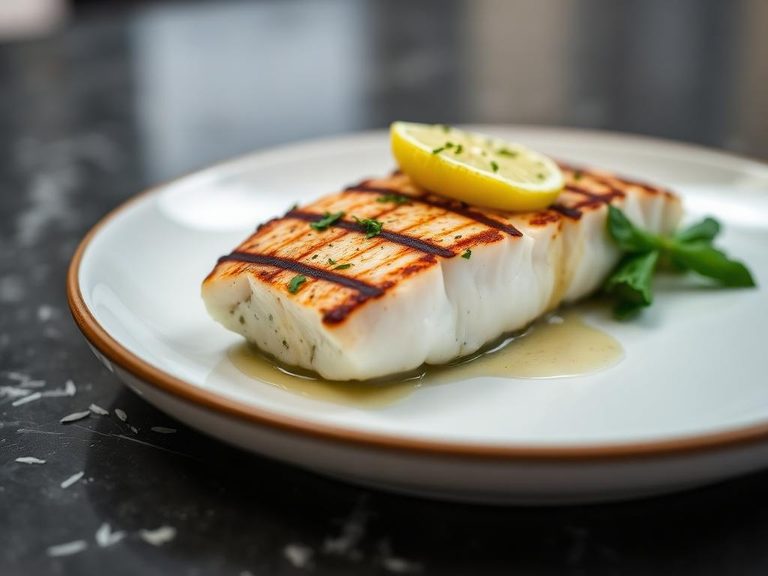
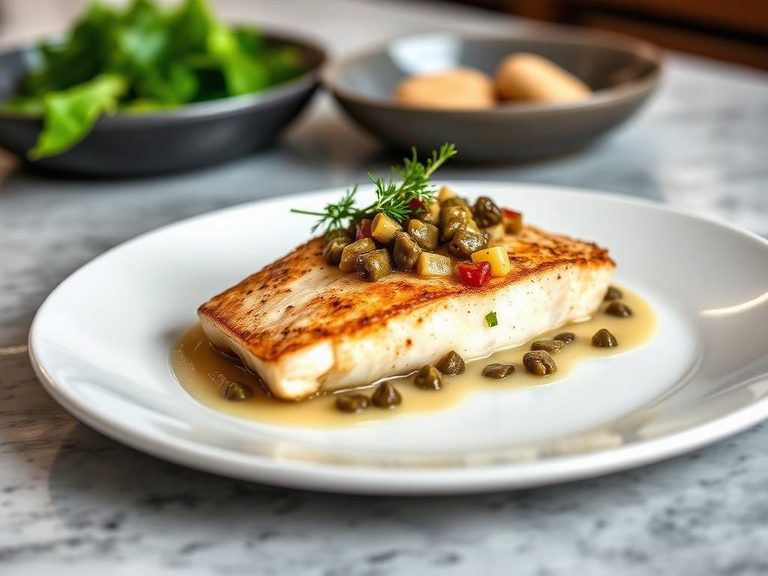
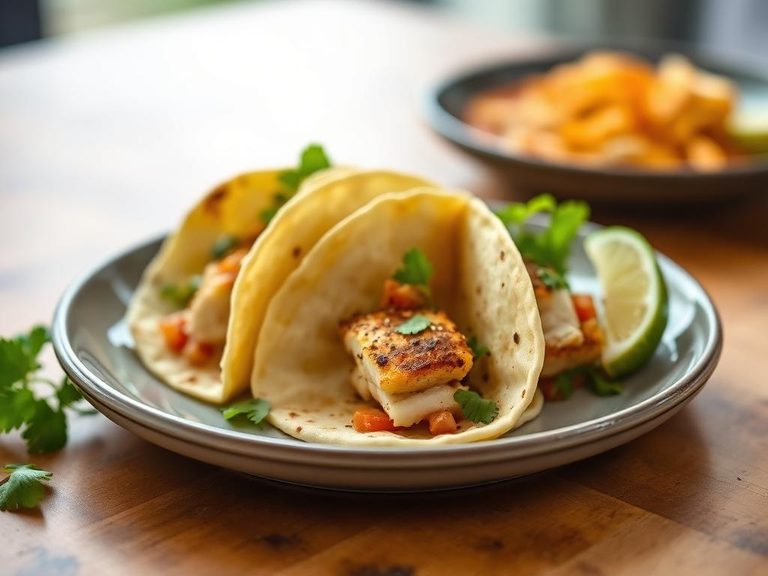
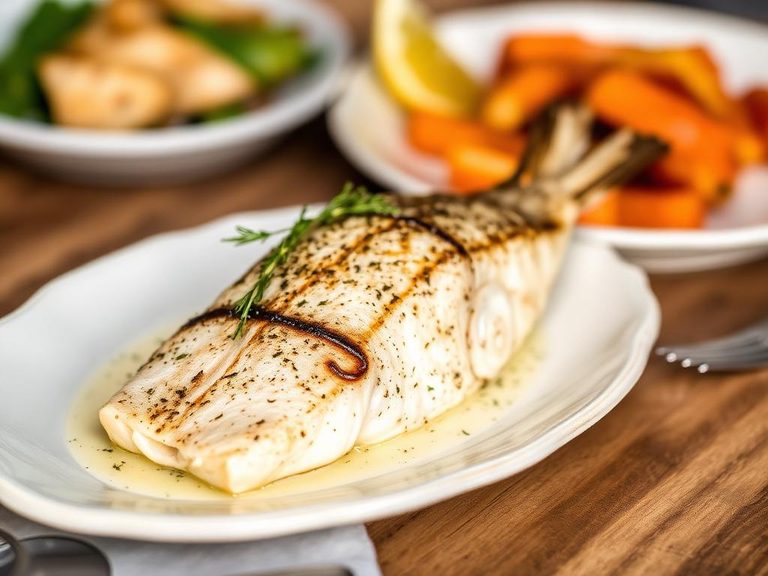

🌍 Where it's eaten
💡 Did you know?
Tilefish are sometimes called the 'clown of the sea' because they are known to decorate the entrance to their burrows on the ocean floor with shells, rocks, and other found objects.
Full nutrition (USDA data · scales with serving)
| Water | 70.2 g |
| Energy | 147 kcal |
| Energy | 615 kj |
| Protein | 24.5 g |
| Total lipid (fat) | 4.7 g |
| Ash | 1.4 g |
| Carbohydrate, by difference | 0.00 g |
| Fiber, total dietary | 0.00 g |
| Calcium, Ca | 26.0 mg |
| Iron, Fe | 0.31 mg |
| Magnesium, Mg | 33.0 mg |
| Phosphorus, P | 236 mg |
| Potassium, K | 512 mg |
| Sodium, Na | 59.0 mg |
| Zinc, Zn | 0.53 mg |
| Copper, Cu | 0.05 mg |
| Manganese, Mn | 0.01 mg |
| Selenium, Se | 51.5 ug |
| Vitamin C, total ascorbic acid | 0.00 mg |
| Thiamin | 0.14 mg |
| Riboflavin | 0.19 mg |
| Niacin | 3.5 mg |
| Pantothenic acid | 0.87 mg |
| Vitamin B-6 | 0.30 mg |
| Folate, total | 17.0 ug |
| Folic acid | 0.00 ug |
| Folate, food | 17.0 ug |
| Folate, DFE | 17.0 ug |
| Vitamin B-12 | 2.5 ug |
| Vitamin A, RAE | 21.0 ug |
| Retinol | 21.0 ug |
| Vitamin A, IU | 69.0 iu |
Fat & fatty acid profile (per 100g)
| Fatty acids, total saturated | 0.87 g |
| SFA 14:0 | 0.14 g |
| SFA 16:0 | 0.53 g |
| SFA 18:0 | 0.18 g |
| Fatty acids, total monounsaturated | 1.3 g |
| MUFA 16:1 | 0.33 g |
| MUFA 18:1 | 0.94 g |
| MUFA 22:1 | 0.06 g |
| Fatty acids, total polyunsaturated | 1.2 g |
| PUFA 18:2 | 0.05 g |
| PUFA 20:4 | 0.15 g |
| PUFA 20:5 n-3 (EPA) | 0.17 g |
| PUFA 22:5 n-3 (DPA) | 0.14 g |
| PUFA 22:6 n-3 (DHA) | 0.73 g |
| Cholesterol | 64.0 mg |
Amino acid profile (per 100g)
| Tryptophan | 0.27 g |
| Threonine | 1.1 g |
| Isoleucine | 1.1 g |
| Leucine | 2.0 g |
| Lysine | 2.2 g |
| Methionine | 0.72 g |
| Cystine | 0.26 g |
| Phenylalanine | 0.96 g |
| Tyrosine | 0.83 g |
| Valine | 1.3 g |
| Arginine | 1.5 g |
| Histidine | 0.72 g |
| Alanine | 1.5 g |
| Aspartic acid | 2.5 g |
| Glutamic acid | 3.7 g |
| Glycine | 1.2 g |
| Proline | 0.87 g |
| Serine | 1.00 g |
FAQ
What does tilefish taste like?
Tilefish has a mild, sweet flavor often compared to crab or lobster, with a firm, meaty texture that is less flaky than many other white fish.
Is tilefish healthy to eat?
Yes, it's an excellent source of lean protein and healthy fats. However, due to its position in the food chain, it can be higher in mercury, so moderation is key for certain groups.
What is the best way to cook tilefish?
Its firm flesh is ideal for dry-heat methods like grilling, broiling, and pan-searing, which help caramelize its natural sweetness.
Nutrient density (calculated · NRF9.3)
Nutrient Rich Foods index: beneficial nutrients (protein, fiber, vitamins, minerals) minus saturated fat, added sugar & sodium, per 100 kcal.
NRF9.3 index — Fulgoni, Keast & Drewnowski, 2009. Computed from USDA nutrients.
Weight-loss friendliness (composite index)
Energy density 1.47 kcal/g · 67% calories from protein · 0.0 g fiber · 0.0 g sugar per 100 g.
Composite of energy density (Rolls et al., 1999), protein & fiber satiety, minus sugar. A calculated heuristic — ranks satiety-per-calorie, not a clinical measure.
Dietary load (calculated from USDA values)
Potential renal acid load. Positive = acid-forming, negative = alkaline-forming.
Sodium-to-potassium ratio: 0.12 (lower is better — aim for ≤ 1)
Sodium:potassium per WHO potassium guidance. Computed from USDA nutrients.