

Fish, salmon, tipnuk, fermented (Alaska Native)
Whole food · American Indian/Alaska Native Foods

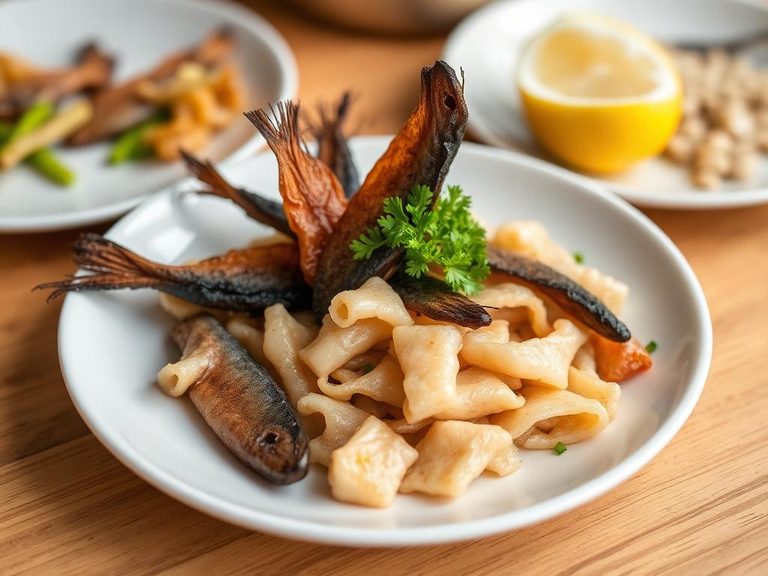
Photo: Wikipedia
Tipnuk is a traditional Alaska Native fermented salmon, typically made from the heads and guts of salmon, often buried in pits or barrels to cure. It has a pungent, deeply savory flavor with a soft, sometimes gelatinous texture, and is a nutrient-dense source of protein and healthy fats. This fermented delicacy is a staple in Yup'ik and Inupiat cultures, prized for its long shelf life and nutritional value.
Calorie split: 40% protein · 0% carbs · 60% fat
↓ Full nutrition💚 Why it's loved
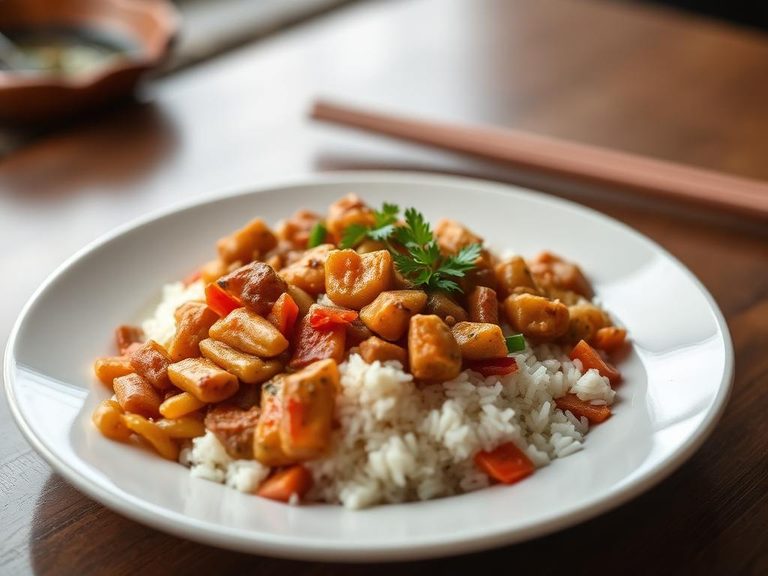
People love tipnuk for its intense, umami-rich flavor that pairs well with simple foods like rice or bread, and its deep connection to Alaska Native heritage. It's valued for its ability to provide essential nutrients in harsh climates where fresh food may be scarce.
⚠️ Watch-outs & how to enjoy it better
The strong, fermented smell and taste can be overwhelming for those unfamiliar with it, and it may be high in sodium due to the curing process. To counteract, pair with unsalted foods like plain rice or vegetables, and consume in small portions to manage salt intake. Those with fish allergies should avoid it entirely.
Key benefits
- High in protein (15.9g per 100g) for muscle maintenance
- Rich in omega-3 fatty acids from salmon
- Zero carbohydrates, making it keto-friendly
- Fermentation may enhance nutrient bioavailability
- Traditional preservation method with cultural significance
🍽️ Popular dishes
🌍 Where it's eaten
💡 Did you know?
Tipnuk is often made by fermenting salmon heads and guts in a pit lined with grass or in barrels, a process that can take weeks to months, developing its unique flavor and preserving it for winter consumption.
Full nutrition (USDA data · scales with serving)
| Water | 68.8 g |
| Energy | 159 kcal |
| Energy | 665 kj |
| Protein | 15.9 g |
| Total lipid (fat) | 10.6 g |
| Ash | 2.0 g |
| Carbohydrate, by difference | 0.00 g |
| Phosphorus, P | 46.0 mg |
| Thiamin | 0.13 mg |
| Riboflavin | 0.15 mg |
| Niacin | 1.9 mg |
| Vitamin A, IU | 780 iu |
Fat & fatty acid profile (per 100g)
Estimated from Fish, halibut, raw, with skin (Alaska Native) — USDA does not publish this profile for Fish.
| Fatty acids, total saturated | 0.73 g |
| SFA 8:0 | 0.00 g |
| SFA 10:0 | 0.00 g |
| SFA 12:0 | 0.00 g |
| SFA 14:0 | 0.09 g |
| SFA 15:0 | 0.01 g |
| SFA 16:0 | 0.38 g |
| SFA 17:0 | 0.00 g |
| SFA 18:0 | 0.09 g |
| SFA 20:0 | 0.01 g |
| SFA 22:0 | 0.00 g |
| SFA 24:0 | 0.00 g |
| Fatty acids, total monounsaturated | 1.2 g |
| MUFA 14:1 | 0.00 g |
| MUFA 15:1 | 0.00 g |
| MUFA 16:1 | 0.23 g |
| MUFA 17:1 | 0.00 g |
| MUFA 18:1 | 0.59 g |
| MUFA 20:1 | 0.11 g |
| MUFA 22:1 | 0.00 g |
| MUFA 22:1 c | 0.00 g |
| MUFA 24:1 c | 0.01 g |
| Fatty acids, total polyunsaturated | 0.91 g |
| PUFA 18:2 | 0.02 g |
| PUFA 18:3 | 0.01 g |
| PUFA 18:3 n-3 c,c,c (ALA) | 0.01 g |
| PUFA 18:3 n-6 c,c,c | 0.00 g |
| PUFA 18:4 | 0.00 g |
| PUFA 20:2 n-6 c,c | 0.01 g |
| PUFA 20:3 | 0.00 g |
| PUFA 20:4 | 0.03 g |
| PUFA 20:5 n-3 (EPA) | 0.22 g |
| PUFA 21:5 | 0.00 g |
| PUFA 22:4 | 0.00 g |
| PUFA 22:5 n-3 (DPA) | 0.06 g |
| PUFA 22:6 n-3 (DHA) | 0.39 g |
| Cholesterol | 72.0 mg |
Amino acid profile (per 100g)
Estimated from Fish, halibut, raw, with skin (Alaska Native) — USDA does not publish this profile for Fish.
| Tryptophan | 0.31 g |
| Threonine | 0.95 g |
| Isoleucine | 0.94 g |
| Leucine | 1.6 g |
| Lysine | 1.8 g |
| Methionine | 0.80 g |
| Cystine | 0.35 g |
| Phenylalanine | 0.82 g |
| Tyrosine | 0.70 g |
| Valine | 1.0 g |
| Arginine | 1.2 g |
| Histidine | 0.50 g |
| Alanine | 1.2 g |
| Aspartic acid | 2.8 g |
| Glutamic acid | 3.2 g |
| Glycine | 0.93 g |
| Proline | 0.73 g |
| Serine | 0.91 g |
| Hydroxyproline | 0.18 g |
FAQ
What is tipnuk?
Tipnuk is a traditional Alaska Native fermented salmon dish, typically made from salmon heads and guts, cured through fermentation to preserve it and develop a strong, savory flavor.
Is tipnuk safe to eat?
Yes, when prepared traditionally and stored properly, tipnuk is safe. However, it's important to source it from reputable producers to avoid contamination, and those with fish allergies should avoid it.
How is tipnuk different from other fermented fish?
Tipnuk is specifically made from salmon parts in Alaska Native traditions, using a unique fermentation process that differs from other fermented fish like surströmming or garum, often involving burial in pits or barrels.
Weight-loss friendliness (composite index)
Energy density 1.59 kcal/g · 40% calories from protein · 0.0 g fiber · 0.0 g sugar per 100 g.
Composite of energy density (Rolls et al., 1999), protein & fiber satiety, minus sugar. A calculated heuristic — ranks satiety-per-calorie, not a clinical measure.