

Fish, mackerel, king, raw
Whole food · Finfish and Shellfish Products

Photo: Wikipedia
King mackerel, or kingfish, is a large, migratory pelagic fish prized for its firm, moist, and meaty texture with a pronounced, rich flavor. Its deep red flesh, when raw, is striking and indicates a high myoglobin content. Nutritionally, it's a powerhouse of lean protein with virtually no carbohydrates or fat.
Calorie split: 82% protein · 0% carbs · 18% fat
↓ Full nutrition💚 Why it's loved
People love king mackerel for its robust, steak-like flavor that stands up boldly to grilling and strong seasonings. Its versatility in both raw preparations (like sashimi) and cooked dishes makes it a favorite across many coastal cuisines.
⚠️ Watch-outs & how to enjoy it better
King mackerel is a larger predatory fish, which means it can accumulate higher levels of mercury than smaller species; pregnant women and young children should limit consumption. Its strong flavor can be too intense for those who prefer milder fish. To mitigate mercury concerns, choose smaller king mackerel (under 30 inches) and vary your seafood choices throughout the week.
Key benefits
- Excellent source of high-quality, complete protein
- Very low in fat and calories
- Rich in selenium, a key antioxidant mineral
- Provides vitamin B12 for nerve and blood health
- Contains omega-3 fatty acids, particularly EPA and DHA
🍽️ Popular dishes
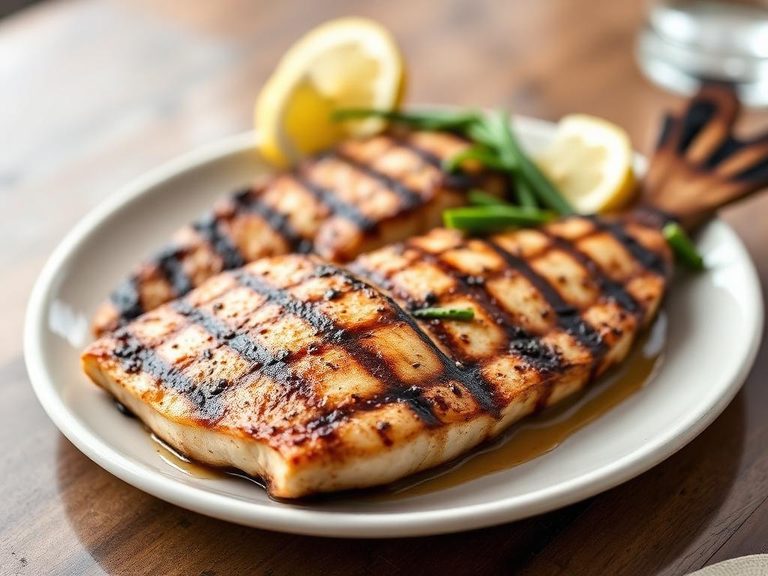
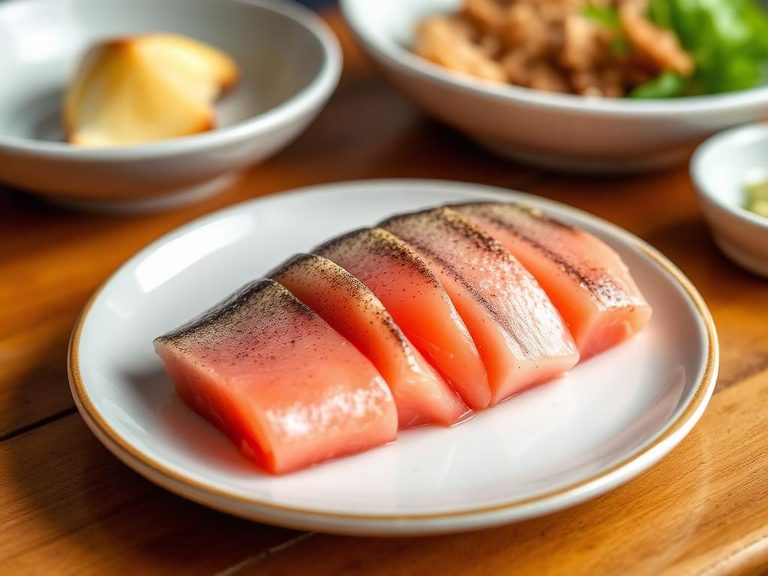
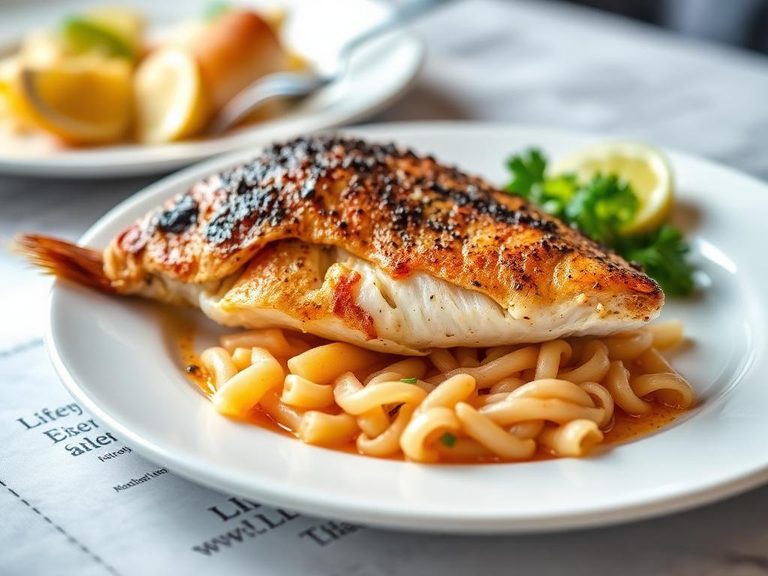
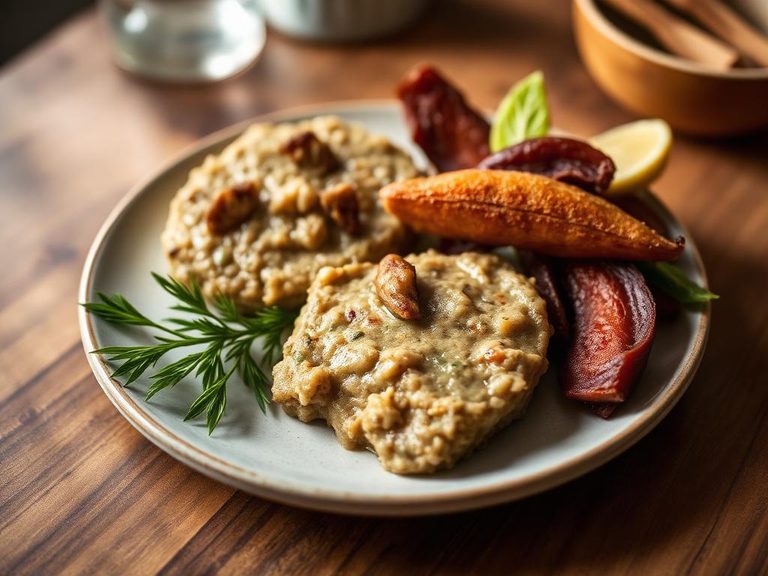
🌍 Where it's eaten
💡 Did you know?
The 'king' in its name is well-earned; king mackerel can grow over 5 feet long and weigh more than 90 pounds, making it a top prize for sport fishermen.
Full nutrition (USDA data · scales with serving)
| Water | 75.8 g |
| Energy | 105 kcal |
| Energy | 439 kj |
| Protein | 20.3 g |
| Total lipid (fat) | 2.0 g |
| Ash | 1.3 g |
| Carbohydrate, by difference | 0.00 g |
| Fiber, total dietary | 0.00 g |
| Calcium, Ca | 31.0 mg |
| Iron, Fe | 1.8 mg |
| Magnesium, Mg | 32.0 mg |
| Phosphorus, P | 248 mg |
| Potassium, K | 435 mg |
| Sodium, Na | 158 mg |
| Zinc, Zn | 0.56 mg |
| Copper, Cu | 0.03 mg |
| Manganese, Mn | 0.01 mg |
| Selenium, Se | 36.5 ug |
| Vitamin C, total ascorbic acid | 1.6 mg |
| Thiamin | 0.10 mg |
| Riboflavin | 0.48 mg |
| Niacin | 8.6 mg |
| Pantothenic acid | 0.84 mg |
| Vitamin B-6 | 0.44 mg |
| Folate, total | 8.0 ug |
| Folic acid | 0.00 ug |
| Folate, food | 8.0 ug |
| Folate, DFE | 8.0 ug |
| Vitamin B-12 | 15.6 ug |
| Vitamin A, RAE | 218 ug |
| Retinol | 218 ug |
| Vitamin A, IU | 727 iu |
Fat & fatty acid profile (per 100g)
| Fatty acids, total saturated | 0.36 g |
| SFA 14:0 | 0.08 g |
| SFA 16:0 | 0.24 g |
| SFA 18:0 | 0.04 g |
| Fatty acids, total monounsaturated | 0.76 g |
| MUFA 16:1 | 0.12 g |
| MUFA 18:1 | 0.31 g |
| MUFA 20:1 | 0.12 g |
| MUFA 22:1 | 0.21 g |
| Fatty acids, total polyunsaturated | 0.46 g |
| PUFA 18:2 | 0.04 g |
| PUFA 18:4 | 0.09 g |
| PUFA 20:5 n-3 (EPA) | 0.14 g |
| PUFA 22:5 n-3 (DPA) | 0.02 g |
| PUFA 22:6 n-3 (DHA) | 0.18 g |
| Cholesterol | 53.0 mg |
Amino acid profile (per 100g)
| Tryptophan | 0.23 g |
| Threonine | 0.89 g |
| Isoleucine | 0.94 g |
| Leucine | 1.6 g |
| Lysine | 1.9 g |
| Methionine | 0.60 g |
| Cystine | 0.22 g |
| Phenylalanine | 0.79 g |
| Tyrosine | 0.69 g |
| Valine | 1.0 g |
| Arginine | 1.2 g |
| Histidine | 0.60 g |
| Alanine | 1.2 g |
| Aspartic acid | 2.1 g |
| Glutamic acid | 3.0 g |
| Glycine | 0.97 g |
| Proline | 0.72 g |
| Serine | 0.83 g |
FAQ
Is king mackerel the same as Spanish mackerel?
No, they are different species. King mackerel (Scomberomorus cavalla) is generally larger, has a more pronounced lateral line that dips sharply, and is considered to have a richer flavor than the smaller, milder Spanish mackerel.
How can I tell if king mackerel is fresh?
Look for firm, moist flesh that springs back when pressed. The eyes should be clear and bright, not cloudy, and the gills should be a vibrant red. It should smell like the clean ocean, not 'fishy'.
What's the best way to cook king mackerel to reduce its strong flavor?
Marinating in acidic ingredients like citrus juice or vinegar before grilling or broiling can help balance its robust flavor. Quick, high-heat cooking methods also help preserve its texture without amplifying the 'fishiness'.
Nutrient density (calculated · NRF9.3)
Nutrient Rich Foods index: beneficial nutrients (protein, fiber, vitamins, minerals) minus saturated fat, added sugar & sodium, per 100 kcal.
NRF9.3 index — Fulgoni, Keast & Drewnowski, 2009. Computed from USDA nutrients.
Weight-loss friendliness (composite index)
Energy density 1.05 kcal/g · 77% calories from protein · 0.0 g fiber · 0.0 g sugar per 100 g.
Composite of energy density (Rolls et al., 1999), protein & fiber satiety, minus sugar. A calculated heuristic — ranks satiety-per-calorie, not a clinical measure.
Dietary load (calculated from USDA values)
Potential renal acid load. Positive = acid-forming, negative = alkaline-forming.
Sodium-to-potassium ratio: 0.36 (lower is better — aim for ≤ 1)
Sodium:potassium per WHO potassium guidance. Computed from USDA nutrients.