

Fish, mackerel, king, cooked, dry heat
Whole food · Finfish and Shellfish Products

Photo: Wikipedia
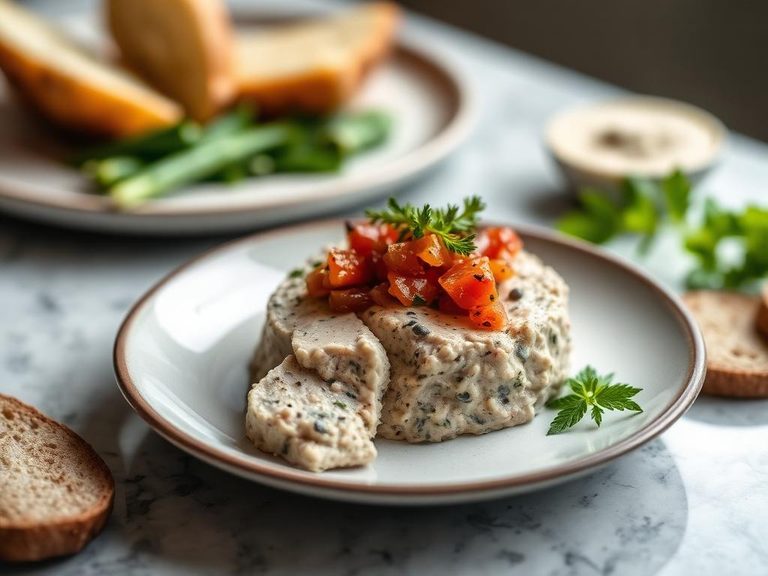
King mackerel, cooked with dry heat, is a firm, meaty, and richly flavored fish with a deep, savory taste and a satisfying, flaky texture. It is an exceptionally lean protein source, delivering a substantial 26 grams of protein per 100g with virtually no fat, carbohydrates, or sugars. This makes it a powerful, nutrient-dense choice for those seeking high-quality protein without added calories.
Calorie split: 82% protein · 0% carbs · 18% fat
↓ Full nutrition💚 Why it's loved
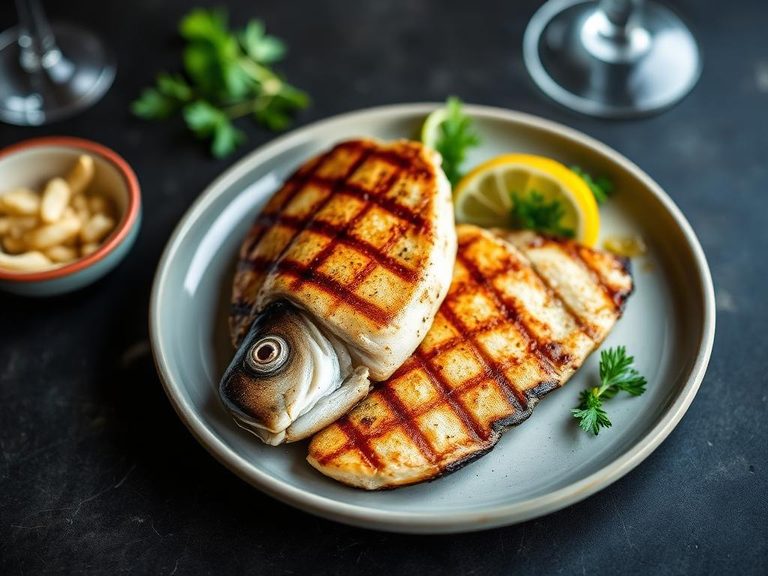
People love king mackerel for its robust, steak-like flavor and firm texture that holds up beautifully to grilling, broiling, and searing. Its versatility allows it to be the star of simple weeknight meals or the centerpiece of elaborate seafood feasts, often evoking coastal culinary traditions.
⚠️ Watch-outs & how to enjoy it better
King mackerel is a larger predatory fish, which means it can contain higher levels of mercury than smaller species, making it a food to consume in moderation, especially for pregnant women and young children. To mitigate this, choose smaller king mackerel, vary your seafood intake with lower-mercury options like salmon or sardines, and follow local fish consumption advisories.
Key benefits
- Excellent source of complete protein for muscle maintenance and satiety.
- Very low in fat and carbohydrates, ideal for low-fat or ketogenic diets.
- Rich in selenium and B vitamins, supporting metabolism and immune function.
- Provides omega-3 fatty acids, beneficial for heart and brain health.
- Zero sugar and fiber, making it a straightforward, unprocessed food.
🍽️ Popular dishes
🌍 Where it's eaten
💡 Did you know?
King mackerel is known as the 'King of the Mackerel' and is a prized game fish in the Atlantic, capable of swimming at speeds up to 30 miles per hour.
Full nutrition (USDA data · scales with serving)
| Water | 69.0 g |
| Energy | 134 kcal |
| Energy | 561 kj |
| Protein | 26.0 g |
| Total lipid (fat) | 2.6 g |
| Ash | 1.6 g |
| Carbohydrate, by difference | 0.00 g |
| Fiber, total dietary | 0.00 g |
| Calcium, Ca | 40.0 mg |
| Iron, Fe | 2.3 mg |
| Magnesium, Mg | 41.0 mg |
| Phosphorus, P | 318 mg |
| Potassium, K | 558 mg |
| Sodium, Na | 203 mg |
| Zinc, Zn | 0.72 mg |
| Copper, Cu | 0.03 mg |
| Manganese, Mn | 0.01 mg |
| Selenium, Se | 46.8 ug |
| Vitamin C, total ascorbic acid | 1.6 mg |
| Thiamin | 0.12 mg |
| Riboflavin | 0.58 mg |
| Niacin | 10.5 mg |
| Pantothenic acid | 0.97 mg |
| Vitamin B-6 | 0.51 mg |
| Folate, total | 9.0 ug |
| Folic acid | 0.00 ug |
| Folate, food | 9.0 ug |
| Folate, DFE | 9.0 ug |
| Vitamin B-12 | 18.0 ug |
| Vitamin A, RAE | 252 ug |
| Retinol | 252 ug |
| Vitamin A, IU | 839 iu |
Fat & fatty acid profile (per 100g)
| Fatty acids, total saturated | 0.47 g |
| SFA 14:0 | 0.10 g |
| SFA 16:0 | 0.31 g |
| SFA 18:0 | 0.05 g |
| Fatty acids, total monounsaturated | 0.98 g |
| MUFA 16:1 | 0.15 g |
| MUFA 18:1 | 0.40 g |
| MUFA 20:1 | 0.16 g |
| MUFA 22:1 | 0.27 g |
| Fatty acids, total polyunsaturated | 0.59 g |
| PUFA 18:2 | 0.05 g |
| PUFA 18:4 | 0.12 g |
| PUFA 20:5 n-3 (EPA) | 0.17 g |
| PUFA 22:5 n-3 (DPA) | 0.02 g |
| PUFA 22:6 n-3 (DHA) | 0.23 g |
| Cholesterol | 68.0 mg |
Amino acid profile (per 100g)
| Tryptophan | 0.29 g |
| Threonine | 1.1 g |
| Isoleucine | 1.2 g |
| Leucine | 2.1 g |
| Lysine | 2.4 g |
| Methionine | 0.77 g |
| Cystine | 0.28 g |
| Phenylalanine | 1.0 g |
| Tyrosine | 0.88 g |
| Valine | 1.3 g |
| Arginine | 1.6 g |
| Histidine | 0.77 g |
| Alanine | 1.6 g |
| Aspartic acid | 2.7 g |
| Glutamic acid | 3.9 g |
| Glycine | 1.2 g |
| Proline | 0.92 g |
| Serine | 1.1 g |
FAQ
Is king mackerel a good source of omega-3s?
Yes, it provides omega-3 fatty acids, though its higher fat content compared to lean white fish means it's a moderate source. It's beneficial for heart health when consumed as part of a balanced diet.
How should I cook king mackerel to keep it moist?
Dry-heat methods like grilling, broiling, or pan-searing work best. Avoid overcooking, as it can become dry. Marinating briefly or basting with oil can help retain moisture.
Is king mackerel safe for everyone?
Due to potential mercury content, it's advised that pregnant women, nursing mothers, and young children limit consumption. Adults can enjoy it regularly as part of a varied seafood diet, following local guidelines.
Nutrient density (calculated · NRF9.3)
Nutrient Rich Foods index: beneficial nutrients (protein, fiber, vitamins, minerals) minus saturated fat, added sugar & sodium, per 100 kcal.
NRF9.3 index — Fulgoni, Keast & Drewnowski, 2009. Computed from USDA nutrients.
Weight-loss friendliness (composite index)
Energy density 1.34 kcal/g · 78% calories from protein · 0.0 g fiber · 0.0 g sugar per 100 g.
Composite of energy density (Rolls et al., 1999), protein & fiber satiety, minus sugar. A calculated heuristic — ranks satiety-per-calorie, not a clinical measure.
Dietary load (calculated from USDA values)
Potential renal acid load. Positive = acid-forming, negative = alkaline-forming.
Sodium-to-potassium ratio: 0.36 (lower is better — aim for ≤ 1)
Sodium:potassium per WHO potassium guidance. Computed from USDA nutrients.