

Crustaceans, crab, queen, raw
Whole food · Finfish and Shellfish Products

Photo: Wikipedia
Queen crab, also known as snow crab, is a prized crustacean with sweet, delicate white meat and a slightly briny, oceanic flavor. Its texture is tender and flaky, often described as more delicate than lobster. Nutritionally, it's a powerhouse of lean protein with virtually no fat or carbohydrates.
Calorie split: 87% protein · 0% carbs · 13% fat
↓ Full nutrition💚 Why it's loved
People adore queen crab for its clean, sweet flavor that tastes luxuriously of the sea without being overpowering. It's incredibly versatile, shining simply steamed with butter or as the star in rich bisques and salads.
⚠️ Watch-outs & how to enjoy it better
As a common shellfish allergen, it must be avoided by those with crustacean sensitivities. The meat is also relatively high in sodium, so individuals monitoring salt intake should practice portion control. To counteract, pair with potassium-rich vegetables like steamed asparagus or a squeeze of lemon to enhance flavor without added salt.
Key benefits
- Excellent source of high-quality, lean protein
- Very low in fat and calories
- Naturally carb-free and sugar-free
- Provides essential minerals like selenium and zinc
- Rich in vitamin B12 for nerve function
🍽️ Popular dishes
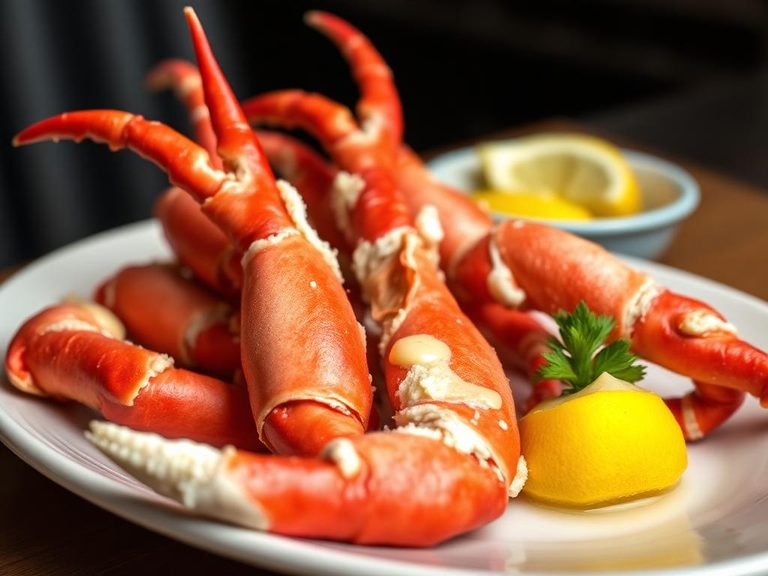
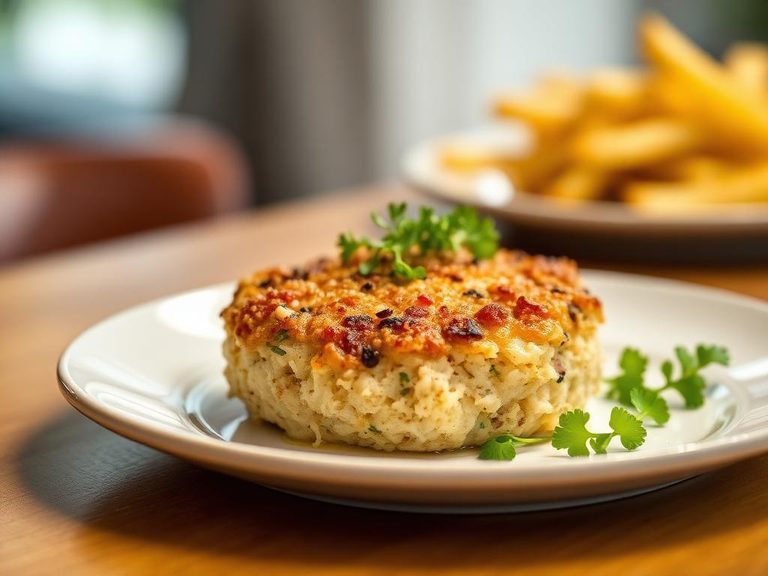

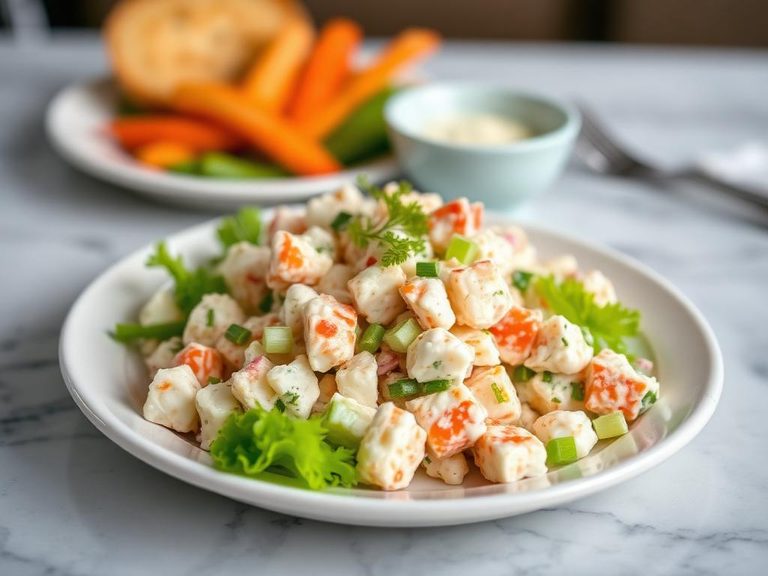
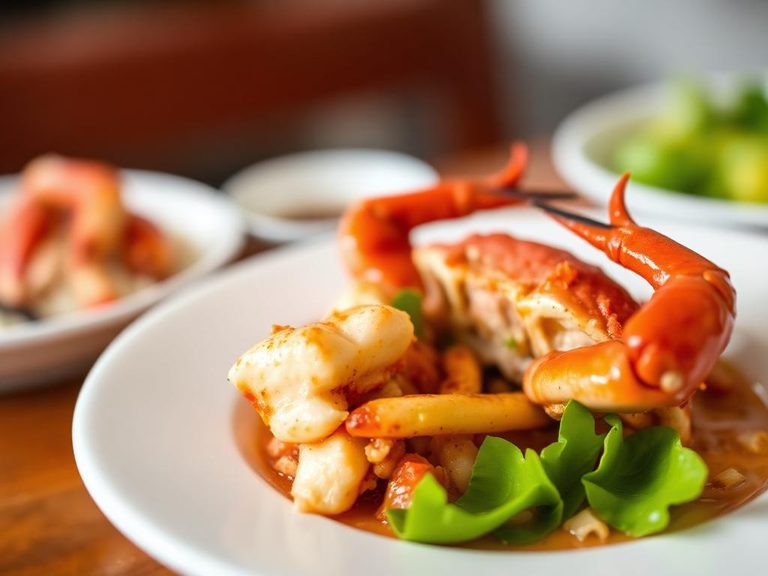
🌍 Where it's eaten
💡 Did you know?
Queen crab is often called 'snow crab' because it thrives in the frigid, ice-covered waters of the North Atlantic and North Pacific oceans.
Full nutrition (USDA data · scales with serving)
| Water | 80.6 g |
| Energy | 90.0 kcal |
| Energy | 377 kj |
| Protein | 18.5 g |
| Total lipid (fat) | 1.2 g |
| Ash | 2.0 g |
| Carbohydrate, by difference | 0.00 g |
| Fiber, total dietary | 0.00 g |
| Calcium, Ca | 26.0 mg |
| Iron, Fe | 2.5 mg |
| Magnesium, Mg | 49.0 mg |
| Phosphorus, P | 133 mg |
| Potassium, K | 173 mg |
| Sodium, Na | 539 mg |
| Zinc, Zn | 2.8 mg |
| Copper, Cu | 0.57 mg |
| Manganese, Mn | 0.03 mg |
| Selenium, Se | 34.6 ug |
| Vitamin C, total ascorbic acid | 7.0 mg |
| Thiamin | 0.08 mg |
| Riboflavin | 0.20 mg |
| Niacin | 2.5 mg |
| Pantothenic acid | 0.35 mg |
| Vitamin B-6 | 0.15 mg |
| Folate, total | 44.0 ug |
| Folic acid | 0.00 ug |
| Folate, food | 44.0 ug |
| Folate, DFE | 44.0 ug |
| Vitamin B-12 | 9.0 ug |
| Vitamin A, RAE | 45.0 ug |
| Retinol | 45.0 ug |
| Vitamin A, IU | 150 iu |
Fat & fatty acid profile (per 100g)
| Fatty acids, total saturated | 0.14 g |
| SFA 14:0 | 0.00 g |
| SFA 16:0 | 0.12 g |
| SFA 18:0 | 0.02 g |
| Fatty acids, total monounsaturated | 0.26 g |
| MUFA 16:1 | 0.05 g |
| MUFA 18:1 | 0.18 g |
| MUFA 20:1 | 0.02 g |
| Fatty acids, total polyunsaturated | 0.42 g |
| PUFA 18:2 | 0.01 g |
| PUFA 18:3 | 0.00 g |
| PUFA 18:4 | 0.00 g |
| PUFA 20:4 | 0.03 g |
| PUFA 20:5 n-3 (EPA) | 0.26 g |
| PUFA 22:5 n-3 (DPA) | 0.01 g |
| PUFA 22:6 n-3 (DHA) | 0.11 g |
| Cholesterol | 55.0 mg |
Amino acid profile (per 100g)
| Tryptophan | 0.26 g |
| Threonine | 0.75 g |
| Isoleucine | 0.90 g |
| Leucine | 1.5 g |
| Lysine | 1.6 g |
| Methionine | 0.52 g |
| Cystine | 0.21 g |
| Phenylalanine | 0.78 g |
| Tyrosine | 0.62 g |
| Valine | 0.87 g |
| Arginine | 1.6 g |
| Histidine | 0.38 g |
| Alanine | 1.0 g |
| Aspartic acid | 1.9 g |
| Glutamic acid | 3.2 g |
| Glycine | 1.1 g |
| Proline | 0.61 g |
| Serine | 0.73 g |
FAQ
What's the difference between queen crab and king crab?
Queen (snow) crab legs are longer and thinner with a sweeter, more delicate flavor. King crab legs are much larger, thicker, and have a firmer, more fibrous texture with a richer, brinier taste.
How do you eat crab legs?
Use a crab cracker or nutcracker to gently crack the shell along its length. Use a small fork or pick to extract the meat from the shell cavities. The large leg muscles and the smaller pieces from the body are all edible.
Is queen crab sustainable?
Sustainability varies by fishery. Look for crab from well-managed stocks, such as those certified by the Marine Stewardship Council (MSC) or recommended by seafood guides like Monterey Bay Aquarium's Seafood Watch.
Nutrient density (calculated · NRF9.3)
Nutrient Rich Foods index: beneficial nutrients (protein, fiber, vitamins, minerals) minus saturated fat, added sugar & sodium, per 100 kcal.
NRF9.3 index — Fulgoni, Keast & Drewnowski, 2009. Computed from USDA nutrients.
Weight-loss friendliness (composite index)
Energy density 0.90 kcal/g · 82% calories from protein · 0.0 g fiber · 0.0 g sugar per 100 g.
Composite of energy density (Rolls et al., 1999), protein & fiber satiety, minus sugar. A calculated heuristic — ranks satiety-per-calorie, not a clinical measure.
Dietary load (calculated from USDA values)
Potential renal acid load. Positive = acid-forming, negative = alkaline-forming.
Sodium-to-potassium ratio: 3.12 (lower is better — aim for ≤ 1)
Sodium:potassium per WHO potassium guidance. Computed from USDA nutrients.