

Crustaceans, crab, dungeness, cooked, moist heat
Whole food · Finfish and Shellfish Products

Photo: Wikipedia
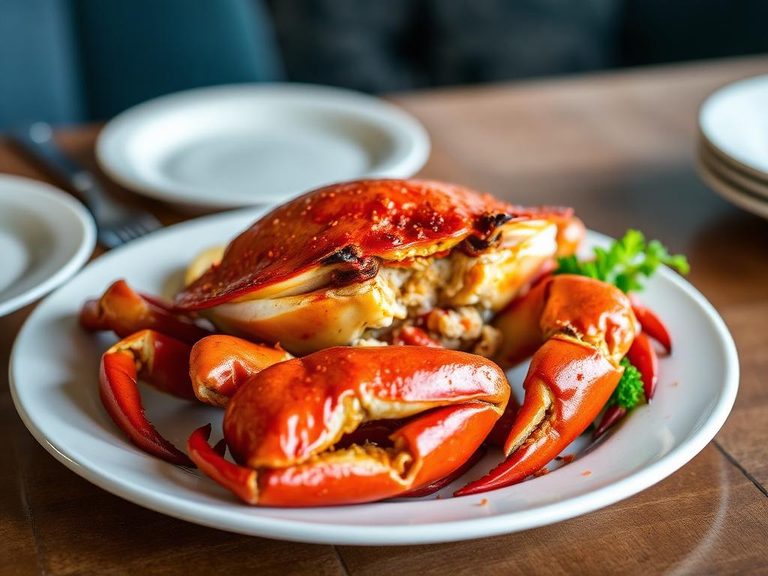
Dungeness crab, harvested from the cold Pacific waters, is a true delicacy prized for its sweet, delicate flavor and tender, flaky white meat. When cooked with moist heat like steaming or boiling, its natural sweetness shines through without the need for heavy seasoning. Nutritionally, it's a powerhouse of lean protein, offering over 22 grams per 100 grams with virtually no carbohydrates or fat.
Calorie split: 86% protein · 4% carbs · 11% fat
↓ Full nutrition💚 Why it's loved
People adore Dungeness crab for its uniquely sweet, nutty flavor and the satisfying, succulent texture of its large, easy-to-pick leg and body meat. It's incredibly versatile, shining simply with melted butter or as the star in luxurious dishes from crab cakes to pasta.
⚠️ Watch-outs & how to enjoy it better
As a shellfish, it is a common allergen and must be avoided by those with shellfish allergies. The meat is also naturally high in sodium, which can be a concern for those monitoring salt intake. To manage sodium, enjoy it steamed or boiled rather than in heavily seasoned or canned preparations, and pair it with unsalted sides like fresh vegetables or a simple green salad.
Key benefits
- Excellent source of high-quality, lean protein
- Very low in carbohydrates and fat
- Rich in essential minerals like selenium and zinc
- Provides a good amount of vitamin B12
- Naturally low in calories
🍽️ Popular dishes
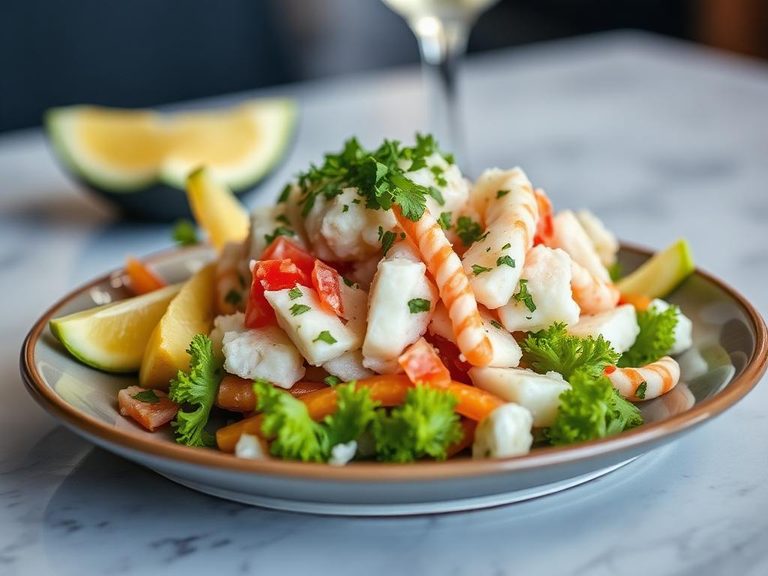
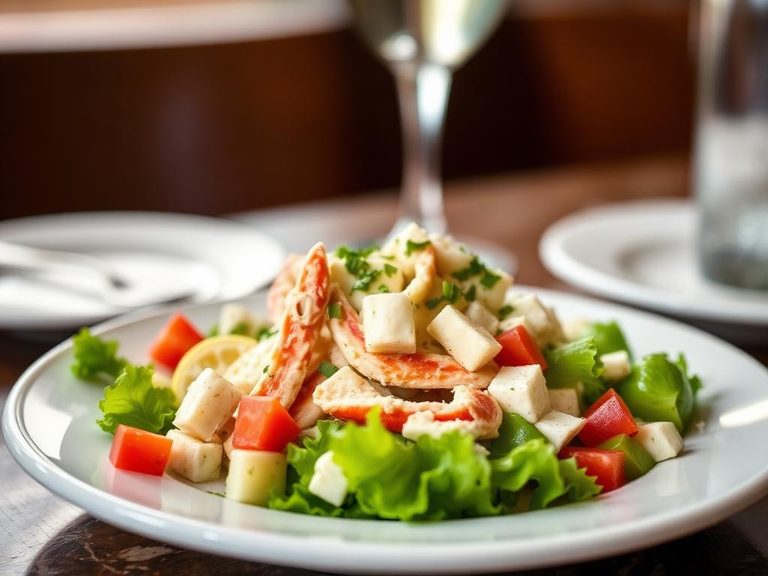
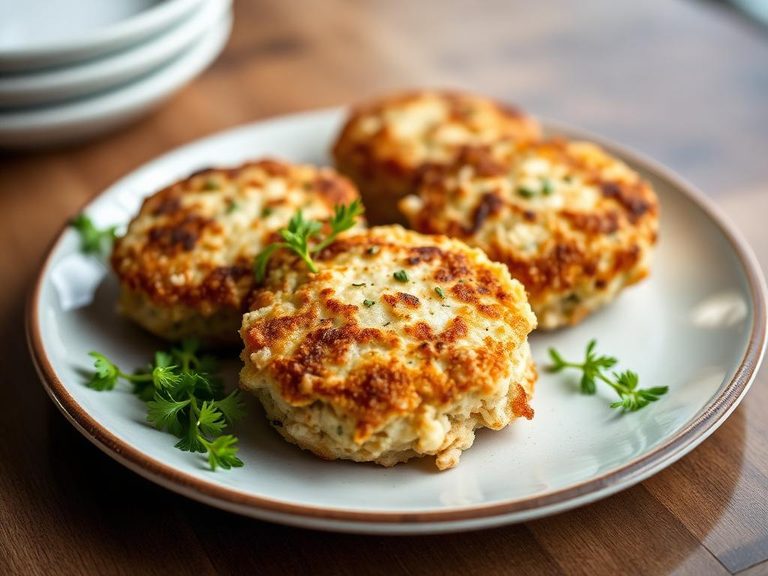

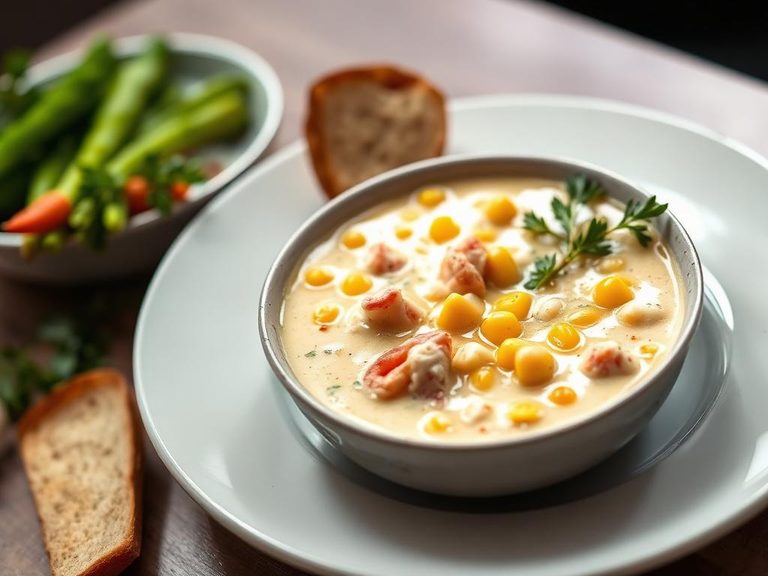
🌍 Where it's eaten
💡 Did you know?
A single Dungeness crab can have a leg span of over a foot, and the largest ever caught weighed nearly 8 pounds!
Full nutrition (USDA data · scales with serving)
| Water | 73.3 g |
| Energy | 110 kcal |
| Energy | 460 kj |
| Protein | 22.3 g |
| Total lipid (fat) | 1.2 g |
| Ash | 2.2 g |
| Carbohydrate, by difference | 0.95 g |
| Fiber, total dietary | 0.00 g |
| Calcium, Ca | 59.0 mg |
| Iron, Fe | 0.43 mg |
| Magnesium, Mg | 58.0 mg |
| Phosphorus, P | 175 mg |
| Potassium, K | 408 mg |
| Sodium, Na | 378 mg |
| Zinc, Zn | 5.5 mg |
| Copper, Cu | 0.73 mg |
| Manganese, Mn | 0.10 mg |
| Selenium, Se | 47.6 ug |
| Vitamin C, total ascorbic acid | 3.6 mg |
| Thiamin | 0.06 mg |
| Riboflavin | 0.20 mg |
| Niacin | 3.6 mg |
| Pantothenic acid | 0.40 mg |
| Vitamin B-6 | 0.17 mg |
| Folate, total | 42.0 ug |
| Folic acid | 0.00 ug |
| Folate, food | 42.0 ug |
| Folate, DFE | 42.0 ug |
| Vitamin B-12 | 10.4 ug |
| Vitamin A, RAE | 31.0 ug |
| Retinol | 31.0 ug |
| Vitamin A, IU | 104 iu |
Fat & fatty acid profile (per 100g)
| Fatty acids, total saturated | 0.17 g |
| SFA 12:0 | 0.00 g |
| SFA 14:0 | 0.00 g |
| SFA 16:0 | 0.11 g |
| SFA 18:0 | 0.05 g |
| Fatty acids, total monounsaturated | 0.21 g |
| MUFA 16:1 | 0.06 g |
| MUFA 18:1 | 0.12 g |
| MUFA 20:1 | 0.01 g |
| MUFA 22:1 | 0.03 g |
| Fatty acids, total polyunsaturated | 0.41 g |
| PUFA 20:4 | 0.00 g |
| PUFA 20:5 n-3 (EPA) | 0.28 g |
| PUFA 22:5 n-3 (DPA) | 0.01 g |
| PUFA 22:6 n-3 (DHA) | 0.11 g |
| Cholesterol | 76.0 mg |
Amino acid profile (per 100g)
| Tryptophan | 0.31 g |
| Threonine | 0.90 g |
| Isoleucine | 1.1 g |
| Leucine | 1.8 g |
| Lysine | 1.9 g |
| Methionine | 0.63 g |
| Cystine | 0.25 g |
| Phenylalanine | 0.94 g |
| Tyrosine | 0.74 g |
| Valine | 1.0 g |
| Arginine | 1.9 g |
| Histidine | 0.45 g |
| Alanine | 1.3 g |
| Aspartic acid | 2.3 g |
| Glutamic acid | 3.8 g |
| Glycine | 1.3 g |
| Proline | 0.74 g |
| Serine | 0.88 g |
FAQ
What's the difference between Dungeness and King crab?
Dungeness crab has a sweeter, more delicate flavor and a softer shell, while King crab legs are larger, with a firmer, more fibrous texture and a brinier, more pronounced taste.
How do I pick a fresh Dungeness crab?
Look for a live crab with all its legs intact. If buying cooked, the shell should be bright orange-red, and the meat should smell fresh and sweet, not fishy or ammoniated.
Is the brown 'mustard' inside the crab edible?
Yes, the brown hepatopancreas, often called 'crab butter' or 'mustard,' is edible and considered a delicacy by many, with a rich, intense flavor. However, it can concentrate environmental contaminants, so consumption is a matter of personal preference.
Nutrient density (calculated · NRF9.3)
Nutrient Rich Foods index: beneficial nutrients (protein, fiber, vitamins, minerals) minus saturated fat, added sugar & sodium, per 100 kcal.
NRF9.3 index — Fulgoni, Keast & Drewnowski, 2009. Computed from USDA nutrients.
Weight-loss friendliness (composite index)
Energy density 1.10 kcal/g · 81% calories from protein · 0.0 g fiber · 0.0 g sugar per 100 g.
Composite of energy density (Rolls et al., 1999), protein & fiber satiety, minus sugar. A calculated heuristic — ranks satiety-per-calorie, not a clinical measure.
Dietary load (calculated from USDA values)
Potential renal acid load. Positive = acid-forming, negative = alkaline-forming.
Sodium-to-potassium ratio: 0.93 (lower is better — aim for ≤ 1)
Sodium:potassium per WHO potassium guidance. Computed from USDA nutrients.