

Cookies, shortbread, commercially prepared, pecan
Whole food · Baked Products

Photo: Wikipedia
A buttery, crumbly shortbread cookie studded with rich, toasty pecans. It delivers a melt-in-your-mouth texture with a satisfying nutty crunch and a deep, caramelized flavor. Nutritionally, it's a dense energy source, with over half its calories coming from fat.
Calorie split: 4% protein · 43% carbs · 54% fat
↓ Full nutrition💚 Why it's loved
People love it for the perfect balance of rich, buttery dough and the sweet, earthy crunch of pecans. It's a beloved staple for holiday platters, coffee breaks, and as a comforting, indulgent treat.
⚠️ Watch-outs & how to enjoy it better
Its high calorie, fat, and refined carb content can contribute to blood sugar spikes and weight gain if overconsumed. Pecans are a tree nut allergen. To enjoy mindfully, pair a small portion with a source of protein (like Greek yogurt) to slow sugar absorption and practice strict portion control.
Key benefits
- Excellent source of quick energy from carbohydrates and fats
- Provides plant-based protein from pecans
- Contains dietary fiber from nut pieces
- Source of monounsaturated fats from pecans and butter
🍽️ Popular dishes

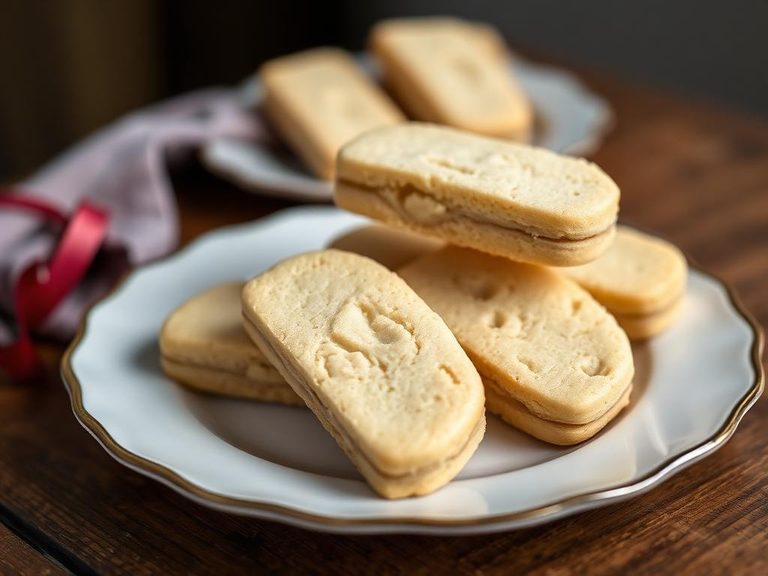
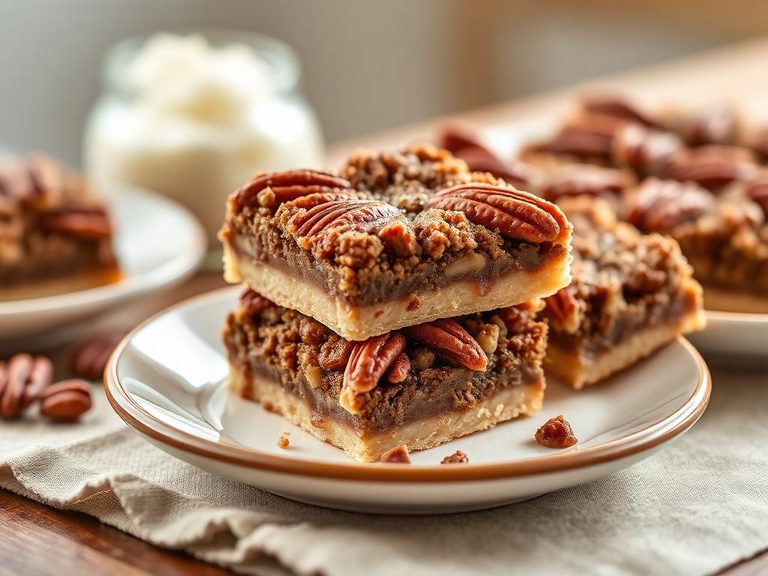
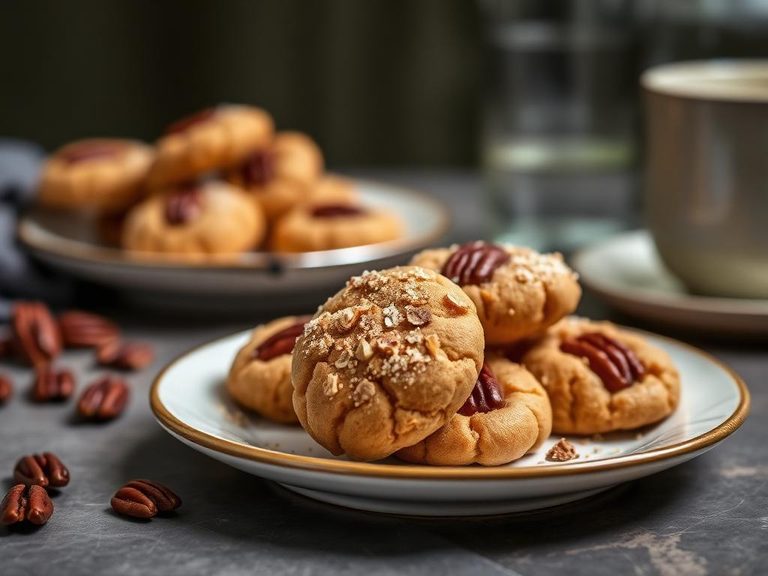
🌍 Where it's eaten
💡 Did you know?
Traditional shortbread gets its signature 'short' (crumbly) texture from a high fat-to-flour ratio, which inhibits gluten formation, making it tender rather than chewy.
Full nutrition (USDA data · scales with serving)
| Water | 3.3 g |
| Energy | 542 kcal |
| Energy | 2268 kj |
| Protein | 4.9 g |
| Total lipid (fat) | 32.5 g |
| Ash | 1.0 g |
| Carbohydrate, by difference | 58.3 g |
| Fiber, total dietary | 1.8 g |
| Calcium, Ca | 30.0 mg |
| Iron, Fe | 2.4 mg |
| Magnesium, Mg | 18.0 mg |
| Phosphorus, P | 85.0 mg |
| Potassium, K | 73.0 mg |
| Sodium, Na | 281 mg |
| Zinc, Zn | 0.58 mg |
| Copper, Cu | 0.15 mg |
| Manganese, Mn | 0.62 mg |
| Selenium, Se | 3.2 ug |
| Vitamin C, total ascorbic acid | 0.00 mg |
| Thiamin | 0.29 mg |
| Riboflavin | 0.22 mg |
| Niacin | 2.5 mg |
| Pantothenic acid | 0.38 mg |
| Vitamin B-6 | 0.02 mg |
| Folate, total | 63.0 ug |
| Folic acid | 55.0 ug |
| Folate, food | 8.0 ug |
| Folate, DFE | 102 ug |
| Vitamin B-12 | 0.01 ug |
| Vitamin A, RAE | 1.0 ug |
| Retinol | 1.0 ug |
| Vitamin A, IU | 3.0 iu |
Fat & fatty acid profile (per 100g)
| Fatty acids, total saturated | 8.2 g |
| SFA 4:0 | 0.00 g |
| SFA 6:0 | 0.00 g |
| SFA 8:0 | 0.00 g |
| SFA 10:0 | 0.00 g |
| SFA 12:0 | 0.00 g |
| SFA 14:0 | 0.16 g |
| SFA 16:0 | 4.2 g |
| SFA 18:0 | 3.8 g |
| Fatty acids, total monounsaturated | 18.6 g |
| MUFA 16:1 | 0.04 g |
| MUFA 18:1 | 18.6 g |
| MUFA 20:1 | 0.05 g |
| MUFA 22:1 | 0.00 g |
| Fatty acids, total polyunsaturated | 4.1 g |
| PUFA 18:2 | 3.9 g |
| PUFA 18:3 | 0.21 g |
| PUFA 18:4 | 0.00 g |
| PUFA 20:4 | 0.00 g |
| PUFA 20:5 n-3 (EPA) | 0.00 g |
| PUFA 22:5 n-3 (DPA) | 0.00 g |
| PUFA 22:6 n-3 (DHA) | 0.00 g |
| Cholesterol | 33.0 mg |
Amino acid profile (per 100g)
| Tryptophan | 0.08 g |
| Threonine | 0.14 g |
| Isoleucine | 0.19 g |
| Leucine | 0.34 g |
| Lysine | 0.18 g |
| Methionine | 0.09 g |
| Cystine | 0.11 g |
| Phenylalanine | 0.24 g |
| Tyrosine | 0.15 g |
| Valine | 0.22 g |
| Arginine | 0.28 g |
| Histidine | 0.11 g |
| Alanine | 0.16 g |
| Aspartic acid | 0.25 g |
| Glutamic acid | 1.5 g |
| Glycine | 0.18 g |
| Proline | 0.49 g |
| Serine | 0.26 g |
FAQ
What makes shortbread different from other cookies?
Shortbread is defined by its simple, rich dough of butter, sugar, and flour, with a very high butter content. This creates its characteristic sandy, crumbly texture ('short') rather than a chewy or crispy one.
Why are there no eggs in shortbread?
Eggs add moisture and act as a binder, which would make shortbread tougher and less crumbly. The classic recipe relies solely on butter for richness and texture.
How should I store pecan shortbread?
Store in an airtight container at room temperature for up to a week. For longer storage, freeze the baked cookies or the unbaked dough logs for up to 3 months.
Nutrient density (calculated · NRF9.3)
Nutrient Rich Foods index: beneficial nutrients (protein, fiber, vitamins, minerals) minus saturated fat, added sugar & sodium, per 100 kcal.
NRF9.3 index — Fulgoni, Keast & Drewnowski, 2009. Computed from USDA nutrients.
Weight-loss friendliness (composite index)
Energy density 5.42 kcal/g · 4% calories from protein · 1.8 g fiber · 0.0 g sugar per 100 g.
Composite of energy density (Rolls et al., 1999), protein & fiber satiety, minus sugar. A calculated heuristic — ranks satiety-per-calorie, not a clinical measure.
Dietary load (calculated from USDA values)
Potential renal acid load. Positive = acid-forming, negative = alkaline-forming.
Sodium-to-potassium ratio: 3.85 (lower is better — aim for ≤ 1)
Sodium:potassium per WHO potassium guidance. Computed from USDA nutrients.