

Collards, frozen, chopped, cooked, boiled, drained, with salt
Whole food · Vegetables and Vegetable Products

Photo: Wikipedia
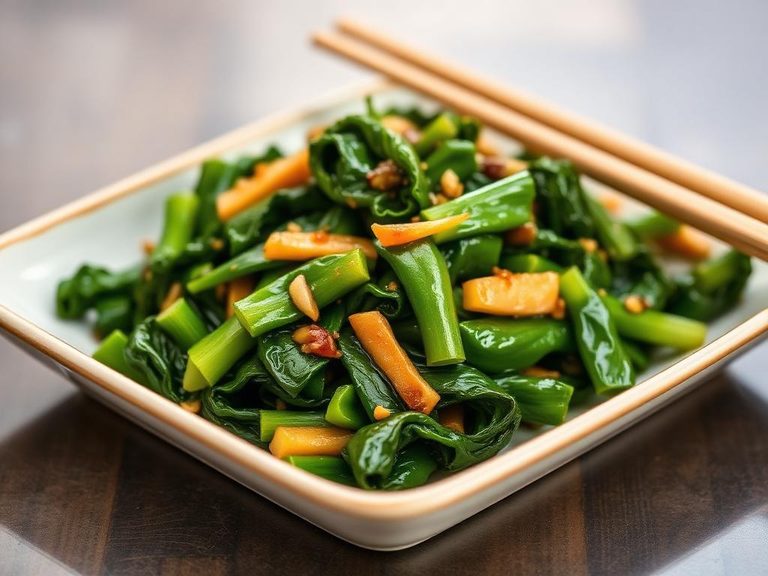
This is the humble, soulful backbone of Southern cooking—frozen chopped collard greens, boiled until tender and seasoned with a touch of salt. The texture is soft and slightly silky, with a deep, earthy, and mildly bitter flavor that carries a satisfying, hearty bite. Despite its rich taste, it is an incredibly lean food, packing nearly 3 grams of protein and 2.8 grams of fiber into just 36 calories per 100g.
Calorie split: 27% protein · 65% carbs · 8% fat
↓ Full nutrition💚 Why it's loved
People love it for its deep, savory, and earthy flavor that pairs beautifully with smoky meats and spices. It is a cultural staple in Southern American cuisine, often bringing a sense of comfort and tradition to the table.
⚠️ Watch-outs & how to enjoy it better
The natural bitterness of collards can be off-putting to some, and the added salt makes it unsuitable for low-sodium diets. To counteract the bitterness, cook with a splash of apple cider vinegar or a pinch of sugar, and for sodium concerns, rinse the cooked greens or choose a no-salt-added version.
Key benefits
- Extremely low in calories (36 kcal per 100g)
- High in dietary fiber (2.8g) for digestive health
- Good source of plant-based protein (2.97g)
- Naturally low in fat (0.41g)
- Rich in vitamins A, C, and K (typical of leafy greens)
🍽️ Popular dishes
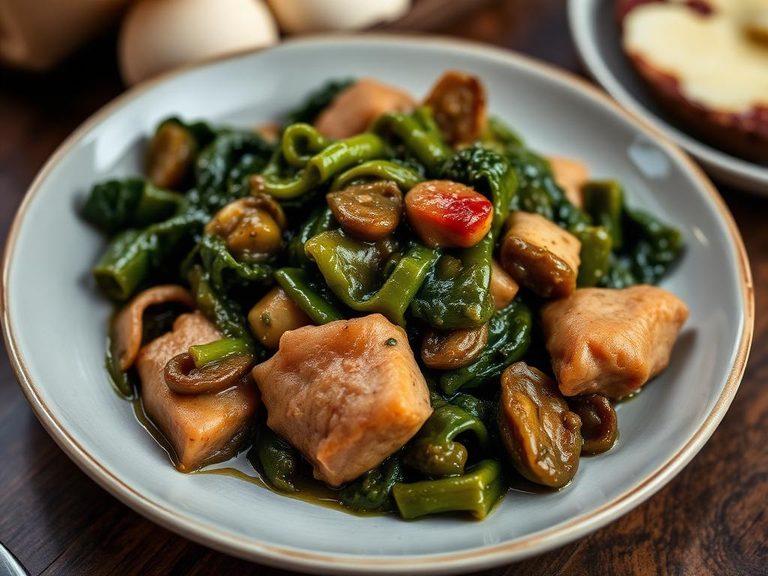
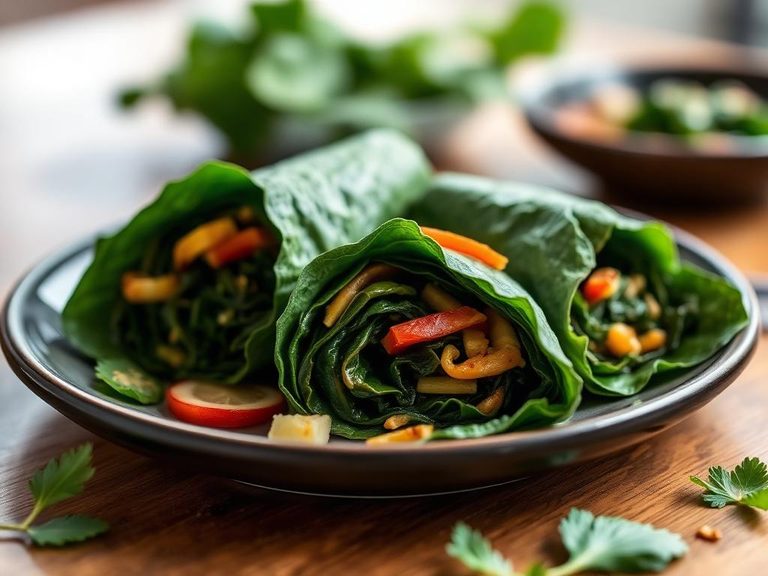
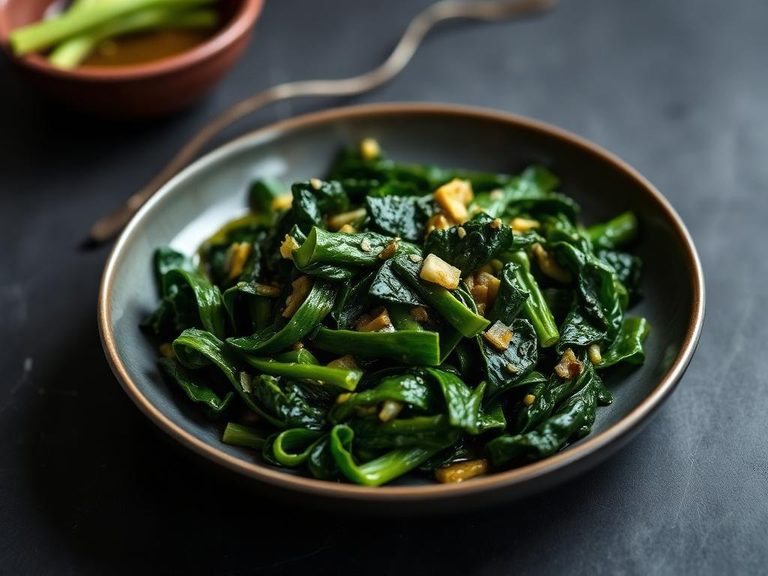
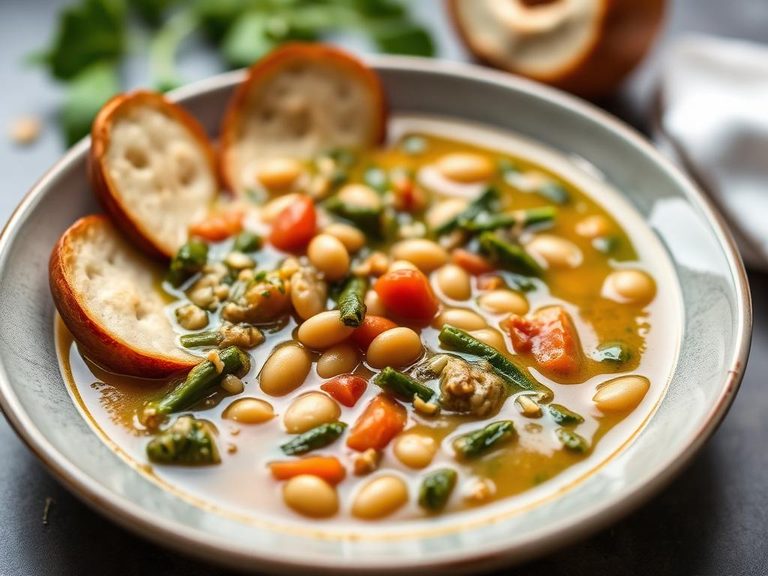
🌍 Where it's eaten
💡 Did you know?
The name 'collard' comes from the Old English word 'colewort,' meaning 'cabbage plant,' and these greens were a staple in ancient Rome and Greece long before they became a symbol of the American South.
Full nutrition (USDA data · scales with serving)
| Water | 88.5 g |
| Energy | 36.0 kcal |
| Energy | 151 kj |
| Protein | 3.0 g |
| Total lipid (fat) | 0.41 g |
| Ash | 1.1 g |
| Carbohydrate, by difference | 7.1 g |
| Fiber, total dietary | 2.8 g |
| Total Sugars | 0.57 g |
| Calcium, Ca | 210 mg |
| Iron, Fe | 1.1 mg |
| Magnesium, Mg | 30.0 mg |
| Phosphorus, P | 27.0 mg |
| Potassium, K | 251 mg |
| Sodium, Na | 286 mg |
| Zinc, Zn | 0.27 mg |
| Copper, Cu | 0.06 mg |
| Manganese, Mn | 0.66 mg |
| Selenium, Se | 1.5 ug |
| Vitamin C, total ascorbic acid | 26.4 mg |
| Thiamin | 0.05 mg |
| Riboflavin | 0.12 mg |
| Niacin | 0.64 mg |
| Pantothenic acid | 0.12 mg |
| Vitamin B-6 | 0.11 mg |
| Folate, total | 76.0 ug |
| Folic acid | 0.00 ug |
| Folate, food | 76.0 ug |
| Folate, DFE | 76.0 ug |
| Choline, total | 45.1 mg |
| Betaine | 0.20 mg |
| Vitamin B-12 | 0.00 ug |
| Vitamin B-12, added | 0.00 ug |
| Vitamin A, RAE | 575 ug |
| Retinol | 0.00 ug |
| Carotene, beta | 6818 ug |
| Carotene, alpha | 127 ug |
| Cryptoxanthin, beta | 28.0 ug |
| Vitamin A, IU | 11493 iu |
| Lycopene | 0.00 ug |
| Lutein + zeaxanthin | 10898 ug |
| Vitamin E (alpha-tocopherol) | 1.3 mg |
| Vitamin E, added | 0.00 mg |
| Vitamin D (D2 + D3), International Units | 0.00 iu |
| Vitamin D (D2 + D3) | 0.00 ug |
| Vitamin K (phylloquinone) | 623 ug |
| Caffeine | 0.00 mg |
| Theobromine | 0.00 mg |
Fat & fatty acid profile (per 100g)
| Fatty acids, total saturated | 0.04 g |
| Fatty acids, total trans | 0.00 g |
| Cholesterol | 0.00 mg |
Amino acid profile (per 100g)
| Tryptophan | 0.04 g |
| Threonine | 0.10 g |
| Isoleucine | 0.12 g |
| Leucine | 0.18 g |
| Lysine | 0.14 g |
| Methionine | 0.04 g |
| Cystine | 0.03 g |
| Phenylalanine | 0.10 g |
| Tyrosine | 0.08 g |
| Valine | 0.14 g |
| Arginine | 0.15 g |
| Histidine | 0.06 g |
| Alanine | 0.13 g |
| Aspartic acid | 0.23 g |
| Glutamic acid | 0.25 g |
| Glycine | 0.11 g |
| Proline | 0.13 g |
| Serine | 0.10 g |
FAQ
Are frozen collard greens as nutritious as fresh?
Yes, frozen collard greens are often just as nutritious as fresh, as they are typically blanched and frozen shortly after harvest, which preserves most of their vitamins and minerals.
How should I store cooked collard greens?
Store cooked collard greens in an airtight container in the refrigerator for up to 4-5 days, or freeze them for up to 3 months for longer storage.
Can I reduce the sodium in canned or frozen collard greens?
Yes, you can rinse the greens under cold water to reduce sodium, or choose a no-salt-added version and season to taste with herbs and spices instead.
Nutrient density (calculated · NRF9.3)
Nutrient Rich Foods index: beneficial nutrients (protein, fiber, vitamins, minerals) minus saturated fat, added sugar & sodium, per 100 kcal.
NRF9.3 index — Fulgoni, Keast & Drewnowski, 2009. Computed from USDA nutrients.
Weight-loss friendliness (composite index)
Energy density 0.36 kcal/g · 33% calories from protein · 2.8 g fiber · 0.6 g sugar per 100 g.
Composite of energy density (Rolls et al., 1999), protein & fiber satiety, minus sugar. A calculated heuristic — ranks satiety-per-calorie, not a clinical measure.
Dietary load (calculated from USDA values)
Potential renal acid load. Positive = acid-forming, negative = alkaline-forming.
Sodium-to-potassium ratio: 1.14 (lower is better — aim for ≤ 1)
Sodium:potassium per WHO potassium guidance. Computed from USDA nutrients.