

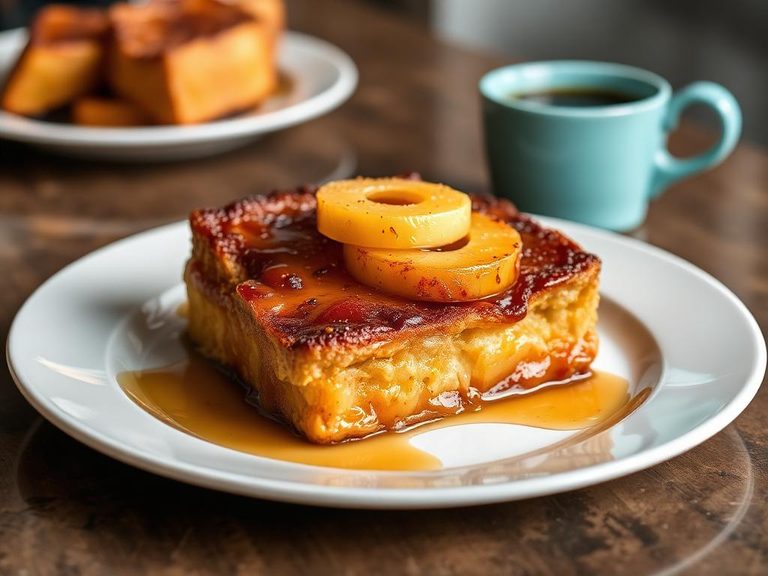
Cake, pineapple upside-down, prepared from recipe
Whole food · Baked Products

Photo: Wikipedia
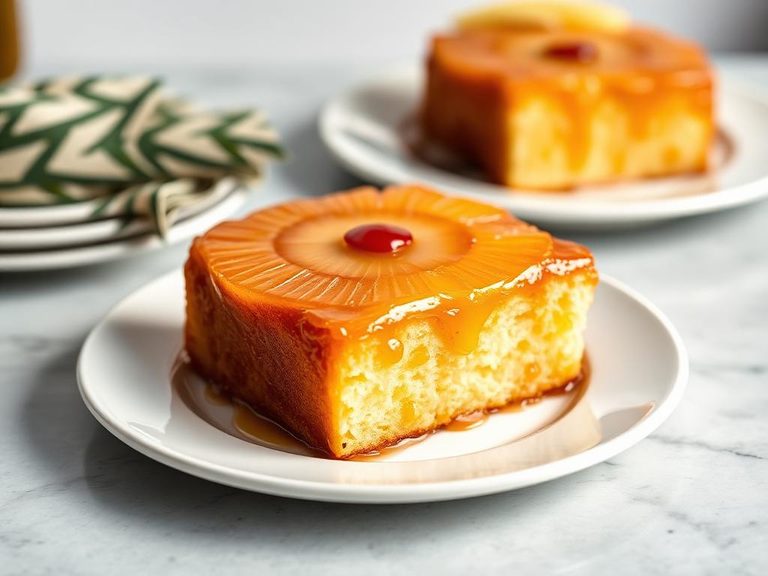
A golden, caramelized classic where pineapple rings and maraschino cherries are baked atop a buttery brown-sugar glaze, then dramatically flipped to reveal a glossy, fruit-studded top. The cake itself is tender and moist, with a sweet, tangy, and deeply caramelized flavor profile. Nutritionally, it's a dense energy source, primarily from carbohydrates and fats.
Calorie split: 4% protein · 62% carbs · 34% fat
↓ Full nutrition💚 Why it's loved
People adore the dramatic reveal when it's flipped from pan to plate, showcasing its jewel-like fruit topping. It's a beloved retro dessert that balances the sweet, buttery cake with the bright, acidic pop of cooked pineapple.
⚠️ Watch-outs & how to enjoy it better
The high sugar and fat content can cause rapid blood-sugar spikes, making it a poor choice for those managing diabetes or insulin resistance. To mitigate this, enjoy a small slice alongside a source of protein or healthy fat (like Greek yogurt or nuts) to slow sugar absorption. The caramelized sugar is also very sticky, posing a dental risk; rinsing your mouth with water afterward is a simple countermeasure.
Key benefits
- Provides quick energy from carbohydrates
- Contains small amounts of minerals like manganese and copper from pineapple
- The caramelized topping offers a rich, satisfying flavor
- Can be a comforting, nostalgic treat for celebrations
🍽️ Popular dishes
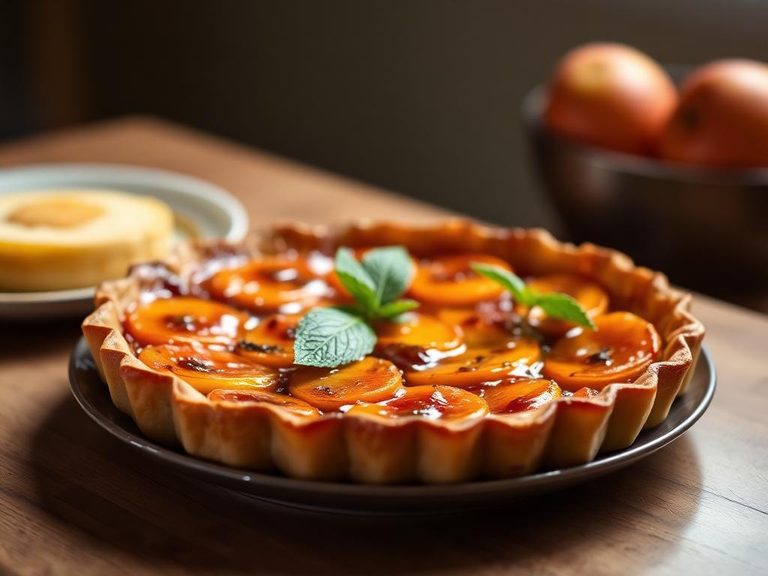
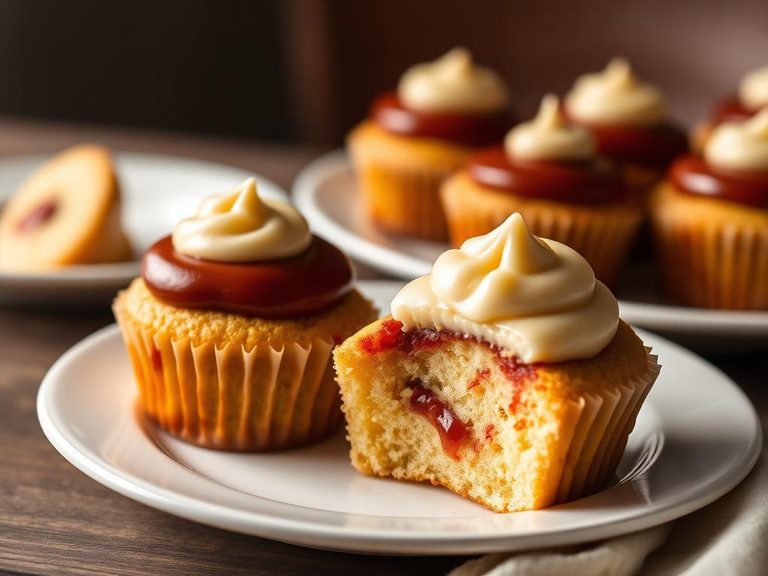
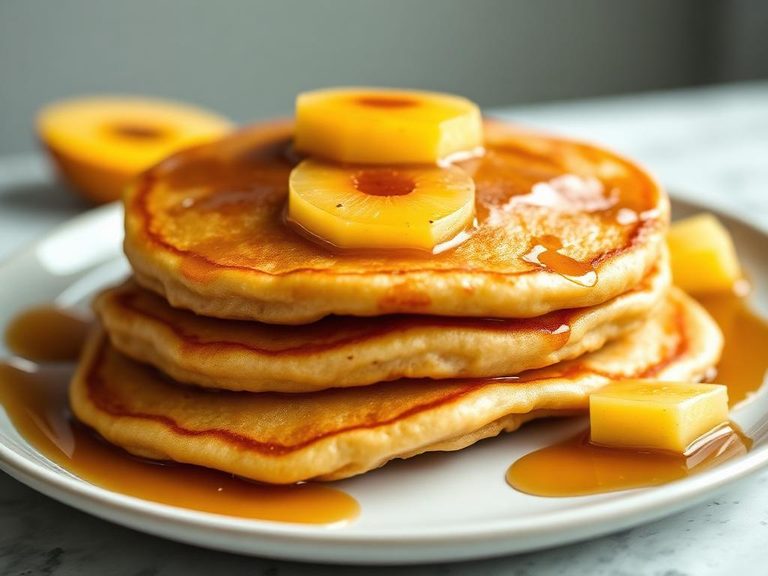
🌍 Where it's eaten
💡 Did you know?
The modern popularity of this cake is directly tied to the 1920s invention of canned pineapple rings, which made the uniform, decorative fruit topping easy and affordable for home bakers.
Full nutrition (USDA data · scales with serving)
| Water | 32.3 g |
| Energy | 319 kcal |
| Energy | 1335 kj |
| Protein | 3.5 g |
| Total lipid (fat) | 12.1 g |
| Ash | 1.7 g |
| Carbohydrate, by difference | 50.5 g |
| Fiber, total dietary | 0.80 g |
| Calcium, Ca | 120 mg |
| Iron, Fe | 1.5 mg |
| Magnesium, Mg | 13.0 mg |
| Phosphorus, P | 82.0 mg |
| Potassium, K | 112 mg |
| Sodium, Na | 319 mg |
| Zinc, Zn | 0.31 mg |
| Copper, Cu | 0.09 mg |
| Manganese, Mn | 0.35 mg |
| Selenium, Se | 9.4 ug |
| Vitamin C, total ascorbic acid | 1.2 mg |
| Thiamin | 0.15 mg |
| Riboflavin | 0.16 mg |
| Niacin | 1.2 mg |
| Pantothenic acid | 0.20 mg |
| Vitamin B-6 | 0.03 mg |
| Folate, total | 26.0 ug |
| Folic acid | 19.0 ug |
| Folate, food | 7.0 ug |
| Folate, DFE | 39.0 ug |
| Vitamin B-12 | 0.08 ug |
| Vitamin A, RAE | 62.0 ug |
| Retinol | 59.0 ug |
| Vitamin A, IU | 253 iu |
| Alcohol, ethyl | 0.00 g |
Fat & fatty acid profile (per 100g)
| Fatty acids, total saturated | 2.9 g |
| SFA 4:0 | 0.01 g |
| SFA 6:0 | 0.01 g |
| SFA 8:0 | 0.00 g |
| SFA 10:0 | 0.01 g |
| SFA 12:0 | 0.01 g |
| SFA 14:0 | 0.07 g |
| SFA 16:0 | 1.7 g |
| SFA 18:0 | 1.1 g |
| Fatty acids, total monounsaturated | 5.2 g |
| MUFA 16:1 | 0.02 g |
| MUFA 18:1 | 5.2 g |
| MUFA 20:1 | 0.00 g |
| MUFA 22:1 | 0.00 g |
| Fatty acids, total polyunsaturated | 3.3 g |
| PUFA 18:2 | 3.1 g |
| PUFA 18:3 | 0.18 g |
| PUFA 18:4 | 0.00 g |
| PUFA 20:4 | 0.01 g |
| PUFA 20:5 n-3 (EPA) | 0.00 g |
| PUFA 22:5 n-3 (DPA) | 0.00 g |
| PUFA 22:6 n-3 (DHA) | 0.00 g |
| Cholesterol | 22.0 mg |
Amino acid profile (per 100g)
| Tryptophan | 0.04 g |
| Threonine | 0.12 g |
| Isoleucine | 0.15 g |
| Leucine | 0.26 g |
| Lysine | 0.14 g |
| Methionine | 0.07 g |
| Cystine | 0.07 g |
| Phenylalanine | 0.17 g |
| Tyrosine | 0.12 g |
| Valine | 0.17 g |
| Arginine | 0.15 g |
| Histidine | 0.08 g |
| Alanine | 0.13 g |
| Aspartic acid | 0.22 g |
| Glutamic acid | 0.95 g |
| Glycine | 0.11 g |
| Proline | 0.34 g |
| Serine | 0.19 g |
FAQ
Why is it called 'upside-down'?
The fruit and sugar topping is arranged at the bottom of the pan before the batter is poured over it. After baking, the cake is inverted onto a plate, making the bottom the top.
Can I use fresh pineapple instead of canned?
Yes, but canned pineapple is traditional because it's pre-sliced, consistently sweet, and the syrup can be used in the caramel. Fresh pineapple must be sliced into rings and may release more water, affecting the caramel.
How do I prevent the topping from sticking to the pan?
Ensure the butter and brown sugar are fully melted and bubbly before adding the fruit. After baking, let the cake cool in the pan for exactly 5-10 minutes—too long and the caramel hardens, too short and it's too runny. Run a knife around the edge before inverting.
Nutrient density (calculated · NRF9.3)
Nutrient Rich Foods index: beneficial nutrients (protein, fiber, vitamins, minerals) minus saturated fat, added sugar & sodium, per 100 kcal.
NRF9.3 index — Fulgoni, Keast & Drewnowski, 2009. Computed from USDA nutrients.
Weight-loss friendliness (composite index)
Energy density 3.19 kcal/g · 4% calories from protein · 0.8 g fiber · 0.0 g sugar per 100 g.
Composite of energy density (Rolls et al., 1999), protein & fiber satiety, minus sugar. A calculated heuristic — ranks satiety-per-calorie, not a clinical measure.
Dietary load (calculated from USDA values)
Potential renal acid load. Positive = acid-forming, negative = alkaline-forming.
Sodium-to-potassium ratio: 2.85 (lower is better — aim for ≤ 1)
Sodium:potassium per WHO potassium guidance. Computed from USDA nutrients.