

Beef, rib, whole (ribs 6-12), separable lean and fat, trimmed to 1/8" fat, prime, raw
Whole food · Beef Products
This is the premium, well-marbled section of beef short ribs, prized for its rich, beefy flavor and a texture that becomes melt-in-your-mouth tender when cooked properly. With nearly 32 grams of fat per 100 grams, it delivers an intensely savory, succulent eating experience. Nutritionally, it's a powerhouse of protein and fat, but contains zero carbohydrates.
Calorie split: 18% protein · 0% carbs · 82% fat
↓ Full nutrition💚 Why it's loved
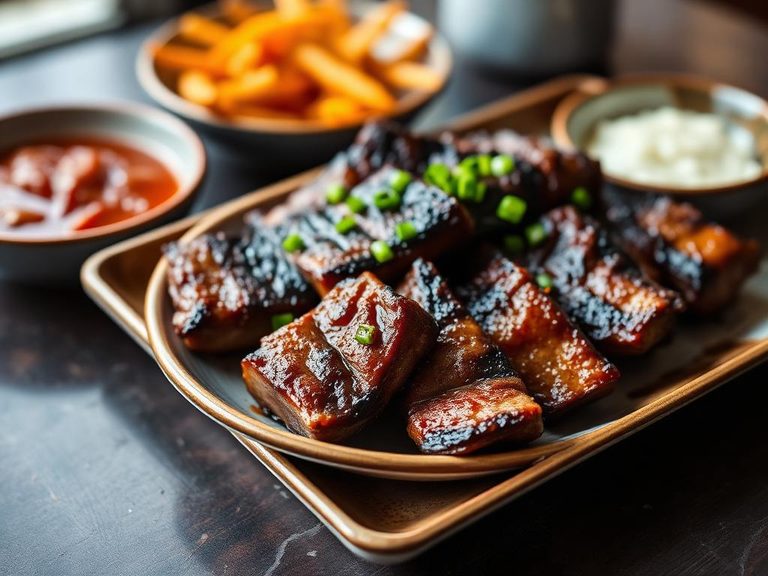
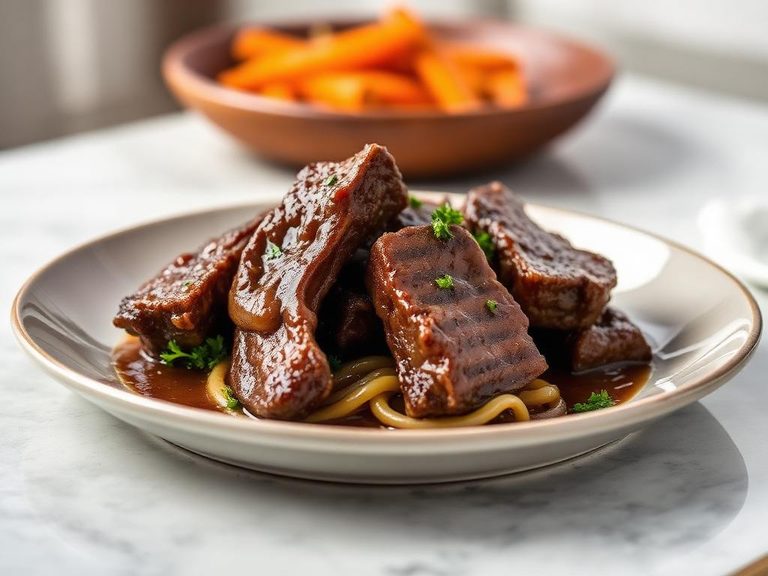
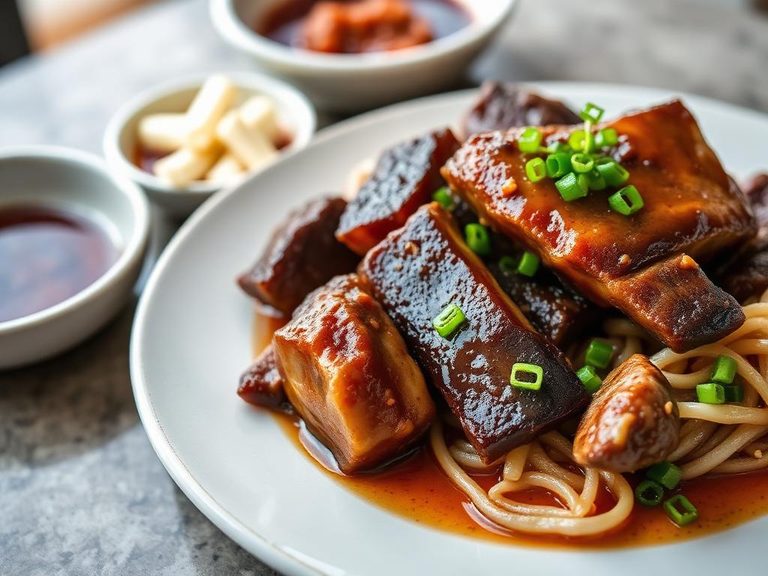
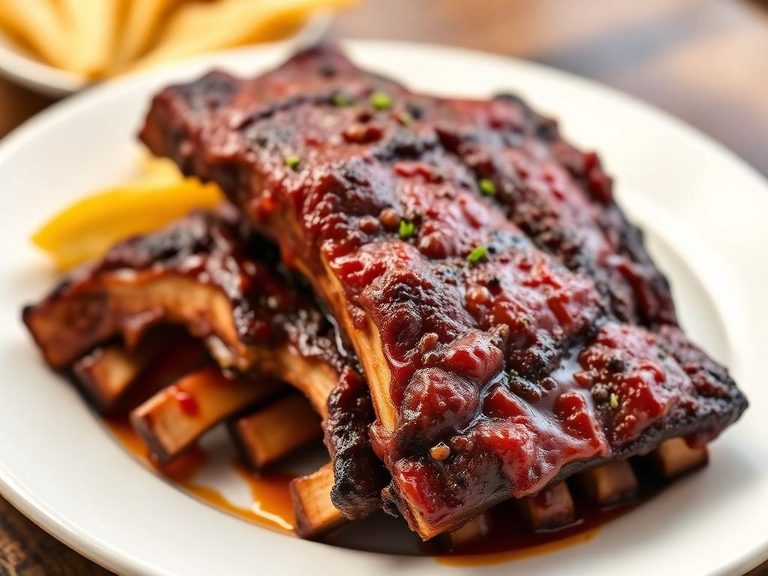
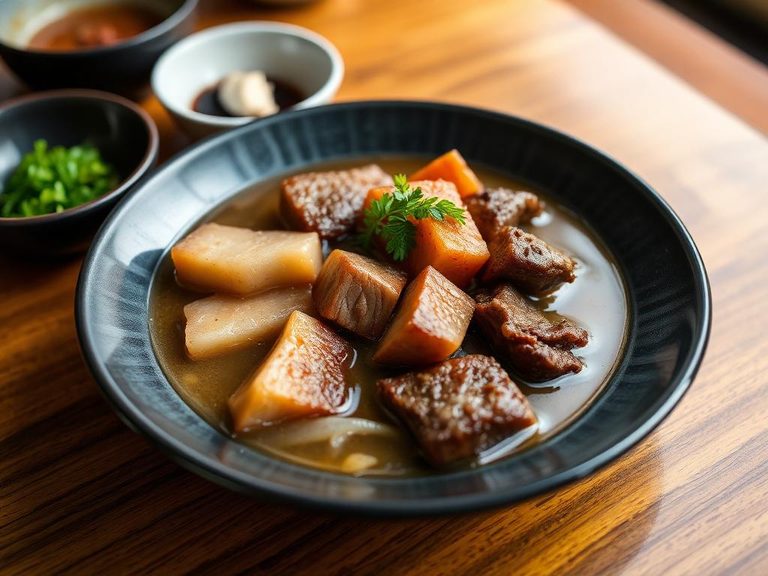
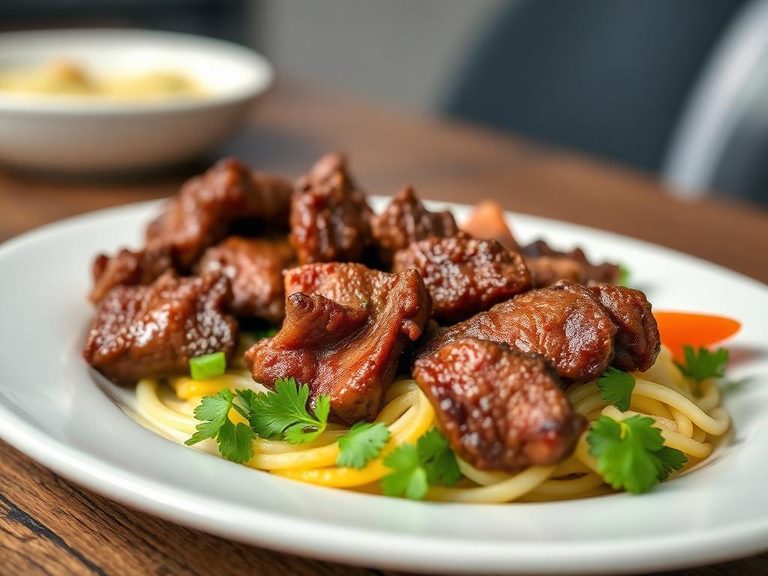
People adore it for the deep, beefy umami that develops during slow cooking, where the marbled fat bastes the meat from within. Its versatility shines in everything from smoky barbecue to elegant braised dishes, making it a centerpiece in many comfort food traditions.
⚠️ Watch-outs & how to enjoy it better
The high saturated fat and calorie density require mindful portion control, especially for those managing heart health or calorie intake. To counteract this, pair a smaller portion with large servings of non-starchy vegetables (like roasted broccoli or a vinegar-based slaw) to add volume, fiber, and nutrients without excess calories.
Key benefits
- Excellent source of high-quality protein for muscle maintenance.
- Rich in essential minerals like iron, zinc, and selenium.
- Provides B vitamins, especially B12, crucial for nerve function.
- High fat content aids in the absorption of fat-soluble vitamins (A, D, E, K).
- Satiating due to the combination of protein and fat.
🍽️ Popular dishes
🌍 Where it's eaten
💡 Did you know?
The term 'prime' in its name is a USDA grade indicating the highest level of marbling, which is the intramuscular fat that creates flavor and tenderness; only about 2-3% of all beef graded in the US achieves this top tier.
Full nutrition (USDA data · scales with serving)
| Water | 51.5 g |
| Energy | 355 kcal |
| Energy | 1485 kj |
| Protein | 16.1 g |
| Total lipid (fat) | 31.7 g |
| Ash | 0.76 g |
| Carbohydrate, by difference | 0.00 g |
| Fiber, total dietary | 0.00 g |
| Calcium, Ca | 9.0 mg |
| Iron, Fe | 1.7 mg |
| Magnesium, Mg | 16.0 mg |
| Phosphorus, P | 152 mg |
| Potassium, K | 263 mg |
| Sodium, Na | 53.0 mg |
| Zinc, Zn | 3.6 mg |
| Copper, Cu | 0.06 mg |
| Manganese, Mn | 0.01 mg |
| Selenium, Se | 20.7 ug |
| Vitamin C, total ascorbic acid | 0.00 mg |
| Thiamin | 0.08 mg |
| Riboflavin | 0.13 mg |
| Niacin | 2.8 mg |
| Pantothenic acid | 0.30 mg |
| Vitamin B-6 | 0.31 mg |
| Folate, total | 5.0 ug |
| Folic acid | 0.00 ug |
| Folate, food | 5.0 ug |
| Folate, DFE | 5.0 ug |
| Choline, total | 67.5 mg |
| Betaine | 9.9 mg |
| Vitamin B-12 | 2.8 ug |
| Vitamin A, IU | 0.00 iu |
Fat & fatty acid profile (per 100g)
| Fatty acids, total saturated | 13.2 g |
| SFA 10:0 | 0.11 g |
| SFA 12:0 | 0.07 g |
| SFA 14:0 | 1.0 g |
| SFA 16:0 | 7.8 g |
| SFA 18:0 | 4.0 g |
| Fatty acids, total monounsaturated | 13.8 g |
| MUFA 16:1 | 1.6 g |
| MUFA 18:1 | 12.0 g |
| MUFA 20:1 | 0.05 g |
| Fatty acids, total polyunsaturated | 1.1 g |
| PUFA 18:2 | 0.75 g |
| PUFA 18:3 | 0.37 g |
| PUFA 20:4 | 0.03 g |
| Cholesterol | 72.0 mg |
Amino acid profile (per 100g)
| Tryptophan | 0.18 g |
| Threonine | 0.70 g |
| Isoleucine | 0.73 g |
| Leucine | 1.3 g |
| Lysine | 1.3 g |
| Methionine | 0.41 g |
| Cystine | 0.18 g |
| Phenylalanine | 0.63 g |
| Tyrosine | 0.54 g |
| Valine | 0.79 g |
| Arginine | 1.0 g |
| Histidine | 0.55 g |
| Alanine | 0.97 g |
| Aspartic acid | 1.5 g |
| Glutamic acid | 2.4 g |
| Glycine | 0.88 g |
| Proline | 0.71 g |
| Serine | 0.62 g |
FAQ
What's the best way to cook prime beef ribs?
Slow, moist cooking methods like braising, smoking, or stewing are ideal. These break down the connective tissue and render the abundant fat, resulting in tender, flavorful meat. High-heat methods like grilling are best for thinner, sliced preparations like Korean galbi.
Is this cut the same as brisket?
No, they are different. Beef ribs come from the rib section near the spine, while brisket comes from the lower chest. Ribs have more bone and a different fat distribution, leading to a distinct texture and flavor profile.
How does the 'trimmed to 1/8 inch fat' specification affect cooking?
It means the external fat cap has been mostly removed, leaving a thin, consistent layer. This prevents excessive greasiness while still providing enough fat to baste the meat during cooking, ensuring it doesn't dry out.
Nutrient density (calculated · NRF9.3)
Nutrient Rich Foods index: beneficial nutrients (protein, fiber, vitamins, minerals) minus saturated fat, added sugar & sodium, per 100 kcal.
NRF9.3 index — Fulgoni, Keast & Drewnowski, 2009. Computed from USDA nutrients.
Weight-loss friendliness (composite index)
Energy density 3.55 kcal/g · 18% calories from protein · 0.0 g fiber · 0.0 g sugar per 100 g.
Composite of energy density (Rolls et al., 1999), protein & fiber satiety, minus sugar. A calculated heuristic — ranks satiety-per-calorie, not a clinical measure.
Dietary load (calculated from USDA values)
Potential renal acid load. Positive = acid-forming, negative = alkaline-forming.
Sodium-to-potassium ratio: 0.20 (lower is better — aim for ≤ 1)
Sodium:potassium per WHO potassium guidance. Computed from USDA nutrients.