

Soup, cream of potato, canned, prepared with equal volume milk
Whole food · Soups, Sauces, and Gravies
This is a classic, velvety canned soup base, where the earthy, mild flavor of potato is enriched by a creamy, smooth texture from milk. Its nutrition is defined by a balanced mix of carbohydrates and fats, providing a comforting, energy-dense foundation for a quick meal.
Calorie split: 15% protein · 46% carbs · 39% fat
↓ Full nutrition💚 Why it's loved
People love it for its nostalgic, comforting warmth and its incredible versatility as a blank canvas for toppings or as a base for other dishes. It's a staple of quick, satisfying home cooking.
⚠️ Watch-outs & how to enjoy it better
As a canned product, it can be high in sodium, which is a concern for those monitoring blood pressure. To counteract this, look for low-sodium versions, rinse the contents lightly, or dilute it with fresh milk or water and season yourself. Its creamy texture also means it can contribute to blood sugar spikes if not balanced; pair it with a fiber-rich side salad or a protein like grilled chicken to create a more balanced meal.
Key benefits
- Provides a quick source of energy from carbohydrates and fats.
- Contains protein from the added milk.
- Offers a convenient, shelf-stable base for many recipes.
- Can be a comforting, warm meal component.
🍽️ Popular dishes
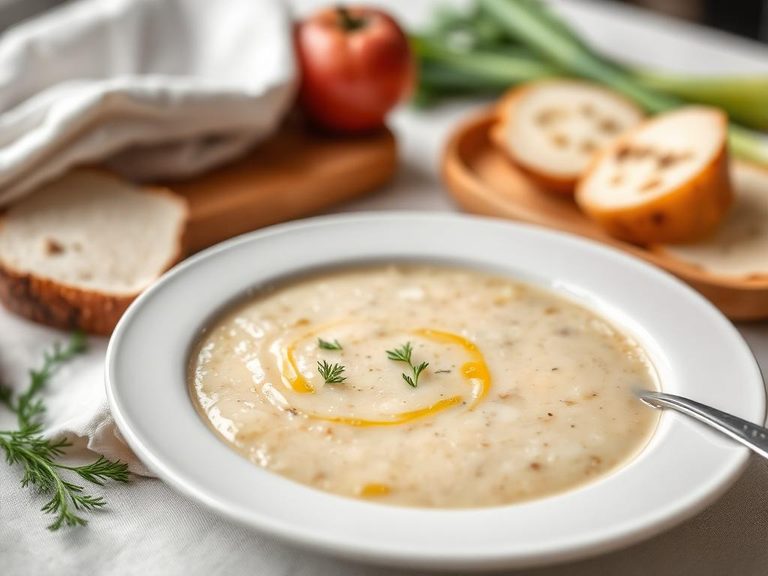
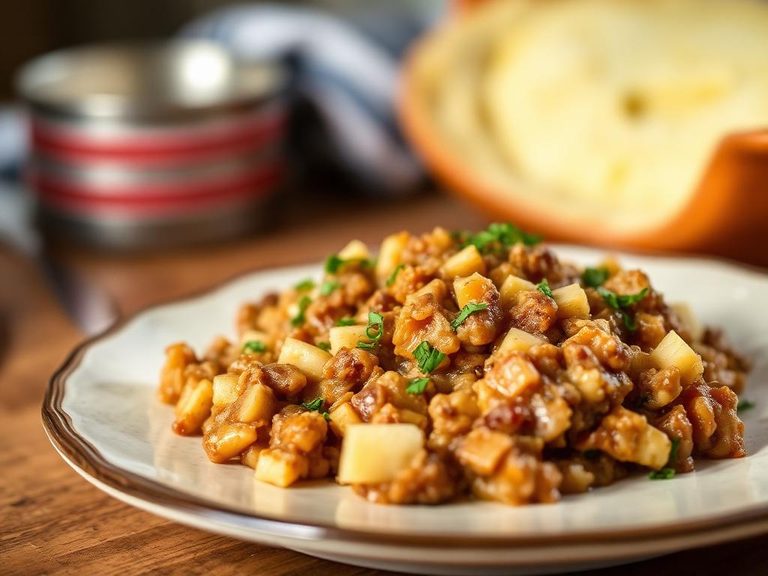
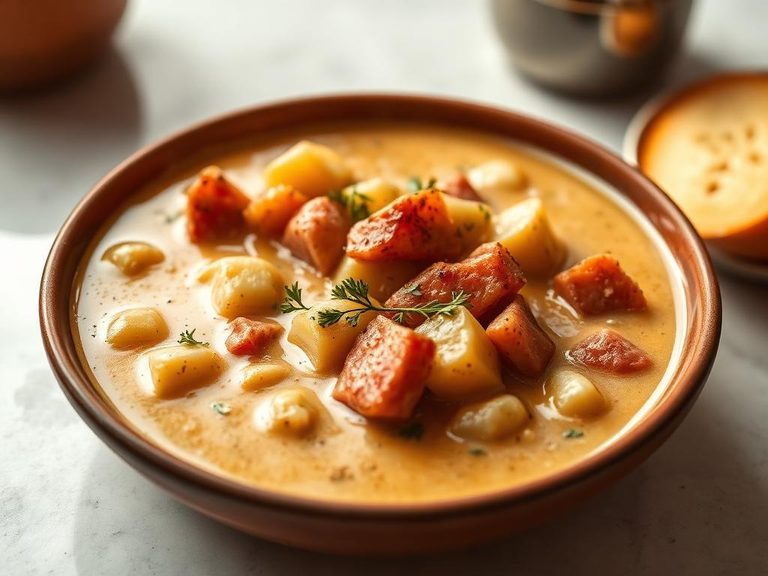
🌍 Where it's eaten
💡 Did you know?
The 'cream of' in its name originally referred to the technique of thickening a soup with a roux (flour and fat) and then finishing it with cream, not necessarily that the primary ingredient was cream.
Full nutrition (USDA data · scales with serving)
| Water | 86.7 g |
| Energy | 60.0 kcal |
| Energy | 251 kj |
| Protein | 2.3 g |
| Total lipid (fat) | 2.6 g |
| Ash | 1.5 g |
| Carbohydrate, by difference | 6.9 g |
| Fiber, total dietary | 0.20 g |
| Calcium, Ca | 67.0 mg |
| Iron, Fe | 0.22 mg |
| Magnesium, Mg | 7.0 mg |
| Phosphorus, P | 65.0 mg |
| Potassium, K | 130 mg |
| Sodium, Na | 230 mg |
| Zinc, Zn | 0.27 mg |
| Copper, Cu | 0.11 mg |
| Manganese, Mn | 0.15 mg |
| Vitamin C, total ascorbic acid | 0.50 mg |
| Thiamin | 0.03 mg |
| Riboflavin | 0.10 mg |
| Niacin | 0.26 mg |
| Pantothenic acid | 0.68 mg |
| Vitamin B-6 | 0.04 mg |
| Folate, total | 4.0 ug |
| Folic acid | 0.00 ug |
| Folate, food | 4.0 ug |
| Folate, DFE | 4.0 ug |
| Vitamin B-12 | 0.20 ug |
| Vitamin A, IU | 179 iu |
| Alcohol, ethyl | 0.00 g |
Fat & fatty acid profile (per 100g)
| Fatty acids, total saturated | 1.5 g |
| SFA 4:0 | 0.10 g |
| SFA 6:0 | 0.05 g |
| SFA 8:0 | 0.03 g |
| SFA 10:0 | 0.06 g |
| SFA 12:0 | 0.07 g |
| SFA 14:0 | 0.24 g |
| SFA 16:0 | 0.65 g |
| SFA 18:0 | 0.28 g |
| Fatty acids, total monounsaturated | 0.70 g |
| MUFA 16:1 | 0.05 g |
| MUFA 18:1 | 0.61 g |
| MUFA 20:1 | 0.00 g |
| MUFA 22:1 | 0.00 g |
| Fatty acids, total polyunsaturated | 0.23 g |
| PUFA 18:2 | 0.19 g |
| PUFA 18:3 | 0.04 g |
| PUFA 18:4 | 0.00 g |
| PUFA 20:4 | 0.00 g |
| PUFA 20:5 n-3 (EPA) | 0.00 g |
| PUFA 22:5 n-3 (DPA) | 0.00 g |
| PUFA 22:6 n-3 (DHA) | 0.00 g |
| Cholesterol | 9.0 mg |
Amino acid profile (per 100g)
| Tryptophan | 0.03 g |
| Threonine | 0.10 g |
| Isoleucine | 0.13 g |
| Leucine | 0.21 g |
| Lysine | 0.16 g |
| Methionine | 0.05 g |
| Cystine | 0.03 g |
| Phenylalanine | 0.11 g |
| Tyrosine | 0.10 g |
| Valine | 0.15 g |
| Arginine | 0.09 g |
| Histidine | 0.06 g |
| Alanine | 0.08 g |
| Aspartic acid | 0.23 g |
| Glutamic acid | 0.51 g |
| Glycine | 0.06 g |
| Proline | 0.21 g |
| Serine | 0.12 g |
FAQ
Is this soup gluten-free?
Not necessarily. Many canned cream soups use wheat flour as a thickener. You must check the specific brand's ingredient list for wheat or gluten-containing additives.
Can I use this as a substitute for heavy cream in recipes?
It's not a direct substitute. It has a much lower fat content, contains starch, and has a distinct potato flavor. It will change the texture and taste of your dish, but it can work in some rustic casseroles or sauces.
How can I improve the flavor of the canned soup?
Sauté some fresh onion and garlic before adding the soup. Stir in fresh herbs like chives or thyme, a dash of black pepper, or a swirl of sour cream or plain yogurt for extra tang and richness.
Nutrient density (calculated · NRF9.3)
Nutrient Rich Foods index: beneficial nutrients (protein, fiber, vitamins, minerals) minus saturated fat, added sugar & sodium, per 100 kcal.
NRF9.3 index — Fulgoni, Keast & Drewnowski, 2009. Computed from USDA nutrients.
Weight-loss friendliness (composite index)
Energy density 0.60 kcal/g · 16% calories from protein · 0.2 g fiber · 0.0 g sugar per 100 g.
Composite of energy density (Rolls et al., 1999), protein & fiber satiety, minus sugar. A calculated heuristic — ranks satiety-per-calorie, not a clinical measure.
Dietary load (calculated from USDA values)
Potential renal acid load. Positive = acid-forming, negative = alkaline-forming.
Sodium-to-potassium ratio: 1.77 (lower is better — aim for ≤ 1)
Sodium:potassium per WHO potassium guidance. Computed from USDA nutrients.