

Rice flour, brown
Whole food · Cereal Grains and Pasta
Brown rice flour is a whole-grain flour made from finely milled, unpolished brown rice, offering a slightly nutty, earthy flavor and a subtly gritty texture. It is a gluten-free staple that retains the bran and germ, providing more fiber and nutrients than white rice flour. With 7.23g of protein and 4.6g of fiber per 100g, it's a more substantial choice for gluten-free baking.
Calorie split: 8% protein · 85% carbs · 7% fat
↓ Full nutrition💚 Why it's loved
People love it for its ability to create tender, moist baked goods with a pleasant, wholesome nuttiness. Its neutral-yet-complex flavor makes it a perfect canvas for everything from delicate cakes to savory flatbreads.
⚠️ Watch-outs & how to enjoy it better
Its high carbohydrate content (76.48g per 100g) can cause blood sugar spikes if consumed in large portions alone. To counteract this, pair it with protein (like eggs or nuts) or healthy fats (like avocado or oil) in recipes, and practice portion control. Some may find its texture slightly gritty if not sifted well.
Key benefits
- Naturally gluten-free, safe for celiac disease
- Good source of dietary fiber (4.6g per 100g)
- Contains more minerals than white rice flour
- Provides plant-based protein (7.23g per 100g)
- Versatile base for both sweet and savory dishes
🍽️ Popular dishes
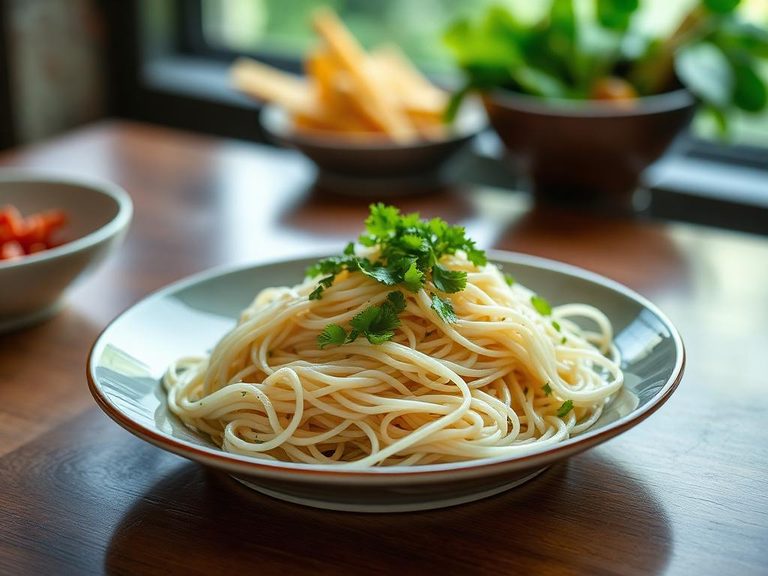

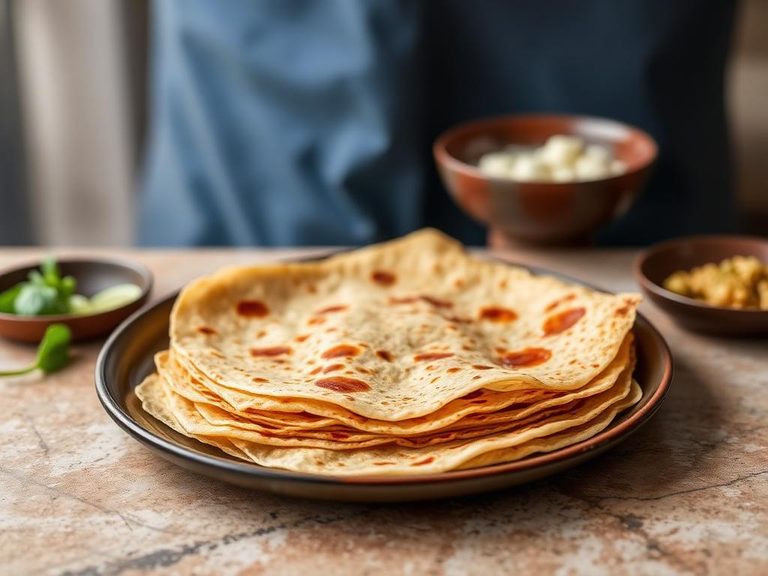

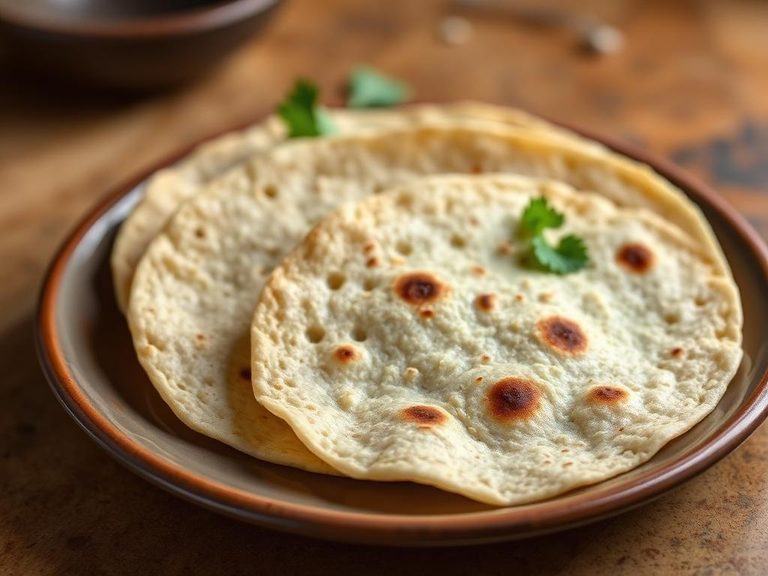
🌍 Where it's eaten
💡 Did you know?
In Japan, a special type of roasted brown rice flour called 'kinako' is a popular, nutty-tasting topping for mochi and ice cream.
Full nutrition (USDA data · scales with serving)
| Water | 12.0 g |
| Energy | 363 kcal |
| Energy | 1519 kj |
| Protein | 7.2 g |
| Total lipid (fat) | 2.8 g |
| Ash | 1.5 g |
| Carbohydrate, by difference | 76.5 g |
| Fiber, total dietary | 4.6 g |
| Total Sugars | 0.66 g |
| Calcium, Ca | 11.0 mg |
| Iron, Fe | 2.0 mg |
| Magnesium, Mg | 112 mg |
| Phosphorus, P | 337 mg |
| Potassium, K | 289 mg |
| Sodium, Na | 8.0 mg |
| Zinc, Zn | 2.5 mg |
| Copper, Cu | 0.23 mg |
| Manganese, Mn | 4.0 mg |
| Vitamin C, total ascorbic acid | 0.00 mg |
| Thiamin | 0.44 mg |
| Riboflavin | 0.08 mg |
| Niacin | 6.3 mg |
| Pantothenic acid | 1.6 mg |
| Vitamin B-6 | 0.74 mg |
| Folate, total | 16.0 ug |
| Folic acid | 0.00 ug |
| Folate, food | 16.0 ug |
| Folate, DFE | 16.0 ug |
| Vitamin B-12 | 0.00 ug |
| Vitamin B-12, added | 0.00 ug |
| Retinol | 0.00 ug |
| Vitamin A, IU | 0.00 iu |
| Vitamin E (alpha-tocopherol) | 0.60 mg |
| Vitamin E, added | 0.00 mg |
| Vitamin D (D2 + D3), International Units | 0.00 iu |
| Vitamin D (D2 + D3) | 0.00 ug |
| Alcohol, ethyl | 0.00 g |
Fat & fatty acid profile (per 100g)
| Fatty acids, total saturated | 0.56 g |
| SFA 12:0 | 0.00 g |
| SFA 14:0 | 0.01 g |
| SFA 16:0 | 0.47 g |
| SFA 18:0 | 0.05 g |
| Fatty acids, total monounsaturated | 1.0 g |
| MUFA 16:1 | 0.01 g |
| MUFA 18:1 | 1.00 g |
| Fatty acids, total polyunsaturated | 1.00 g |
| PUFA 18:2 | 0.95 g |
| PUFA 18:3 | 0.04 g |
| Cholesterol | 0.00 mg |
Amino acid profile (per 100g)
| Tryptophan | 0.09 g |
| Threonine | 0.27 g |
| Isoleucine | 0.31 g |
| Leucine | 0.60 g |
| Lysine | 0.28 g |
| Methionine | 0.16 g |
| Cystine | 0.09 g |
| Phenylalanine | 0.37 g |
| Tyrosine | 0.27 g |
| Valine | 0.42 g |
| Arginine | 0.55 g |
| Histidine | 0.18 g |
| Alanine | 0.42 g |
| Aspartic acid | 0.68 g |
| Glutamic acid | 1.5 g |
| Glycine | 0.36 g |
| Proline | 0.34 g |
| Serine | 0.37 g |
FAQ
Can I substitute brown rice flour 1:1 for all-purpose flour?
Not directly. It lacks gluten, so baked goods can be crumbly. It's best used in blends (often with xanthan gum) or in recipes specifically designed for gluten-free flours.
How should I store it?
Keep it in an airtight container in a cool, dark place for a few months, or in the freezer for up to a year, as the natural oils can go rancid.
Is it the same as white rice flour?
No. Brown rice flour is made from the whole grain (bran, germ, endosperm), giving it more fiber, nutrients, and a nuttier taste than refined white rice flour.
Nutrient density (calculated · NRF9.3)
Nutrient Rich Foods index: beneficial nutrients (protein, fiber, vitamins, minerals) minus saturated fat, added sugar & sodium, per 100 kcal.
NRF9.3 index — Fulgoni, Keast & Drewnowski, 2009. Computed from USDA nutrients.
Weight-loss friendliness (composite index)
Energy density 3.63 kcal/g · 8% calories from protein · 4.6 g fiber · 0.7 g sugar per 100 g.
Composite of energy density (Rolls et al., 1999), protein & fiber satiety, minus sugar. A calculated heuristic — ranks satiety-per-calorie, not a clinical measure.
Dietary load (calculated from USDA values)
Potential renal acid load. Positive = acid-forming, negative = alkaline-forming.
Sodium-to-potassium ratio: 0.03 (lower is better — aim for ≤ 1)
Sodium:potassium per WHO potassium guidance. Computed from USDA nutrients.