

Potatoes, scalloped, home-prepared with butter
Whole food · Vegetables and Vegetable Products

Photo: Wikipedia
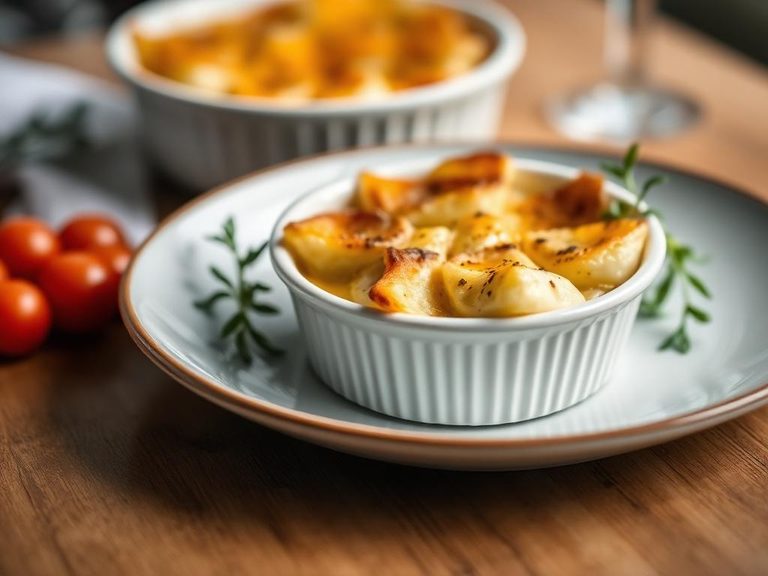
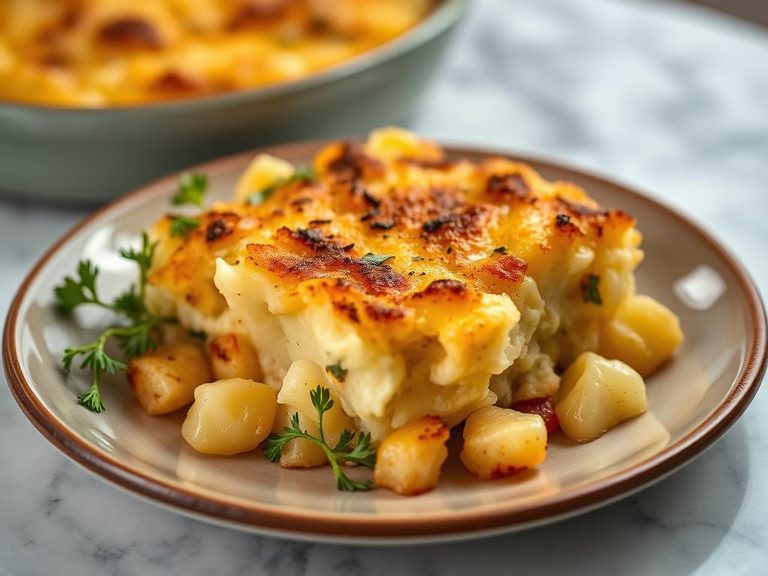
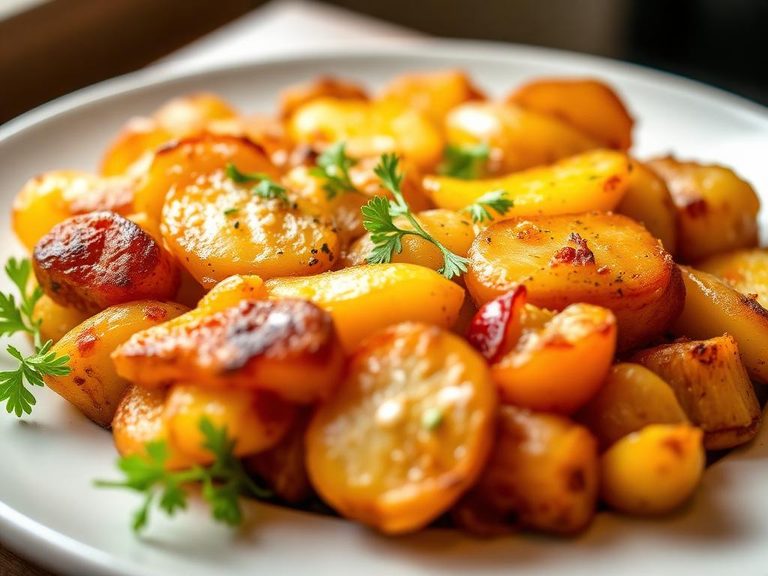
Scalloped potatoes are thinly sliced potatoes baked in a rich, creamy sauce until tender and golden on top. The home-prepared version with butter offers a comforting, savory flavor with a soft, velvety texture. Nutritionally, it provides a moderate calorie base with a good balance of carbs and fats for energy.
Calorie split: 13% protein · 49% carbs · 38% fat
↓ Full nutrition💚 Why it's loved
People love scalloped potatoes for their creamy, indulgent comfort food appeal and the satisfying contrast between the soft interior and crispy, cheesy top. It's a versatile side dish that pairs well with roasts, steaks, or holiday meals.
⚠️ Watch-outs & how to enjoy it better
The dish can be high in saturated fat and sodium, especially with added cheese or cream, which may concern those monitoring heart health or blood pressure. To mitigate, use low-fat milk, reduce butter, add herbs for flavor, and pair with a large, leafy green salad to boost fiber and balance the meal.
Key benefits
- Good source of dietary fiber for digestive health
- Provides potassium from potatoes
- Contains vitamin C, especially if skins are included
- Offers a comforting, energy-dense meal
- Can be made with whole potatoes for added nutrients
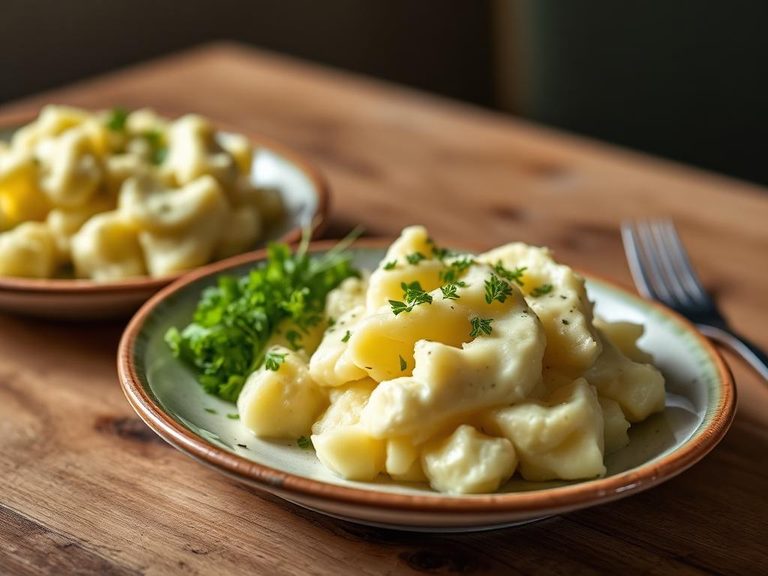
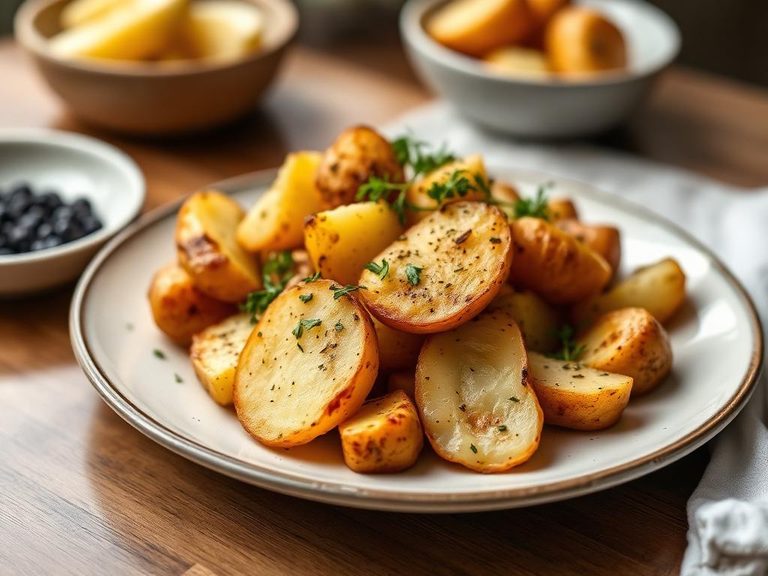
🍽️ Popular dishes
🌍 Where it's eaten
💡 Did you know?
The name 'scalloped' likely comes from the practice of baking the dish in a scallop-shaped dish or shell, not from the shellfish itself.
Full nutrition (USDA data · scales with serving)
| Water | 80.9 g |
| Energy | 88.0 kcal |
| Energy | 367 kj |
| Protein | 2.9 g |
| Total lipid (fat) | 3.7 g |
| Ash | 1.7 g |
| Carbohydrate, by difference | 10.8 g |
| Fiber, total dietary | 1.9 g |
| Calcium, Ca | 57.0 mg |
| Iron, Fe | 0.57 mg |
| Magnesium, Mg | 19.0 mg |
| Phosphorus, P | 63.0 mg |
| Potassium, K | 378 mg |
| Sodium, Na | 335 mg |
| Zinc, Zn | 0.40 mg |
| Copper, Cu | 0.16 mg |
| Manganese, Mn | 0.17 mg |
| Selenium, Se | 1.6 ug |
| Fluoride, F | 31.5 ug |
| Vitamin C, total ascorbic acid | 10.6 mg |
| Thiamin | 0.07 mg |
| Riboflavin | 0.09 mg |
| Niacin | 1.1 mg |
| Pantothenic acid | 0.51 mg |
| Vitamin B-6 | 0.18 mg |
| Folate, total | 11.0 ug |
| Folic acid | 2.0 ug |
| Folate, food | 9.0 ug |
| Folate, DFE | 13.0 ug |
| Vitamin B-12 | 0.00 ug |
| Vitamin A, IU | 135 iu |
| Vitamin D (D2 + D3), International Units | 0.00 iu |
| Vitamin D (D2 + D3) | 0.00 ug |
Fat & fatty acid profile (per 100g)
| Fatty acids, total saturated | 2.3 g |
| SFA 4:0 | 0.12 g |
| SFA 6:0 | 0.07 g |
| SFA 8:0 | 0.04 g |
| SFA 10:0 | 0.09 g |
| SFA 12:0 | 0.10 g |
| SFA 14:0 | 0.36 g |
| SFA 16:0 | 0.96 g |
| SFA 18:0 | 0.44 g |
| Fatty acids, total monounsaturated | 1.0 g |
| MUFA 16:1 | 0.08 g |
| MUFA 18:1 | 0.90 g |
| Fatty acids, total polyunsaturated | 0.17 g |
| PUFA 18:2 | 0.10 g |
| PUFA 18:3 | 0.06 g |
| Cholesterol | 12.0 mg |
Amino acid profile (per 100g)
| Tryptophan | 0.04 g |
| Threonine | 0.12 g |
| Isoleucine | 0.14 g |
| Leucine | 0.23 g |
| Lysine | 0.19 g |
| Methionine | 0.06 g |
| Cystine | 0.03 g |
| Phenylalanine | 0.14 g |
| Tyrosine | 0.12 g |
| Valine | 0.17 g |
| Arginine | 0.12 g |
| Histidine | 0.07 g |
| Alanine | 0.09 g |
| Aspartic acid | 0.44 g |
| Glutamic acid | 0.58 g |
| Glycine | 0.08 g |
| Proline | 0.20 g |
| Serine | 0.14 g |
FAQ
What's the difference between scalloped and au gratin potatoes?
Scalloped potatoes are typically baked in a cream or milk-based sauce, while au gratin potatoes are topped with cheese and/or breadcrumbs for a crispy crust.
Can I make scalloped potatoes ahead of time?
Yes, you can assemble the dish, cover, and refrigerate for up to 24 hours before baking. Add 10-15 minutes to the baking time if cooking from cold.
What type of potato is best for scalloped potatoes?
Waxy or all-purpose potatoes like Yukon Gold hold their shape well and provide a creamy texture. Starchy potatoes like Russets can become too soft.
Nutrient density (calculated · NRF9.3)
Nutrient Rich Foods index: beneficial nutrients (protein, fiber, vitamins, minerals) minus saturated fat, added sugar & sodium, per 100 kcal.
NRF9.3 index — Fulgoni, Keast & Drewnowski, 2009. Computed from USDA nutrients.
Weight-loss friendliness (composite index)
Energy density 0.88 kcal/g · 13% calories from protein · 1.9 g fiber · 0.0 g sugar per 100 g.
Composite of energy density (Rolls et al., 1999), protein & fiber satiety, minus sugar. A calculated heuristic — ranks satiety-per-calorie, not a clinical measure.
Dietary load (calculated from USDA values)
Potential renal acid load. Positive = acid-forming, negative = alkaline-forming.
Sodium-to-potassium ratio: 0.89 (lower is better — aim for ≤ 1)
Sodium:potassium per WHO potassium guidance. Computed from USDA nutrients.