

Potatoes, au gratin, dry mix, unprepared
Whole food · Vegetables and Vegetable Products

Photo: Wikipedia
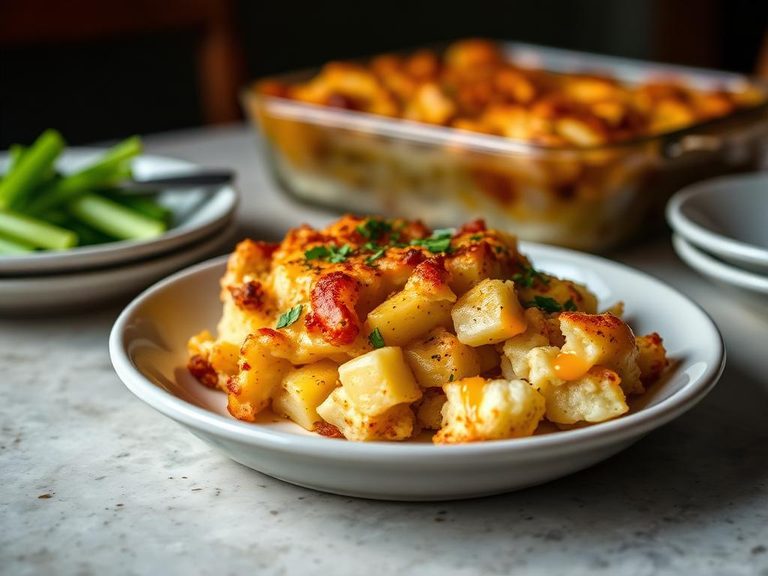
This is a convenient dry mix for creating classic au gratin potatoes, a dish where thinly sliced potatoes are baked in a rich, creamy sauce until bubbly and golden. The mix itself is a starchy, savory powder that transforms into a velvety, cheesy coating when combined with milk and butter, delivering a comforting, indulgent texture. Nutritionally, it's a high-carbohydrate base, providing substantial energy with minimal fat in its unprepared state.
Calorie split: 10% protein · 81% carbs · 9% fat
↓ Full nutrition💚 Why it's loved
People adore it for the nostalgic, creamy, and cheesy flavor profile that defines a perfect gratin, offering a taste of home-style comfort with minimal effort. Its versatility as a side dish for roasts, steaks, or holiday meals makes it a beloved staple.
⚠️ Watch-outs & how to enjoy it better
The final dish can be very high in calories, saturated fat, and sodium, especially when prepared with full-fat dairy, posing a concern for those monitoring blood sugar or heart health. To counteract, use low-fat milk, reduce added butter, and pair the gratin with a large portion of steamed green vegetables or a lean protein to balance the meal and slow carbohydrate absorption.
Key benefits
- Provides a quick, shelf-stable base for a classic comfort dish.
- High in carbohydrates for a quick source of energy.
- Contains dietary fiber from potato content.
- Low in fat before preparation, allowing control over final richness.
- Simplifies the preparation of a traditionally labor-intensive dish.
🍽️ Popular dishes
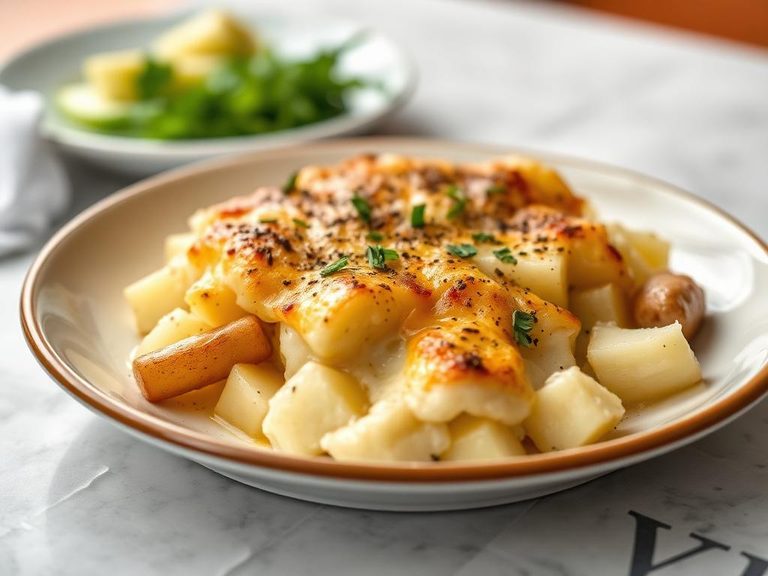
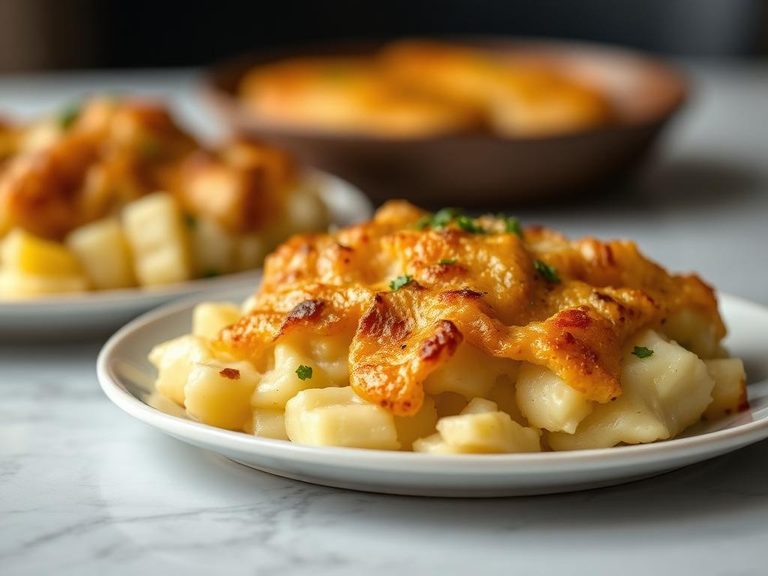
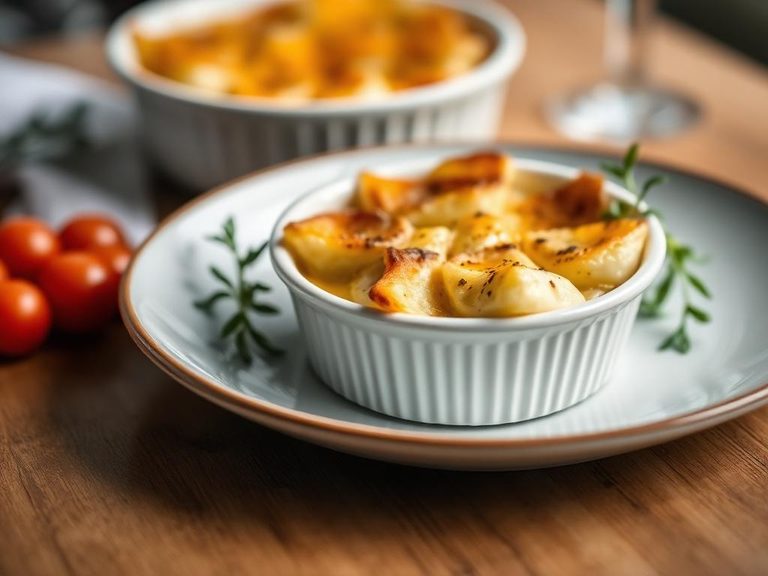
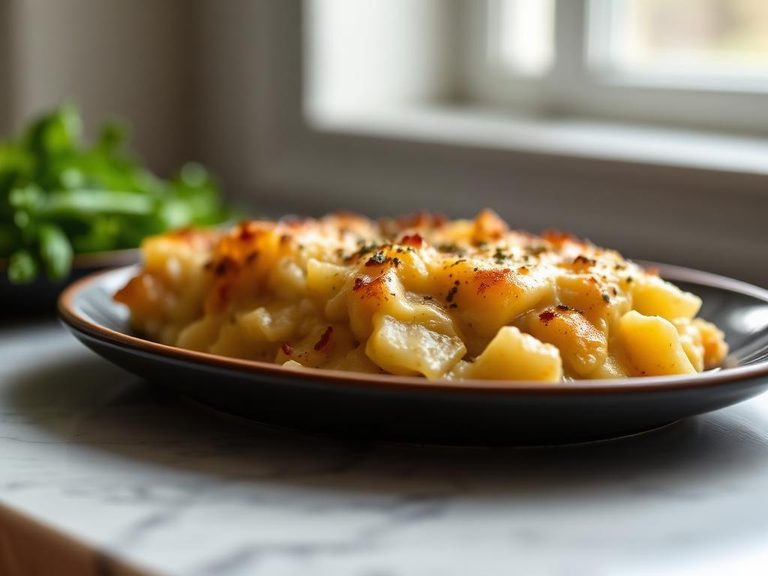
🌍 Where it's eaten
💡 Did you know?
The term 'au gratin' is French for 'by grating,' originally referring to a dish topped with breadcrumbs or grated cheese that browned in the oven.
Full nutrition (USDA data · scales with serving)
| Water | 5.0 g |
| Energy | 314 kcal |
| Energy | 1314 kj |
| Protein | 8.9 g |
| Total lipid (fat) | 3.7 g |
| Ash | 8.1 g |
| Carbohydrate, by difference | 74.3 g |
| Fiber, total dietary | 4.1 g |
| Calcium, Ca | 311 mg |
| Iron, Fe | 1.6 mg |
| Magnesium, Mg | 64.0 mg |
| Phosphorus, P | 404 mg |
| Potassium, K | 990 mg |
| Sodium, Na | 2095 mg |
| Zinc, Zn | 0.90 mg |
| Copper, Cu | 0.24 mg |
| Manganese, Mn | 0.59 mg |
| Selenium, Se | 10.0 ug |
| Vitamin C, total ascorbic acid | 15.5 mg |
| Thiamin | 0.07 mg |
| Riboflavin | 0.25 mg |
| Niacin | 4.1 mg |
| Pantothenic acid | 0.92 mg |
| Vitamin B-6 | 0.15 mg |
| Folate, total | 40.0 ug |
| Folic acid | 0.00 ug |
| Folate, food | 40.0 ug |
| Folate, DFE | 40.0 ug |
| Vitamin B-12 | 0.00 ug |
| Vitamin A, RAE | 54.0 ug |
| Retinol | 49.0 ug |
| Carotene, beta | 60.0 ug |
| Vitamin A, IU | 263 iu |
| Vitamin D (D2 + D3), International Units | 0.00 iu |
| Vitamin D (D2 + D3) | 0.00 ug |
Fat & fatty acid profile (per 100g)
| Fatty acids, total saturated | 2.3 g |
| SFA 4:0 | 0.12 g |
| SFA 6:0 | 0.07 g |
| SFA 8:0 | 0.04 g |
| SFA 10:0 | 0.08 g |
| SFA 12:0 | 0.08 g |
| SFA 14:0 | 0.37 g |
| SFA 16:0 | 1.0 g |
| SFA 18:0 | 0.45 g |
| Fatty acids, total monounsaturated | 1.1 g |
| MUFA 16:1 | 0.10 g |
| MUFA 18:1 | 0.90 g |
| Fatty acids, total polyunsaturated | 0.12 g |
| PUFA 18:2 | 0.07 g |
| PUFA 18:3 | 0.05 g |
Amino acid profile (per 100g)
Estimated from Potatoes, french fried, all types, salt added in processing, frozen, unprepared — USDA does not publish this profile for Potatoes.
| Tryptophan | 0.02 g |
| Threonine | 0.08 g |
| Isoleucine | 0.08 g |
| Leucine | 0.13 g |
| Lysine | 0.13 g |
| Methionine | 0.04 g |
| Cystine | 0.04 g |
| Phenylalanine | 0.10 g |
| Tyrosine | 0.08 g |
| Valine | 0.12 g |
| Arginine | 0.13 g |
| Histidine | 0.05 g |
| Alanine | 0.09 g |
| Aspartic acid | 0.50 g |
| Glutamic acid | 0.40 g |
| Glycine | 0.07 g |
| Proline | 0.08 g |
| Serine | 0.10 g |
FAQ
What's the difference between au gratin and scalloped potatoes?
Traditionally, au gratin potatoes include cheese and/or breadcrumbs in the topping, while scalloped potatoes are cooked in a cream or milk sauce without a browned crust. The dry mix often blurs this line.
Can I make this mix without dairy?
The mix is designed to be combined with milk and butter for the classic sauce. Substituting with plant-based milk and oil is possible but will significantly alter the traditional flavor and texture.
Why is the mix so high in carbs?
The primary ingredient is potato starch or dehydrated potato, which is a concentrated carbohydrate source. The dish is inherently starch-heavy.
Nutrient density (calculated · NRF9.3)
Nutrient Rich Foods index: beneficial nutrients (protein, fiber, vitamins, minerals) minus saturated fat, added sugar & sodium, per 100 kcal.
NRF9.3 index — Fulgoni, Keast & Drewnowski, 2009. Computed from USDA nutrients.
Weight-loss friendliness (composite index)
Energy density 3.14 kcal/g · 11% calories from protein · 4.1 g fiber · 0.0 g sugar per 100 g.
Composite of energy density (Rolls et al., 1999), protein & fiber satiety, minus sugar. A calculated heuristic — ranks satiety-per-calorie, not a clinical measure.
Dietary load (calculated from USDA values)
Potential renal acid load. Positive = acid-forming, negative = alkaline-forming.
Sodium-to-potassium ratio: 2.12 (lower is better — aim for ≤ 1)
Sodium:potassium per WHO potassium guidance. Computed from USDA nutrients.