

Onions, welsh, raw
Whole food · Vegetables and Vegetable Products

Photo: Wikipedia
Welsh onions (Allium fistulosum) are a perennial bunching onion with hollow, tubular green leaves and a mild, sweet, non-bulbing white base. Their crisp texture and gentle, less pungent flavor make them a versatile fresh or cooked ingredient. At only 34 kcal per 100g, they are a low-energy, high-fiber vegetable with a notable vitamin K content.
Calorie split: 20% protein · 70% carbs · 10% fat
↓ Full nutrition💚 Why it's loved
People love Welsh onions for their mild, sweet flavor that lacks the sharp bite of mature bulb onions, making them ideal for raw salads and garnishes. Their crisp, hollow green stalks add a fresh, grassy note and visual appeal to a wide variety of dishes.
⚠️ Watch-outs & how to enjoy it better
Like other alliums, Welsh onions can cause digestive discomfort (bloating, gas) in some individuals, particularly those with IBS or FODMAP sensitivities. To mitigate this, try cooking them to reduce fermentable sugars, or consume in smaller portions alongside protein or fat to slow digestion.
Key benefits
- Low in calories and fat
- Good source of dietary fiber (2.4g per 100g)
- Provides vitamin K, important for blood clotting
- Contains antioxidants like quercetin
- Adds flavor without added salt or sugar
🍽️ Popular dishes

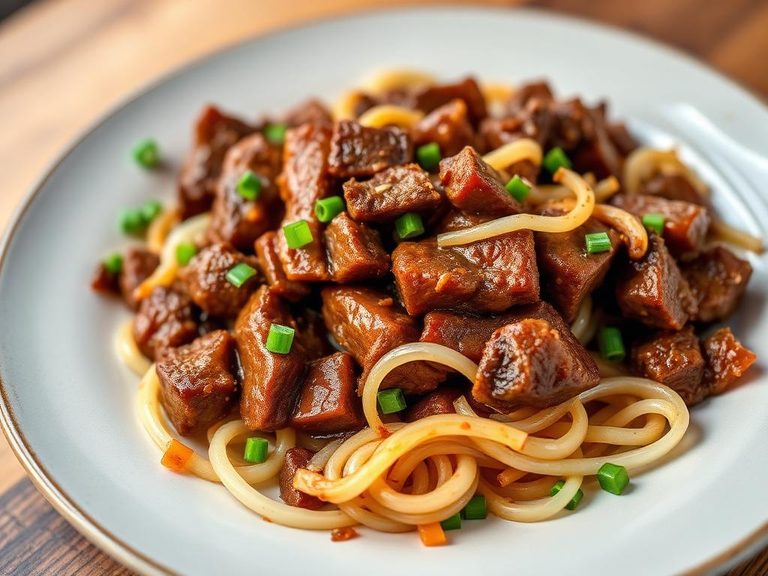


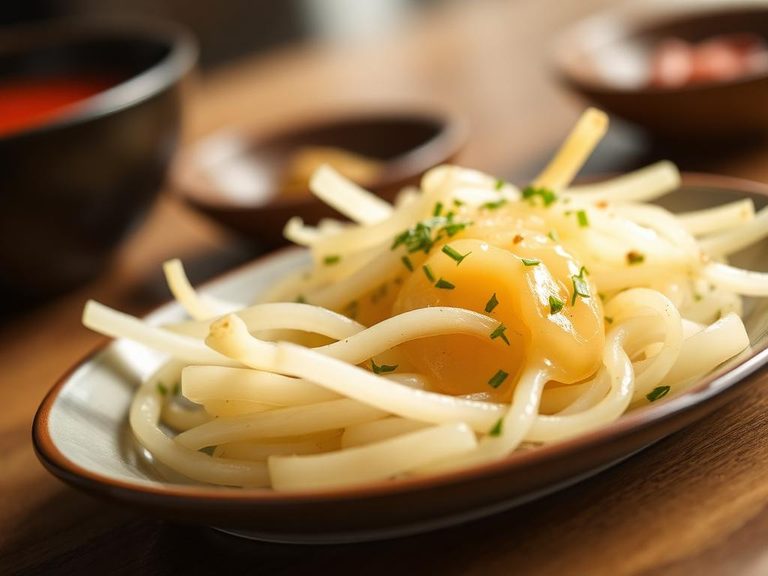
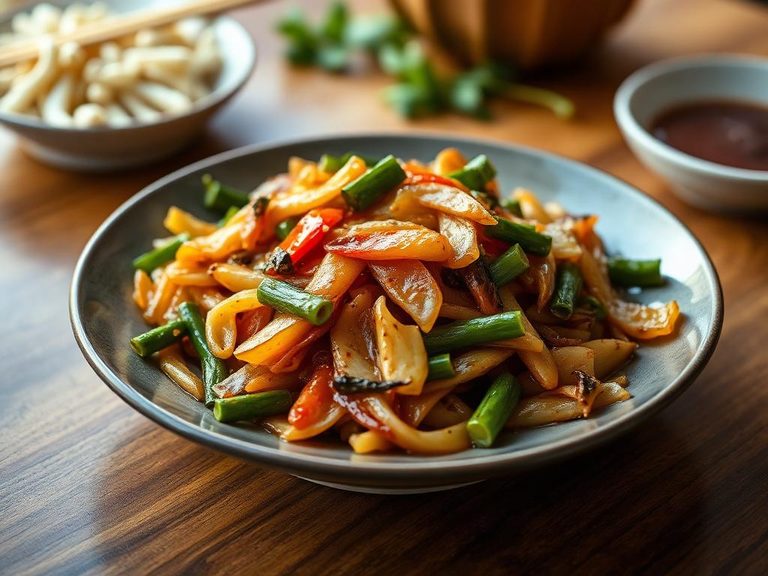
🌍 Where it's eaten
💡 Did you know?
Despite the name 'Welsh onion,' it is not native to Wales but likely originated in China; the term 'Welsh' may derive from the Old English 'wealh' meaning 'foreigner' or 'foreign onion.'
Full nutrition (USDA data · scales with serving)
| Water | 90.5 g |
| Energy | 34.0 kcal |
| Energy | 142 kj |
| Protein | 1.9 g |
| Total lipid (fat) | 0.40 g |
| Ash | 0.70 g |
| Carbohydrate, by difference | 6.5 g |
| Fiber, total dietary | 2.4 g |
| Total Sugars | 2.2 g |
| Calcium, Ca | 18.0 mg |
| Iron, Fe | 1.2 mg |
| Magnesium, Mg | 23.0 mg |
| Phosphorus, P | 49.0 mg |
| Potassium, K | 212 mg |
| Sodium, Na | 17.0 mg |
| Zinc, Zn | 0.52 mg |
| Copper, Cu | 0.07 mg |
| Manganese, Mn | 0.14 mg |
| Selenium, Se | 0.60 ug |
| Vitamin C, total ascorbic acid | 27.0 mg |
| Thiamin | 0.05 mg |
| Riboflavin | 0.09 mg |
| Niacin | 0.40 mg |
| Pantothenic acid | 0.17 mg |
| Vitamin B-6 | 0.07 mg |
| Folate, total | 16.0 ug |
| Folic acid | 0.00 ug |
| Folate, food | 16.0 ug |
| Folate, DFE | 16.0 ug |
| Choline, total | 5.3 mg |
| Vitamin B-12 | 0.00 ug |
| Retinol | 0.00 ug |
| Vitamin A, IU | 1160 iu |
| Vitamin E (alpha-tocopherol) | 0.51 mg |
| Vitamin D (D2 + D3), International Units | 0.00 iu |
| Vitamin D (D2 + D3) | 0.00 ug |
| Vitamin K (phylloquinone) | 193 ug |
| Alcohol, ethyl | 0.00 g |
| Caffeine | 0.00 mg |
| Theobromine | 0.00 mg |
Fat & fatty acid profile (per 100g)
| Fatty acids, total saturated | 0.07 g |
| SFA 14:0 | 0.00 g |
| SFA 16:0 | 0.06 g |
| SFA 18:0 | 0.01 g |
| Fatty acids, total monounsaturated | 0.06 g |
| MUFA 18:1 | 0.06 g |
| Fatty acids, total polyunsaturated | 0.16 g |
| PUFA 18:2 | 0.15 g |
| PUFA 18:3 | 0.01 g |
| Fatty acids, total trans | 0.00 g |
| Cholesterol | 0.00 mg |
Amino acid profile (per 100g)
| Tryptophan | 0.02 g |
| Threonine | 0.07 g |
| Isoleucine | 0.08 g |
| Leucine | 0.11 g |
| Lysine | 0.10 g |
| Methionine | 0.02 g |
| Phenylalanine | 0.06 g |
| Tyrosine | 0.06 g |
| Valine | 0.08 g |
| Arginine | 0.14 g |
| Histidine | 0.03 g |
| Alanine | 0.09 g |
| Aspartic acid | 0.18 g |
| Glutamic acid | 0.39 g |
| Glycine | 0.09 g |
| Proline | 0.13 g |
| Serine | 0.09 g |
FAQ
What is the difference between Welsh onions and regular green onions (scallions)?
Welsh onions (Allium fistulosum) are a distinct species from common green onions (Allium cepa). They are perennial, have thicker, more hollow leaves, and a milder, sweeter flavor. They do not form a bulb like regular onions.
Can I eat Welsh onions raw?
Yes, they are excellent raw. Their mild, sweet flavor and crisp texture make them perfect for salads, garnishes, and dips. They lack the harsh bite of raw bulb onions.
Are Welsh onions a good source of vitamins?
They are a good source of vitamin K (important for bone health and blood clotting) and contain vitamin C and folate. They also provide antioxidants like quercetin.
How should I store Welsh onions?
Store them unwashed in a plastic bag in the refrigerator crisper drawer. They can also be placed upright in a jar with an inch of water on the counter for a few days, similar to fresh herbs.
Nutrient density (calculated · NRF9.3)
Nutrient Rich Foods index: beneficial nutrients (protein, fiber, vitamins, minerals) minus saturated fat, added sugar & sodium, per 100 kcal.
NRF9.3 index — Fulgoni, Keast & Drewnowski, 2009. Computed from USDA nutrients.
Weight-loss friendliness (composite index)
Energy density 0.34 kcal/g · 22% calories from protein · 2.4 g fiber · 2.2 g sugar per 100 g.
Composite of energy density (Rolls et al., 1999), protein & fiber satiety, minus sugar. A calculated heuristic — ranks satiety-per-calorie, not a clinical measure.
Dietary load (calculated from USDA values)
Potential renal acid load. Positive = acid-forming, negative = alkaline-forming.
Sodium-to-potassium ratio: 0.08 (lower is better — aim for ≤ 1)
Sodium:potassium per WHO potassium guidance. Computed from USDA nutrients.