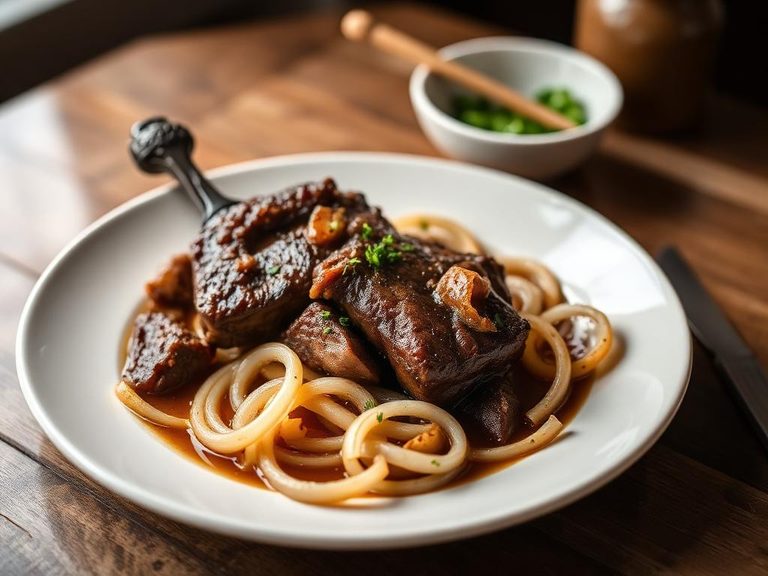
Pickled Welsh onions
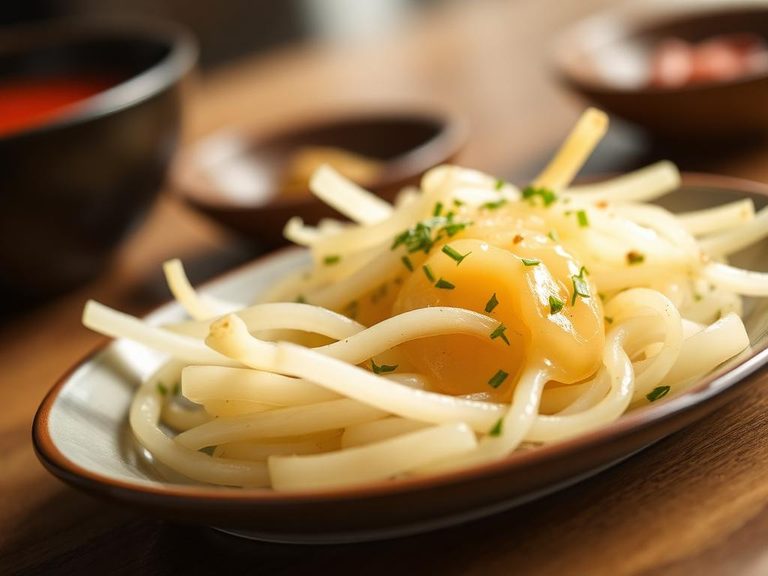
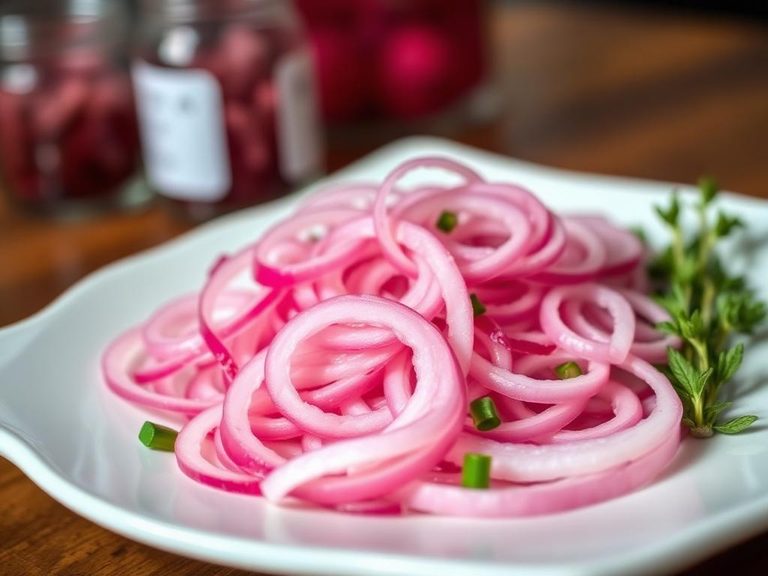
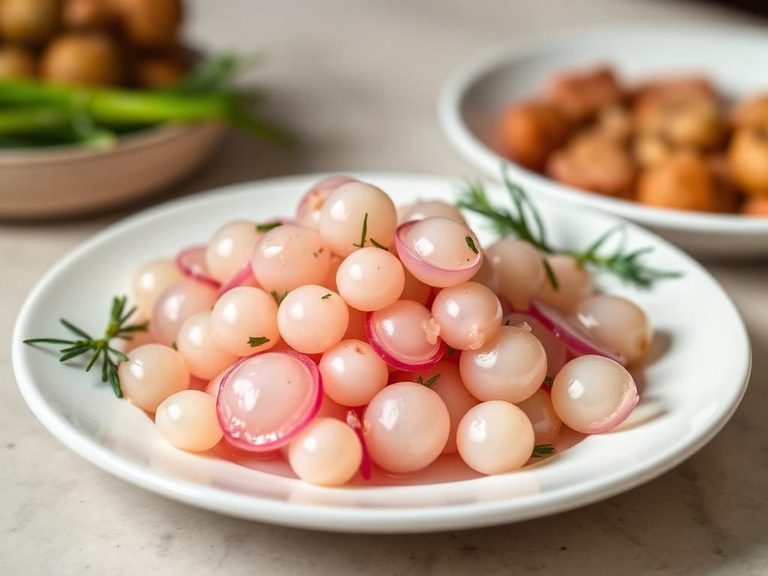
Pickled Welsh onions, known as 'negizuke' or 'negi no tsukemono' in Japanese, are a classic Japanese pickle made from the white part of Japanese long onions (negi) preserved in a brine of rice vinegar, sugar, and salt. They are a staple side dish and condiment in Japanese cuisine, often served alongside rice, grilled fish, or in bento boxes.
🍽️ Nutrition at a glance
This dish is very low in calories, fat, and protein, with carbohydrates coming primarily from the added sugar and vinegar brine. It provides a good source of vitamin K and manganese, and its fermentation process can offer beneficial probiotics.
Nutrition breakdown
| Calories | 30 kcal |
| Protein | 0.5 g |
| Carbs | 7 g |
| Fat | 0 g |
| Fiber | 1 g |
| Sugar | 5 g |
| Sodium | 450 mg |
| Vitamin K | 30 mcg |
| Manganese | 0.2 mg |
| Potassium | 150 mg |
| Vitamin C | 5 mg |
| Folate | 15 mcg |
| Calcium | 20 mg |
| Iron | 0.3 mg |
| Vitamin B6 | 0.05 mg |
Per 1/2 cup (about 100 g) · estimated, varies by recipe
💡 What's interesting
Culturally, these pickles are a prime example of 'tsukemono' (pickled things), an essential component of the traditional Japanese meal structure designed to balance flavors and aid digestion. Nutritionally, the pickling process not only preserves the vegetable but can also enhance the availability of certain nutrients and create gut-friendly bacteria.