

Lamb, variety meats and by-products, tongue, raw
Whole food · Lamb, Veal, and Game Products

Photo: Wikipedia
Lamb tongue is a tender, richly marbled organ meat with a uniquely smooth, slightly gelatinous texture and a deep, gamey flavor that intensifies with cooking. Nutritionally, it's a powerhouse of high-quality protein and healthy fats, delivering a substantial energy boost with virtually no carbohydrates.
Calorie split: 29% protein · 0% carbs · 71% fat
↓ Full nutrition💚 Why it's loved
People cherish lamb tongue for its luxurious, melt-in-the-mouth texture when braised and its deep, savory flavor that stands up to bold spices. It's a prized delicacy in many cultures, often featured in festive or traditional dishes.
⚠️ Watch-outs & how to enjoy it better
Its high fat content and calorie density may be a concern for those monitoring fat intake or on strict diets. The strong, distinct flavor can be off-putting to those unaccustomed to organ meats. To balance, pair it with acidic or fresh elements like lemon, pickles, or a crisp salad to cut the richness, and practice portion control by serving it as part of a mixed plate.
Key benefits
- Excellent source of complete protein for muscle maintenance
- Rich in heme iron, more bioavailable than plant-based iron
- Provides essential B vitamins, especially B12 and niacin
- Contains zinc, important for immune function
- High in conjugated linoleic acid (CLA), a beneficial fatty acid
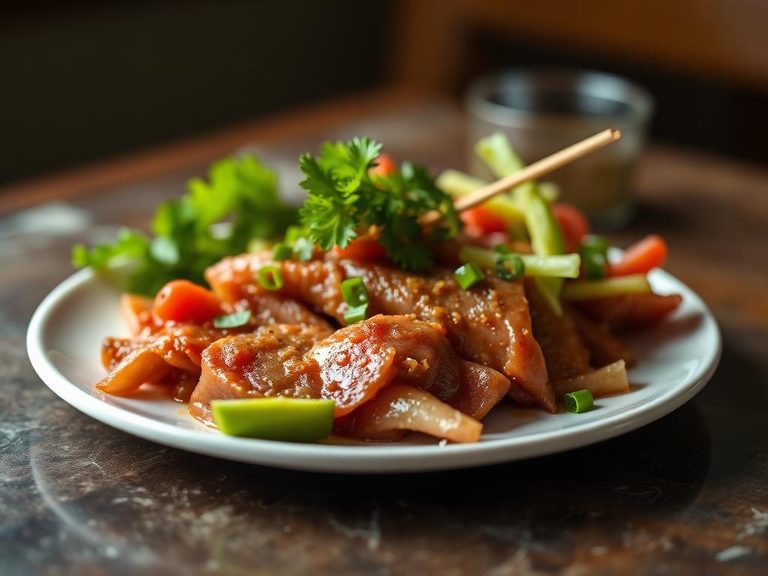
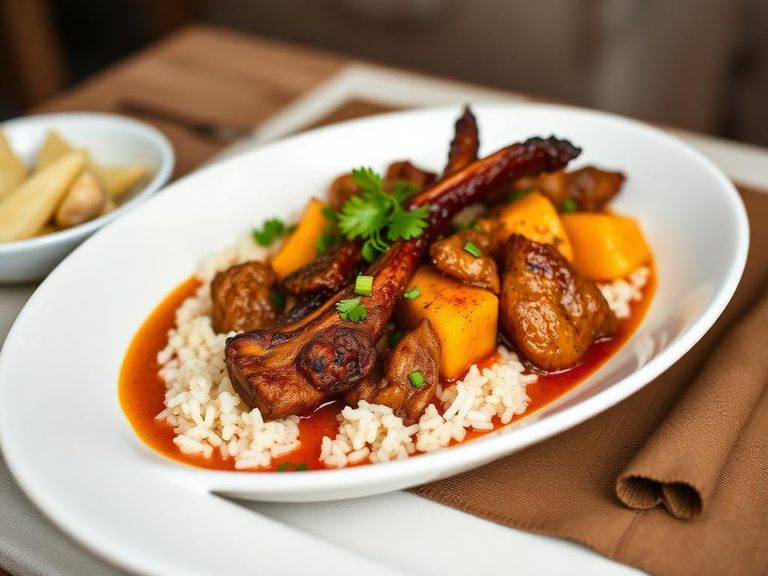
🍽️ Popular dishes
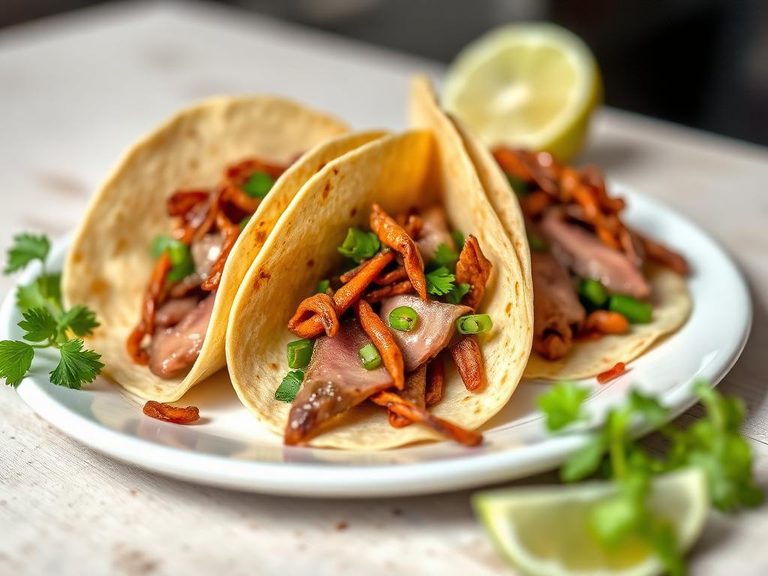
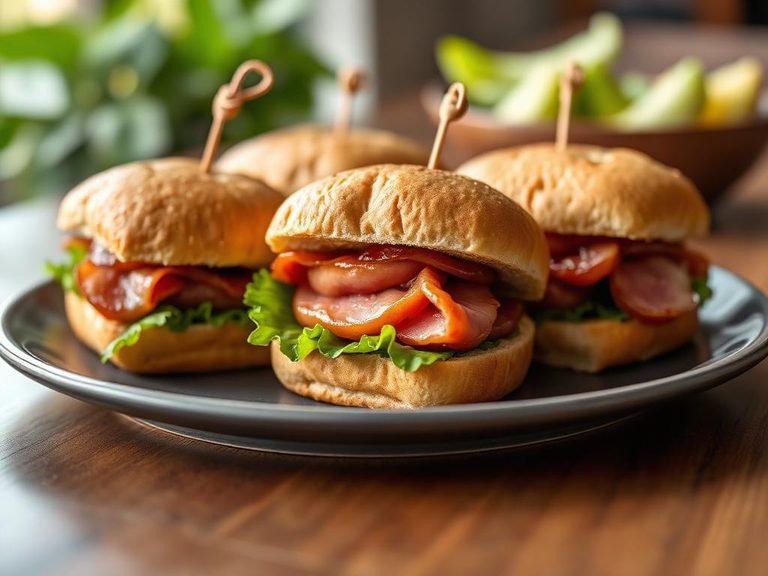
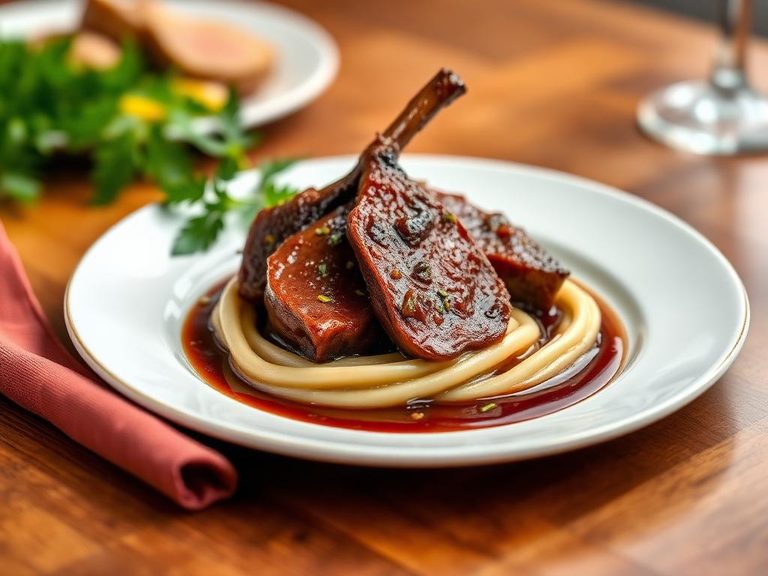
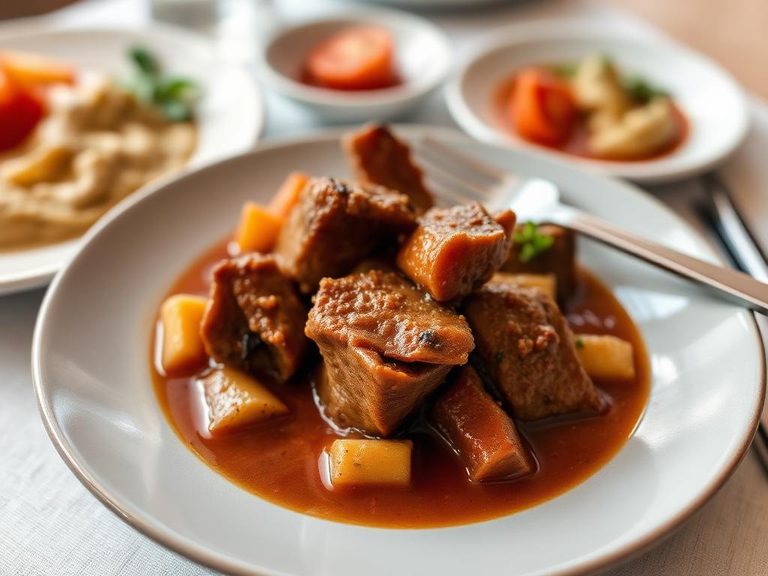
🌍 Where it's eaten
💡 Did you know?
Despite its name, the tongue is a single, powerful muscle, making it one of the hardest-working muscles in the animal's body.
Full nutrition (USDA data · scales with serving)
| Water | 66.6 g |
| Energy | 222 kcal |
| Energy | 929 kj |
| Protein | 15.7 g |
| Total lipid (fat) | 17.2 g |
| Ash | 0.92 g |
| Carbohydrate, by difference | 0.00 g |
| Fiber, total dietary | 0.00 g |
| Calcium, Ca | 9.0 mg |
| Iron, Fe | 2.6 mg |
| Magnesium, Mg | 21.0 mg |
| Phosphorus, P | 184 mg |
| Potassium, K | 257 mg |
| Sodium, Na | 78.0 mg |
| Zinc, Zn | 2.3 mg |
| Copper, Cu | 0.21 mg |
| Manganese, Mn | 0.05 mg |
| Selenium, Se | 15.0 ug |
| Vitamin C, total ascorbic acid | 6.0 mg |
| Thiamin | 0.15 mg |
| Riboflavin | 0.38 mg |
| Niacin | 4.7 mg |
| Pantothenic acid | 0.97 mg |
| Vitamin B-6 | 0.18 mg |
| Folate, total | 4.0 ug |
| Folic acid | 0.00 ug |
| Folate, food | 4.0 ug |
| Folate, DFE | 4.0 ug |
| Vitamin B-12 | 7.2 ug |
| Vitamin A, RAE | 0.00 ug |
| Retinol | 0.00 ug |
| Vitamin A, IU | 0.00 iu |
Fat & fatty acid profile (per 100g)
| Fatty acids, total saturated | 6.6 g |
| SFA 12:0 | 0.03 g |
| SFA 14:0 | 0.48 g |
| SFA 16:0 | 3.3 g |
| SFA 18:0 | 2.5 g |
| Fatty acids, total monounsaturated | 8.5 g |
| MUFA 16:1 | 0.43 g |
| MUFA 18:1 | 7.8 g |
| MUFA 20:1 | 0.00 g |
| MUFA 22:1 | 0.19 g |
| Fatty acids, total polyunsaturated | 1.1 g |
| PUFA 18:2 | 0.48 g |
| PUFA 18:3 | 0.51 g |
| PUFA 20:4 | 0.06 g |
| PUFA 20:5 n-3 (EPA) | 0.00 g |
| PUFA 22:5 n-3 (DPA) | 0.00 g |
| PUFA 22:6 n-3 (DHA) | 0.00 g |
| Cholesterol | 156 mg |
Amino acid profile (per 100g)
| Tryptophan | 0.16 g |
| Threonine | 0.71 g |
| Isoleucine | 0.61 g |
| Leucine | 1.1 g |
| Lysine | 1.1 g |
| Methionine | 0.33 g |
| Cystine | 0.17 g |
| Phenylalanine | 0.59 g |
| Tyrosine | 0.47 g |
| Valine | 0.75 g |
| Arginine | 1.0 g |
| Histidine | 0.35 g |
| Alanine | 0.90 g |
| Aspartic acid | 1.4 g |
| Glutamic acid | 2.0 g |
| Glycine | 1.0 g |
| Proline | 0.83 g |
| Serine | 0.62 g |
FAQ
How do you prepare lamb tongue before cooking?
It must be thoroughly cleaned. The outer skin is typically blanched in boiling water, then peeled off to reveal the tender meat underneath.
What's the best cooking method for a tender result?
Slow, moist cooking methods like braising, simmering, or stewing are ideal, as they break down the connective tissue and result in a fork-tender texture.
Does it taste like lamb meat?
It has a similar but more pronounced, slightly gamier and richer flavor compared to lamb muscle meat, with a uniquely smooth texture.
Nutrient density (calculated · NRF9.3)
Nutrient Rich Foods index: beneficial nutrients (protein, fiber, vitamins, minerals) minus saturated fat, added sugar & sodium, per 100 kcal.
NRF9.3 index — Fulgoni, Keast & Drewnowski, 2009. Computed from USDA nutrients.
Weight-loss friendliness (composite index)
Energy density 2.22 kcal/g · 28% calories from protein · 0.0 g fiber · 0.0 g sugar per 100 g.
Composite of energy density (Rolls et al., 1999), protein & fiber satiety, minus sugar. A calculated heuristic — ranks satiety-per-calorie, not a clinical measure.
Dietary load (calculated from USDA values)
Potential renal acid load. Positive = acid-forming, negative = alkaline-forming.
Sodium-to-potassium ratio: 0.30 (lower is better — aim for ≤ 1)
Sodium:potassium per WHO potassium guidance. Computed from USDA nutrients.