

Lamb, leg, whole (shank and sirloin), separable lean and fat, trimmed to 1/4" fat, choice, raw
Whole food · Lamb, Veal, and Game Products

Photo: Wikipedia
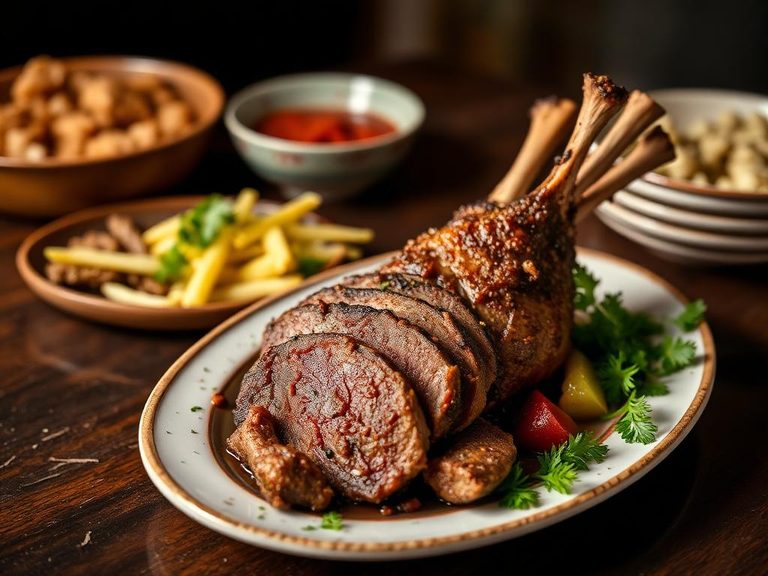
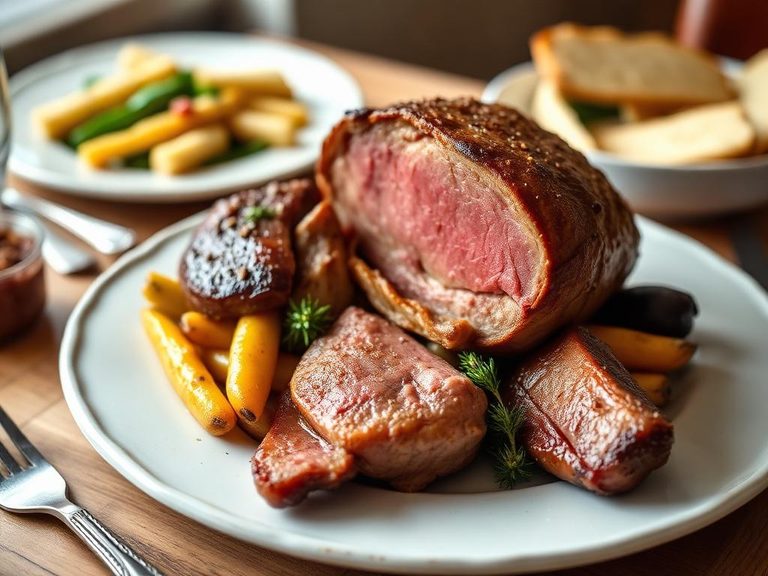
This is a whole, bone-in leg of lamb, trimmed to a lean quarter-inch of fat, offering a robust, slightly gamy flavor with a tender, fine-grained texture when cooked properly. It's a nutrient-dense powerhouse, delivering nearly 18 grams of high-quality protein and 17 grams of fat per 100g, with zero carbohydrates. The cut includes both the lean sirloin and the more worked, flavorful shank, making it versatile for various cooking methods.
Calorie split: 32% protein · 0% carbs · 68% fat
↓ Full nutrition💚 Why it's loved
People adore it for its rich, distinctive flavor that stands up bold herbs like rosemary and garlic, and its impressive presentation as a centerpiece roast. It's a celebratory cut central to many cultural feasts and Sunday family dinners.
⚠️ Watch-outs & how to enjoy it better
The higher fat content (17g per 100g) and calories make it a richer choice that may require portion awareness for some diets. To balance, pair it with fiber-rich, non-starchy vegetables like roasted Brussels sprouts or a tangy salad to add volume and nutrients without excess calories.
Key benefits
- Excellent source of complete protein for muscle maintenance.
- Rich in heme iron, which is highly bioavailable for energy.
- Provides zinc, crucial for immune function.
- Contains B vitamins like B12 and niacin for metabolism.
- Natural source of conjugated linoleic acid (CLA).
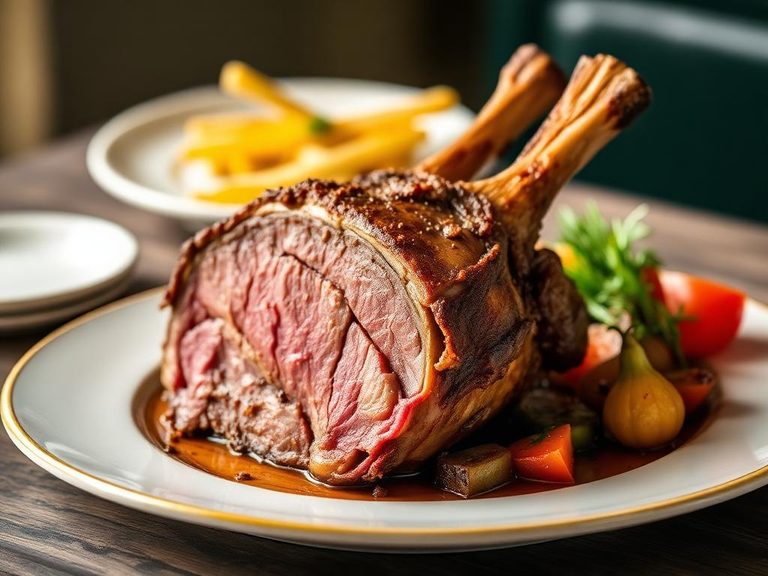
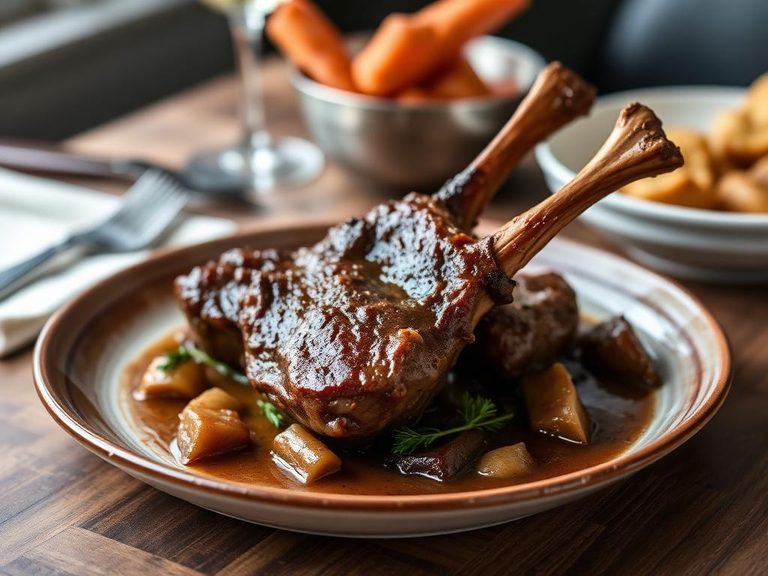
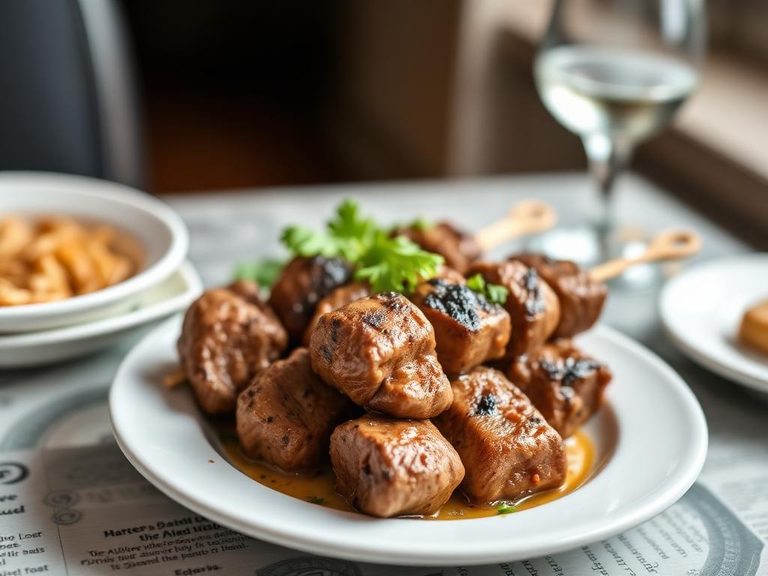
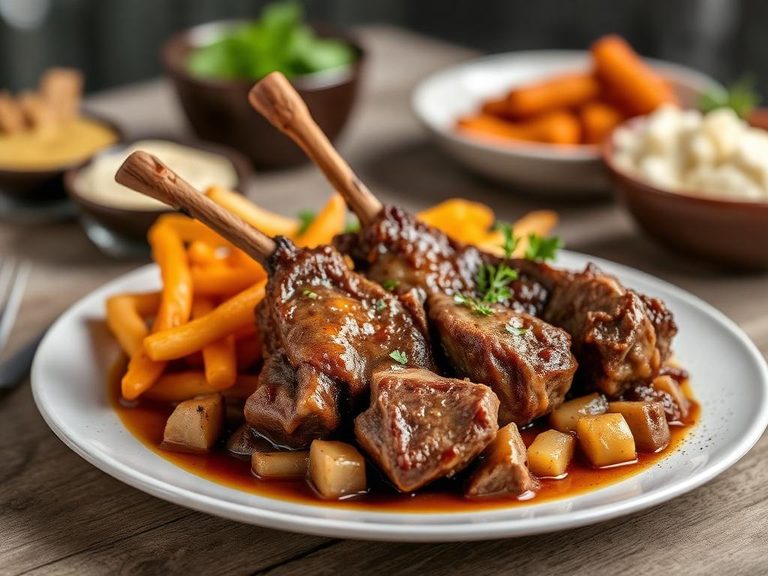
🍽️ Popular dishes
🌍 Where it's eaten
💡 Did you know?
A single leg of lamb can yield over 20 different cuts and preparations, from the tender 'noisette' medallions to the gelatinous, fall-off-the-bone shank meat.
Full nutrition (USDA data · scales with serving)
| Water | 64.3 g |
| Energy | 230 kcal |
| Energy | 962 kj |
| Protein | 17.9 g |
| Total lipid (fat) | 17.1 g |
| Ash | 0.94 g |
| Carbohydrate, by difference | 0.00 g |
| Fiber, total dietary | 0.00 g |
| Calcium, Ca | 9.0 mg |
| Iron, Fe | 1.7 mg |
| Magnesium, Mg | 23.0 mg |
| Phosphorus, P | 170 mg |
| Potassium, K | 249 mg |
| Sodium, Na | 56.0 mg |
| Zinc, Zn | 3.3 mg |
| Copper, Cu | 0.11 mg |
| Manganese, Mn | 0.02 mg |
| Selenium, Se | 20.7 ug |
| Vitamin C, total ascorbic acid | 0.00 mg |
| Thiamin | 0.13 mg |
| Riboflavin | 0.23 mg |
| Niacin | 6.3 mg |
| Pantothenic acid | 0.69 mg |
| Vitamin B-6 | 0.15 mg |
| Folate, total | 19.0 ug |
| Folic acid | 0.00 ug |
| Folate, food | 19.0 ug |
| Folate, DFE | 19.0 ug |
| Vitamin B-12 | 2.5 ug |
| Vitamin A, RAE | 0.00 ug |
| Retinol | 0.00 ug |
| Vitamin A, IU | 0.00 iu |
| Vitamin E (alpha-tocopherol) | 0.21 mg |
Fat & fatty acid profile (per 100g)
| Fatty acids, total saturated | 7.4 g |
| SFA 10:0 | 0.04 g |
| SFA 12:0 | 0.07 g |
| SFA 14:0 | 0.68 g |
| SFA 16:0 | 3.7 g |
| SFA 18:0 | 2.4 g |
| Fatty acids, total monounsaturated | 7.0 g |
| MUFA 16:1 | 0.50 g |
| MUFA 18:1 | 6.3 g |
| Fatty acids, total polyunsaturated | 1.4 g |
| PUFA 18:2 | 0.99 g |
| PUFA 18:3 | 0.30 g |
| PUFA 20:4 | 0.06 g |
| Cholesterol | 69.0 mg |
Amino acid profile (per 100g)
| Tryptophan | 0.21 g |
| Threonine | 0.77 g |
| Isoleucine | 0.86 g |
| Leucine | 1.4 g |
| Lysine | 1.6 g |
| Methionine | 0.46 g |
| Cystine | 0.21 g |
| Phenylalanine | 0.73 g |
| Tyrosine | 0.60 g |
| Valine | 0.97 g |
| Arginine | 1.1 g |
| Histidine | 0.57 g |
| Alanine | 1.1 g |
| Aspartic acid | 1.6 g |
| Glutamic acid | 2.6 g |
| Glycine | 0.88 g |
| Proline | 0.75 g |
| Serine | 0.67 g |
FAQ
What's the best way to cook a whole leg of lamb for tenderness?
For a whole leg, low-and-slow roasting (around 325°F/160°C) or braising is key to breaking down connective tissue. For the lean sirloin end, a quick sear followed by roasting to medium-rare (135°F/57°C internal) preserves tenderness. Always rest the meat after cooking.
How do I reduce the 'gamey' flavor if I'm sensitive to it?
Soaking the lamb in buttermilk or a saltwater brine for a few hours before cooking can mellow the flavor. Using strong marinades with acidic components like lemon juice, vinegar, or wine, and bold herbs like rosemary, mint, or oregano, also effectively balances the taste.
Is lamb leg a good choice for a high-protein diet?
Yes, it's an excellent choice. With about 17.91g of protein per 100g, it provides all essential amino acids. Choosing the leaner, trimmed cuts and portioning appropriately makes it a valuable protein source.
Nutrient density (calculated · NRF9.3)
Nutrient Rich Foods index: beneficial nutrients (protein, fiber, vitamins, minerals) minus saturated fat, added sugar & sodium, per 100 kcal.
NRF9.3 index — Fulgoni, Keast & Drewnowski, 2009. Computed from USDA nutrients.
Weight-loss friendliness (composite index)
Energy density 2.30 kcal/g · 31% calories from protein · 0.0 g fiber · 0.0 g sugar per 100 g.
Composite of energy density (Rolls et al., 1999), protein & fiber satiety, minus sugar. A calculated heuristic — ranks satiety-per-calorie, not a clinical measure.
Dietary load (calculated from USDA values)
Potential renal acid load. Positive = acid-forming, negative = alkaline-forming.
Sodium-to-potassium ratio: 0.22 (lower is better — aim for ≤ 1)
Sodium:potassium per WHO potassium guidance. Computed from USDA nutrients.