

Fruit butters, apple
Whole food · Sweets

Photo: Wikipedia
Fruit butters, apple, is a smooth, velvety spread made by slow-cooking apples with spices until their sugars caramelize into a deep, amber-hued concentrate. Its texture is luxuriously thick, like a spoonable jam, with a sweet, tangy, and warmly spiced flavor profile. Nutritionally, it's a concentrated source of carbohydrates, primarily from natural fruit sugars, with minimal protein or fat.
Calorie split: 1% protein · 98% carbs · 2% fat
↓ Full nutrition💚 Why it's loved
People love it for its nostalgic, comforting flavor that captures the essence of autumn in a jar, and its incredible versatility as a topping, filling, or ingredient in both sweet and savory cooking.
⚠️ Watch-outs & how to enjoy it better
Its high natural sugar content can cause rapid blood-sugar spikes, making portion control important for those monitoring glucose levels. To mitigate this, pair it with protein or healthy fats (like on whole-grain toast with nut butter) or use it as a small accent in a larger dish rather than a main component.
Key benefits
- Provides quick, natural energy from fruit carbohydrates.
- Contains dietary fiber from the apple pulp.
- Offers a concentrated source of apple's natural nutrients.
- A versatile, fat-free spread for various dishes.
- Naturally sweetened, often with minimal added ingredients.
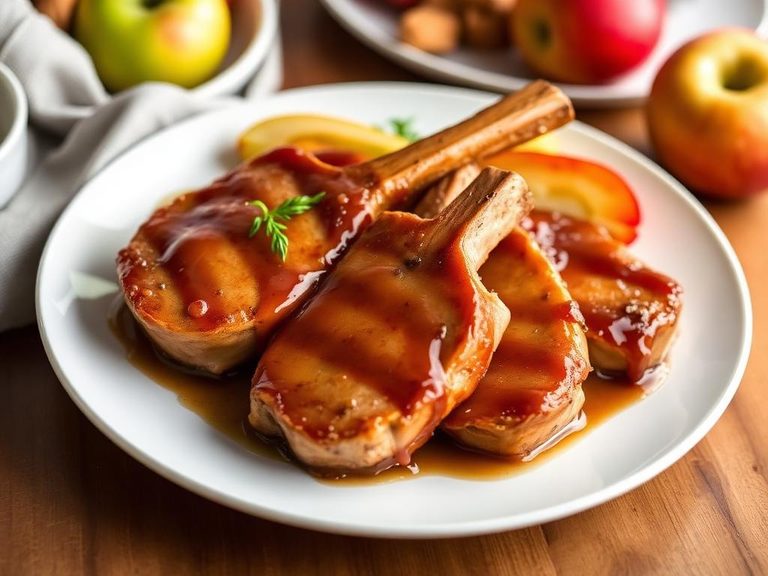
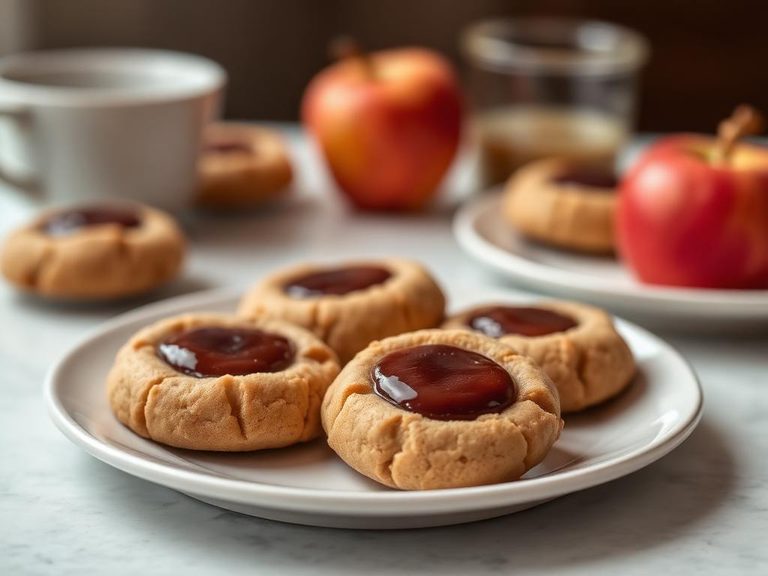
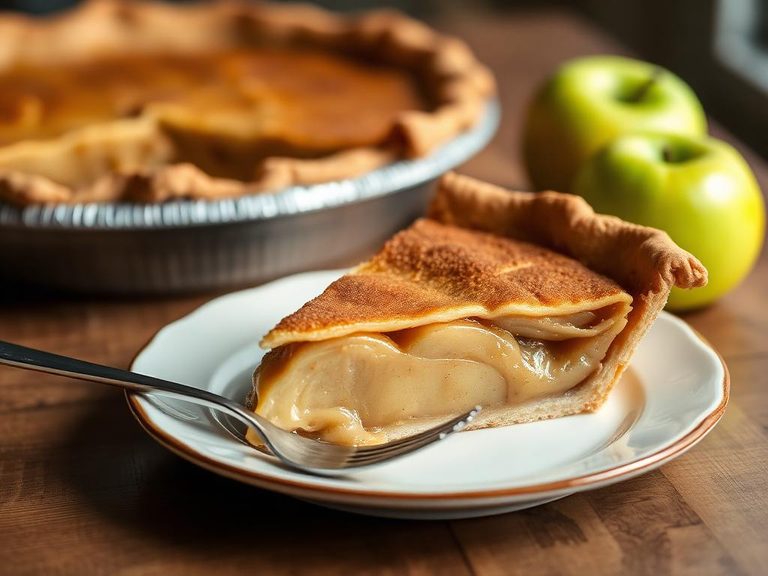
🍽️ Popular dishes
🌍 Where it's eaten
💡 Did you know?
Traditional apple butter was made by cooking large batches in copper kettles over an open fire for up to 12 hours, requiring constant stirring with a wooden paddle called a 'butter paddle' to prevent scorching.
Full nutrition (USDA data · scales with serving)
| Water | 56.5 g |
| Energy | 173 kcal |
| Energy | 724 kj |
| Protein | 0.39 g |
| Total lipid (fat) | 0.30 g |
| Ash | 0.39 g |
| Carbohydrate, by difference | 42.5 g |
| Fiber, total dietary | 1.5 g |
| Total Sugars | 35.3 g |
| Calcium, Ca | 14.0 mg |
| Iron, Fe | 0.31 mg |
| Magnesium, Mg | 4.0 mg |
| Phosphorus, P | 8.0 mg |
| Potassium, K | 91.0 mg |
| Sodium, Na | 15.0 mg |
| Zinc, Zn | 0.06 mg |
| Copper, Cu | 0.08 mg |
| Manganese, Mn | 0.32 mg |
| Selenium, Se | 0.40 ug |
| Vitamin C, total ascorbic acid | 0.60 mg |
| Thiamin | 0.01 mg |
| Riboflavin | 0.02 mg |
| Niacin | 0.08 mg |
| Pantothenic acid | 0.05 mg |
| Vitamin B-6 | 0.04 mg |
| Folate, total | 1.0 ug |
| Folic acid | 0.00 ug |
| Folate, food | 1.0 ug |
| Folate, DFE | 1.0 ug |
| Choline, total | 2.1 mg |
| Vitamin B-12 | 0.00 ug |
| Vitamin B-12, added | 0.00 ug |
| Vitamin A, RAE | 1.0 ug |
| Retinol | 0.00 ug |
| Carotene, beta | 9.0 ug |
| Carotene, alpha | 0.00 ug |
| Cryptoxanthin, beta | 9.0 ug |
| Vitamin A, IU | 22.0 iu |
| Lycopene | 0.00 ug |
| Lutein + zeaxanthin | 17.0 ug |
| Vitamin E (alpha-tocopherol) | 0.05 mg |
| Vitamin E, added | 0.00 mg |
| Tocopherol, beta | 0.00 mg |
| Tocopherol, gamma | 0.01 mg |
| Vitamin D (D2 + D3), International Units | 0.00 iu |
| Vitamin D (D2 + D3) | 0.00 ug |
| Vitamin K (phylloquinone) | 0.90 ug |
| Alcohol, ethyl | 0.00 g |
| Caffeine | 0.00 mg |
| Theobromine | 0.00 mg |
Fat & fatty acid profile (per 100g)
| Fatty acids, total saturated | 0.05 g |
| SFA 4:0 | 0.00 g |
| SFA 6:0 | 0.00 g |
| SFA 8:0 | 0.00 g |
| SFA 10:0 | 0.00 g |
| SFA 12:0 | 0.00 g |
| SFA 14:0 | 0.00 g |
| SFA 16:0 | 0.04 g |
| SFA 18:0 | 0.01 g |
| Fatty acids, total monounsaturated | 0.02 g |
| MUFA 16:1 | 0.00 g |
| MUFA 18:1 | 0.02 g |
| MUFA 20:1 | 0.00 g |
| MUFA 22:1 | 0.00 g |
| Fatty acids, total polyunsaturated | 0.08 g |
| PUFA 18:2 | 0.07 g |
| PUFA 18:3 | 0.02 g |
| PUFA 18:4 | 0.00 g |
| PUFA 20:4 | 0.00 g |
| PUFA 20:5 n-3 (EPA) | 0.00 g |
| PUFA 22:5 n-3 (DPA) | 0.00 g |
| PUFA 22:6 n-3 (DHA) | 0.00 g |
| Cholesterol | 0.00 mg |
FAQ
Is fruit butter the same as jam or jelly?
No. Fruit butter is cooked down much longer than jam or jelly, breaking down the fruit completely into a smooth, spreadable paste. It typically contains no added pectin and has a more concentrated, less gel-like texture.
How is apple butter different from applesauce?
Apple butter is essentially applesauce that has been cooked for several more hours. This extended cooking caramelizes the natural sugars, darkens the color, and develops a much richer, more concentrated flavor.
What can I substitute for apple butter in a recipe?
In a pinch, you can use a thick applesauce reduced with extra cinnamon and a touch of brown sugar, or a smooth, spiced pumpkin butter. The flavor won't be identical, but it will provide a similar sweet, spiced fruit base.
Nutrient density (calculated · NRF9.3)
Nutrient Rich Foods index: beneficial nutrients (protein, fiber, vitamins, minerals) minus saturated fat, added sugar & sodium, per 100 kcal.
NRF9.3 index — Fulgoni, Keast & Drewnowski, 2009. Computed from USDA nutrients.
Weight-loss friendliness (composite index)
Energy density 1.73 kcal/g · 1% calories from protein · 1.5 g fiber · 35.3 g sugar per 100 g.
Composite of energy density (Rolls et al., 1999), protein & fiber satiety, minus sugar. A calculated heuristic — ranks satiety-per-calorie, not a clinical measure.
Dietary load (calculated from USDA values)
Potential renal acid load. Positive = acid-forming, negative = alkaline-forming.
Sodium-to-potassium ratio: 0.16 (lower is better — aim for ≤ 1)
Sodium:potassium per WHO potassium guidance. Computed from USDA nutrients.