

Frozen novelties, ice type, lime
Whole food · Sweets

Photo: Wikipedia
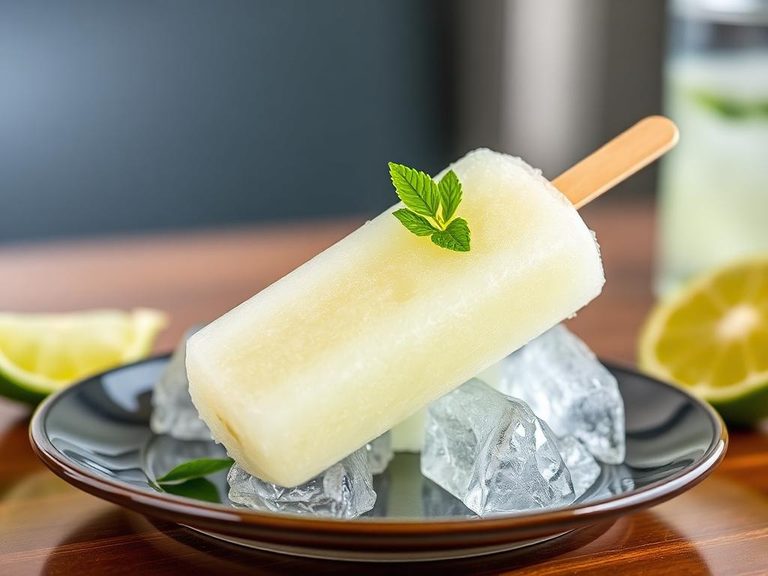
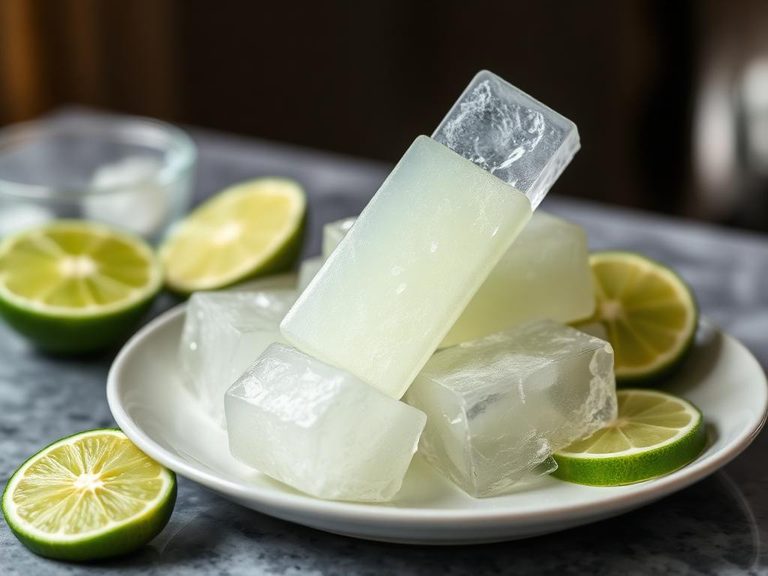
A bright, electric-green frozen treat on a stick, this lime ice novelty delivers a sharp, tangy punch that quickly mellows into a sweet, refreshing finish. Its texture is pure, crystalline ice—light and brittle, designed to melt rapidly on the tongue for instant cooling. Nutritionally, it's a straightforward source of quick energy from its 32.6g of sugar per 100g, with virtually no fat, protein, or fiber.
Calorie split: 1% protein · 99% carbs · 0% fat
↓ Full nutrition💚 Why it's loved
People love it for the nostalgic, intense burst of sweet-tart lime that cuts through summer heat like a knife. Its simplicity and vibrant color make it a universally recognizable and fun treat, often associated with childhood summers and casual outdoor gatherings.
⚠️ Watch-outs & how to enjoy it better
The high sugar content (32.6g per 100g) can cause a rapid blood-sugar spike, making it a poor choice for those managing diabetes or seeking sustained energy. To counteract this, enjoy it as a occasional treat rather than a staple, and consider pairing it with a source of protein or fat (like a handful of nuts) to slow sugar absorption.
Key benefits
- Provides quick energy from simple carbohydrates.
- Extremely low in fat and cholesterol-free.
- A hydrating, low-calorie alternative to creamy desserts.
- Offers a sharp, palate-cleansing citrus flavor.
- Simple ingredient profile with no complex additives.
🍽️ Popular dishes
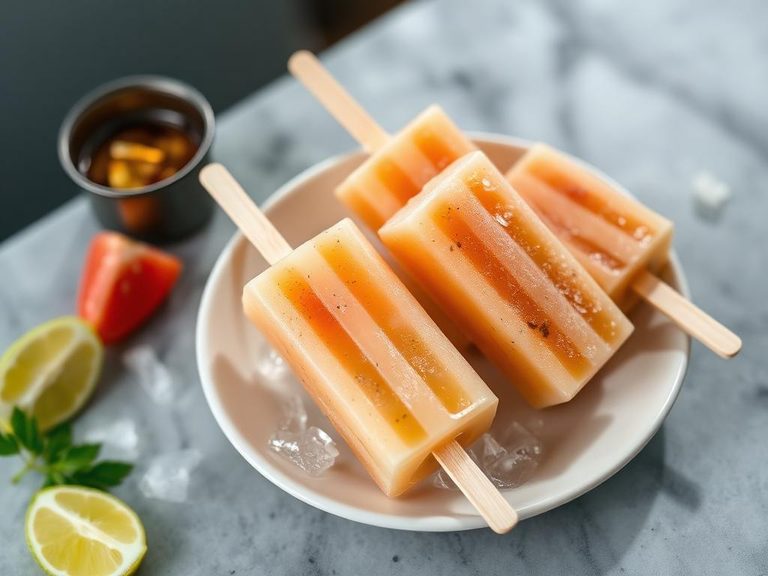
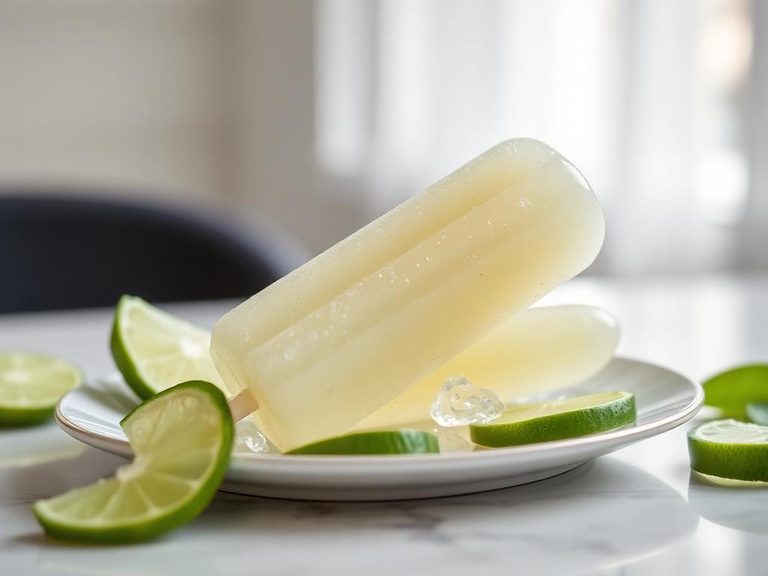
🌍 Where it's eaten
💡 Did you know?
The vibrant green color in many commercial lime ice novelties often comes from food dye, as the natural juice of a lime is a pale, cloudy yellow-green.
Full nutrition (USDA data · scales with serving)
| Water | 66.9 g |
| Energy | 128 kcal |
| Energy | 536 kj |
| Protein | 0.40 g |
| Total lipid (fat) | 0.00 g |
| Ash | 0.03 g |
| Carbohydrate, by difference | 32.6 g |
| Fiber, total dietary | 0.00 g |
| Total Sugars | 32.6 g |
| Calcium, Ca | 2.0 mg |
| Iron, Fe | 0.16 mg |
| Magnesium, Mg | 1.0 mg |
| Phosphorus, P | 1.0 mg |
| Potassium, K | 3.0 mg |
| Sodium, Na | 22.0 mg |
| Zinc, Zn | 0.02 mg |
| Copper, Cu | 0.01 mg |
| Manganese, Mn | 0.02 mg |
| Selenium, Se | 0.10 ug |
| Vitamin C, total ascorbic acid | 1.0 mg |
| Thiamin | 0.00 mg |
| Riboflavin | 0.00 mg |
| Niacin | 0.01 mg |
| Pantothenic acid | 0.00 mg |
| Vitamin B-6 | 0.00 mg |
| Folate, total | 0.00 ug |
| Folic acid | 0.00 ug |
| Folate, food | 0.00 ug |
| Folate, DFE | 0.00 ug |
| Choline, total | 4.0 mg |
| Vitamin B-12 | 0.00 ug |
| Vitamin B-12, added | 0.00 ug |
| Vitamin A, RAE | 0.00 ug |
| Retinol | 0.00 ug |
| Carotene, beta | 0.00 ug |
| Carotene, alpha | 0.00 ug |
| Cryptoxanthin, beta | 0.00 ug |
| Vitamin A, IU | 0.00 iu |
| Lycopene | 0.00 ug |
| Lutein + zeaxanthin | 0.00 ug |
| Vitamin E (alpha-tocopherol) | 0.00 mg |
| Vitamin E, added | 0.00 mg |
| Vitamin D (D2 + D3), International Units | 0.00 iu |
| Vitamin D (D2 + D3) | 0.00 ug |
| Vitamin K (phylloquinone) | 0.00 ug |
| Alcohol, ethyl | 0.00 g |
| Caffeine | 0.00 mg |
| Theobromine | 0.00 mg |
Fat & fatty acid profile (per 100g)
| Fatty acids, total saturated | 0.00 g |
| SFA 4:0 | 0.00 g |
| SFA 6:0 | 0.00 g |
| SFA 8:0 | 0.00 g |
| SFA 10:0 | 0.00 g |
| SFA 12:0 | 0.00 g |
| SFA 14:0 | 0.00 g |
| SFA 16:0 | 0.00 g |
| SFA 18:0 | 0.00 g |
| Fatty acids, total monounsaturated | 0.00 g |
| MUFA 16:1 | 0.00 g |
| MUFA 18:1 | 0.00 g |
| MUFA 20:1 | 0.00 g |
| MUFA 22:1 | 0.00 g |
| Fatty acids, total polyunsaturated | 0.00 g |
| PUFA 18:2 | 0.00 g |
| PUFA 18:3 | 0.00 g |
| PUFA 18:4 | 0.00 g |
| PUFA 20:4 | 0.00 g |
| PUFA 20:5 n-3 (EPA) | 0.00 g |
| PUFA 22:5 n-3 (DPA) | 0.00 g |
| PUFA 22:6 n-3 (DHA) | 0.00 g |
| Cholesterol | 0.00 mg |
FAQ
Is this the same as sorbet or sherbet?
Not exactly. This is a water-based ice pop (or ice candy). Sorbet is typically fruit purée-based and smoother, while sherbet contains a small amount of dairy, making it creamier. This novelty is pure ice and sugar.
Why does it melt so fast?
Its high sugar and water content, with no fat or stabilizers to slow melting, means it has a low freezing point and is designed for quick consumption. The crystalline structure breaks down rapidly at room temperature.
Can I make a healthier version at home?
Absolutely. Blend fresh lime juice, water, and a smaller amount of sweetener like honey or agave, then freeze. You can add a pinch of salt or a splash of coconut water for electrolytes and a more complex flavor.
Nutrient density (calculated · NRF9.3)
Nutrient Rich Foods index: beneficial nutrients (protein, fiber, vitamins, minerals) minus saturated fat, added sugar & sodium, per 100 kcal.
NRF9.3 index — Fulgoni, Keast & Drewnowski, 2009. Computed from USDA nutrients.
Weight-loss friendliness (composite index)
Energy density 1.28 kcal/g · 1% calories from protein · 0.0 g fiber · 32.6 g sugar per 100 g.
Composite of energy density (Rolls et al., 1999), protein & fiber satiety, minus sugar. A calculated heuristic — ranks satiety-per-calorie, not a clinical measure.
Dietary load (calculated from USDA values)
Potential renal acid load. Positive = acid-forming, negative = alkaline-forming.
Sodium-to-potassium ratio: 7.33 (lower is better — aim for ≤ 1)
Sodium:potassium per WHO potassium guidance. Computed from USDA nutrients.