

Fish, whitefish, broad, head, eyes, cheeks and soft bones (Alaska Native)
Whole food · American Indian/Alaska Native Foods
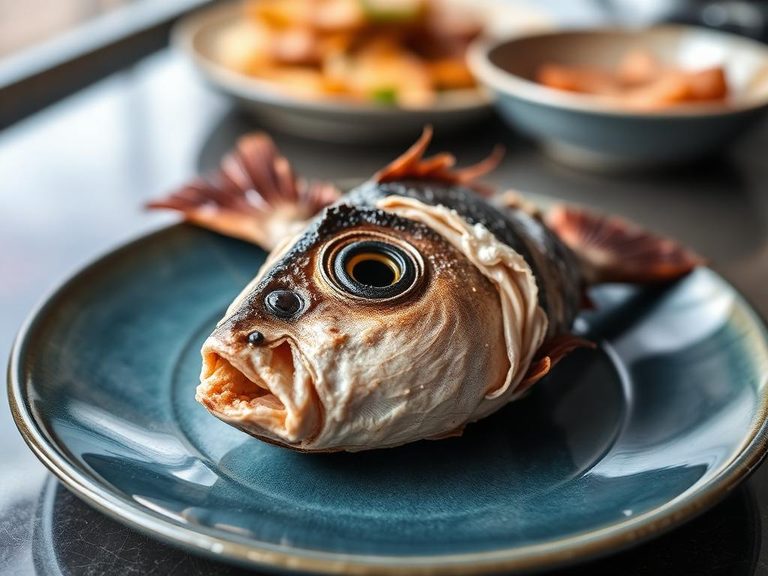
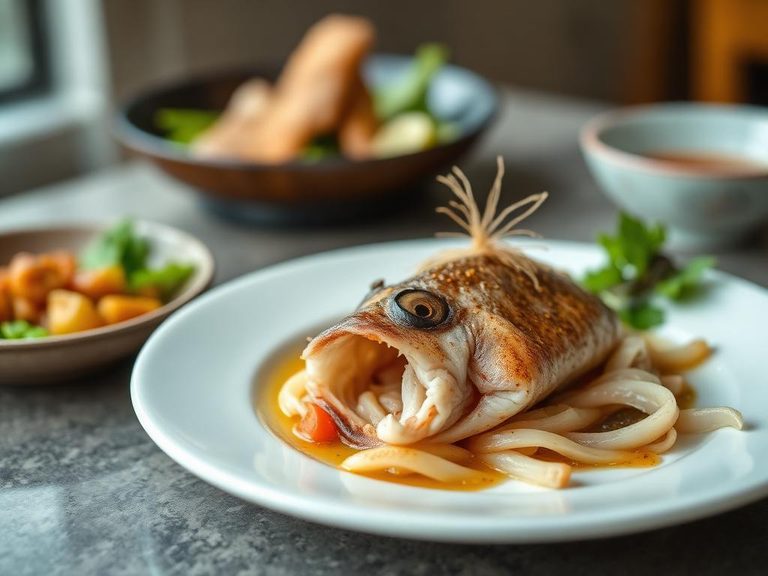
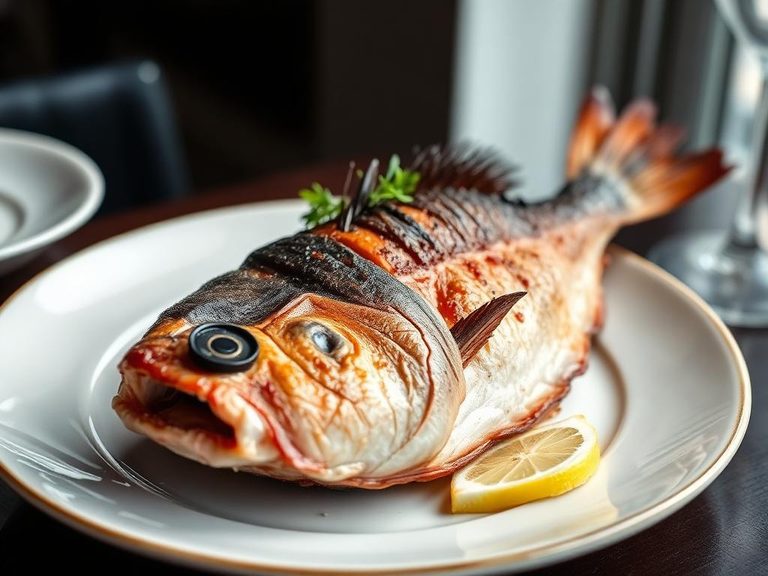
This is the prized head portion of a broad whitefish, a delicacy in Alaska Native cuisine, featuring the cheeks, eyes, and soft, edible bones. The texture is a unique mix: the cheek is a firm, sweet, scallop-like morsel, while the eyes are gelatinous and rich. Nutritionally, it's a lean, high-protein powerhouse with virtually no carbohydrates.
Calorie split: 70% protein · 0% carbs · 30% fat
↓ Full nutrition💚 Why it's loved
People cherish it for its unique, sweet flavor and the cultural significance of using the entire fish, a practice of respect and sustainability. The cheeks are considered the ultimate 'fisherman's snack' or treat.
⚠️ Watch-outs & how to enjoy it better
The texture of the eyes (gelatinous) and the presence of small bones can be off-putting to the uninitiated. As a whole-head preparation, it requires proper cooking and handling to ensure safety. Tip: For the bones, ensure they are cooked until very soft and chew them carefully or spit them out. For the eyes, try them once prepared traditionally, or focus on the cheek meat if you're hesitant.
Key benefits
- Exceptionally high in complete protein for muscle maintenance.
- Contains omega-3 fatty acids from the fish's diet.
- Source of calcium and minerals from the soft, edible bones.
- Provides vitamin D, especially if sun-dried or from wild-caught fish.
- A zero-carb, whole-food protein source.
🍽️ Popular dishes
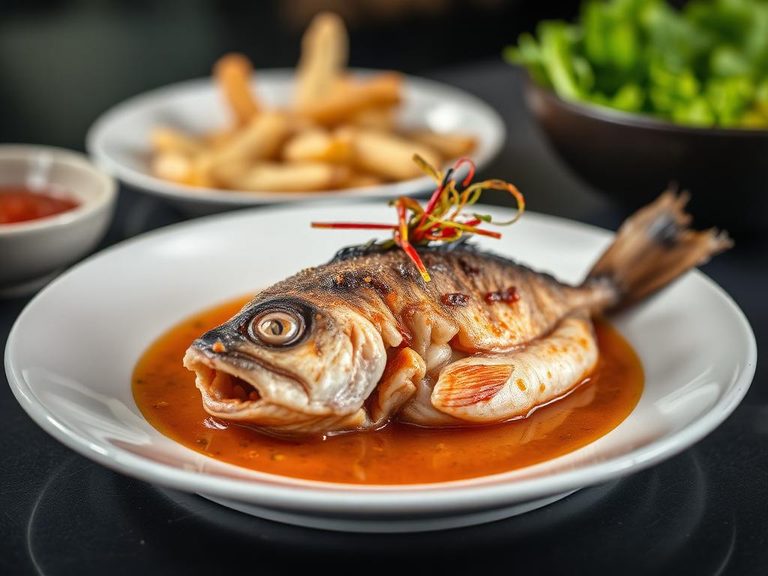
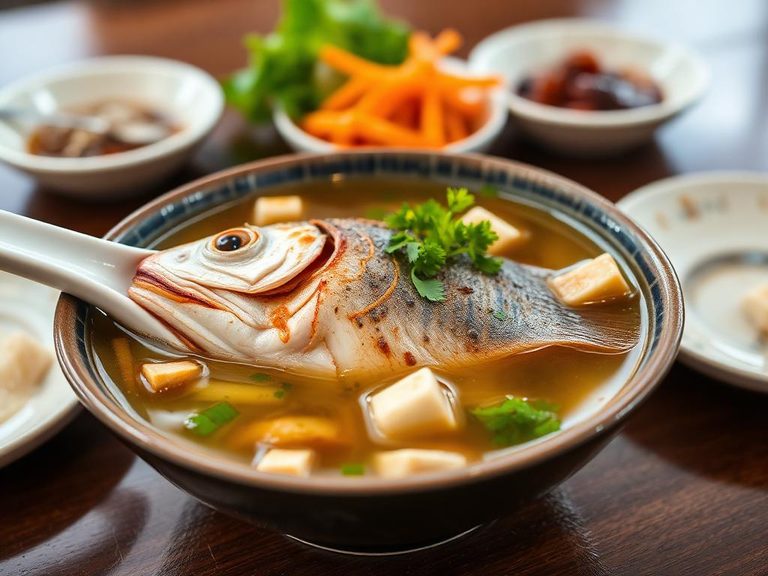
🌍 Where it's eaten
💡 Did you know?
The soft, crunchy bones in the fish head are intentionally consumed as a valuable source of calcium and other minerals, a practice that maximizes nutrition from the entire animal.
Full nutrition (USDA data · scales with serving)
| Water | 76.3 g |
| Energy | 107 kcal |
| Energy | 447 kj |
| Protein | 18.6 g |
| Total lipid (fat) | 3.6 g |
| Ash | 1.5 g |
| Carbohydrate, by difference | 0.00 g |
| Iron, Fe | 3.9 mg |
| Phosphorus, P | 242 mg |
Fat & fatty acid profile (per 100g)
Estimated from Fish, halibut, raw, with skin (Alaska Native) — USDA does not publish this profile for Fish.
| Fatty acids, total saturated | 0.73 g |
| SFA 8:0 | 0.00 g |
| SFA 10:0 | 0.00 g |
| SFA 12:0 | 0.00 g |
| SFA 14:0 | 0.09 g |
| SFA 15:0 | 0.01 g |
| SFA 16:0 | 0.38 g |
| SFA 17:0 | 0.00 g |
| SFA 18:0 | 0.09 g |
| SFA 20:0 | 0.01 g |
| SFA 22:0 | 0.00 g |
| SFA 24:0 | 0.00 g |
| Fatty acids, total monounsaturated | 1.2 g |
| MUFA 14:1 | 0.00 g |
| MUFA 15:1 | 0.00 g |
| MUFA 16:1 | 0.23 g |
| MUFA 17:1 | 0.00 g |
| MUFA 18:1 | 0.59 g |
| MUFA 20:1 | 0.11 g |
| MUFA 22:1 | 0.00 g |
| MUFA 22:1 c | 0.00 g |
| MUFA 24:1 c | 0.01 g |
| Fatty acids, total polyunsaturated | 0.91 g |
| PUFA 18:2 | 0.02 g |
| PUFA 18:3 | 0.01 g |
| PUFA 18:3 n-3 c,c,c (ALA) | 0.01 g |
| PUFA 18:3 n-6 c,c,c | 0.00 g |
| PUFA 18:4 | 0.00 g |
| PUFA 20:2 n-6 c,c | 0.01 g |
| PUFA 20:3 | 0.00 g |
| PUFA 20:4 | 0.03 g |
| PUFA 20:5 n-3 (EPA) | 0.22 g |
| PUFA 21:5 | 0.00 g |
| PUFA 22:4 | 0.00 g |
| PUFA 22:5 n-3 (DPA) | 0.06 g |
| PUFA 22:6 n-3 (DHA) | 0.39 g |
| Cholesterol | 72.0 mg |
Amino acid profile (per 100g)
Estimated from Fish, halibut, raw, with skin (Alaska Native) — USDA does not publish this profile for Fish.
| Tryptophan | 0.31 g |
| Threonine | 0.95 g |
| Isoleucine | 0.94 g |
| Leucine | 1.6 g |
| Lysine | 1.8 g |
| Methionine | 0.80 g |
| Cystine | 0.35 g |
| Phenylalanine | 0.82 g |
| Tyrosine | 0.70 g |
| Valine | 1.0 g |
| Arginine | 1.2 g |
| Histidine | 0.50 g |
| Alanine | 1.2 g |
| Aspartic acid | 2.8 g |
| Glutamic acid | 3.2 g |
| Glycine | 0.93 g |
| Proline | 0.73 g |
| Serine | 0.91 g |
| Hydroxyproline | 0.18 g |
FAQ
How do you eat the eyes?
The eyes are typically cooked (stewed, boiled, or smoked) until the surrounding tissue is soft. The gelatinous interior is then consumed, often prized for its rich, fatty flavor and texture.
Are the bones safe to eat?
Yes, when properly cooked. The small, soft bones in the head become tender and edible, providing a crunchy, calcium-rich element. They are chewed carefully.
What does it taste like?
The cheek meat is the most familiar, tasting like a very sweet, delicate scallop. The overall flavor of the head is rich, oily, and deeply 'fishy' in a clean, oceanic way, with varied textures.
Weight-loss friendliness (composite index)
Energy density 1.07 kcal/g · 70% calories from protein · 0.0 g fiber · 0.0 g sugar per 100 g.
Composite of energy density (Rolls et al., 1999), protein & fiber satiety, minus sugar. A calculated heuristic — ranks satiety-per-calorie, not a clinical measure.