

Fish, grouper, mixed species, cooked, dry heat
Whole food · Finfish and Shellfish Products

Photo: Wikipedia
Grouper is a lean, mild-flavored white fish with a firm, meaty texture that holds up beautifully to high-heat cooking methods. It is exceptionally high in protein, delivering nearly 25 grams per 100-gram serving with virtually no fat or carbohydrates. This makes it a staple for clean, high-protein diets, offering a satisfying, flaky bite without a heavy caloric load.
Calorie split: 89% protein · 0% carbs · 11% fat
↓ Full nutrition💚 Why it's loved
People love grouper for its mild, sweet flavor and substantial, steak-like texture that doesn't feel delicate or mushy. It is prized for its versatility, acting as a blank canvas that readily absorbs marinades, spices, and sauces in cuisines ranging from Caribbean to Mediterranean.
⚠️ Watch-outs & how to enjoy it better
While generally low in allergens, grouper can contain high levels of mercury, so pregnant women and young children should limit consumption to once a week. To mitigate this, pair it with fiber-rich vegetables and ensure it is sourced from reputable, sustainable fisheries to avoid potential contaminants.
Key benefits
- Excellent source of lean protein for muscle maintenance
- Very low in fat and carbohydrates, ideal for weight management
- Rich in selenium and B vitamins for metabolic health
- Naturally free of dietary fiber and sugar
- Firm texture prevents it from falling apart during cooking
🍽️ Popular dishes

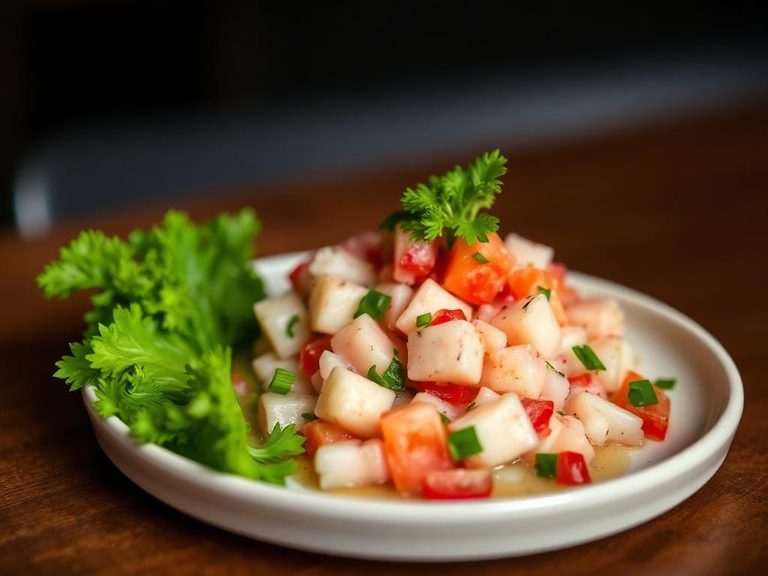
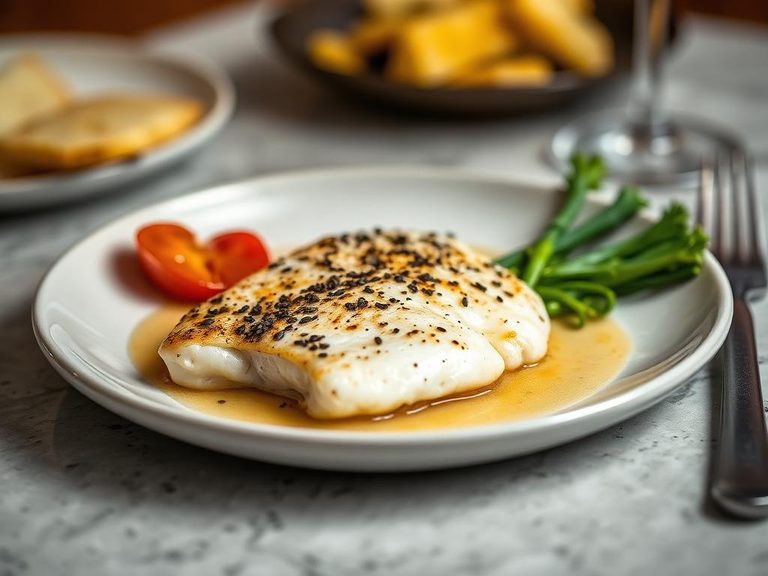

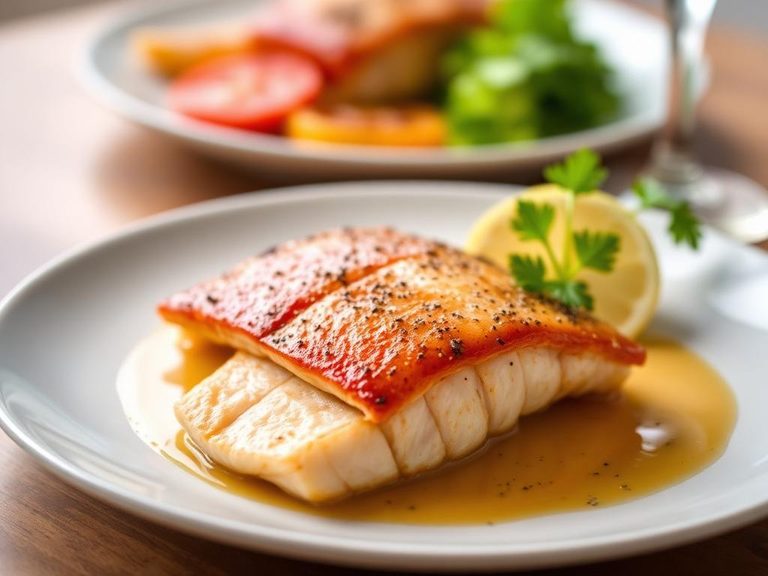

🌍 Where it's eaten
💡 Did you know?
Grouper are protogynous hermaphrodites, meaning they are born female and can change to male as they grow larger and older, a process that is essential for the survival of their population.
Full nutrition (USDA data · scales with serving)
| Water | 73.4 g |
| Energy | 118 kcal |
| Energy | 494 kj |
| Protein | 24.8 g |
| Total lipid (fat) | 1.3 g |
| Ash | 1.4 g |
| Carbohydrate, by difference | 0.00 g |
| Fiber, total dietary | 0.00 g |
| Calcium, Ca | 21.0 mg |
| Iron, Fe | 1.1 mg |
| Magnesium, Mg | 37.0 mg |
| Phosphorus, P | 143 mg |
| Potassium, K | 475 mg |
| Sodium, Na | 53.0 mg |
| Zinc, Zn | 0.51 mg |
| Copper, Cu | 0.04 mg |
| Manganese, Mn | 0.01 mg |
| Selenium, Se | 46.8 ug |
| Vitamin C, total ascorbic acid | 0.00 mg |
| Thiamin | 0.08 mg |
| Riboflavin | 0.01 mg |
| Niacin | 0.38 mg |
| Pantothenic acid | 0.87 mg |
| Vitamin B-6 | 0.35 mg |
| Folate, total | 10.0 ug |
| Folic acid | 0.00 ug |
| Folate, food | 10.0 ug |
| Folate, DFE | 10.0 ug |
| Vitamin B-12 | 0.69 ug |
| Vitamin A, RAE | 50.0 ug |
| Retinol | 50.0 ug |
| Vitamin A, IU | 165 iu |
Fat & fatty acid profile (per 100g)
| Fatty acids, total saturated | 0.30 g |
| SFA 14:0 | 0.03 g |
| SFA 16:0 | 0.14 g |
| SFA 18:0 | 0.06 g |
| Fatty acids, total monounsaturated | 0.27 g |
| MUFA 16:1 | 0.03 g |
| MUFA 18:1 | 0.09 g |
| Fatty acids, total polyunsaturated | 0.40 g |
| PUFA 18:2 | 0.02 g |
| PUFA 20:4 | 0.06 g |
| PUFA 20:5 n-3 (EPA) | 0.04 g |
| PUFA 22:5 n-3 (DPA) | 0.02 g |
| PUFA 22:6 n-3 (DHA) | 0.21 g |
| Cholesterol | 47.0 mg |
Amino acid profile (per 100g)
| Tryptophan | 0.28 g |
| Threonine | 1.1 g |
| Isoleucine | 1.1 g |
| Leucine | 2.0 g |
| Lysine | 2.3 g |
| Methionine | 0.73 g |
| Cystine | 0.27 g |
| Phenylalanine | 0.97 g |
| Tyrosine | 0.84 g |
| Valine | 1.3 g |
| Arginine | 1.5 g |
| Histidine | 0.73 g |
| Alanine | 1.5 g |
| Aspartic acid | 2.5 g |
| Glutamic acid | 3.7 g |
| Glycine | 1.2 g |
| Proline | 0.88 g |
| Serine | 1.0 g |
FAQ
Is grouper a healthy fish to eat?
Yes, grouper is very healthy. It is high in protein and low in fat, making it a great choice for weight management and muscle building. It also provides essential nutrients like selenium and B vitamins.
What does grouper taste like?
Grouper has a mild, sweet flavor with a firm, meaty texture. It is less 'fishy' than many other types of fish, making it a popular choice for people who are sensitive to strong fish flavors.
How should I cook grouper?
Grouper is best cooked using dry-heat methods like grilling, baking, or pan-searing. Its firm texture allows it to hold up well to high heat without falling apart, and it pairs well with a variety of seasonings and sauces.
Nutrient density (calculated · NRF9.3)
Nutrient Rich Foods index: beneficial nutrients (protein, fiber, vitamins, minerals) minus saturated fat, added sugar & sodium, per 100 kcal.
NRF9.3 index — Fulgoni, Keast & Drewnowski, 2009. Computed from USDA nutrients.
Weight-loss friendliness (composite index)
Energy density 1.18 kcal/g · 84% calories from protein · 0.0 g fiber · 0.0 g sugar per 100 g.
Composite of energy density (Rolls et al., 1999), protein & fiber satiety, minus sugar. A calculated heuristic — ranks satiety-per-calorie, not a clinical measure.
Dietary load (calculated from USDA values)
Potential renal acid load. Positive = acid-forming, negative = alkaline-forming.
Sodium-to-potassium ratio: 0.11 (lower is better — aim for ≤ 1)
Sodium:potassium per WHO potassium guidance. Computed from USDA nutrients.