

Dandelion greens, cooked, boiled, drained, without salt
Whole food · Vegetables and Vegetable Products

Photo: Wikipedia
Dandelion greens, once boiled and drained, transform from a common lawn weed into a tender, earthy vegetable with a pleasantly bitter, slightly nutty flavor. Their texture becomes silky-soft, similar to cooked spinach, making them a versatile base for many dishes. Nutritionally, they are a standout for being exceptionally low in calories while packing a solid 2.9g of fiber per 100g.
Calorie split: 21% protein · 66% carbs · 14% fat
↓ Full nutrition💚 Why it's loved
People love dandelion greens for their distinctive, bold bitterness that cuts through rich dishes, adding a complex, sophisticated flavor. They are cherished in many cuisines as a foraged or garden-fresh ingredient, symbolizing spring and connection to the land.
⚠️ Watch-outs & how to enjoy it better
The pronounced bitterness can be off-putting to some palates, especially those unfamiliar with bitter greens. They are also high in oxalates, which can interfere with mineral absorption and may be a concern for individuals prone to kidney stones. To counteract this, always cook them (boiling and draining helps leach out oxalates) and pair them with a source of fat or protein, like a poached egg or olive oil, to balance the flavor and enhance nutrient absorption.
Key benefits
- Excellent source of vitamins A, C, and K.
- High in minerals like iron and calcium.
- Provides prebiotic fiber to support gut health.
- Contains antioxidants like beta-carotene and polyphenols.
🍽️ Popular dishes
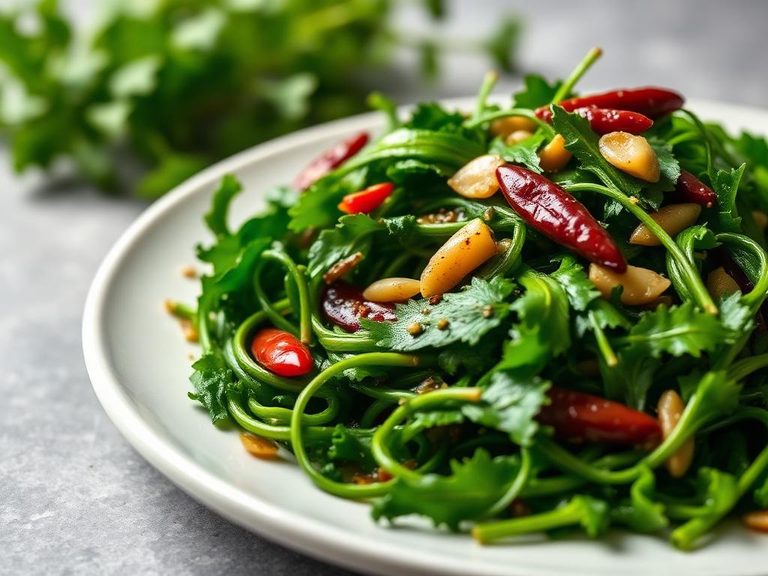
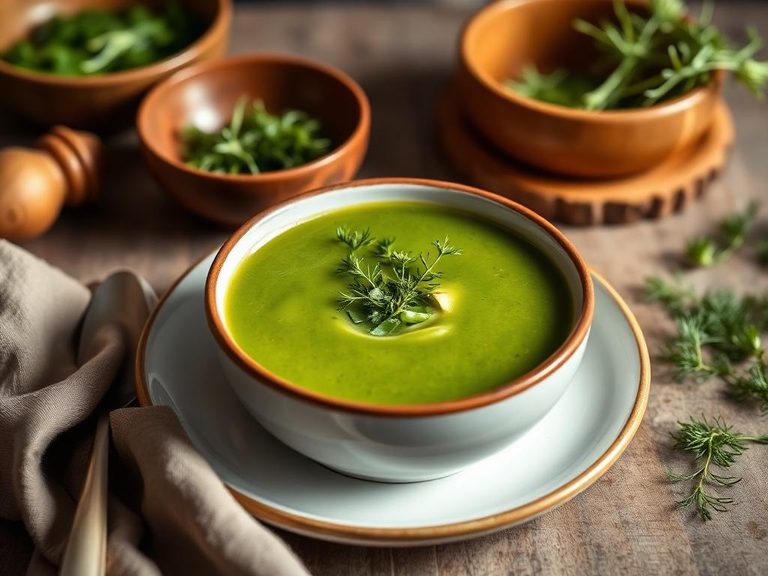
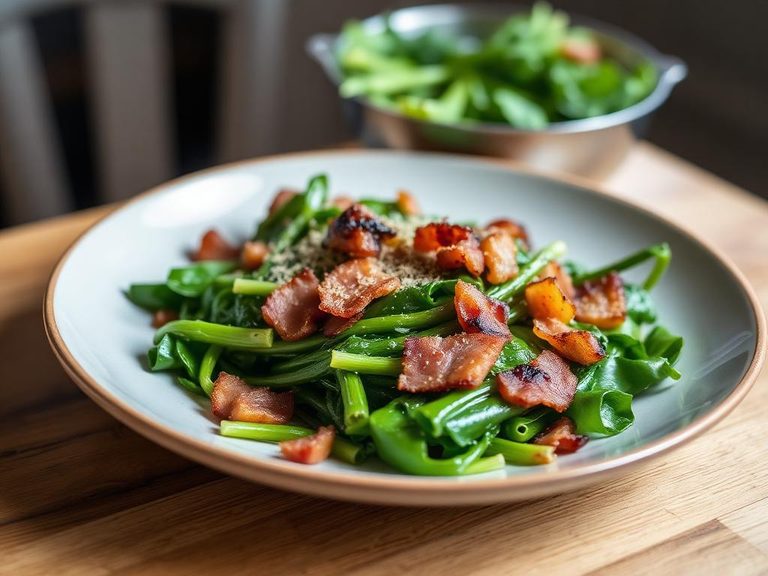
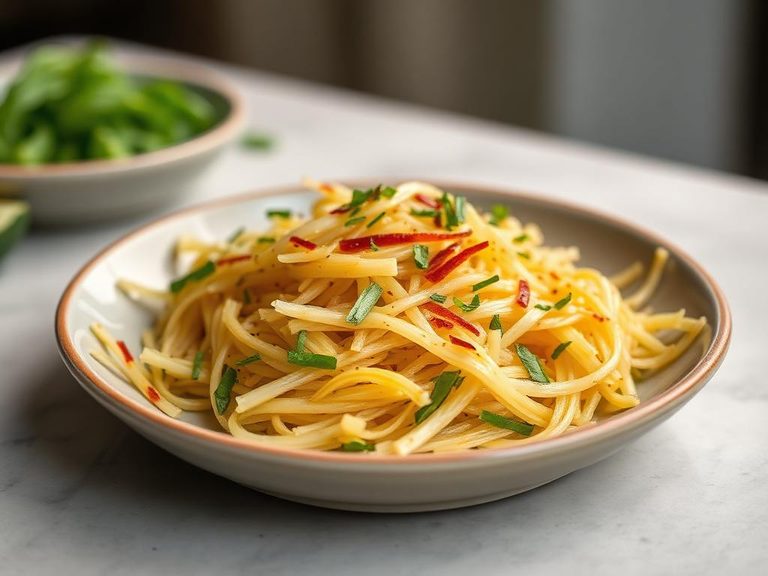
🌍 Where it's eaten
💡 Did you know?
The entire dandelion plant is edible; the roots can be roasted as a coffee substitute, and the flowers are used to make wine or fritters.
Full nutrition (USDA data · scales with serving)
| Water | 89.8 g |
| Energy | 33.0 kcal |
| Energy | 138 kj |
| Protein | 2.0 g |
| Total lipid (fat) | 0.60 g |
| Ash | 1.2 g |
| Carbohydrate, by difference | 6.4 g |
| Fiber, total dietary | 2.9 g |
| Total Sugars | 0.50 g |
| Calcium, Ca | 140 mg |
| Iron, Fe | 1.8 mg |
| Magnesium, Mg | 24.0 mg |
| Phosphorus, P | 42.0 mg |
| Potassium, K | 232 mg |
| Sodium, Na | 44.0 mg |
| Zinc, Zn | 0.28 mg |
| Copper, Cu | 0.12 mg |
| Manganese, Mn | 0.23 mg |
| Selenium, Se | 0.30 ug |
| Vitamin C, total ascorbic acid | 18.0 mg |
| Thiamin | 0.13 mg |
| Riboflavin | 0.17 mg |
| Niacin | 0.51 mg |
| Pantothenic acid | 0.06 mg |
| Vitamin B-6 | 0.16 mg |
| Folate, total | 13.0 ug |
| Folic acid | 0.00 ug |
| Folate, food | 13.0 ug |
| Folate, DFE | 13.0 ug |
| Choline, total | 25.0 mg |
| Vitamin B-12 | 0.00 ug |
| Vitamin B-12, added | 0.00 ug |
| Vitamin A, RAE | 342 ug |
| Retinol | 0.00 ug |
| Carotene, beta | 3940 ug |
| Carotene, alpha | 244 ug |
| Cryptoxanthin, beta | 82.0 ug |
| Vitamin A, IU | 6837 iu |
| Lycopene | 0.00 ug |
| Lutein + zeaxanthin | 9158 ug |
| Vitamin E (alpha-tocopherol) | 2.4 mg |
| Vitamin E, added | 0.00 mg |
| Vitamin D (D2 + D3), International Units | 0.00 iu |
| Vitamin D (D2 + D3) | 0.00 ug |
| Vitamin K (phylloquinone) | 551 ug |
| Alcohol, ethyl | 0.00 g |
| Caffeine | 0.00 mg |
| Theobromine | 0.00 mg |
Fat & fatty acid profile (per 100g)
| Fatty acids, total saturated | 0.15 g |
| SFA 4:0 | 0.00 g |
| SFA 6:0 | 0.00 g |
| SFA 8:0 | 0.00 g |
| SFA 10:0 | 0.00 g |
| SFA 12:0 | 0.00 g |
| SFA 14:0 | 0.01 g |
| SFA 16:0 | 0.12 g |
| SFA 18:0 | 0.01 g |
| Fatty acids, total monounsaturated | 0.01 g |
| MUFA 16:1 | 0.00 g |
| MUFA 18:1 | 0.01 g |
| MUFA 20:1 | 0.00 g |
| MUFA 22:1 | 0.00 g |
| Fatty acids, total polyunsaturated | 0.26 g |
| PUFA 18:2 | 0.22 g |
| PUFA 18:3 | 0.04 g |
| PUFA 18:4 | 0.00 g |
| PUFA 20:4 | 0.00 g |
| PUFA 20:5 n-3 (EPA) | 0.00 g |
| PUFA 22:5 n-3 (DPA) | 0.00 g |
| PUFA 22:6 n-3 (DHA) | 0.00 g |
| Fatty acids, total trans | 0.00 g |
| Cholesterol | 0.00 mg |
FAQ
How do I reduce the bitterness of dandelion greens?
Boiling them in a large pot of water for 1-2 minutes and then draining thoroughly (discarding the water) is the most effective method. You can also sauté them with strong flavors like garlic, lemon juice, or a sweet element like raisins.
Can I eat dandelion greens raw?
Yes, young, tender leaves can be used in salads, but they will be significantly more bitter than when cooked. Older, larger leaves are best cooked to soften their texture and mellow the flavor.
Are dandelion greens from my yard safe to eat?
Only if you are absolutely certain they have not been treated with herbicides, pesticides, or fertilizers, and they are growing in a clean, non-polluted area. It's safest to use greens grown specifically for consumption or forage from a known, pristine source.
Nutrient density (calculated · NRF9.3)
Nutrient Rich Foods index: beneficial nutrients (protein, fiber, vitamins, minerals) minus saturated fat, added sugar & sodium, per 100 kcal.
NRF9.3 index — Fulgoni, Keast & Drewnowski, 2009. Computed from USDA nutrients.
Weight-loss friendliness (composite index)
Energy density 0.33 kcal/g · 24% calories from protein · 2.9 g fiber · 0.5 g sugar per 100 g.
Composite of energy density (Rolls et al., 1999), protein & fiber satiety, minus sugar. A calculated heuristic — ranks satiety-per-calorie, not a clinical measure.
Dietary load (calculated from USDA values)
Potential renal acid load. Positive = acid-forming, negative = alkaline-forming.
Sodium-to-potassium ratio: 0.19 (lower is better — aim for ≤ 1)
Sodium:potassium per WHO potassium guidance. Computed from USDA nutrients.