

Beverages, Cranberry juice cocktail
Whole food · Beverages

Photo: Wikipedia
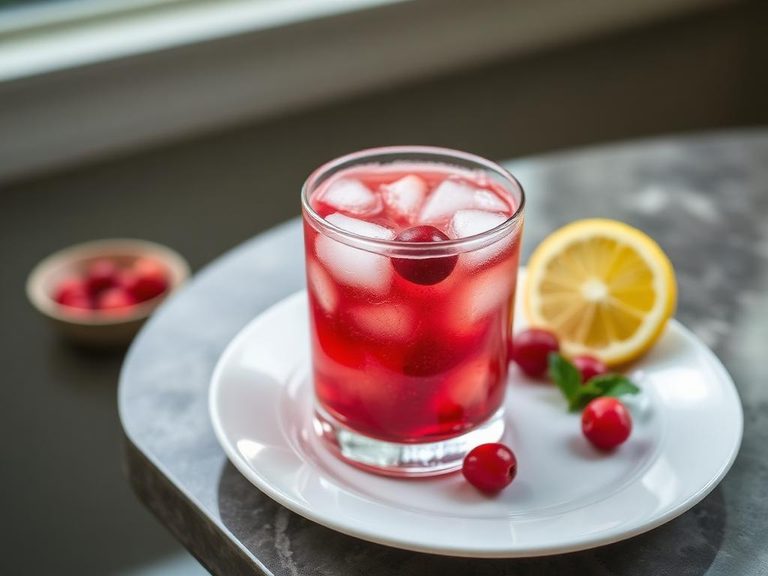
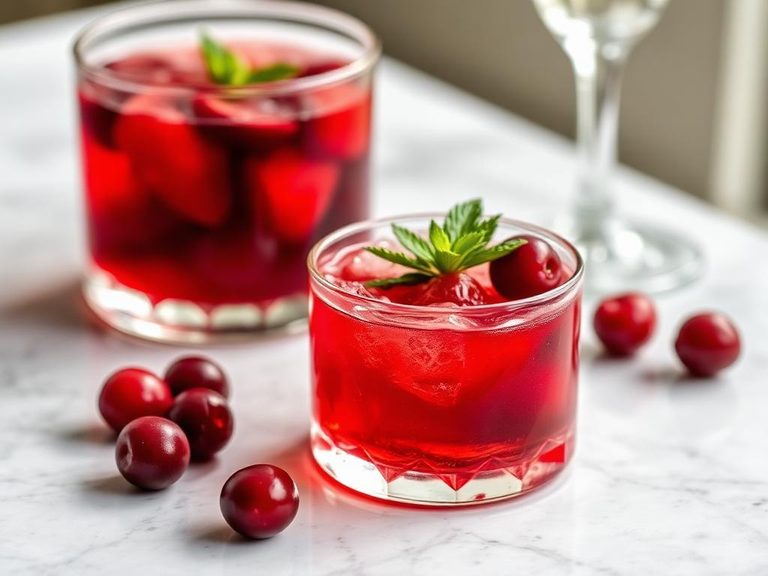
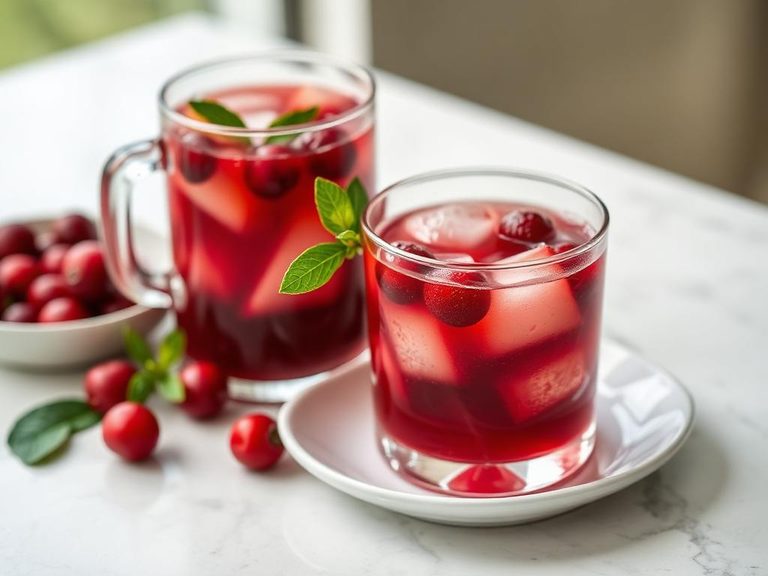
Cranberry juice cocktail is a vibrant, ruby-red beverage made by blending cranberry juice with water and sweeteners. It offers a distinctive balance of tart and sweet flavors with a smooth, refreshing texture. Nutritionally, it's a low-calorie drink primarily composed of carbohydrates, specifically sugars, with negligible protein and fat.
Calorie split: 0% protein · 94% carbs · 6% fat
↓ Full nutrition💚 Why it's loved
People love its signature sweet-tart punch that cuts through richness and refreshes the palate. It's a versatile mixer for cocktails and mocktails, and its festive red color makes it a cultural staple at holiday meals and brunches.
⚠️ Watch-outs & how to enjoy it better
The high added sugar content can contribute to blood-sugar spikes and empty calories. To counteract this, choose a 'light' or 100% juice version, dilute it with sparkling water, or pair it with a source of protein or healthy fat (like nuts or yogurt) to slow sugar absorption.
Key benefits
- Provides quick hydration
- Contains some vitamin C from cranberries
- Offers antioxidants like proanthocyanidins
- Low in fat and cholesterol
- May support urinary tract health
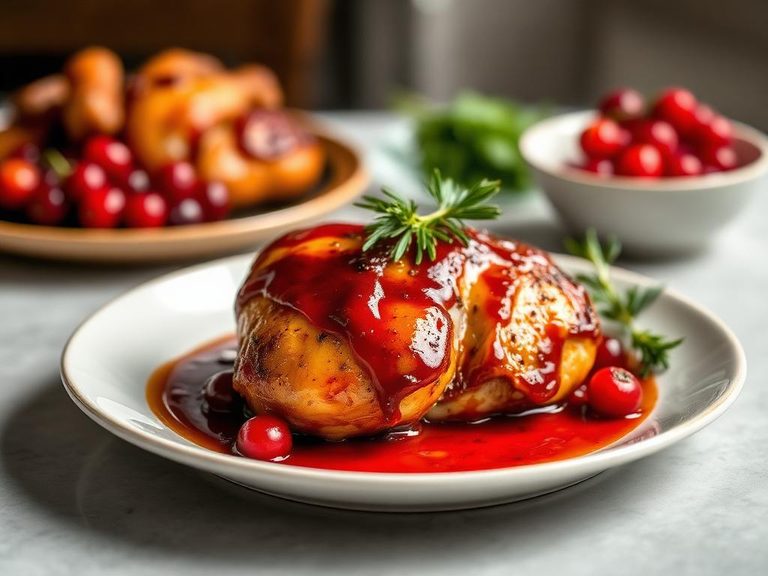
🍽️ Popular dishes
🌍 Where it's eaten
💡 Did you know?
The process of making cranberry juice cocktail was popularized in the 1930s when a New Jersey farmer developed a method to blend tart cranberries with sweeter juices to create a palatable, mass-market drink.
Full nutrition (USDA data · scales with serving)
| Water | 87.4 g |
| Energy | 52.0 kcal |
| Energy | 218 kj |
| Protein | 0.00 g |
| Total lipid (fat) | 0.34 g |
| Ash | 0.03 g |
| Carbohydrate, by difference | 12.3 g |
| Total Sugars | 11.4 g |
| Sucrose | 0.55 g |
| Glucose | 5.7 g |
| Fructose | 5.2 g |
| Lactose | 0.00 g |
| Maltose | 0.00 g |
| Galactose | 0.00 g |
| Calcium, Ca | 3.0 mg |
| Iron, Fe | 0.04 mg |
| Magnesium, Mg | 1.0 mg |
| Phosphorus, P | 1.0 mg |
| Potassium, K | 19.0 mg |
| Sodium, Na | 2.0 mg |
| Zinc, Zn | 0.02 mg |
| Copper, Cu | 0.01 mg |
| Manganese, Mn | 0.06 mg |
| Vitamin C, total ascorbic acid | 33.5 mg |
| Thiamin | 0.00 mg |
| Riboflavin | 0.00 mg |
| Niacin | 0.03 mg |
| Pantothenic acid | 0.05 mg |
| Vitamin B-6 | 0.00 mg |
Fat & fatty acid profile (per 100g)
Estimated from Beverages, carbonated, tonic water — USDA does not publish this profile for Beverages.
| Fatty acids, total saturated | 0.00 g |
| SFA 4:0 | 0.00 g |
| SFA 6:0 | 0.00 g |
| SFA 8:0 | 0.00 g |
| SFA 10:0 | 0.00 g |
| SFA 12:0 | 0.00 g |
| SFA 14:0 | 0.00 g |
| SFA 16:0 | 0.00 g |
| SFA 18:0 | 0.00 g |
| Fatty acids, total monounsaturated | 0.00 g |
| MUFA 16:1 | 0.00 g |
| MUFA 18:1 | 0.00 g |
| MUFA 20:1 | 0.00 g |
| MUFA 22:1 | 0.00 g |
| Fatty acids, total polyunsaturated | 0.00 g |
| PUFA 18:2 | 0.00 g |
| PUFA 18:3 | 0.00 g |
| PUFA 18:4 | 0.00 g |
| PUFA 20:4 | 0.00 g |
| PUFA 20:5 n-3 (EPA) | 0.00 g |
| PUFA 22:5 n-3 (DPA) | 0.00 g |
| PUFA 22:6 n-3 (DHA) | 0.00 g |
| Fatty acids, total trans | 0.00 g |
| Cholesterol | 0.00 mg |
Amino acid profile (per 100g)
Estimated from Beverages, carbonated, tonic water — USDA does not publish this profile for Beverages.
| Tryptophan | 0.00 g |
| Threonine | 0.00 g |
| Isoleucine | 0.00 g |
| Leucine | 0.00 g |
| Lysine | 0.00 g |
| Methionine | 0.00 g |
| Cystine | 0.00 g |
| Phenylalanine | 0.00 g |
| Tyrosine | 0.00 g |
| Valine | 0.00 g |
| Arginine | 0.00 g |
| Histidine | 0.00 g |
| Alanine | 0.00 g |
| Aspartic acid | 0.00 g |
| Glutamic acid | 0.00 g |
| Glycine | 0.00 g |
| Proline | 0.00 g |
| Serine | 0.00 g |
FAQ
Is cranberry juice cocktail the same as 100% cranberry juice?
No. Cranberry juice cocktail is a blend of cranberry juice, water, and added sweeteners like high-fructose corn syrup. 100% cranberry juice is typically unsweetened or may have a small amount of added apple juice for sweetness, but contains no added sugars.
Does cranberry juice cocktail actually help with urinary tract infections (UTIs)?
The evidence is mixed. Some studies suggest compounds in cranberries (proanthocyanidins) may help prevent bacteria from adhering to the bladder wall, potentially reducing UTI risk. However, the amount in a cocktail is often diluted with sugar and water, making its efficacy questionable. It is not a treatment.
Why is cranberry juice cocktail so tart?
Cranberries are naturally very tart due to high levels of organic acids, primarily citric and malic acid. The 'cocktail' formulation adds sugar to balance this intense tartness, resulting in its characteristic sweet-and-sour flavor profile.
Nutrient density (calculated · NRF9.3)
Nutrient Rich Foods index: beneficial nutrients (protein, fiber, vitamins, minerals) minus saturated fat, added sugar & sodium, per 100 kcal.
NRF9.3 index — Fulgoni, Keast & Drewnowski, 2009. Computed from USDA nutrients.
Weight-loss friendliness (composite index)
Energy density 0.52 kcal/g · 0% calories from protein · 0.0 g fiber · 11.4 g sugar per 100 g.
Composite of energy density (Rolls et al., 1999), protein & fiber satiety, minus sugar. A calculated heuristic — ranks satiety-per-calorie, not a clinical measure.
Dietary load (calculated from USDA values)
Potential renal acid load. Positive = acid-forming, negative = alkaline-forming.
Sodium-to-potassium ratio: 0.11 (lower is better — aim for ≤ 1)
Sodium:potassium per WHO potassium guidance. Computed from USDA nutrients.