

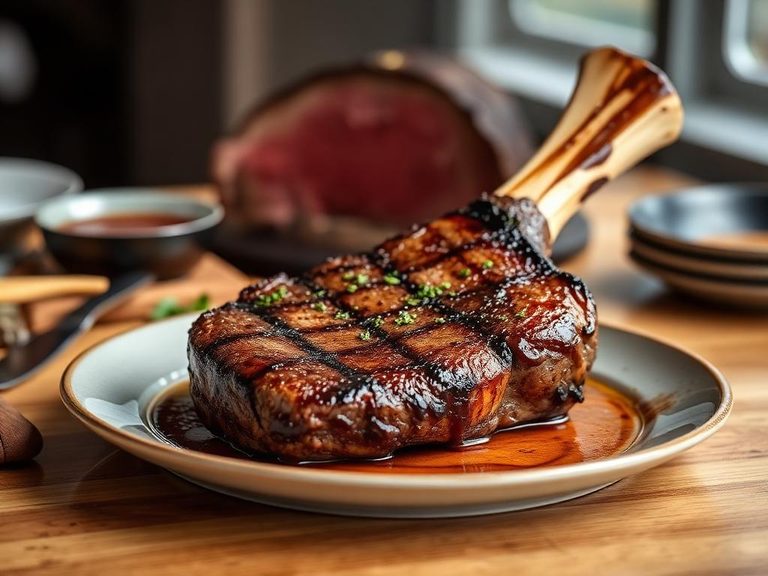
Beef, rib, whole (ribs 6-12), separable lean and fat, trimmed to 1/8" fat, choice, cooked, broiled
Whole food · Beef Products

Photo: Wikipedia
This is a prime cut of beef from the rib section (ribs 6-12), broiled to a savory, juicy perfection with a distinct, beefy flavor and a tender yet satisfying chew. It's a high-protein, zero-carb food, delivering a substantial 28.5 grams of fat per 100g, which contributes to its rich mouthfeel and satiety. The trimmed 1/8-inch fat cap ensures a balance of flavor and leanness, making it a classic choice for steak lovers.
Calorie split: 26% protein · 0% carbs · 74% fat
↓ Full nutrition💚 Why it's loved
People adore it for its deep, umami-rich flavor and the satisfying, melt-in-your-mouth texture that only a well-marbled rib steak can provide. It's a centerpiece of celebratory meals and backyard grilling, embodying a sense of hearty, indulgent comfort.
⚠️ Watch-outs & how to enjoy it better
The high fat and calorie content (352 kcal per 100g) can be a concern for those managing weight or cholesterol levels. To counteract this, practice strict portion control (aim for a 118g serving) and pair it with a large portion of non-starchy vegetables like roasted broccoli or a fresh salad to add fiber and volume without excess calories.
Key benefits
- Excellent source of complete protein for muscle maintenance.
- Rich in B vitamins, especially B12, for energy metabolism.
- Provides iron and zinc, essential minerals for immune function.
- Naturally zero-carb, suitable for ketogenic and low-carb diets.
- The fat content aids in the absorption of fat-soluble vitamins.
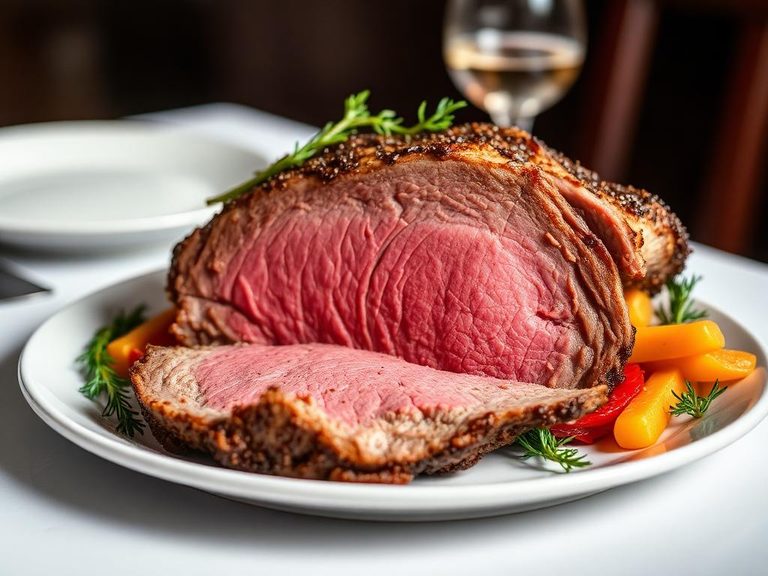
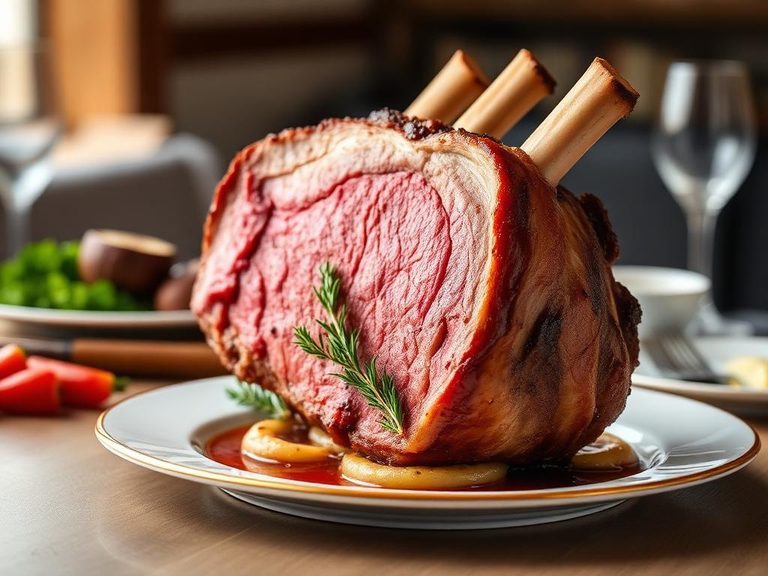
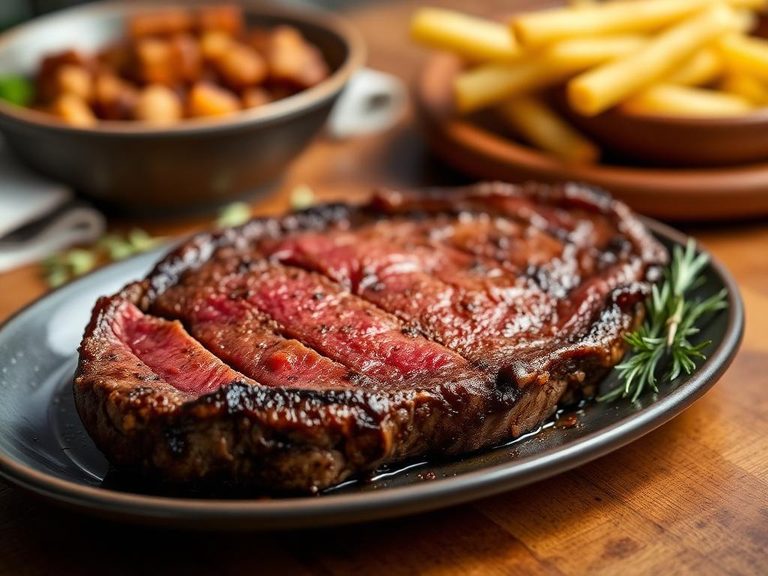
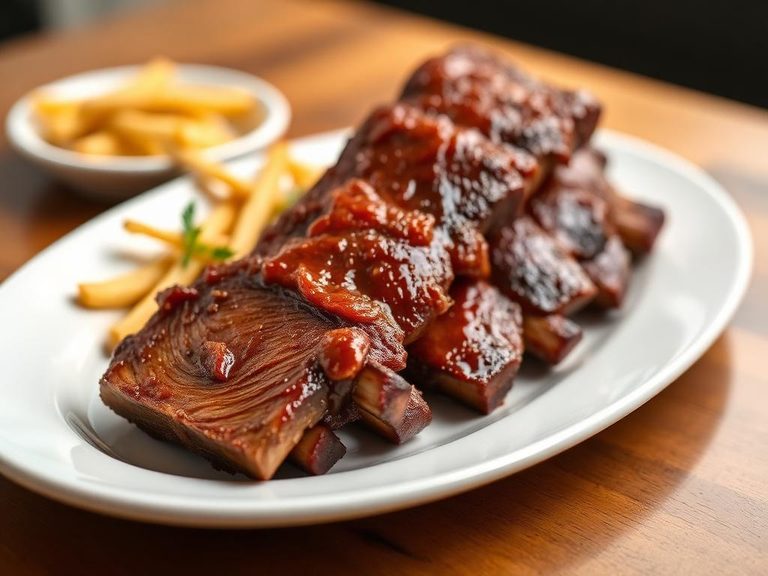
🍽️ Popular dishes
🌍 Where it's eaten
💡 Did you know?
The rib section is considered one of the most tender and flavorful parts of the cow because the muscles here do less work, resulting in excellent marbling and a buttery texture when cooked.
Full nutrition (USDA data · scales with serving)
| Water | 47.3 g |
| Energy | 352 kcal |
| Energy | 1473 kj |
| Protein | 22.3 g |
| Total lipid (fat) | 28.5 g |
| Ash | 1.0 g |
| Carbohydrate, by difference | 0.00 g |
| Fiber, total dietary | 0.00 g |
| Calcium, Ca | 11.0 mg |
| Iron, Fe | 2.2 mg |
| Magnesium, Mg | 20.0 mg |
| Phosphorus, P | 178 mg |
| Potassium, K | 313 mg |
| Sodium, Na | 63.0 mg |
| Zinc, Zn | 5.2 mg |
| Copper, Cu | 0.08 mg |
| Manganese, Mn | 0.01 mg |
| Selenium, Se | 21.8 ug |
| Vitamin C, total ascorbic acid | 0.00 mg |
| Thiamin | 0.08 mg |
| Riboflavin | 0.17 mg |
| Niacin | 3.3 mg |
| Pantothenic acid | 0.32 mg |
| Vitamin B-6 | 0.27 mg |
| Folate, total | 6.0 ug |
| Folic acid | 0.00 ug |
| Folate, food | 6.0 ug |
| Folate, DFE | 6.0 ug |
| Choline, total | 84.8 mg |
| Betaine | 11.1 mg |
| Vitamin B-12 | 2.9 ug |
| Vitamin A, IU | 0.00 iu |
Fat & fatty acid profile (per 100g)
| Fatty acids, total saturated | 11.6 g |
| SFA 10:0 | 0.08 g |
| SFA 12:0 | 0.08 g |
| SFA 14:0 | 0.93 g |
| SFA 16:0 | 7.1 g |
| SFA 18:0 | 3.4 g |
| Fatty acids, total monounsaturated | 12.1 g |
| MUFA 16:1 | 1.2 g |
| MUFA 18:1 | 10.9 g |
| MUFA 20:1 | 0.05 g |
| Fatty acids, total polyunsaturated | 1.0 g |
| PUFA 18:2 | 0.70 g |
| PUFA 18:3 | 0.31 g |
| PUFA 20:4 | 0.03 g |
| Cholesterol | 82.0 mg |
Amino acid profile (per 100g)
| Tryptophan | 0.25 g |
| Threonine | 0.97 g |
| Isoleucine | 1.0 g |
| Leucine | 1.8 g |
| Lysine | 1.9 g |
| Methionine | 0.57 g |
| Cystine | 0.25 g |
| Phenylalanine | 0.87 g |
| Tyrosine | 0.75 g |
| Valine | 1.1 g |
| Arginine | 1.4 g |
| Histidine | 0.76 g |
| Alanine | 1.3 g |
| Aspartic acid | 2.0 g |
| Glutamic acid | 3.3 g |
| Glycine | 1.2 g |
| Proline | 0.98 g |
| Serine | 0.85 g |
FAQ
What is the difference between a ribeye and a prime rib?
They come from the same rib section. A ribeye is a steak cut from the rib, while prime rib is a roast cut from the same area, typically cooked bone-in and sliced for serving.
Is this cut suitable for a low-carb diet?
Yes, it is an excellent choice for low-carb and ketogenic diets as it contains zero carbohydrates and is high in protein and fat.
How should I cook this cut for best results?
Broiling or grilling is ideal to render the fat and create a flavorful crust. Let the meat rest after cooking to allow the juices to redistribute for maximum tenderness.
Nutrient density (calculated · NRF9.3)
Nutrient Rich Foods index: beneficial nutrients (protein, fiber, vitamins, minerals) minus saturated fat, added sugar & sodium, per 100 kcal.
NRF9.3 index — Fulgoni, Keast & Drewnowski, 2009. Computed from USDA nutrients.
Weight-loss friendliness (composite index)
Energy density 3.52 kcal/g · 25% calories from protein · 0.0 g fiber · 0.0 g sugar per 100 g.
Composite of energy density (Rolls et al., 1999), protein & fiber satiety, minus sugar. A calculated heuristic — ranks satiety-per-calorie, not a clinical measure.
Dietary load (calculated from USDA values)
Potential renal acid load. Positive = acid-forming, negative = alkaline-forming.
Sodium-to-potassium ratio: 0.20 (lower is better — aim for ≤ 1)
Sodium:potassium per WHO potassium guidance. Computed from USDA nutrients.