

Beef, rib, small end (ribs 10-12), separable lean and fat, trimmed to 1/8" fat, choice, cooked, roasted
Whole food · Beef Products

Photo: Wikipedia
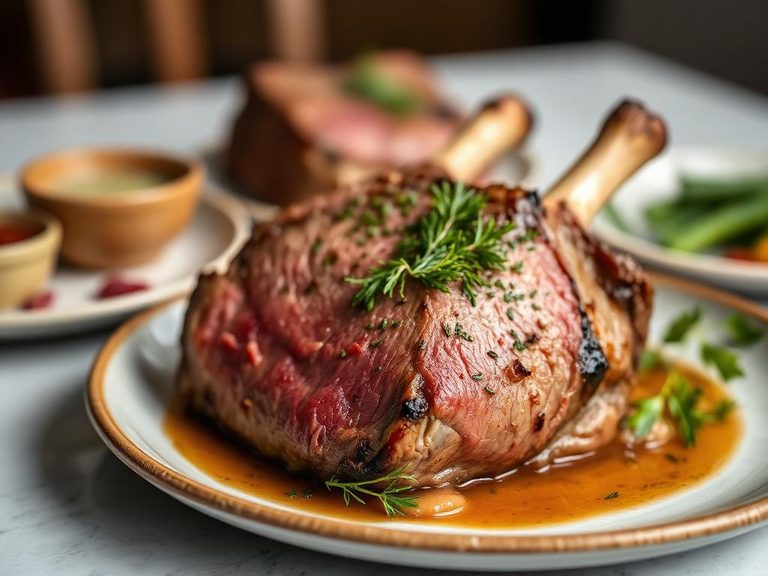
This is a premium cut from the small end of the beef rib primal, specifically ribs 10-12, trimmed to a thin 1/8-inch fat cap and roasted to perfection. The cooking method renders the intramuscular fat, resulting in a deeply savory, beefy flavor with a tender, juicy texture that yields easily to the bite. Nutritionally, it's a dense source of high-quality protein and provides a significant amount of energy primarily from fat.
Calorie split: 25% protein · 0% carbs · 75% fat
↓ Full nutrition💚 Why it's loved
People adore this cut for its perfect balance of robust, meaty flavor and succulent tenderness, which comes from the ideal marbling and the roasting process that caramelizes the exterior. It's a centerpiece cut, celebrated for its versatility in both simple, elegant roasts and hearty, slow-cooked dishes.
⚠️ Watch-outs & how to enjoy it better
The high fat and calorie density means it should be enjoyed in moderation, especially for those monitoring saturated fat intake. A potential downside is its richness, which can feel heavy if not paired appropriately. To counteract this, serve it with fiber-rich, acidic, or bitter sides like a sharp arugula salad, roasted Brussels sprouts, or a tangy chimichurri sauce to cut through the fat and aid digestion.
Key benefits
- Excellent source of complete protein for muscle maintenance and repair.
- Rich in essential minerals like iron, zinc, and selenium.
- Provides B vitamins, especially B12, crucial for nerve function and energy metabolism.
- The fat content aids in the absorption of fat-soluble vitamins (A, D, E, K).
🍽️ Popular dishes
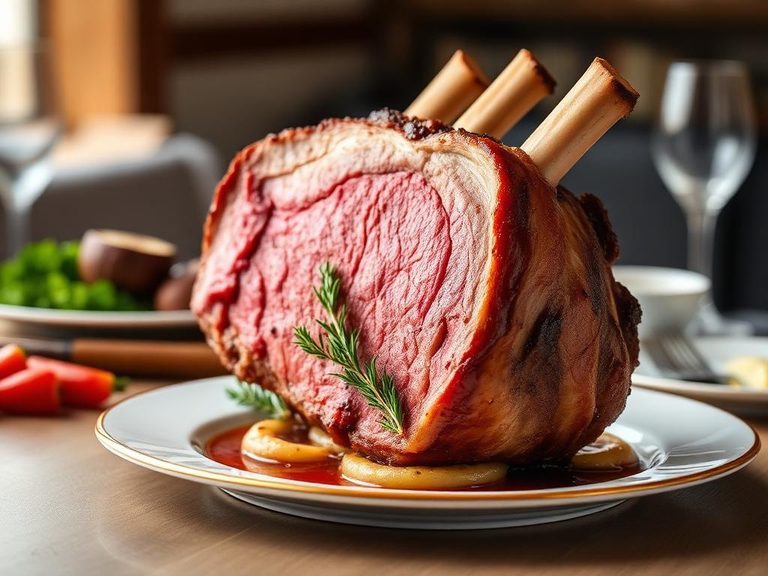
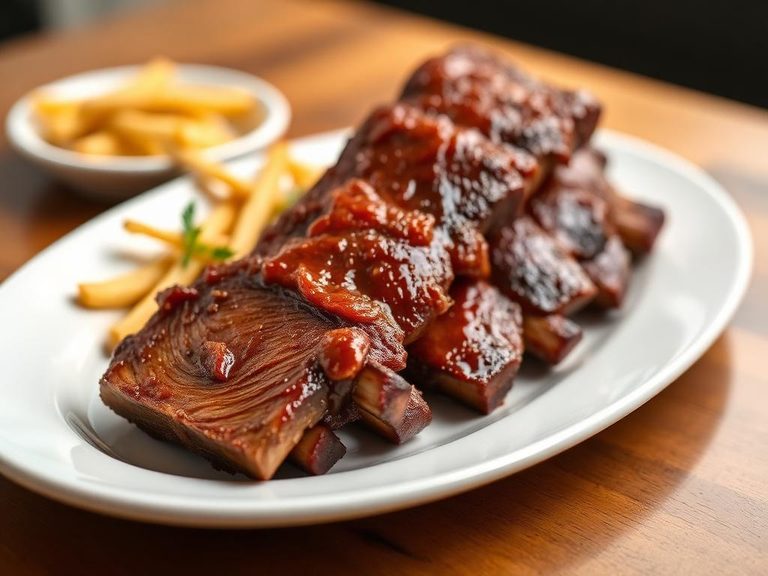
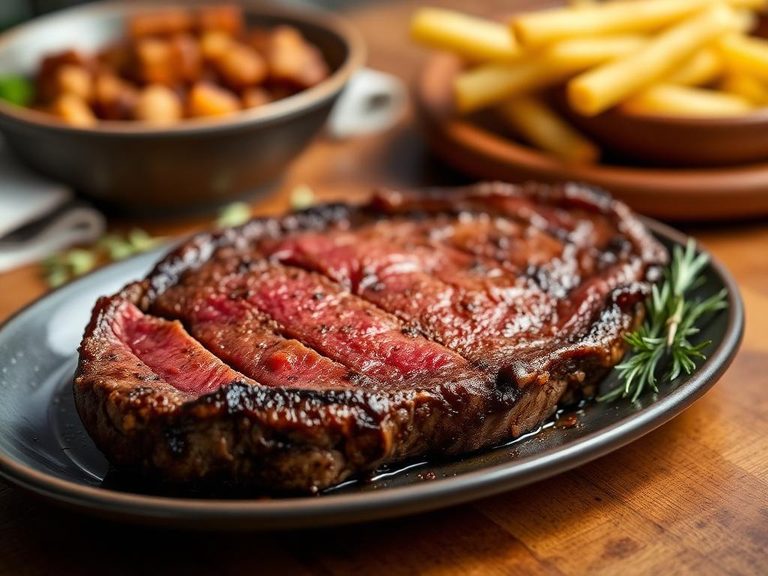
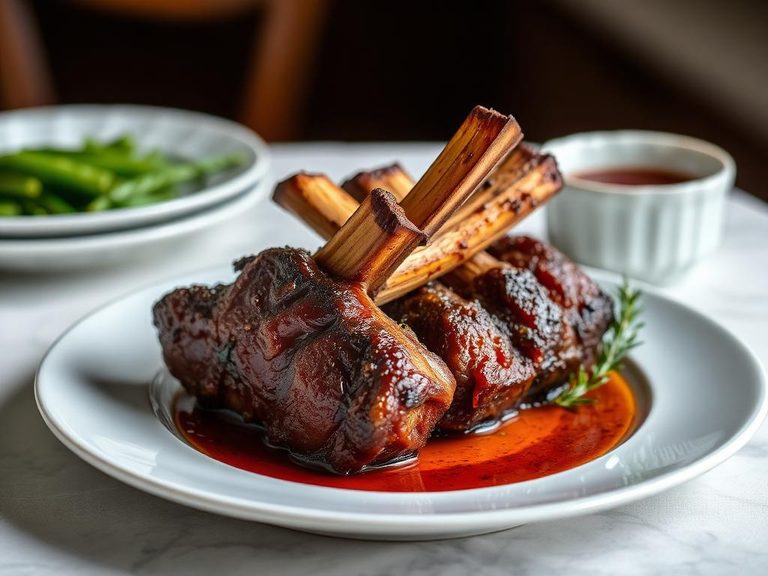
🌍 Where it's eaten
💡 Did you know?
The 'small end' ribs (10-12) are from the end of the rib primal closest to the loin, making them more tender and uniform than the larger 'chuck end' ribs, and they are the classic source for the most prized cuts of Prime Rib.
Full nutrition (USDA data · scales with serving)
| Water | 47.2 g |
| Energy | 359 kcal |
| Energy | 1502 kj |
| Protein | 22.3 g |
| Total lipid (fat) | 29.2 g |
| Ash | 1.1 g |
| Carbohydrate, by difference | 0.00 g |
| Fiber, total dietary | 0.00 g |
| Calcium, Ca | 13.0 mg |
| Iron, Fe | 2.4 mg |
| Magnesium, Mg | 20.0 mg |
| Phosphorus, P | 181 mg |
| Potassium, K | 319 mg |
| Sodium, Na | 63.0 mg |
| Zinc, Zn | 4.9 mg |
| Copper, Cu | 0.08 mg |
| Manganese, Mn | 0.01 mg |
| Selenium, Se | 21.9 ug |
| Vitamin C, total ascorbic acid | 0.00 mg |
| Thiamin | 0.06 mg |
| Riboflavin | 0.16 mg |
| Niacin | 3.1 mg |
| Pantothenic acid | 0.24 mg |
| Vitamin B-6 | 0.24 mg |
| Folate, total | 6.0 ug |
| Folic acid | 0.00 ug |
| Folate, food | 6.0 ug |
| Folate, DFE | 6.0 ug |
| Vitamin B-12 | 2.9 ug |
| Vitamin A, RAE | 0.00 ug |
| Retinol | 0.00 ug |
| Vitamin A, IU | 0.00 iu |
Fat & fatty acid profile (per 100g)
| Fatty acids, total saturated | 11.8 g |
| SFA 10:0 | 0.09 g |
| SFA 12:0 | 0.08 g |
| SFA 14:0 | 0.95 g |
| SFA 16:0 | 7.3 g |
| SFA 18:0 | 3.4 g |
| Fatty acids, total monounsaturated | 12.6 g |
| MUFA 16:1 | 1.3 g |
| MUFA 18:1 | 11.3 g |
| MUFA 20:1 | 0.06 g |
| Fatty acids, total polyunsaturated | 1.1 g |
| PUFA 18:2 | 0.70 g |
| PUFA 18:3 | 0.35 g |
| PUFA 20:4 | 0.01 g |
| Cholesterol | 83.0 mg |
Amino acid profile (per 100g)
| Tryptophan | 0.25 g |
| Threonine | 0.97 g |
| Isoleucine | 1.0 g |
| Leucine | 1.8 g |
| Lysine | 1.9 g |
| Methionine | 0.57 g |
| Cystine | 0.25 g |
| Phenylalanine | 0.87 g |
| Tyrosine | 0.75 g |
| Valine | 1.1 g |
| Arginine | 1.4 g |
| Histidine | 0.76 g |
| Alanine | 1.3 g |
| Aspartic acid | 2.0 g |
| Glutamic acid | 3.3 g |
| Glycine | 1.2 g |
| Proline | 0.98 g |
| Serine | 0.85 g |
FAQ
What is the difference between 'choice' and 'prime' grade for this cut?
'Choice' is a high-quality grade with slightly less marbling than 'Prime.' Prime has more abundant intramuscular fat, making it even more tender and flavorful, but also higher in calories and cost.
How should I cook this cut for the best results?
For a roast, sear all sides in a hot pan first, then roast in the oven at a moderate temperature (around 325°F/165°C) until the internal temperature reaches your desired doneness. Let it rest for at least 15 minutes before slicing to retain juices.
Is this cut suitable for a low-carb or keto diet?
Yes, it's an excellent choice as it contains zero carbohydrates and is high in both protein and fat, which are the primary macronutrients in ketogenic diets.
Nutrient density (calculated · NRF9.3)
Nutrient Rich Foods index: beneficial nutrients (protein, fiber, vitamins, minerals) minus saturated fat, added sugar & sodium, per 100 kcal.
NRF9.3 index — Fulgoni, Keast & Drewnowski, 2009. Computed from USDA nutrients.
Weight-loss friendliness (composite index)
Energy density 3.59 kcal/g · 25% calories from protein · 0.0 g fiber · 0.0 g sugar per 100 g.
Composite of energy density (Rolls et al., 1999), protein & fiber satiety, minus sugar. A calculated heuristic — ranks satiety-per-calorie, not a clinical measure.
Dietary load (calculated from USDA values)
Potential renal acid load. Positive = acid-forming, negative = alkaline-forming.
Sodium-to-potassium ratio: 0.20 (lower is better — aim for ≤ 1)
Sodium:potassium per WHO potassium guidance. Computed from USDA nutrients.